|
|
Welcome to Cambridge Physical Sciences
|
Cambridge's respected physics list seeks to combine an innovative and cutting edge approach with the highest standards of scholarship, writing and production across the whole range of the discipline. This encompasses everything from academic monographs to student textbooks and professional handbooks. We aim to reflect the latest developments in research, and also to provide materials for graduate and undergraduate students.
Physics publishing at Cambridge started in 1703 with the publication of the second edition of Newton's Principia, and has continued to the present day through the publication of many influential physicists, including Albert Einstein, Richard Feynman, Erwin Schrödinger, Gerard 't Hooft, Martinus Veltman, Steven Weinberg, Emil Wolf, John Schwarz, Ed Witten, Michael Green, Stephen Hawking and many others. |
Featured Titles
  | NIST Handbook of Mathematical Functions
Edited by Frank W. J. Olver , Daniel W. Lozier , Ronald F. Boisvert , Charles W. Clark
Modern developments in theoretical and applied science depend on knowledge of the properties of mathematical functions, from elementary trigonometric functions to the multitude of special functions.
Paperback | Learn More
$50.00 (Z) |
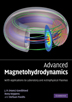 | Advanced Magnetohydrodynamics
With Applications to Laboratory and Astrophysical Plasmas
J. P. Goedbloed , Rony Keppens , Stefaan Poedts
Following on from the companion volume Principles of Magnetohydrodynamics, this textbook analyzes the applications of plasma physics to thermonuclear fusion and plasma astrophysics from the single viewpoint of MHD.
Paperback | Learn More
$95.00 (Z) |
 | Geometric and Topological Methods for Quantum Field Theory
Edited by Hernan Ocampo , Eddy Pariguan , Sylvie Paycha
Aimed at graduate students in physics and mathematics, this book provides an introduction to recent developments in several active topics at the interface between algebra, geometry, topology and quantum field theory.
Hardback | Learn More
$125.00 (C) |
 | Laser Dynamics
Thomas Erneux , Pierre Glorieux
Bridging the gap between laser physics and applied mathematics, this book offers a new perspective on laser dynamics. Combining fresh treatments of classic problems with up-to-date research, asymptotic techniques appropriate for nonlinear dynamical systems are shown to offer a powerful alternative to numerical simulations.
Hardback | Learn More
$110.00 (C) |
 | Introduction to Optical Quantum Information Processing
Pieter Kok , Brendon Lovett
Quantum information processing offers fundamental improvements over classical information processing, such as computing power, secure communication, and high-precision measurements. However, the best way to create practical devices is not yet known.
Hardback | Learn More
$78.00 (Z) |
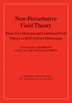 | Non-Perturbative Field Theory
From Two Dimensional Conformal Field Theory to QCD in Four Dimensions
Yitzhak Frishman , Jacob Sonnenschein
Providing a new perspective on quantum field theory, this book gives a pedagogical and up-to-date exposition of non-perturbative methods in relativistic quantum field theory and introduces the reader to modern research work in theoretical physics.
Hardback | Learn More
$130.00 (C) |
 | Introduction to Nanophotonics
Sergey V. Gaponenko
Nanophotonics is where photonics merges with nanoscience and nanotechnology, and where spatial confinement considerably modifies light propagation and light-matter interaction.
Hardback | Learn More
$78.00 (Z) |
 | Condensed Matter Field Theory
Alexander Altland , Ben D. Simons
Modern experimental developments in condensed matter and ultracold atom physics present formidable challenges to theorists. This book provides a pedagogical introduction to quantum field theory in many-particle physics, emphasizing the applicability of the formalism to concrete problems.
Hardback | Learn More
$90.00 (Z) |
 | Supercontinuum Generation in Optical Fibers
Edited by J. M. Dudley , J. R. Taylor
The optical fiber based supercontinuum source has recently become a significant scientific and commercial success, with applications ranging from frequency comb production to advanced medical imaging.
Hardback | Learn More
$125.00 (C) |
 | Magnetism and Magnetic Materials
J. M. D. Coey
Covering basic physical concepts, experimental methods, and applications, this book is an indispensable text on the fascinating science of magnetism, and an invaluable source of practical reference data.
Hardback | Learn More
$80.00 (Z) |
 | Quantum Processes Systems, and Information
Benjamin Schumacher , Michael Westmoreland
A new and exciting approach to the basics of quantum theory, this undergraduate textbook contains extensive discussions of conceptual puzzles and over 800 exercises and problems.
Hardback | Learn More
$75.00 (X) |
 | Causality, Measurement Theory and the Differentiable Structure of Space-Time
R. N. Sen
Introducing graduate students and researchers to mathematical physics, this book discusses two recent developments: the demonstration that causality can be defined on discrete space-times; and Sewell's measurement theory, in which the wave packet is reduced without recourse to the observer's conscious ego, nonlinearities or interaction with the rest of the universe.
Hardback | Learn More
$130.00 (C) |
 | Essential Quantum Optics
From Quantum Measurements to Black Holes
Ulf Leonhardt
Covering some of the most exciting trends in quantum optics - quantum entanglement, teleportation, and levitation - this textbook is ideal for advanced undergraduate and graduate students.
Paperback | Learn More
$49.99 (Z) |
 | Stochastic Processes for Physicists
Understanding Noisy Systems
Kurt Jacobs
Stochastic processes are an essential part of numerous branches of physics, as well as in biology, chemistry, and finance. This textbook provides a solid understanding of stochastic processes and stochastic calculus in physics, without the need for measure theory.
Hardback | Learn More
$45.00 (Z) |
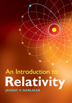 | An Introduction to Relativity
Jayant V. Narlikar
General relativity is now an essential part of undergraduate and graduate courses in physics, astrophysics and applied mathematics. This simple, user-friendly introduction to relativity is ideal for a first course in the subject.
Hardback | Learn More
$120.00 (C) | |





Services
-
Book proposals, submission guidelines and ordering
-
Order your examination copies
-
Resources for librarians
-
How to order
Subscribe to Cambridge Alerts
Receive regular updates of
our new titles and special offers
|


