Temporary Disruption
We have implemented additional assurance measures to protect our systems.
As a result, we have suspended some of our systems and services. We apologise for any temporary disruption some customers may experience.
Published online by Cambridge University Press: 16 July 2025
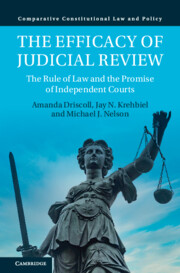
We open the book by discussing the rise of constitutional courts and judicial review, emphasizing their stated responsibility as guardians of the constitutional system. We discuss existing theories of judicial power and independence, highlighting the concept of judicial efficacy: the ability of courts to create political penalties for elites who fail to abide by the constitutional limits on their authority. We discuss different types of penalties courts might levy and explain why attitudinal costs – particularly a loss of public support – represent the cornerstone of judicial efficacy. We then provide a summary of our argument, contrasting our theory of judicial efficacy with existing accounts of judicial power and impact. The chapter concludes with a roadmap for the rest of the book and a summary of our key findings.
To save this book to your Kindle, first ensure no-reply@cambridge.org is added to your Approved Personal Document E-mail List under your Personal Document Settings on the Manage Your Content and Devices page of your Amazon account. Then enter the ‘name’ part of your Kindle email address below. Find out more about saving to your Kindle.
Note you can select to save to either the @free.kindle.com or @kindle.com variations. ‘@free.kindle.com’ emails are free but can only be saved to your device when it is connected to wi-fi. ‘@kindle.com’ emails can be delivered even when you are not connected to wi-fi, but note that service fees apply.
Find out more about the Kindle Personal Document Service.
To save content items to your account, please confirm that you agree to abide by our usage policies. If this is the first time you use this feature, you will be asked to authorise Cambridge Core to connect with your account. Find out more about saving content to Dropbox.
To save content items to your account, please confirm that you agree to abide by our usage policies. If this is the first time you use this feature, you will be asked to authorise Cambridge Core to connect with your account. Find out more about saving content to Google Drive.