Temporary Disruption
We have implemented additional assurance measures to protect our systems.
As a result, we have suspended some of our systems and services. We apologise for any temporary disruption some customers may experience.
from History 3 - Forms
Published online by Cambridge University Press: 31 December 2024
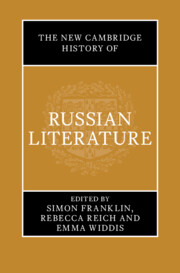
This chapter traces the development of Russian poetry from the earliest known texts to the late nineteenth century. The emphasis is on versification (syllabic, syllabo-tonic, and tonic [also called accentual] systems, all of which appear at times in Russia), genre, and style. Examples come primarily from the work of canonic poets. A distinction is drawn between folkloric and literary verse, which intersected only infrequently. Some attention is devoted to the ways that Russian poetry was indebted to Polish, German, and French models. The focus is on two periods: the eighteenth century, when secular Russian literature first began to flourish, and the ‘Golden Age’ of Aleksandr Pushkin.
To save this book to your Kindle, first ensure no-reply@cambridge.org is added to your Approved Personal Document E-mail List under your Personal Document Settings on the Manage Your Content and Devices page of your Amazon account. Then enter the ‘name’ part of your Kindle email address below. Find out more about saving to your Kindle.
Note you can select to save to either the @free.kindle.com or @kindle.com variations. ‘@free.kindle.com’ emails are free but can only be saved to your device when it is connected to wi-fi. ‘@kindle.com’ emails can be delivered even when you are not connected to wi-fi, but note that service fees apply.
Find out more about the Kindle Personal Document Service.
To save content items to your account, please confirm that you agree to abide by our usage policies. If this is the first time you use this feature, you will be asked to authorise Cambridge Core to connect with your account. Find out more about saving content to Dropbox.
To save content items to your account, please confirm that you agree to abide by our usage policies. If this is the first time you use this feature, you will be asked to authorise Cambridge Core to connect with your account. Find out more about saving content to Google Drive.