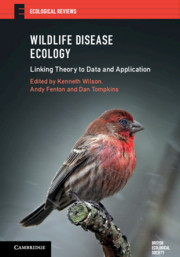
Book contents
- Wildlife Disease Ecology
- Ecological Reviews
- Wildlife Disease Ecology
- Copyright page
- Contents
- Contributors
- Preface: Wildlife Disease Ecology
- Glossary of Terms
- Part I Understanding within-host processes
- Chapter one Pollinator diseases: the Bombus–Crithidia system
- Chapter Two Genetic diversity and disease spread: epidemiological models and empirical studies of a snail–trematode system
- Chapter Three Wild rodents as a natural model to study within-host parasite interactions
- Chapter Four From population to individual host scale and back again: testing theories of infection and defence in the Soay sheep of St Kilda
- Chapter Five The causes and consequences of parasite interactions: African buffalo as a case study
- Chapter Six Effects of host lifespan on the evolution of age-specific resistance: a case study of anther-smut disease on wild carnations
- Chapter Seven Sexually transmitted infections in natural populations: what have we learnt from beetles and beyond?
- Part II Understanding between-host processes
- Part III Understanding wildlife disease ecology at the community and landscape level
- Index
- Plate Section (PDF Only)
- References
Chapter Four - From population to individual host scale and back again: testing theories of infection and defence in the Soay sheep of St Kilda
from Part I - Understanding within-host processes
Published online by Cambridge University Press: 28 October 2019

Book contents
- Wildlife Disease Ecology
- Ecological Reviews
- Wildlife Disease Ecology
- Copyright page
- Contents
- Contributors
- Preface: Wildlife Disease Ecology
- Glossary of Terms
- Part I Understanding within-host processes
- Chapter one Pollinator diseases: the Bombus–Crithidia system
- Chapter Two Genetic diversity and disease spread: epidemiological models and empirical studies of a snail–trematode system
- Chapter Three Wild rodents as a natural model to study within-host parasite interactions
- Chapter Four From population to individual host scale and back again: testing theories of infection and defence in the Soay sheep of St Kilda
- Chapter Five The causes and consequences of parasite interactions: African buffalo as a case study
- Chapter Six Effects of host lifespan on the evolution of age-specific resistance: a case study of anther-smut disease on wild carnations
- Chapter Seven Sexually transmitted infections in natural populations: what have we learnt from beetles and beyond?
- Part II Understanding between-host processes
- Part III Understanding wildlife disease ecology at the community and landscape level
- Index
- Plate Section (PDF Only)
- References
Summary
Why do hosts vary so much in parasite burden, how does this variation translate to variation in host demographic rates and parasite transmission, and how does varied transmission intensity impact selection upon immune defence of individuals? The theoretical foundations of disease ecology provide predictions for the answers to these questions, yet testing such predictions with empirical data poses many challenges. We show how the long-term ecological and genetic study of the unmanaged Soay sheep of St Kilda has addressed fundamental questions in disease ecology, with longitudinal data on parasite burden, immune defence, condition, survival, and fecundity of >10,000 individuals. The rich individual-scale data are complemented by >30 years of data on sheep population dynamics and genetic diversity as well as parasite dynamics and diversity. Population-scale work has documented the range of parasite species present and the contribution of the most prevalent and virulent parasites to regulating sheep dynamics. Individual-scale work has identified drivers of variation in parasite burden and tested hypotheses about costs and benefits of defence in a quest to determine how natural selection has shaped immune function of the sheep.
Keywords
Information
- Type
- Chapter
- Information
- Wildlife Disease EcologyLinking Theory to Data and Application, pp. 91 - 128Publisher: Cambridge University PressPrint publication year: 2019
References
Abbott, K.A., Taylor, M.A. & Stubbings, L.A. (2012) Sustainable Worm Control Strategies For Sheep: A Technical Manual For Veterinary Surgeons and Advisers. Malvern: UK SCOPS (Sustainable Control of Parasites in Sheep), National Sheep Association.Google Scholar
Albon, S.D., Stien, A., Irvine, R.J., et al. (2002) The role of parasites in the dynamics of a reindeer population. Proceedings of the Royal Society of London B, 269, 1625–1632.Google Scholar
Albrecht, A. (1909) Zur Kenntnis der Entwicklung der Sklerostomen beim Pferde. Zeitschrift fur Veterinarkunde, 21, 161–181.Google Scholar
Anderson, R.M. (1986) The population dynamics and epidemiology of intestinal nematode infections. Transactions of the Royal Society of Tropical Medicine and Hygiene, 80, 686–696.Google Scholar
Anderson, R.M. & May, R.M. (1978) Regulation and stability of host–parasite population interactions. I. Regulatory processes. Journal of Animal Ecology, 47, 219–247.Google Scholar
Anderson, R.M. & May, R.M. (1979) Population biology of infectious diseases: Part I. Nature, 280, 361–367.Google Scholar
Anderson, R.M. & May, R.M. (1982) Coevolution of hosts and parasites. Parasitology, 85, 411–426.Google Scholar
Bancroft, D.R., Pemberton, J.M. & King, P. (1995) Extensive protein and microsatellite variability in an isolated, cyclic ungulate population. Heredity, 74, 326–336.CrossRefGoogle Scholar
Behnke, J.M., Barnard, C.J. & Wakelin, D. (1992) Understanding chronic nematode infections: evolutionary considerations, current hypotheses and the way forward. International Journal for Parasitology, 22, 861–907.Google Scholar
Beisel, W.R. (1977) Magnitude of the host nutritional responses to infection. The American Journal of Clinical Nutrition, 30, 1236–1247.CrossRefGoogle ScholarPubMed
Beldomenico, P.M., Telfer, S., Gebert, S., et al. (2008) Poor condition and infection: a vicious circle in natural populations. Proceedings of the Royal Society of London B, 275, 1753–1759.Google Scholar
Beraldi, D., McRae, A.F., Gratten, J., et al. (2007) Quantitative trait loci (QTL) mapping of resistance to strongyles and coccidea in the free-living Soay sheep (Ovis aries). International Journal for Parasitology, 37, 121–129.CrossRefGoogle Scholar
Bérénos, C., Ellis, P.A., Pilkington, J.G., et al. (2015) Heterogeneity of genetic architecture of body size traits in a free-living population. Molecular Ecology, 24, 1810–1830.CrossRefGoogle Scholar
Bérénos, C., Ellis, P.A., Pilkington, J.G. & Pemberton, J.M. (2014) Estimating quantitative genetic parameters in wild populations: a comparison of pedigree and genomic approaches. Molecular Ecology, 23, 3434–3451.Google Scholar
Bérénos, C., Ellis, P.A., Pilkington, J.G. & Pemberton, J.M. (2016) Genomic analysis reveals depression due to both individual and maternal inbreeding in a free-living mammal population. Molecular Ecology, 25, 3152–3168.CrossRefGoogle Scholar
Best, A., White, A. & Boots, M. (2008) Maintenance of host variation in tolerance to pathogens and parasites. Proceedings of the National Academy of Sciences of the United States of America, 105, 20,786–20,791.Google Scholar
Bishop, S. (2012) A consideration of resistance and tolerance for ruminant nematode infections. Frontiers in Genetics, 3, 168.CrossRefGoogle ScholarPubMed
Bishop, S.C. & Stear, M.J. (2000) The use of a gamma-type function to assess the relationship between the number of adult Teladorsagia circumcincta and total egg output. Parasitology, 121, 435–440.Google Scholar
Blanchet, S., Rey, O. & Loot, G. (2010) Evidence for host variation in parasite tolerance in a wild fish population. Evolutionary Ecology, 24, 1129–1139.Google Scholar
Boots, M., Best, A., Miller, M.R. & White, A. (2009) The role of ecological feedbacks in the evolution of host defence: what does theory tell us? Philosophical Transactions of the Royal Society of London B: Biological Sciences, 364, 27–36.Google Scholar
Borer, E., Antonovics, J., Kinkel, L., et al. (2011) Bridging taxonomic and disciplinary divides in infectious disease. EcoHealth, 8, 261–267.Google Scholar
Bowers, R.G., Boots, M. & Begon, M. (1994) Life-history trade-offs and the evolution of pathogen resistance: competition between host strains. Proceedings of the Royal Society of London B, 257, 247–253.Google Scholar
Boyd, H.E.G. (1999) The early development of parasitism in Soay sheep on St Kilda. Thesis, University of Cambridge.Google Scholar
Bradley, J.E. & Jackson, J.A. (2008) Measuring immune system variation to help understand host–pathogen community dynamics. Parasitology, 135, 807–823.Google Scholar
Braisher, T.L., Gemmell, N.J., Grenfell, B.T. & Amos, W. (2004) Host isolation and patterns of genetic variability in three populations of Teladorsagia from sheep. International Journal for Parasitology, 34, 1197–1204.Google Scholar
Brown, E.A., Pilkington, J.G., Nussey, D.H., et al. (2013) Detecting genes for variation in parasite burden and immunological traits in a wild population: testing the candidate gene approach. Molecular Ecology, 22, 757–773.Google Scholar
Bruno, J.F., Ellner, S.P., Vu, I., Kim, K. & Harvell, C.D. (2011) Impacts of aspergillosis on sea fan coral demography: modeling a moving target. Ecological Monographs, 81, 123–139.CrossRefGoogle Scholar
Carval, D. & Ferriere, R. (2010) A unified model for the coevolution of resistance, tolerance and virulence. Evolution, 64, 2988–3009.Google ScholarPubMed
Caswell, H. (2001) Matrix Population Models, 2nd edition. Sunderland, MA: Sinauer Associates.Google Scholar
Cattadori, I.M., Albert, R. & Boag, B. (2007) Variation in host susceptibility and infectiousness generated by co-infection: the myxoma–Trichostrongylus retortaeformis case in wild rabbits. Journal of The Royal Society Interface, 4, 831–840.Google Scholar
Cattadori, I.M., Boag, B., Bjørnstad, O.N., Cornell, S.J. & Hudson, P.J. (2005) Peak shift and epidemiology in a seasonal host–nematode system. Proceedings of the Royal Society of London B, 272, 1163–1169.Google Scholar
Caudron, Q., Garnier, R., Pilkington, J.G., et al. (2017) Robust extraction of quantitative structural information from high-variance histological images of livers from necropsied Soay sheep. Royal Society Open Science, 4, 170111.Google Scholar
Chessa, B., Pereira, F., Arnaud, F., et al. (2009) Revealing the history of sheep domestication using retrovirus integrations. Science, 324, 532–536.CrossRefGoogle ScholarPubMed
Chevin, L.-M. (2015) Evolution of adult size depends on genetic variance in growth trajectories: a comment on analyses of evolutionary dynamics using integral projection models. Methods in Ecology and Evolution, 6, 981–986.Google Scholar
Childs, D.Z., Coulson, T.N., Pemberton, J.M., Clutton-Brock, T.H. & Rees, M. (2011) Predicting trait values and measuring selection in complex life histories: reproductive allocation decisions in Soay sheep. Ecology Letters, 14, 985–992.CrossRefGoogle ScholarPubMed
Childs, D.Z., Sheldon, B.C. & Rees, M. (2016) The evolution of labile traits in sex- and age-structured populations. Journal of Animal Ecology, 85, 329–342.Google Scholar
Christensen, L.L., Selman, C., Blount, J.D., et al. (2015) Plasma markers of oxidative stress are uncorrelated in a wild mammal. Ecology and Evolution, 5, 5096–5108.Google Scholar
Clark, D. & Bruelisauer, F. (2008) Mapping the Prevalence of JSRV and Other Endemic Infections. Inverness: Scottish Government.Google Scholar
Clutton-Brock, T.H., Illius, A.W., Wilson, K., et al. (1997) Stability and instability in ungulate populations: an empirical analysis. American Naturalist, 149, 195–219.Google Scholar
Clutton-Brock, T.H. & Pemberton, J.M. (2004) Individuals and populations. In: Clutton-Brock, T.H. & Pemberton, J.M. (eds.), Soay Sheep: Dynamics and Selection in an Island Population (pp. 1–13). Cambridge: Cambridge University Press.Google Scholar
Clutton-Brock, T.H., Pemberton, J.M., Coulson, T., Stevenson, I.R. & MacColl, A.D.C. (2004) The sheep of St Kilda. In: Clutton-Brock, T.H. & Pemberton, J.M. (eds.), Soay Sheep: Dynamics and Selection in an Island Population (pp. 17–51). Cambridge: Cambridge University Press.Google Scholar
Clutton-Brock, T. & Sheldon, B.C. (2010) Individuals and populations: the role of long-term, individual-based studies of animals in ecology and evolutionary biology. Trends in Ecology & Evolution, 25, 562–573.Google Scholar
Clutton-Brock, T.H., Stevenson, I.R., Marrow, P., et al. (1996) Population fluctuations, reproductive costs and life-history tactics in female Soay sheep. Journal of Animal Ecology, 65, 675–689.Google Scholar
Colditz, I.G. (2008) Six costs of immunity to gastrointestinal nematode infections. Parasite Immunology, 30, 63–70.Google Scholar
Coltman, D.W., Pilkington, J.G., Kruuk, L.E.B., Wilson, K. & Pemberton, J.M. (2001a) Positive genetic correlation between parasite resistance and body size in a free-living ungulate population. Evolution, 55, 2116–2125.Google Scholar
Coltman, D.W., Pilkington, J.G. & Pemberton, J.M. (2003) Fine-scale genetic structure in a free-living ungulate population. Molecular Ecology, 12, 733–742.CrossRefGoogle Scholar
Coltman, D.W., Pilkington, J.G., Smith, J.A. & Pemberton, J.M. (1999) Parasite-mediated selection against inbred Soay sheep in a free-living, island population. Evolution, 53, 1259–1267.Google Scholar
Coltman, D.W., Wilson, K., Pilkington, J.G., Stear, M.J. & Pemberton, J.M. (2001b) A microsatellite polymorphism in the gamma interferon gene is associated with resistance to gastrointestinal nematodes in a naturally parasitized population of Soay sheep. Parasitology, 122, 571–582.CrossRefGoogle Scholar
Connelly, L., Craig, B.H., Jones, B. & Alexander, C.L. (2013) Genetic diversity of Cryptosporidium spp. within a remote population of Soay Sheep on St. Kilda Islands, Scotland. Applied and Environmental Microbiology, 79, 2240–2246.CrossRefGoogle Scholar
Cornell, S.J. (2010) Modelling stochastic transmission processes in helminth infections. In: Michael, E. & Spear, R.C. (eds.), Modelling Parasite Transmission & Control (pp. 66–78). New York, NY: Springer.CrossRefGoogle Scholar
Coulson, T. (2012) Integral projections models, their construction and use in posing hypotheses in ecology. Oikos, 121, 1337–1350.CrossRefGoogle Scholar
Coulson, T., Albon, S., Pilkington, J.G. & Clutton-Brock, T.H. (1999) Small-scale spatial dynamics in a fluctuating ungulate population. Journal of Animal Ecology, 68, 658–671.Google Scholar
Coulson, T., Catchpole, E.A., Albon, S.D., et al. (2001) Age, sex, density, winter weather, and population crashes in Soay sheep. Science, 292, 1528–1531.Google Scholar
Coulson, T., Kendall, B.E., Barthold, J., et al. (2017) Modeling adaptive and nonadaptive responses of populations to environmental change. The American Naturalist, 190, 313–336.CrossRefGoogle ScholarPubMed
Coulson, T., Tuljapurkar, S. & Childs, D.Z. (2010) Using evolutionary demography to link life history theory, quantitative genetics and population ecology. Journal of Animal Ecology, 79, 1226–1240.Google Scholar
Craig, B.H. (2005) Parasite diversity in a free-living host population. Thesis, University of Edinburgh.Google Scholar
Craig, B.H., Jones, O.R., Pilkington, J.G. & Pemberton, J.M. (2009) Re-establishment of nematode infra-community and host survivorship in wild Soay sheep following anthelmintic treatment. Veterinary Parasitology, 161, 47–52.Google Scholar
Craig, B.H., Pilkington, J.G., Kruuk, L.E.B. & Pemberton, J.M. (2007) Epidemiology of parasite protozoan infections in Soay sheep (Ovis aries L.) on St Kilda. Parasitology, 134, 9–21.CrossRefGoogle Scholar
Craig, B.H., Pilkington, J.G. & Pemberton, J.M. (2006) Gastrointestinal nematode species burdens and host mortality in a feral sheep population. Parasitology, 133, 485–496.Google Scholar
Craig, B.H., Tempest, L.J., Pilkington, J.G. & Pemberton, J.M. (2008) Metazoan–protozoan parasite co-infections and host body weight in St Kilda Soay sheep. Parasitology, 135, 433–441.Google Scholar
Crawley, M., Albon, S., Bazely, D., et al. (2004) Vegetation and sheep population dynamics. In: Clutton-Brock, T.H. & Pemberton, J.M. (eds.), Soay Sheep: Dynamics and Selection in an Island Population (pp. 89–112). Cambridge: Cambridge University Press.Google Scholar
Cressler, C.E., Graham, A.L. & Day, T. (2015) Evolution of hosts paying manifold costs of defence. Proceedings of the Royal Society of London B, 282, 20150065.Google Scholar
Day, T., Alizon, S. & Mideo, N. (2011) Bridging scales in the evolution of infectious disease life-histories: theory. Evolution, 65, 3448–3461.Google Scholar
Denham, D.A. (1969) The development of Ostertagia circumcincta in lambs. Journal of Helminthology, 43, 299–310.Google Scholar
Doeschl-Wilson, A.B., Bishop, S., Kyriazakis, I. & Villanueva, B. (2012) Novel methods for quantifying individual host response to infectious pathogens for genetic analyses. Frontiers in Genetics, 3, 266.Google Scholar
Doeschl-Wilson, A.B. & Kyriazakis, I. (2012) Should we aim for genetic improvement in host resistance or tolerance to infectious pathogens? Frontiers in Genetics, 3, 272.Google Scholar
Doeschl-Wilson, A.B., Villanueva, B. & Kyriazakis, I. (2012) The first step towards genetic selection for host tolerance to infectious pathogens: obtaining the tolerance phenotype through group estimates. Frontiers in Genetics, 3, 265.Google Scholar
Easterling, M.R., Ellner, S.P. & Dixon, P.M. (2000) Size-specific sensitivity: applying a new structured population model. Ecology, 81, 694–708.Google Scholar
Ezenwa, V.O., Etienne, R.S., Gordon, L., Beja‐Pereira, A. & Jolles, A.E. (2010) Hidden consequences of living in a wormy world: nematode‐induced immune suppression facilitates tuberculosis invasion in African buffalo. The American Naturalist, 176, 613–624.Google Scholar
Ezenwa, V.O. & Jolles, A.E. (2015) Opposite effects of anthelmintic treatment on microbial infection at individual versus population scales. Science, 347, 175–177.Google Scholar
Fairlie, J., Holland, R., Pilkington, J.G., et al. (2016) Lifelong leukocyte telomere dynamics and survival in a free-living mammal. Aging Cell, 15, 140–148.CrossRefGoogle Scholar
Feulner, P.G.D., Gratten, J., Kijas, J.W., et al. (2013) Introgression and the fate of domesticated genes in a wild mammal population. Molecular Ecology, 22, 4210–4221.Google Scholar
Fineblum, W.L. & Rausher, M.D. (1995) Tradeoff between resistance and tolerance to herbivore damage in a morning glory. Nature, 377, 517–520.Google Scholar
Garnier, R., Bento, A.I., Hansen, C., et al. (2017a) Physiological proteins in resource-limited herbivores experiencing a population die-off. The Science of Nature, 104, 68.Google Scholar
Garnier, R., Cheung, C.K., Watt, K.A., et al. (2017b) Joint associations of blood plasma proteins with overwinter survival of a large mammal. Ecology Letters, 20, 175–183.Google Scholar
Garnier, R. & Graham, A.L. (2014) Insights from parasite-specific serological tools in eco-immunology. Integrative and Comparative Biology, 54, 363–376.Google Scholar
Garnier, R., Grenfell, B.T., Nisbet, A.J., Matthews, J.B. & Graham, A.L. (2016) Integrating immune mechanisms to model nematode worm burden: an example in sheep. Parasitology, 143, 894–904.Google Scholar
Gibson, W., Pilkington, J.G. & Pemberton, J.M. (2010) Trypanosoma melophagium from the sheep ked Melophagus ovinus on the island of St Kilda. Parasitology, 137, 1799–1804.Google Scholar
Graham, A.L., Allen, J.E. & Read, A.F. (2005) Evolutionary causes and consequences of immunopathology. Annual Review of Ecology, Evolution, and Systematics, 36, 373–397.Google Scholar
Graham, A.L., Hayward, A.D., Watt, K.A., et al. (2010) Fitness correlates of heritable variation in antibody responsiveness in a wild mammal. Science, 330, 662–665.CrossRefGoogle Scholar
Graham, A.L., Nussey, D.H., Lloyd-Smith, J.O., et al. (2016) Exposure to viral and bacterial pathogens among Soay sheep (Ovis aries) of the St Kilda archipelago. Epidemiology and Infection, 144, 1–10.Google Scholar
Graham, A.L., Shuker, D.M., Pollitt, L.C., et al. (2011) Fitness consequences of immune responses: strengthening the empirical framework for ecoimmunology. Functional Ecology, 25, 5–17.Google Scholar
Gratten, J., Beraldi, D., Lowder, B.V., et al. (2007) Compelling evidence that a single nucleotide substitution in TYRP1 is responsible for coat-colour polymorphism in a free-living population of Soay sheep. Proceedings of the Royal Society of London B, 274, 619–626.Google Scholar
Gratten, J., Pilkington, J.G., Brown, E.A., et al. (2010) The genetic basis of recessive self-colour pattern in a wild sheep population. Heredity, 104, 206–214.Google Scholar
Grenfell, B. & Dobson, A. (1995) Ecology of Infectious Diseases in Natural Populations. Cambridge: Cambridge University Press.Google Scholar
Grenfell, B.H., Price, O.F., Albon, S.D. & Clutton-Brock, T.H. (1992) Overcompensation and population cycles in an ungulate. Nature, 355, 823–826.Google Scholar
Grenfell, B.T., Wilson, K., Finkelstadt, B.F., et al. (1998) Noise and determinism in synchronized sheep dynamics. Nature, 394, 674–677.Google Scholar
Grenfell, B.T., Wilson, K., Isham, V.S., Boyd, H.E.G. & Dietz, K. (1995) Modelling patterns of parasite aggregation in natural populations: trichostrongylid nematode–ruminant interactions as a case study. Parasitology, 111, S135–S151.Google Scholar
Gulland, F.M.D. (1992) The role of nematode parasites in Soay sheep (Ovis aries L.) mortality during a population crash. Parasitology, 105, 493–503.Google Scholar
Gulland, F.M.D., Albon, S.D., Pemberton, J.M., Moorcroft, P.R. & Clutton-Brock, T.H. (1993) Parasite-associated polymorphism in a cyclic ungulate population. Proceedings of the Royal Society of London B, 254, 7–13.Google Scholar
Gulland, F.M.D. & Fox, M. (1992) Epidemiology of nematode infections of Soay sheep (Ovis aries L.) on St Kilda. Parasitology, 105, 481–492.Google Scholar
Halliday, A.M., Routledge, C.M., Smith, S.K., Matthews, J.B. & Smith, W.D. (2007) Parasite loss and inhibited development of Teladorsagia circumcincta in relation to the kinetics of the local IgA response in sheep. Parasite Immunology, 29, 425–434.Google Scholar
Hayward, A.D., Garnier, R., Watt, K.A., et al. (2014a) Heritable, heterogeneous, and costly resistance of sheep against nematodes and potential feedbacks to epidemiological dynamics. The American Naturalist, 184, S58–S76.Google Scholar
Hayward, A.D., Nussey, D.H., Wilson, A.J., et al. (2014b) Natural selection on individual variation in tolerance of gastrointestinal nematode infection. PLoS Biology, 12, e1001917.Google Scholar
Hayward, A.D., Pemberton, J.M., Bérénos, C., et al. (2018) Evidence for selection-by-environment but not genotype-by-environment interactions for fitness-related traits in a wild mammal population. Genetics, 208, 349–364.Google Scholar
Hayward, A.D., Wilson, A.J., Pilkington, J.G., et al. (2011) Natural selection on a measure of parasite resistance varies across ages and environmental conditions in a wild mammal. Journal of Evolutionary Biology, 24, 1664–1676.Google Scholar
Hayward, A.D., Wilson, A.J., Pilkington, J.G., Pemberton, J.M. & Kruuk, L.E.B. (2009) Ageing in a variable habitat: environmental stress affects senescence in parasite resistance in St Kilda Soay sheep. Proceedings of the Royal Society of London B, 276, 3477–3485.Google Scholar
Henderson, C.R. (1950) Estimation of genetic parameters. Annals of Mathematical Statistics, 21, 309–310.Google Scholar
Henrichs, B., Oosthuizen, M.C., Troskie, M., et al. (2016) Within guild co-infections influence parasite community membership: a longitudinal study in African Buffalo. Journal of Animal Ecology, 85, 1025–1034.Google Scholar
Hong, C., Michel, J.F. & Lancaster, M.B. (1987) Observations on the dynamics of worm burdens in lambs infected daily with Ostertagia circumcincta. International Journal for Parasitology, 17, 951–956.Google Scholar
Houdijk, J.G.M., Kyriazakis, I., Jackson, F., Huntley, J.F. & Coop, R.L. (2005) Effects of protein supply and reproductive status on local and systemic immune responses to Teladorsagia circumcincta in sheep. Veterinary Parasitology, 129, 105–117.CrossRefGoogle ScholarPubMed
Hudson, P.J., Dobson, A.P. & Newborn, D. (1998) Prevention of population cycles by parasite removal. Science, 282, 2256–2258.Google Scholar
Hutchings, M.R., Milner, J.M., Gordon, I.J., Kyriazakis, I. & Jackson, F. (2002) Grazing decisions of Soay sheep, Ovis aries, on St Kilda: a consequence of parasite distribution? Oikos, 96, 235–244.Google Scholar
Jackson, J.A., Hall, A.J., Friberg, I.M., et al. (2014) An immunological marker of tolerance to infection in wild rodents. PLoS Biology, 12, e1001901.Google Scholar
Janeiro, M.J., Coltman, D.W., Festa-Bianchet, M., Pelletier, F. & Morrissey, M.B. (2017) Towards robust evolutionary inference with integral projection models. Journal of Evolutionary Biology, 30, 270–288.Google Scholar
Jewell, P.A., Milner, C. & Boyd, J.M. (1974) Island Survivors: The Ecology of the Soay Sheep of St Kilda. London: Athlone Press.Google Scholar
Johnston, S.E., Bérénos, C., Slate, J. & Pemberton, J.M. (2016) Conserved genetic architecture underlying individual recombination rate variation in a wild population of Soay sheep (Ovis aries). Genetics, 203, 583–598.Google Scholar
Johnston, S.E., Gratten, J., Berenos, C., et al. (2013) Life history trade-offs at a single locus maintain sexually selected genetic variation. Nature, 502, 93–95.Google Scholar
Johnston, S.E., McEwan, J.C., Pickering, N.K., et al. (2011) Genome-wide association mapping identifies the genetic basis of discrete and quantitative variation in sexual weaponry in a wild sheep population. Molecular Ecology, 20, 2555–2566.Google Scholar
Jolles, A.E., Ezenwa, V.O., Etienne, R.S., Turner, W.C. & Olff, H. (2008) Interactions between macroparasites and microparasites drive infection patterns in free-ranging African buffalo. Ecology, 89, 2239–2250.Google Scholar
Jones, O.R., Anderson, R.M. & Pilkington, J.G. (2006) Parasite-induced anorexia in a free-ranging mammalian herbivore: an experimental test using Soay sheep. Canadian Journal of Zoology, 84, 685–692.Google Scholar
Jones, O.R., Crawley, M.J., Pilkington, J.G. & Pemberton, J.M. (2005) Predictors of early survival in Soay sheep: cohort-, maternal-, and individual-level variation. Proceedings of the Royal Society of London B, 272, 2619–2625.Google Scholar
Kause, A. (2011) Genetic analysis of tolerance to infections using random regressions: a simulation study. Genetics Research, 93, 291–302.Google Scholar
Kause, A., van Dalen, S. & Bovenhuis, H. (2012) Genetics of ascites resistance and tolerance in chicken: a random regression approach. G3: Genes|Genomes|Genetics, 2, 527–535.Google Scholar
Kenyon, F., Sargison, N.D., Skuce, P.J. & Jackson, F. (2009) Sheep helminth parasitic disease in south eastern Scotland arising as a possible consequence of climate change. Veterinary Parasitology, 163, 293–297.Google Scholar
Kijas, J.W., Lenstra, J.A., Hayes, B., et al. (2012) Genome-wide analysis of the world’s sheep breeds reveals high levels of historic mixture and strong recent selection. PLoS Biology, 10, e1001258.Google Scholar
Koski, K.G. & Scott, M.E. (2001) Gastrointestinal nematodes, nutrition and immunity: breaking the negative spiral. Annual Review of Nutrition, 21, 297–321.Google Scholar
Kruuk, L.E.B. (2004) Estimating genetic parameters in natural populations using the ‘animal model’. Philosophical Transactions of the Royal Society of London. Series B: Biological Sciences, 359, 873–890.Google Scholar
Lawson Handley, L.-J., Byrne, K., Santucci, F., et al. (2007) Genetic structure of European sheep breeds. Heredity, 99, 620–631.CrossRefGoogle ScholarPubMed
Lello, J., Boag, B., Fenton, A., Stevenson, I.R. & Hudson, P.J. (2004) Competition and mutualism among the gut helminths of a mammalian host. Nature, 428, 840–844.Google Scholar
Lippens, C., Guivier, E., Faivre, B. & Sorci, G. (2016) Reaction norms of host immunity, host fitness and parasite performance in a mouse–intestinal nematode interaction. International Journal for Parasitology, 46, 133–140.Google Scholar
Liu, W.-C., Bonsall, M.B. & Godfray, H.C.J. (2007) The form of host density-dependence and the likelihood of host–pathogen cycles in forest–insect systems. Theoretical Population Biology, 72, 86–95.Google Scholar
Lloyd-Smith, J.O., Schreiber, S.J., Kopp, P.E. & Getz, W.M. (2005) Superspreading and the effect of individual variation on disease emergence. Nature, 438, 355–359.Google Scholar
Lochmiller, R.L. & Deerenberg, C. (2000) Tradeoffs in evolutionary immunology: just what is the cost of immunity? Oikos, 88, 87–98.Google Scholar
Martinez-Valldares, M., Vara-Del Rio, M.P., Cruz-Rojo, M.A. & Rojo-Vazquez, F.A. (2005) Genetic resistance to Teladorsagia circumcincta: IgA and parameters at slaughter in Churra sheep. Parasite Immunology, 27, 213–218.Google Scholar
May, R.M. & Anderson, R.M. (1978) Regulation and stability of host–parasite population interactions: II. Destabilizing processes. Journal of Animal Ecology, 47, 249–267.Google Scholar
May, R.M. & Anderson, R.M. (1979) Population biology of infectious diseases: Part II. Nature, 280, 455–461.Google Scholar
Mazé-Guilmo, E., Loot, G., Páez, D.J., Lefèvre, T. & Blanchet, S. (2014) Heritable variation in host tolerance and resistance inferred from a wild host–parasite system. Proceedings of the Royal Society of London B, 281, 20132567.Google Scholar
McNeilly, T.N., Devaney, E. & Matthews, J.B. (2009) Teladorsagia circumcincta in the sheep abomasum: defining the role of dendritic cells in T cell regulation and protective immunity. Parasite Immunology, 31, 347–356.Google Scholar
McRae, K.M., Stear, M.J., Good, B. & Keane, O.M. (2015) The host immune response to gastrointestinal nematode infection in sheep. Parasite Immunology, 37, 605–613.CrossRefGoogle ScholarPubMed
Medzhitov, R., Schneider, D.S. & Soares, M.P. (2012) Disease tolerance as a defense strategy. Science, 335, 936–941.Google Scholar
Metcalf, C.J.E., Graham, A.L., Martinez-Bakker, M. & Childs, D.Z. (2016) Opportunities and challenges of Integral Projection Models for modelling host–parasite dynamics. Journal of Animal Ecology, 85, 343–355.Google Scholar
Mideo, N., Nelson, W.A., Reece, S.E., et al. (2011) Bridging scales in the evolution of infectious disease life histories: application. Evolution, 65, 3298–3310.Google Scholar
Miller, M.R., White, A. & Boots, M. (2005) The evolution of host resistance: tolerance and control as distinct strategies. Journal of Theoretical Biology, 236, 198–207.Google Scholar
Miller, M.R., White, A. & Boots, M. (2006) The evolution of parasites in response to tolerance in their hosts: the good, the bad, and apparent commensalism. Evolution, 60, 945–956.Google Scholar
Milner, J.M., Albon, S.D., Illius, A.W., Pemberton, J.M. & Clutton-Brock, T.H. (1999) Repeated selection of morphometric traits in the Soay sheep on St Kilda. Journal of Animal Ecology, 68, 472–488.Google Scholar
Milner, J.M., Elston, D.A. & Albon, S.D. (1999) Estimating the contributions of population density and climatic fluctuations to interannual variation in survival of Soay sheep. Journal of Animal Ecology, 68, 1235–1247.Google Scholar
Moore, S.L. & Wilson, K. (2002) Parasites as a viability cost of sexual selection in natural populations of mammals. Science, 297, 2015–2018.Google Scholar
Morales-Montor, J., Chavarria, A., De León, M.A., et al. (2004) Host gender in parasitic infections of mammals: an evaluation of the female host supremacy paradigm. Journal of Parasitology, 90, 531–546.CrossRefGoogle ScholarPubMed
Morgan, E.R. & van Dijk, J. (2012) Climate and the epidemiology of gastrointestinal nematode infections of sheep in Europe. Veterinary Parasitology, 189, 8–14.Google Scholar
Murphy, L., Pathak, A.K. & Cattadori, I.M. (2013) A co-infection with two gastrointestinal nematodes alters host immune responses and only partially parasite dynamics. Parasite Immunology, 35, 421–432.Google Scholar
Murray, D.L., Cox, E.W., Ballard, W.B., et al. (2006) Pathogens, nutritional deficiency, and climate influences on a declining moose population. Wildlife Monographs, 166, 1–30.CrossRefGoogle Scholar
Nielsen, M.K., Kaplan, R.M., Thamsborg, S.M., Monrad, J. & Olsen, S.N. (2007) Climatic influences on development and survival of free-living stages of equine strongyles: implications for worm control strategies and managing anthelmintic resistance. The Veterinary Journal, 174, 23–32.Google Scholar
Nieuwhof, G.J. & Bishop, S.C. (2005) Costs of the major endemic diseases of sheep in Great Britain and the potential benefits of reduction in disease impact. Animal Science, 81, 23–29.Google Scholar
Nisbet, A.J., McNeilly, T.N., Wildblood, L.A., et al. (2013) Successful immunization against a parasitic nematode by vaccination with recombinant proteins. Vaccine, 31, 4017–4023.Google Scholar
Nussey, D.H., Watt, K., Pilkington, J.G., Zamoyska, R. & McNeilly, T.N. (2012) Age-related variation in immunity in a wild mammal population. Aging Cell, 11, 178–180.Google Scholar
Nussey, D.H., Watt, K.A., Clark, A., et al. (2014) Multivariate immune defences and fitness in the wild: complex but ecologically important associations among plasma antibodies, health and survival. Proceedings of the Royal Society of London B, 281, 20132931.Google Scholar
Ozgul, A., Childs, D.Z., Oli, M.K., et al. (2010) Coupled dynamics of body mass and population growth in response to environmental change. Nature, 466, 482–485.Google Scholar
Ozgul, A., Coulson, T., Reynolds, A., Cameron, T.C. & Benton, T.G. (2012) Population responses to perturbations: the importance of trait-based analysis illustrated through a microcosm experiment. The American Naturalist, 179, 582–594.Google Scholar
Pacala, S.W. & Dobson, A.P. (1988) The relation between the number of parasites/host and host age: population dynamic causes and maximum likelihood estimation. Parasitology, 96, 197–210.Google Scholar
Paterson, S., Wilkes, C., Bleay, C. & Viney, M.E. (2008) Immunological responses elicited by different infection regimes with Strongyloides ratti. PLoS ONE, 3, e2509.Google Scholar
Paterson, S., Wilson, K. & Pemberton, J.M. (1998) Major histocompatibility complex variation associated with juvenile survival and parasite resistance in a large unmanaged ungulate population (Ovis aries L.). Proceedings of the National Academy of Sciences of the United States of America, 95, 3714–3719.Google Scholar
Pathak, A.K., Pelensky, C., Boag, B. & Cattadori, I.M. (2012) Immuno-epidemiology of chronic bacterial and helminth co-infections: observations from the field and evidence from the laboratory. International Journal for Parasitology, 42, 647–655.Google Scholar
Pedersen, A.B. & Greives, T.J. (2008) The interaction of parasites and resources cause crashes in a wild mouse population. Journal of Animal Ecology, 77, 370–377.Google Scholar
Pemberton, J.M., Coltman, D.W., Bancroft, D.R., Smith, J.A. & Paterson, S. (2004) Molecular genetic variation and selection on phenotype. In: Clutton-Brock, T.H. & Pemberton, J.M. (eds.), Soay Sheep: Dynamics and Selection in an Island Population (pp. 217–242). Cambridge: Cambridge University Press.Google Scholar
Penczykowski, R.M., Walker, E., Soubeyrand, S. & Laine, A.-L. (2015) Linking winter conditions to regional disease dynamics in a wild plant–pathogen metapopulation. New Phytologist, 205, 1142–1152.Google Scholar
Pernthaner, A., Cole, S.-A., Morrison, L., et al. (2006) Cytokine and antibody subclass responses in the intestinal lymph of sheep during repeated experimental infections with the nematode parasite Trichostrongylus colubriformis. Veterinary Immunology and Immunopathology, 114, 135–148.Google Scholar
Preston, B.T., Stevenson, I.R., Pemberton, J.M., Coltman, D.W. & Wilson, K. (2003) Overt and covert competition in a promiscuous mammal: the importance of weaponry and testes size to male reproductive success. Proceedings of the Royal Society of London B, 270, 633–640.Google Scholar
Råberg, L., Graham, A.L. & Read, A.F. (2009) Decomposing health: tolerance and resistance to parasites in animals. Philosophical Transactions of the Royal Society of London B, 364, 37–49.Google Scholar
Råberg, L., Sim, D. & Read, A.F. (2007) Disentangling genetic variation for resistance and tolerance to infectious diseases in animals. Science, 318, 812–814.Google Scholar
Rees, M., Childs, D.Z. & Ellner, S.P. (2014) Building integral projection models: a user’s guide. Journal of Animal Ecology, 83, 528–545.Google Scholar
Rees, M. & Ellner, S.P. (2009) Integral projection models for populations in temporally varying environments. Ecological Monographs, 79, 575–594.Google Scholar
Rees, M. & Ellner, S.P. (2016) Evolving integral projection models: evolutionary demography meets eco-evolutionary dynamics. Methods in Ecology and Evolution, 7, 157–170.Google Scholar
Restif, O. & Koella, J.C. (2003) Shared control of epidemiological traits in a coevolutionary model of host–parasite interactions. The American Naturalist, 161, 827–836.Google Scholar
Restif, O. & Koella, J.C. (2004) Concurrent evolution of resistance and tolerance to pathogens. The American Naturalist, 164, E90–E102.Google Scholar
Robinson, M.R., Pilkington, J.G., Clutton-Brock, T.H., Pemberton, J.M. & Kruuk, L.E.B. (2008) Environmental heterogeneity generates fluctuating selection on a secondary sexual trait. Current Biology, 18, 751–757.Google Scholar
Robinson, M.R., Wilson, A.J., Pilkington, J.G., et al. (2009) The impact of environmental heterogeneity on genetic architecture in a wild population of Soay sheep. Genetics, 181, 1639–1648.Google Scholar
Roy, B.A. & Kirchner, J.W. (2000) Evolutionary dynamics of pathogen resistance and tolerance. Evolution, 54, 51–63.Google Scholar
Sahoo, A., Pattanaik, A.K. & Goswami, T.K. (2009) Immunobiochemical status of sheep exposed to periods of experimental protein deficit and realimentation. Journal of Animal Science, 87, 2664–2673.Google Scholar
Sand, K.M.K., Bern, M., Nilsen, J., et al. (2015) Unraveling the interaction between FcRn and albumin: opportunities for design of albumin-based therapeutics. Frontiers in Immunology, 5, 682.Google Scholar
Sayre, B.L. & Harris, G.C. (2012) Systems genetics approach reveals candidate genes for parasite resistance from quantitative trait loci studies in agricultural species. Animal Genetics, 43, 190–198.Google Scholar
Schmid-Hempel, P. (2003) Variation in immune defence as a question of evolutionary ecology. Proceedings of the Royal Society of London B, 270, 357–366.Google Scholar
Schneider, D.S. & Ayres, J.S. (2008) Two ways to survive infection: what resistance and tolerance can teach us about treating infectious disease. Nature Reviews Immunology, 8, 889–895.Google Scholar
Scott, M.E. (1991) Heligmosomoides polygyrus (Nematoda): susceptible and resistant strains of mice are indistinguishable following natural infection. Parasitology, 103, 429–438.Google Scholar
Scott, M.E. (2006) High transmission rates restore expression of genetically determined susceptibility of mice to nematode infections. Parasitology, 132, 669–679.Google Scholar
Shaw, D.J. & Dobson, A.P. (1995) Patterns of macroparasite abundance and aggregation in wildlife populations: a quantitative review. Parasitology, 111, S111–S133.Google Scholar
Shaw, D.J., Grenfell, B.T. & Dobson, A.P. (1998) Patterns of macroparasite aggregation in wildlife host populations. Parasitology, 117, 597–610.Google Scholar
Sheldon, B.C. & Verhulst, S. (1996) Ecological immunity: costly parasite defences and tradeoffs in evolutionary ecology. Trends in Ecology and Evolution, 11, 317–321.Google Scholar
Simms, E. (2000) Defining tolerance as a norm of reaction. Evolutionary Ecology, 14, 563–570.CrossRefGoogle Scholar
Simpson, H.V. (2000) Pathophysiology of abomasal parasitism: is the host or parasite responsible? The Veterinary Journal, 160, 177–191.Google Scholar
Smith, J.A., Wilson, K., Pilkington, J.G. & Pemberton, J.M. (1999) Heritable variation in resistance to gastrointestinal nematodes in an unmanaged mammal population. Proceedings of the Royal Society of London B, 266, 1283–1290.Google Scholar
Smith, W.D., Jackson, F., Jackson, E. & Williams, J. (1985) Age immunity to Ostertagia circumcincta: comparison of the local immune responses of 4 1/2- and 10-month-old lambs. Journal of Comparative Pathology, 95, 235–245.Google Scholar
Sparks, A.M., Watt, K., Sinclair, R., et al. (2019) The genetic architecture of helminth-specific immune responses in a wild population of Soay sheep (Ovis aries). bioRxiv 02871.Google Scholar
Stear, M.J., Bishop, S.C., Doligalska, M., et al. (1995) Regulation of egg production, worm burden, worm length and worm fecundity by host responses in sheep infected with Ostertagia circumcincta. Parasite Immunology, 17, 643–652.Google Scholar
Tate, A.T. & Graham, A.L. (2015) Dynamic patterns of parasitism and immunity across host development influence optimal strategies of resource allocation. The American Naturalist, 186, 495–512.Google Scholar
Tate, A.T. & Rudolf, V.H.W. (2012) Impact of life stage specific immune priming on invertebrate disease dynamics. Oikos, 121, 1083–1092.Google Scholar
Tempest, L.J. (2005) Parasites and the cost of reproduction in Soay sheep. PhD thesis, University of Stirling.Google Scholar
Thrall, P. & Antonovics, J. (1994) The cost of resistance and the maintenance of genetic polymorphisms in host–pathogen systems. Proceedings of the Royal Society of London B, 257, 105–110.Google Scholar
Tidbury, H.J., Best, A. & Boots, M. (2012) The epidemiological consequences of immune priming. Proceedings of the Royal Society of London B, 279, 4505–4512.Google Scholar
Torgerson, P.R., Pilkington, J., Gulland, F.M.D. & Gemmell, M.A. (1995) Further evidence for the long distance dispersal of taeniid eggs. International Journal for Parasitology, 25, 265–267.Google Scholar
Traill, L.W., Schindler, S. & Coulson, T. (2014) Demography, not inheritance, drives phenotypic change in hunted bighorn sheep. Proceedings of the National Academy of Sciences of the United States of America, 111, 13,223–13,228.Google Scholar
Watson, M.J. (2013) What drives population-level effects of parasites? Meta-analysis meets life-history. International Journal for Parasitology: Parasites and Wildlife, 2, 190–196.Google Scholar
Watson, R.L., Bird, E.J., Underwood, S., et al. (2017) Sex differences in leucocyte telomere length in a free-living mammal. Molecular Ecology, 26, 3230–3240.Google Scholar
Watson, R.L., McNeilly, T.N., Watt, K.A., et al. (2016) Cellular and humoral immunity in a wild mammal: variation with age & sex and association with overwinter survival. Ecology and Evolution, 6, 8695–8705.Google Scholar
Watt, K.A., Nussey, D.H., Maclellan, R., Pilkington, J.G. & McNeilly, T.N. (2016) Fecal antibody levels as a noninvasive method for measuring immunity to gastrointestinal nematodes in ecological studies. Ecology and Evolution, 6, 56–67.Google Scholar
Westra, E.R., van Houte, S., Oyesiku-Blakemore, S., et al. (2015) Parasite exposure drives selective evolution of constitutive versus inducible defense. Current Biology, 25, 1043–1049.Google Scholar
Wilber, M.Q., Knapp, R.A., Toothman, M. & Briggs, C.J. (2017) Resistance, tolerance and environmental transmission dynamics determine host extinction risk in a load-dependent amphibian disease. Ecology Letters, 20, 1169–1181.Google Scholar
Wilber, M.Q., Langwig, K.E., Kilpatrick, A.M., McCallum, H.I. & Briggs, C.J. (2016) Integral projection models for host–parasite systems with an application to amphibian chytrid fungus. Methods in Ecology and Evolution, 7, 1182–1194.Google Scholar
Wilson, A.J., Pemberton, J.M., Pilkington, J.G., et al. (2006) Environmental coupling of selection and heritability limits evolution. PLoS Biology, 4, 1270–1275.Google Scholar
Wilson, A.J., Réale, D., Clements, M.N., et al. (2010) An ecologist’s guide to the animal model. Journal of Animal Ecology, 79, 13–26.Google Scholar
Wilson, K., Bjornstad, O.N., Dobson, A.P., et al. (2002) Heterogeneities in macroparasite infections: patterns and processes. In: Hudson, P.J., Rizzoli, A., Grenfell, B.T., Heesterbeek, H. & Dobson, A.P. (eds.), The Ecology of Wildlife Diseases (pp. 6–44). Oxford: Oxford University Press.Google Scholar
Wilson, K., Grenfell, B.T., Pilkington, J.G., Boyd, H.E.G. & Gulland, F.M.D. (2004) Parasites and their impact. In: Clutton-Brock, T.H. & Pemberton, J.M. (eds.), Soay Sheep: Dynamics and Selection in an Island Population (pp. 113–165). Cambridge: Cambridge University Press.Google Scholar
Wilson, K., Grenfell, B.T. & Shaw, D.J. (1996) Analysis of aggregated parasite distributions: a comparison of methods. Functional Ecology, 10, 592–601.Google Scholar
Zuk, M. & McKean, K.A. (1996) Sex differences in parasite infections: patterns and processes. International Journal for Parasitology, 26, 1009–1024.Google Scholar
Accessibility standard: Unknown
Why this information is here
This section outlines the accessibility features of this content - including support for screen readers, full keyboard navigation and high-contrast display options. This may not be relevant for you.Accessibility Information
Accessibility compliance for the HTML of this chapter is currently unknown
and may be updated in the future.
- 2
- Cited by