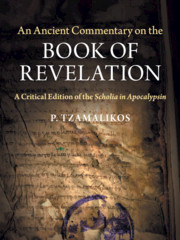

This is a new critical edition, with translation and commentary, of the Scholia in Apocalypsin, which were falsely attributed to Origen a century ago. They include extensive sections from Didymus the Blind's lost Commentary on the Apocalypse (fourth century) and therefore counter the current belief that Oecumenius' commentary (sixth century) was the most ancient. Professor Tzamalikos argues that their author was in fact Cassian the Sabaite, an erudite monk and abbot at the monastery of Sabas, the Great Laura, in Palestine. He was different from the alleged Latin author John Cassian, placed a century or so before the real Cassian. The Scholia attest to the tension between the imperial Christian orthodoxy of the sixth century and certain monastic circles, who drew freely on Hellenic ideas and on alleged 'heretics'. They show that, during that period, Hellenism was a vigorous force inspiring not only pagan intellectuals, but also influential Christian quarters.
Loading metrics...
* Views captured on Cambridge Core between #date#. This data will be updated every 24 hours.
Usage data cannot currently be displayed.
This section outlines the accessibility features of this content - including support for screen readers, full keyboard navigation and high-contrast display options. This may not be relevant for you.
Accessibility compliance for the PDF of this book is currently unknown and may be updated in the future.
