The Corporation in the Nineteenth-Century American Imagination

-
Select format
-
- Publisher:
- Edinburgh University Press
- Publication date:
- 25 April 2023
- 31 December 2022
- ISBN:
- 9781399505024
- 9781399505000
- Dimensions:
- Weight & Pages:
- Dimensions:
- Weight & Pages:
- Subjects:
- Law: General Interest, Law
You may already have access via personal or institutional login- Subjects:
- Law: General Interest, Law
Show more authors 
You may already have access via personal or institutional login
Book description
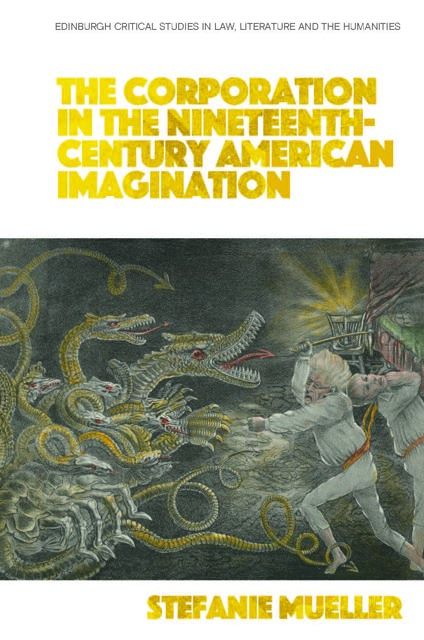
This book examines the way the corporation - a legal concept of enduring and timely importance in the Anglo-American legal tradition - was imagined in the nineteenth-century historical imagination. Stefanie Mueller traces the ways in which literary and cultural representations of the corporation in nineteenth-century America helped shift how the corporation was envisioned; from a public tool meant to serve the common good, to an instrument of private enterprise. She explores how artists and writers together with lawyers and economists represented this transformation through narrative and metaphor. Drawing on a range of legal, literary and visual texts, she shows how the corporation's public origins as well as its fundamentally collective nature continued to be relevant much longer than previous scholarship has argued.
Contents
Contents
Metrics
Full text views
Full text views helpTotal number of HTML views: 0
Total number of PDF views: 0 *
 Loading metrics...
* Views captured on Cambridge Core between #date#. This data will be updated every 24 hours.
Usage data cannot currently be displayed.
Accessibility standard: Unknown
Why this information is here
This section outlines the accessibility features of this content - including support for screen readers, full keyboard navigation and high-contrast display options. This may not be relevant for you.
Accessibility Information
Accessibility compliance for the PDF of this book is currently unknown and may be updated in the future.