Temporary Disruption
We have implemented additional assurance measures to protect our systems.
As a result, we have suspended some of our systems and services. We apologise for any temporary disruption some customers may experience.
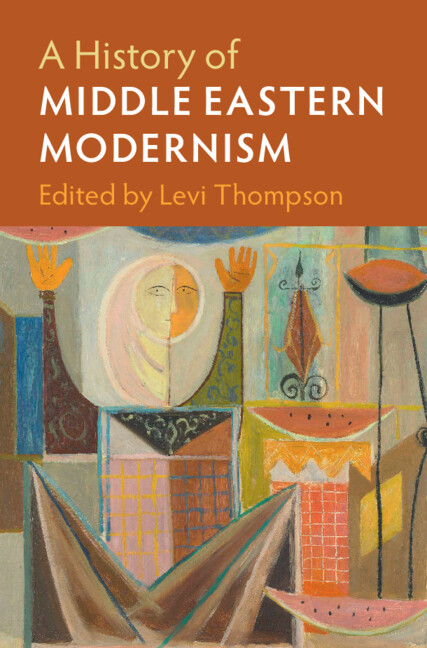
This comprehensive History examines Middle Eastern modernism through analyses of its roots and development across Turkish, Arabic, Persian, and other regional languages. An international team of contributors explains the modernist movement in the Middle East from its beginnings in the nineteenth century until today. Combining linguistic breadth and focused treatments of canonical works of Middle Eastern modernist art and literature, this History highlights remarkable connections in modernist form and content that link the Arab world to the Ottoman Empire and the Turkish Republic as well as Qajar and Pahlavi Iran, Central Asia, and even India, often to the exclusion of Western modernist norms and experiments. Working within the broader framework of global modernisms while attending to the movement's local particularities, this volume establishes Middle Eastern modernism as a vibrant field of inquiry and a cornerstone for modernist studies more generally.
Loading metrics...
* Views captured on Cambridge Core between #date#. This data will be updated every 24 hours.
Usage data cannot currently be displayed.
This section outlines the accessibility features of this content - including support for screen readers, full keyboard navigation and high-contrast display options. This may not be relevant for you.
The HTML of this book complies with version 2.2 of the Web Content Accessibility Guidelines (WCAG), offering more comprehensive accessibility measures for a broad range of users and meets the basic (A) level of WCAG compliance, addressing essential accessibility barriers.
Allows you to navigate directly to chapters, sections, or non‐text items through a linked table of contents, reducing the need for extensive scrolling.
Provides an interactive index, letting you go straight to where a term or subject appears in the text without manual searching.
You will encounter all content (including footnotes, captions, etc.) in a clear, sequential flow, making it easier to follow with assistive tools like screen readers.
You get concise descriptions (for images, charts, or media clips), ensuring you do not miss crucial information when visual or audio elements are not accessible.