To save content items to your account,
please confirm that you agree to abide by our usage policies.
If this is the first time you use this feature, you will be asked to authorise Cambridge Core to connect with your account.
Find out more about saving content to .
To save content items to your Kindle, first ensure no-reply@cambridge.org
is added to your Approved Personal Document E-mail List under your Personal Document Settings
on the Manage Your Content and Devices page of your Amazon account. Then enter the ‘name’ part
of your Kindle email address below.
Find out more about saving to your Kindle.
Note you can select to save to either the @free.kindle.com or @kindle.com variations.
‘@free.kindle.com’ emails are free but can only be saved to your device when it is connected to wi-fi.
‘@kindle.com’ emails can be delivered even when you are not connected to wi-fi, but note that service fees apply.
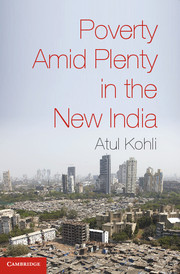
India has one of the fastest growing economies on earth. Over the past three decades, socialism has been replaced by pro-business policies as the way forward. And yet, in this 'new' India, grinding poverty is still a feature of everyday life. Some 450 million people subsist on less than $1.25 per day and nearly half of India's children are malnourished. In his latest book, Atul Kohli, a seasoned scholar of Indian politics and economics, blames this discrepancy on the narrow nature of the ruling alliance in India that, in its new-found relationship with business, has prioritized economic growth above all other social and political considerations. This thoughtful and challenging book affords an alternative vision of India's rise in the world that its democratic rulers will be forced to come to grips with in the years ahead.
The financial crises across Asia in 1997–98 ignited fierce debate about domestic economic weaknesses and flaws in the international financial system. Some analysts blamed Asian governments for inadequate prudential supervision, widespread failures of corporate governance and even 'crony capitalism'. Others assailed the inherent instability of global financial markets and what they considered to be hasty and ill-conceived liberalization taken at the behest of Western-dominated international financial institutions. In this volume a distinguished group of political scientists, economists and practitioners examines the political and economic causes and consequences of the crisis. They ask: To what extent were domestic economic factors to blame for the crises? Why were some economies more prone to crisis than others? What are the costs and benefits of international financial liberalization?
A large body of knowledge has accumulated in recent years on the cognitive processes and brain mechanisms underlying language. Much of this knowledge has come from studies of Indo-European languages, in particular English. Korean, a language of growing interest to linguists, differs significantly from most Indo-European languages in its grammar, its lexicon, and its written and spoken forms - features which have profound implications for the learning, representation and processing of language. This handbook, the third in a three-volume series on East Asian psycholinguistics, presents a state-of-the-art discussion of the psycholinguistic study of Korean. With contributions by over sixty leading scholars, it covers topics in first and second language acquisition, language processing and reading, language disorders in children and adults, and the relationships between language, brain, culture, and cognition. It will be invaluable to all scholars and students interested in the Korean language, as well as cognitive psychologists, linguists, and neuroscientists.
Few countries have experienced such sharply fluctuating fortunes as Indonesia. This book offers a balanced analysis, evaluation and explanation of Indonesia's economic performance, from 1967. Hal Hill highlights Indonesia's successes during this period - rapid industrialisation, major achievements in the food crop sector and the adoption, from the mid-1980s, of outward-looking policies. He also draws attention to the challenges facing the country, including the rocky path towards economic reform, the large external debt, regional and ethnic disparities, and the need for a transparent and predictable policy environment. In this second edition, an extended postscript takes the story through the dramatic turnaround and political and economic crises since 1997, including the downfall of Soeharto.
A History of the Korean Language is the first book on the subject ever published in English. It traces the origin, formation, and various historical stages through which the language has passed, from Old Korean through to the present day. Each chapter begins with an account of the historical and cultural background. A comprehensive list of the literature of each period is then provided and the textual record described, along with the script or scripts used to write it. Finally, each stage of the language is analyzed, offering new details supplementing what is known about its phonology, morphology, syntax, and lexicon. The extraordinary alphabetic materials of the 15th and 16th centuries are given special attention, and are used to shed light on earlier, pre-alphabetic periods.
In a sensitive and compelling account of the lives of those at the very bottom of Indian society, Oliver Mendelsohn and Marika Vicziany explore the construction of the Untouchables as a social and political category, the historical background which led to such a definition, and their position in India today. The authors argue that, despite efforts to ameliorate their condition on the part of the state, a considerable edifice of discrimination persists on the basis of a tradition of ritual subordination. Even now, therefore, it still makes sense to categorise these people as 'Untouchables'. The book promises to make a major contribution to the social and economic debates on poverty, while its wide-ranging perspectives will ensure an interdisciplinary readership from historians of South Asia, to students of politics, economics, religion and sociology.
Migration is at the heart of Asian history. For centuries migrants have tracked the routes and seas of their ancestors - merchants, pilgrims, soldiers and sailors - along the Silk Road and across the Indian Ocean and the China Sea. Over the last 150 years, however, migration within Asia and beyond has been greater than at any other time in history. Sunil S. Amrith's engaging and deeply informative book crosses a vast terrain, from the Middle East to India and China, tracing the history of modern migration. Animated by the voices of Asian migrants, it tells the stories of those forced to flee from war and revolution, and those who left their homes and their families in search of a better life. These stories of Asian diasporas can be joyful or poignant, but they all speak of an engagement with new landscapes and new peoples.
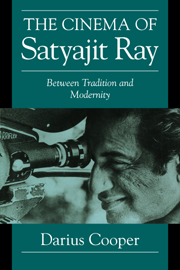
Satyajit Ray is India's greatest filmmaker and his importance in the international world of cinema has long been recognised. Darius Cooper's study of Ray is the first to examine his rich and varied work from a social and historical perspective, and to situate it within Indian aesthetics. Providing analyses of selected films, including those that comprise The Apu Trilogy, Chess Players, and Jalsaghhar, among others, Cooper outlines Western influences on Ray's work, such as the plight of women functioning within a patriarchal society, Ray's political vision of the 'doubly colonised', and his attack and critique of the Bengali/Indian middle class of today. The most comprehensive treatment of Ray's work, The Cinema of Satyajit Ray makes accessible the oeuvre of one of the most prolific and creative filmmakers of the twentieth century.
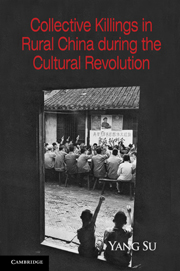
The violence of Mao's China is well known, but its extreme form is not. In 1967 and 1968, during the Cultural Revolution, collective killings were widespread in rural China in the form of public execution. Victims included women, children, and the elderly. This book is the first to systematically document and analyze these atrocities, drawing data from local archives, government documents, and interviews with survivors in two southern provinces. This book extracts from the Chinese case lessons that challenge the prevailing models of genocide and mass killings and contributes to the historiography of the Cultural Revolution, in which scholarship has mainly focused on events in urban areas.
This book deals with international labor and employment law in the East Asia Region (EA), particularly dealing with China, South Korea and Japan. It explores and explains the effects of globalization and discusses the role played by international labor law as it affects lawyers, business, labor, labor unions and human resource management, and the labor issues that can arise in dealing in EA trade and investment. The text, and the readings (from area experts), are organized and written to provide the reader with, first, a broad understanding and insight into the global dimensions of the fast-emerging area of labor and employment issues (e.g., global legal standards and their interplay with domestic and foreign laws); and second, to show how these laws and approaches play out in specific EA countries (comparing global approaches with the specific laws of each country on four common agenda items: regulatory administration, workers' rights, trade unions and dispute resolution).
Robert P. Weller's richly documented account describes the extraordinary transformations which have taken place in Chinese and Taiwanese responses to the environment across the twentieth century. Indeed, both places can be said to have 'discovered' a new concept of nature. The book focuses on nature tourism, anti-pollution movements, and policy implementation to show how the global spread of western ideas about nature has interacted with Chinese traditions. Inevitably differences of understanding across groups have caused problems in administering environmental reforms. They will have to be resolved if the dynamic transformations of the 1980s are to be maintained in the twenty-first century. In spite of a century of independent political development, a comparison between China and Taiwan reveals surprising similarities, showing how globalization and shared cultural traditions have outweighed political differences in shaping their environments. The book will appeal to a broad readership from scholars of Asia, to environmentalists, and anthropologists.
As countries in Asia try to create unified polities, many face challenges from minority groups within their own borders seeking independence. This volume brings together international experts on countries in all regions of Asia to debate how differently they have responded to this problem. Why have some Asian countries, for example, clamped down on their national minorities in favour of homogeneity, whereas others have been willing to accommodate statehood or at least some form of political autonomy? Together they suggest broad patterns and explanatory factors that are rooted in the domestic arena, including state structure and regime type, as well as historical trajectories. In particular, they find that the paths to independence, as well as the cultural elements that have been selected to define post-colonial identities, have decisively influenced state strategies.
In a penetrating anthropological study of the working poor in India, Jan Breman examines the lives of those who, pushed out of the agrarian labour market, depend on casual work. Beginning his local-level research in two villages in south Gujarat, the author discusses the mobilisation of casual labour, which is hired and fired according to the need of the moment, and transferred for the duration of the job to destinations far away from the home area. His case-study reveals that the circulation of labour is indicative of an employment pattern which dominates both the rural and urban economy of large parts of South Asia. Elaborating on the social profile of the work migrants, the author argues that their identity is shaped by both class and caste relations and, despite action by state agencies, nothing of significance has been achieved to improve their quality of life.
This is a guide to Korean language usage for students who have already acquired the basics of the language and wish to extend their knowledge and organise accumulated bits of information into a comprehensive picture. It is designed to promote the fluency and accuracy vital to effective communication, provides excellent coverage of proverbs, idioms, and sound symbolism, is tailored to the needs of the English-speaking user, and will be invaluable to anyone requiring up-to-date guidance on points of grammar and vocabulary. Unlike conventional grammars, it highlights those areas of vocabulary and grammar which cause most difficulty to English speakers. Special attention is given throughout the book to the appropriateness of different language styles in various situational contexts. Clear, readable, and easy to consult, it is essential for all those who wish to take their Korean beyond the beginner's level.
This book is a guide to Chinese usage for students who have already acquired the basics of the language and wish to extend their knowledge. Unlike conventional grammars, it addresses many aspects of Chinese language usage, such as letter writing, idioms, proverbs, and riddles. It also provides new and recent words, including internet vocabulary, which enables students to understand and properly use the most up-to-date expressions alongside everyday language. Useful sections on common social interactions are included, along with an invaluable guide to the finer nuances of body language. Clear, readable, and easy to consult, this is an essential reference for learners seeking access to one of the world's most important languages.
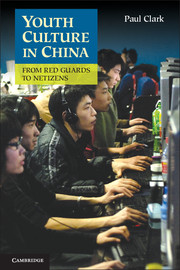
The lives and aspirations of young Chinese (those between 14 and 26 years old) have been transformed in the past five decades. By examining youth cultures around three historical points - 1968, 1988 and 2008 - this book argues that present-day youth culture in China has both international and local roots. Paul Clark describes how the Red Guards and the sent-down youth of the Cultural Revolution era carved out a space for themselves, asserting their distinctive identities, despite tight political controls. By the late 1980s, Chinese-style rock music, sports and other recreations began to influence the identities of Chinese youth, and in the twenty-first century, the Internet offers a new, broader space for expressing youthful fandom and frustrations. From the 1960s to the present, this book shows how youth culture has been reworked to serve the needs of the young Chinese.
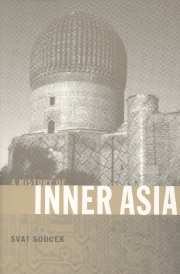
Svat Soucek's book offers a short and accessible introduction to the history of Inner Asia. The narrative, which begins with the arrival of Islam, charts the rise and fall of the different dynasties right up to the Russian conquest. Dynastic tables and maps augment and elucidate the text. The contemporary focus rests on the seven countries which make up the core of present-day Eurasia, that is Uzbekistan, Kazakhstan, Kyrgyzstan, Tajikistan, Turkmenistan, Sinkiang and Mongolia. Since the fall of the Soviet Union in 1991, renewed interest in these countries has prompted considerable political, cultural, economic and religious debate. While a divergent literature has evolved in consequence, no comprehensive survey of the region has been attempted. Soucek's history promises to fill this gap and to become an indispensable source of information for anyone studying or visiting the region.
Long considered one of the great successes of the developing world, India has more recently experienced growing challenges to political order and stability. Institutional mechanisms for the resolution of conflict have broken down, the civil and police services have become highly politicized, and the state bureaucracy appears incapable of implementing an effective plan for economic development. In this book, Atul Kohli analyzes political change in India from the late 1960s to the late 1980s. Based on research conducted at the local, state and national level, the author analyzes the changing patterns of authority in and between the centre and periphery. He combines rich empirical investigation, extensive interviews and theoretical perspectives in developing a detailed explanation of the growing crisis of governance his research reveals. The book will be of interest to both specialists in Indian politics and to students of comparative politics more generally.
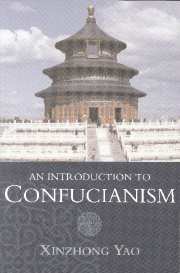
Taking into account the long history and wide range of Confucian Studies, this book introduces Confucianism - initiated in China by Confucius (551 BC–479 BC) - primarily as a philosophical and religious tradition. It pays attention to Confucianism in both the West and the East, focussing on the tradition's doctrines, schools, rituals, sacred places and terminology, but also stressing the adaptations, transformations and new thinking taking place in modern times. Xinzhong Yao presents Confucianism as a tradition with many dimensions and as an ancient tradition with contemporary appeal. This gives the reader a richer and clearer view of how Confucianism functioned in the past and of what it means in the present. A Chinese scholar based in the West, he draws together the many strands of Confucianism in a style accessible to students, teachers, and general readers interested in one of the world's major religious traditions.
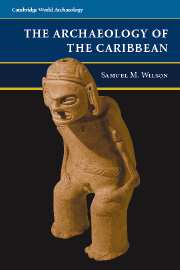
A comprehensive synthesis of Caribbean prehistory from the earliest settlement by humans more than 4000 years BC, to the time of European conquest of the islands. The Caribbean was the last large area in the Americas to be populated, and its relative isolation allowed unique cultures to develop. Samuel Wilson reviews the evidence for migration and cultural change throughout the archipelago, dealing in particular with periods of cultural interaction when groups with different cultures and histories were in contact. He also examines the evolving relationship of the Caribbean people with their environment, as they developed increasingly productive economic systems over time, as well as the emergence of increasingly complex social and political systems, particularly in the Greater Antilles in the centuries before the European conquest. Wilson also provides a review of the history of Caribbean archaeology and the individual scholars and ideas that have shaped the field.