To save content items to your account,
please confirm that you agree to abide by our usage policies.
If this is the first time you use this feature, you will be asked to authorise Cambridge Core to connect with your account.
Find out more about saving content to .
To save content items to your Kindle, first ensure no-reply@cambridge.org
is added to your Approved Personal Document E-mail List under your Personal Document Settings
on the Manage Your Content and Devices page of your Amazon account. Then enter the ‘name’ part
of your Kindle email address below.
Find out more about saving to your Kindle.
Note you can select to save to either the @free.kindle.com or @kindle.com variations.
‘@free.kindle.com’ emails are free but can only be saved to your device when it is connected to wi-fi.
‘@kindle.com’ emails can be delivered even when you are not connected to wi-fi, but note that service fees apply.
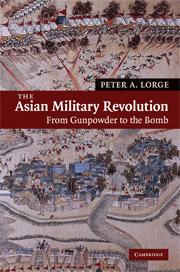
Records show that the Chinese invented gunpowder in the 800s. By the 1200s they had unleashed the first weapons of war upon their unsuspecting neighbours. This extraordinarily ambitious book traces the history of that invention and its impact on the surrounding Asian world - Korea, Japan, South East Asia and South Asia - from the ninth through the twentieth century. As the book makes clear, the spread of war and its technology had devastating consequences on the political and cultural fabric of those early societies although each reacted very differently. The book, which is packed with information about military strategy, interregional warfare and the development of armaments, also engages with the major debates and challenges traditional thinking on Europe's contribution to military technology in Asia. Articulate and comprehensive, this book will be a welcome addition to the undergraduate classroom and to all those interested in Asian studies and military history.
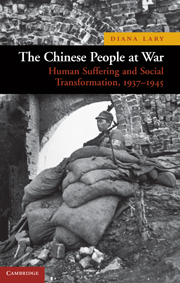
Diana Lary, one of the foremost historians of the period, tells the tragic history of China's War of Resistance and its consequences from the perspective of those who went through it. Using archival evidence only recently made available, interviews with survivors, and extracts from literature, she creates a vivid and highly disturbing picture of the havoc created by the war, the destruction of towns and villages, the displacement of peoples, and the accompanying economic and social disintegration. As the author suggests in this 2010 interpretation of modern Chinese history, far from stemming the spread of communism from the USSR, which was the Japanese pretext for invasion, the horrors of the war, and the damage it created, nurtured the Chinese Communist Party and helped it to win power in 1949.
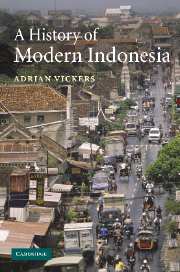
Although Indonesia has the fourth largest population in the world, its history is still relatively unfamiliar and understudied. Guided by the life and writings of the country's most famous author, Pramoedya Ananta Toer, Adrian Vickers takes the reader on a journey across the social and political landscape of twentieth-century Indonesia in this innovative and timely account. He begins by explaining the country's origins under the Dutch in the early part of that century, the subsequent anti-colonial struggle and revolution which led to independence in 1949. Thereafter the spotlight is on the 1950s, a crucial period in the formation of Indonesia as a new nation, which was followed by the Sukarno years, and the anti-communist massacres of the 1960s when General Suharto took over as president. The concluding chapters chart the fall of Suharto's New Order after thirty two years in power, and the subsequent political and religious turmoil which culminated in the Bali bombings in 2002. Drawing on insights from literature, art and anthropology, Adrian Vickers portrays a complex and resilient people borne out of a troubled past.
In a second edition of their successful Concise History of Modern India, Barbara Metcalf and Thomas Metcalf explore India's modern history afresh and update the events of the last decade. These include the takeover of Congress from the seemingly entrenched Hindu nationalist party in 2004, India's huge advances in technology and the country's new role as a major player in world affairs. From the days of the Mughals, through the British Empire, and into Independence, the country has been transformed by its institutional structures. It is these institutions which have helped bring about the social, cultural and economic changes that have taken place over the last half century and paved the way for the modern success story. Despite these advances, poverty, social inequality and religious division still fester. In response to these dilemmas, the book grapples with questions of caste and religious identity, and the nature of the Indian nation.
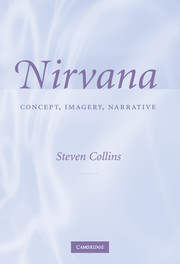
The idea of nirvana (Pali nibbāna) is alluring but elusive for non-specialists and specialists alike. Offering his own interpretation of key texts, Steven Collins explains the idea in a new, accessible way - as a concept, as an image (metaphor), and as an element in the process of narrating both linear and cyclical time. Exploring nirvana from literary and philosophical perspectives, he argues that it has a specific role: to provide 'the sense of an ending' in both the systematic and the narrative thought of the Pali imaginaire. Translations from a number of texts, including some dealing with past and future Buddhas, enable the reader to access source material directly. This book will be essential reading for students of Buddhism, but will also have much to teach anyone concerned with Asia and its religions, or indeed anyone with an interest in the ideas of eternal life or timelessness.
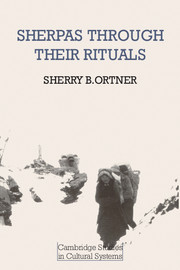
The Sherpas of the Himalayas practice Tibetan Buddhism, a variety of Mahayana Buddhism. This is a general interpretation of Sherpa culture through examining the relationship between the Sherpas' Buddhism and other aspects of their society, and a theoretical contribution to the study of ritual and religious symbolism. In analysing the symbols of Sherpa rituals, professor Ortner leads us toward the discovery of conflict, contradiction, and stress in the wider social and cultural world. Following a general ethnographic sketch, each chapter opens with a brief description of a ritual. The ritual is then dissected, and its symbolic elements are used as guides in the exploration of problematic structures, relationships, and ideas of the culture. The author uses these rituals to illuminate the interconnections between religious ideology, social structure and experience. Professor Ortner analysis of the rituals reveals both the Buddhist pull toward exaggerating the isolation of individuals, and the secular pull that attempts to overcome isolation and to reproduce the conditions for social community.
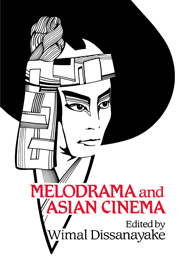
Cinema is a dominant force in the lives of many people living in Asia. A concept central to much of Asian film production is melodrama. This path-breaking study examines the importance of melodrama in the film traditions of Japan, India, China, Indonesia, the Philippines and Australia. Exploring the various ways that melodrama operates with theoretical sophistication, the various essays contained in this volume shed light on the different traditions of Asian cinema, as well as on the wider cultural discourse in which they participate.
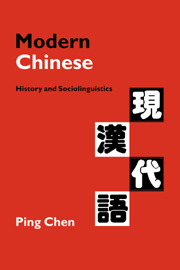
The Chinese language, spoken by over one billion people, has undergone drastic changes over the past century in a way unparalleled at any time previously. This book presents a comprehensive account of the development of Modern Chinese from the late nineteenth century up to the 1990s, concentrating on three major aspects: Modern Spoken Chinese, Modern Written Chinese, and the Modern Chinese writing system. It describes and analyses in detail, from historical and sociolinguistic perspectives, the establishment and promotion of Modern Spoken Chinese and Modern Written Chinese and the reform of the Chinese script. Through an integrated discussion of these three areas of the language it highlights the close interrelationships between them and reveals the interaction of linguistic, historical and social factors in the development of Modern Chinese.
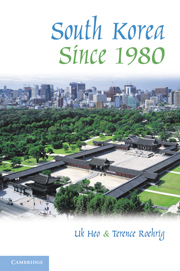
This book examines the changes in politics, economics, society, and foreign policy in South Korea since 1980. Starting with a brief description of its history leading up to 1980, this book deals with South Korea's transition to democracy, the stunning economic development achieved since the 1960s, the 1997 financial crisis, and the economic reforms that followed and concludes with the North Korean nuclear crisis and foreign relations with regional powers. The theoretical framework of this book addresses how democratization affected all of these dimensions of South Korea. For instance, democratization allowed for the more frequent alternation of political elites from conservative to liberal and back to conservative. These elites initiated different policies for dealing with North Korea and held different views on South Korea's role in its alliance with the United States. Consequently, ideological divides in South Korean politics became more stark and the political process more combative.
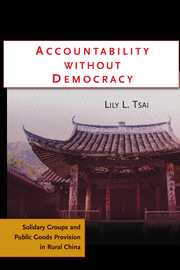
Examines the fundamental issue of how citizens get government officials to provide them with the roads, schools, and other public services they need by studying communities in rural China. In authoritarian and transitional systems, formal institutions for holding government officials accountable are often weak. The state often lacks sufficient resources to monitor its officials closely, and citizens are limited in their power to elect officials they believe will perform well and to remove them when they do not. The answer, Lily L. Tsai found, lies in a community's social institutions. Even when formal democratic and bureaucratic institutions of accountability are weak, government officials can still be subject to informal rules and norms created by community solidary groups that have earned high moral standing in the community.
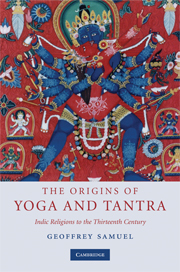
Yoga, tantra and other forms of Asian meditation are practised in modernized forms throughout the world today, but most introductions to Hinduism or Buddhism tell only part of the story of how they developed. This book is an interpretation of the history of Indic religions up to around 1200 CE, with particular focus on the development of yogic and tantric traditions. It assesses how much we really know about this period, and asks what sense we can make of the evolution of yogic and tantric practices, which were to become such central and important features of the Indic religious scene. Its originality lies in seeking to understand these traditions in terms of the total social and religious context of South Asian society during this period, including the religious practices of the general population with their close engagement with family, gender, economic life and other pragmatic concerns.
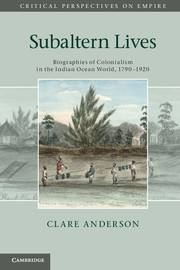
Subaltern Lives uses biographical fragments of the lives of convicts, captives, sailors, slaves, indentured labourers and indigenous peoples to build a fascinating new picture of colonial life in the nineteenth-century Indian Ocean. Moving between India, Africa, Mauritius, Burma, Singapore, Ceylon, the Andaman Islands and the Australian colonies, Clare Anderson offers fresh readings of the nature and significance of 'networked' Empire. She reveals the importance of penal transportation for colonial expansion and sheds new light on convict experiences of penal settlements and colonies, as well as the relationship between convictism, punishment and colonial labour regimes. The book also explores the nature of colonial society during this period and embeds subaltern biographies into key events like the abolition of slavery, the Anglo-Sikh Wars and the Indian Revolt of 1857. This is an important new perspective on British colonialism which also opens up new possibilities for the writing of history itself.
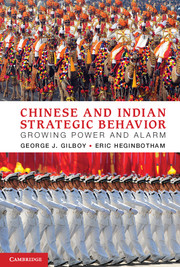
This book offers an empirical comparison of Chinese and Indian international strategic behavior. It is the first study of its kind, filling an important gap in the literature on rising Indian and Chinese power and American interests in Asia. The book creates a framework for the systematic and objective assessment of Chinese and Indian strategic behavior in four areas: (1) strategic culture; (2) foreign policy and use of force; (3) military modernization (including defense spending, military doctrine and force modernization); and (4) economic strategies (including international trade and energy competition). The utility of democratic peace theory in predicting Chinese and Indian behavior is also examined. The findings challenge many assumptions underpinning Western expectations of China and India.
Why do some middle-income countries diversify their economies but fail to upgrade – to produce world-class products based on local inputs and technological capacities? Why have the 'little tigers' of Southeast Asia, such as Thailand, continued to lag behind the Newly Industrializing Countries of East Asia? Richard Doner goes beyond 'political will' by emphasizing institutional capacities and political pressures: development challenges vary; upgrading poses tough challenges that require robust institutional capacities. Such strengths are political in origin. They reflect pressures, such as security threats and resource constraints, which motivate political leaders to focus on efficiency more than clientelist payoffs. Such pressures help to explain the political institutions – 'veto players' – through which leaders operate. Doner assesses this argument by analyzing Thai development historically, in three sectors (sugar, textiles, and autos) and in comparison with both weaker and stronger competitors (Philippines, Indonesia, Taiwan, Brazil, and South Korea).
Burma has often been portrayed as a timeless place, a country of egalitarian Buddhist villages, ruled successively by autocratic kings, British colonialists and, most recently, a military dictatorship. The Making of Modern Burma argues instead that many aspects of Burmese society today, from the borders of the state to the social structure of the countryside to the very notion of a Burmese identity, are largely the creations of the nineteenth century - a period of great change - away from the Ava-based polity of early modern times, and towards the 'British Burma' of the 1900s. The book provides a sophisticated and much-needed account of the period, and as such will be an important resource for policy makers and students as a basis for understanding contemporary politics and the challenges of the modern state. It will also be read by historians interested in the British colonial expansion of the nineteenth century.
Over the past two centuries, Japan has undergone Westernization not only in the external realm of material culture and sociopolitical organization, but also in the inner realm of thought and morals. This comprehensive intellectual history, consisting of chapters from volumes five and six of the Cambridge History of Japan, plus a new introduction and chapter on postwar intellectual trends, describes the forces that made Japanese thinkers both receptive and hostile to Western ideas and values from the 1770s to the 1990s. Important themes in the book are the potential of Western learning to discredit as well as bolster the existing order, and the perennial tension between indigenous and alien, traditional and modern, and rulers and ruled. More specific topics include: Japan's turn to the West; the Meiji Enlightenment and enthusiasm for Westernization; the mid-Meiji conservative reaction; socialism and nationalism in the prewar years; the shock of defeat; and the growth of democracy since 1945.