To save content items to your account,
please confirm that you agree to abide by our usage policies.
If this is the first time you use this feature, you will be asked to authorise Cambridge Core to connect with your account.
Find out more about saving content to .
To save content items to your Kindle, first ensure no-reply@cambridge.org
is added to your Approved Personal Document E-mail List under your Personal Document Settings
on the Manage Your Content and Devices page of your Amazon account. Then enter the ‘name’ part
of your Kindle email address below.
Find out more about saving to your Kindle.
Note you can select to save to either the @free.kindle.com or @kindle.com variations.
‘@free.kindle.com’ emails are free but can only be saved to your device when it is connected to wi-fi.
‘@kindle.com’ emails can be delivered even when you are not connected to wi-fi, but note that service fees apply.
Confucius lived during one of the most politically and socially turbulent periods in Chinese history, a time known as the Spring and Autumn period (722–481 B.C.). During this period, China, formerly united under the Zhou dynasty, was divided into small feudal states, which engaged in repeated cycles of civil wars and political turmoil. Mencius (3B:9) describes this period in this way: “After the death of Yao and Shun, the way of the Sages declined, and tyrants arose one after another.… When the world declined and the Way fell into obscurity, heresies and violence again arose. There were instances of regicides and parricide. Confucius was apprehensive and composed the Spring and Autumn Annals.”
The people of Confucius's time desired to build a peaceful and harmonious community but struggled to restore social order and maintain political stability. Unlike medieval Europeans, however, their struggle did not center on how to “limit the power of established political authority, or secure a protected realm for individual conduct free from arbitrary coercion” (O’Dwyer 2003, 43). For Confucius and his followers, the goal was a government that promoted and secured a peaceful life for the people. Because limiting the power of established political authority was not necessarily the end sought, Confucius and his followers did not advocate the rule of law as an effective solution to the problem of incessant political strife and social disorder facing the warring states. Their main concern was how to establish and maintain a meritocratic government capable of creating datong shehui, or a community of grand harmony (Yao 2000, 275).
Today, historically Confucian East Asia represents a region of democratic underdevelopment. Are Confucian cultural legacies the force preventing the powerful third wave of global democratization from sweeping most countries in Confucian East Asia? Have these legacies also prevented new and old democracies in the region from becoming well-functioning liberal democracies, as proponents of the Asian Values Thesis have argued? The research reported on in this book sought to explore these and other related questions concerning the prevalence and dissemination of Confucian legacies, as well as their connection to democratic and authoritarian politics from the perspective of the mass citizenry.
To this end, I began with a broad conceptualization of Confucianism and democracy, describing each as a multidimensional phenomenon. Defining Confucianism as a system of political and social ethics, I considered the proper modes of both social living and political governance that Confucianism advocates for the achievement of datong shehui, a community of grand harmony. Furthermore, I regarded Confucianism as a phenomenon covering the region of East Asia identified as historically Confucian East Asia and rejected the equation of Confucian values with Asian values, which the Asian Values Thesis has often implied.
From the late nineteenth century onwards, a new range of European and American technologies, powered by electricity and gas, and intended for use on the body and in the home—especially appliances for the domestic kitchen—began to appear in Manila. Electro-mechanical vibratory devices and steam-powered massagers for the body; hair waving and curling machines; and a multitude of technologies for the domestic kitchen, from stoves and water heaters to a gamut of electric and gas gadgetry that included percolators, boilers, electric waffle-irons, grills, and refrigerators (or ice-boxes, their precursor) were targeted largely at the affluent female consumer with promises to improve her physical appearance and health or make her daily life more comfortable. Their introduction and impact in the Philippines can tell a number of compelling stories—the desirability of European or American bourgeois culture, how the trappings of Western lifestyles were imagined, the extent to which the use and purchase of certain technologies aimed at replicating or emulating those lifestyles, or, as this paper explores, the gendered technological infrastructure of the ‘good life’. In this story, modern technologies designed for domestic settings and for use on women's bodies made manifest a myriad of desires and aspirations—prestige, status, cosmopolitanism, modernity, and urbanity. They also articulated a particular sensuousness and pleasure. Electro-vibratory devices, hair styling machines, and kitchen appliances could be experienced by all the senses and thus exerted a visceral appeal; their use proclaimed an enthusiasm for modern technology which, for the first time, emphasized the relevance of modern technology to women's everyday lives by the transformative effects they promised.
Compared with other public media, the colonial state showed a relative lack of interest in radio broadcasting, which developed in Vietnam in the 1930s under the aegis of two organizations based in Hanoi and Saigon, the Radio-Club de l'Indochine du Nord and Radio Saigon. These two groups were largely responsible for the new technology's expansion and for determining the content of broadcasting. The groups actively consulted the growing radio public, and that vocal audience played a role in determining not just what was heard but also in the social life of radio in late-colonial Vietnam. The content of radio was limited to a non-political domain and this fact, along with the particular position that many radios took in the social geography of towns and cities, lent itself to the easy entry of the radio into day-to-day life. Indeed, the early history of radio in Vietnam is remarkable for how rapidly it became commonplace, even banal.
This article examines sixteenth- and seventeenth-century Ottoman sources for the Funj sultanate that ruled the Gezira and Nile Valley regions of the modern Sudan. It also aims to elucidate the relationship between the Ottoman empire and the Funj sultanate. In the first part of the article, the sixteenth-century Ottoman sources, largely documents from the Ottoman archives in Istanbul, are translated and analysed. In the second part, two seventeenth-century Ottoman accounts of the Funj are examined: that by the famous Ottoman traveller Evliya Çelebi, and that by the geographer Abu Bekr el-Dimaşki. The text of the relevant passage from Dimaşki's work is provided alongside a translation. The article also examines evidence for religious links between the Ottomans and the Funj.
This paper takes as its subject the 1905 opening and 1990 closure of the Northern Railway Line, the major Sri Lankan railway which ran the length of the island from south to north. It argues that it can been seen as a social compact in which the life of the individual, the community, and the state became integrally intertwined. It focuses on two dimensions of what the Northern Railway Line enabled in Sri Lanka (formerly Ceylon): first, a physical and symbolic representation of stateness, and, secondly, the pursuit of mundane everyday life. These are embedded within Sri Lanka's landscapes and histories of colonial and post-colonial rule, and the ethnic conflict, riots, and war which inextricably shaped the railway's journeys and passengers. Railways are more often thought of as large-scale, high-tech artefacts rather than the smaller everyday technologies that are the themes of other papers in this special issue. However, this paper highlights the ways in which railways also make particular kinds of everyday life possible and how, in being woven into routine daily and weekly journeys, the Northern Railway Line came to intertwine the changing circumstances and histories of its mainly Tamil passengers within an increasingly ethnicized national landscape. In the aftermath of its closure, the railway has now come to symbolize a desire for a return to the normalcy of the past, an aspiration to an everyday experience that younger generations have never had, and which has, in consequence, become a potent force.
. . . the Northern Railway Line to be opened tomorrow would be a great boon to the Jaffnese in and out of Jaffna. . . it has become possible to travel to Jaffna in a single day. . . At last the railway which was characterized as a ‘tantalising vision’ by a previous Governor and ‘a railway to the moon’, by a quondam Colonial Secretary, has become a fait accompli.1
This line has been completely destroyed between Vavuniya and Kankesanthurai (KKS) a track length of 160km. . . The Northern Railway Line is the main line connecting Colombo with Jaffna. . . the third largest town in Sri Lanka prior to the conflict and the Northern Railway Line was in high demand from both passengers and freight. There is a great sentiment amongst the people of the north for restoration.2
Over the last thirty years, two social developments have occurred that have led to a need for change in language policy in Japan. One is the increase in the number of migrants needing opportunities to learn Japanese as a second language, the other is the influence of electronic technologies on the way Japanese is written. This book looks at the impact of these developments on linguistic behaviour and language management and policy, and at the role of language ideology in the way they have been addressed. Immigration-induced demographic changes confront long cherished notions of national monolingualism and technological advances in electronic text production have led to textual practices with ramifications for script use and for literacy in general. The book will be welcomed by researchers and professionals in language policy and management and by those working in Japanese Studies.
Sir Reginald Fleming Johnston (1874–1938) was a colonial administrator and scholar with a lifelong fascination with China who was appointed tutor to the young Puyi (1906–1967), who became emperor at the age of two. Johnston was highly favoured by the emperor, receiving several imperial titles and residing in the Forbidden City. His account of his time as Puyi's tutor, Twilight in the Forbidden City, also reissued in this series, was dramatised in the film The Last Emperor. Previously, Johnston had served in a variety of colonial service positions, including three years as commissioner of the British-held territory of Weihaiwai. This book, first published in 1910, is Johnston's examination of Weihaiwei, which he considered to be a microcosm of Chinese life. Writing with obvious affection, Johnston outlines the history, culture, festivals and local folklore of Weihaiwei and explores what the future could hold for the city.
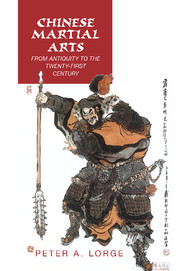
In the global world of the twenty-first century, martial arts are practised for self-defense and sporting purposes only. However, for thousands of years, they were a central feature of military practice in China and essential for the smooth functioning of society. This book, which opens with an intriguing account of the very first female martial artist, charts the history of combat and fighting techniques in China from the Bronze Age to the present. This broad panorama affords fascinating glimpses into the transformation of martial skills, techniques and weaponry against the background of Chinese history, the rise and fall of empires, their governments and their armies. Quotations from literature and poetry, and the stories of individual warriors, infuse the narrative, offering personal reflections on prowess in the battlefield and techniques of engagement. This is an engaging and readable introduction to the authentic history of Chinese martial arts.
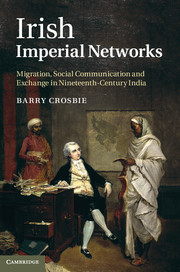
This is an innovative study of the role of Ireland and the Irish in the British Empire which examines the intellectual, cultural and political interconnections between nineteenth-century British imperial, Irish and Indian history. Barry Crosbie argues that Ireland was a crucial sub-imperial centre for the British Empire in South Asia that provided a significant amount of the manpower, intellectual and financial capital that fuelled Britain's drive into Asia from the 1750s onwards. He shows the important role that Ireland played as a centre for recruitment for the armed forces, the medical and civil services and the many missionary and scientific bodies established in South Asia during the colonial period. In doing so, the book also reveals the important part that the Empire played in shaping Ireland's domestic institutions, family life and identity in equally significant ways.
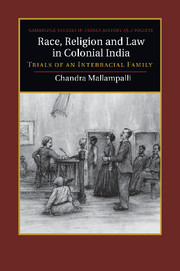
How did British rule in India transform persons from lower social classes? Could Indians from such classes rise in the world by marrying Europeans and embracing their religion and customs? This book explores such questions by examining the intriguing story of an interracial family who lived in southern India in the mid-nineteenth century. The family, which consisted of two untouchable brothers, both of whom married Eurasian women, became wealthy as distillers in the local community. A family dispute resulted in a landmark court case, Abraham v. Abraham. Chandra Mallampalli uses this case to examine the lives of those involved, and shows that far from being products of a 'civilizing mission' who embraced the ways of Englishmen, the Abrahams were ultimately - when faced with the strictures of the colonial legal system - obliged to contend with hierarchy and racial difference.
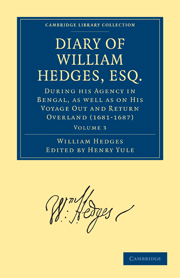
The publications of the Hakluyt Society (founded in 1846) made available edited (and sometimes translated) early accounts of exploration. The first series, which ran from 1847 to 1899, consists of 100 books containing published or previously unpublished works by authors from Christopher Columbus to Sir Francis Drake, and covering voyages to the New World, to China and Japan, to Russia and to Africa and India. Three volumes, published in 1887, are devoted to the diary of William Hedges (1632–1701) who in 1681 became the first Agent of the East India Company at its new base in Bengal. The first volume contains a transcription of the diary itself; Volume 2 contains a collection of documents relevant to Hedges' time in India; and Volume 3 is a documentary history of Thomas Pitt, grandfather of Pitt the Elder and Governor of Fort St George, who appears frequently in Hedges' diary.
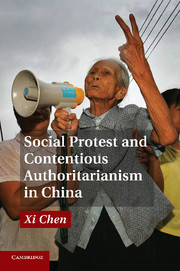
Xi Chen explores the question of why there has been a dramatic rise in and routinization of social protests in China since the early 1990s. Drawing on case studies, in-depth interviews and a unique data set of about 1,000 government records of collective petitions, this book examines how the political structure in Reform China has encouraged Chinese farmers, workers, pensioners, disabled people and demobilized soldiers to pursue their interests and claim their rights by staging collective protests. Chen suggests that routinized contentious bargaining between the government and ordinary people has remedied the weaknesses of the Chinese political system and contributed to the regime's resilience. Social Protest and Contentious Authoritarianism in China challenges the conventional wisdom that authoritarian regimes always repress popular collective protest and that popular collective action tends to destabilize authoritarian regimes.
Even two decades ago, few people expected popular collective action to become common or even “normal” in China. A variety of social groups, including pensioners, laid-off workers, peasants, urban homeowners, demobilized army officers, and people with disabilities, have mounted collective protests to the government. Indeed, when such groups have strong claims to make to the government, they can seldom find a better way than through collective petitioning. From the early 1990s to present, such activities were not just common; many of them were actually a central part of protracted struggles with the government. Through forceful and often persistent collective action, many “disadvantaged” social groups have exerted considerable influence on local policies.
Contentious authoritarianism, wherein a strong authoritarian regime accommodates widespread and routinized collective protests, is a very rare phenomenon. Even in the long history of China, which witnessed numerous rebellions and occasional waves of protests and social movements, it is hard to find a relatively long period when collective protests were so common and routine. To be sure, protests movements have been substantially institutionalized and normalized in some liberal democracies, which are called “social movement societies.” However, authoritarian regimes in general are still quite hostile to popular collective action, and the opening of political opportunity for mass mobilization in such societies tends to be very brief.
On the early morning of July 8, 2002, more than one hundred pensioners quietly gathered around the municipal government compound in City Y, Hunan Province. They laid wood planks and bricks at the entrance, and then several of them sat down; most others remained standing near the area. Although they did not shout anything, they displayed two huge banners of slogans, one of which requested, “Implement the central and provincial policy, and distribute the subsidy of 51 RMB.” They were pensioners from a bankrupt state-owned textile mill who suffered pension arrears, which was a common problem not only in Hunan Province but also in most other provinces in China. Not being particularly noisy, they nonetheless severely disrupted the operation of the government. Because they blocked the main entrance, no vehicle could enter or exit the government compound. Although some officials tried to persuade them to stop the blockade, no security guard or police officer was called to disperse them. The entrance remained essentially closed for five to six hours. Only after a “dialogue” between protest organizers and the municipal governmental officials did those gathered around the compound gate begin to disperse.
The protest in City Y is not an exceptional event. At the local government level, China has experienced a notable increase in social protests since the early 1990s. In Hunan Province in 2001, for instance, 9,213 collective petitioning events, defined as petitions delivered by five or more participants, took place in county-level governments or above. There were twenty-four participants on average in each event. In a number of such collective petition events, petitioners employed a variety of “troublemaking” tactics, such as demonstrations, sit-downs, and highway blockades.