To save content items to your account,
please confirm that you agree to abide by our usage policies.
If this is the first time you use this feature, you will be asked to authorise Cambridge Core to connect with your account.
Find out more about saving content to .
To save content items to your Kindle, first ensure no-reply@cambridge.org
is added to your Approved Personal Document E-mail List under your Personal Document Settings
on the Manage Your Content and Devices page of your Amazon account. Then enter the ‘name’ part
of your Kindle email address below.
Find out more about saving to your Kindle.
Note you can select to save to either the @free.kindle.com or @kindle.com variations.
‘@free.kindle.com’ emails are free but can only be saved to your device when it is connected to wi-fi.
‘@kindle.com’ emails can be delivered even when you are not connected to wi-fi, but note that service fees apply.
In this paper, the identification of a time domain model of a helicopter main rotor lead-lag damper is discussed. Previous studies have shown that lead-lag dampers have a significant contribution to the overall aircraft dynamics, therefore an accurate damper model is essential to predict complex phenomena such as instabilities, limit cycles, etc. Due to the inherently nonlinear dynamics and the complex internal architecture of these components, the model identification can be a challenging task. In this paper, a hybrid physical/machine-learning-based approach has been used to identify a damper model based on experimental test data. The model, called grey box, consists of a combination of a white box, i.e. a physical model described by differential equations, and a black box, i.e. regression numerical model. The white box approximates the core physical behaviour of the damper while the black box improves the overall accuracy by capturing the complex dynamic not included in the white box. The paper shows that, at room temperature, the grey box is able to predict the damper force when either a multi-frequency harmonic or a random input displacement is imposed. The model is validated up to 20Hz and for the entire damper dynamic stroke.
We present a high-energy, hundred-picosecond (ps) pulsed mid-ultraviolet solid-state laser at 266 nm by a direct second harmonic generation (SHG) in a barium borate (BaB2O4, BBO) nonlinear crystal. The green pump source is a 710 mJ, 330 ps pulsed laser at a wavelength of 532 nm with a repetition rate of 1 Hz. Under a green pump energy of 710 mJ, a maximum output energy of 253.3 mJ at 266 nm is achieved with 250 ps pulse duration resulting in a peak power of more than 1 GW, corresponding to an SHG conversion efficiency of 35.7% from 532 to 266 nm. The experimental data were well consistent with the theoretical prediction. To the best of our knowledge, this laser exhibits both the highest output energy and highest peak power ever achieved in a hundred-ps/ps regime at 266 nm for BBO-SHG.
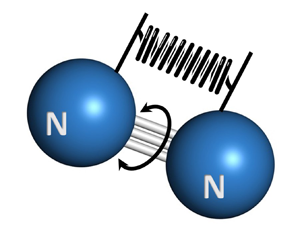
In the classical irreversible thermodynamics (CIT) framework, the Navier–Stokes–Fourier constitutive equations are obtained so as to satisfy the entropy inequality, by and large assuming that the entropy flux is equal to the heat flux over the temperature. This article is focused on the derivation of second-order constitutive equations for polyatomic gases; it takes the basis of CIT, but most importantly, allows up to quadratic nonlinearities in the entropy flux. Mathematical similarities between the proposed model and the classic Stokes–Laplace equations are exploited so as to construct analytic/semi-analytic solutions for the slow rarefied gas flow over different shapes. A set of second-order boundary conditions are formulated such that the model's prediction for the drag force is in excellent agreement with the experimental data over the whole range of Knudsen numbers. We have also computed the normal shock structure in nitrogen for Mach ${Ma} \lesssim 4$. A very good agreement was observed with the kinetic theory, as well as with the experimental data.
In this paper, a mode-matching procedure is used to prove for the first time the dispersionless behavior of glide symmetry (GS) in corrugated metasurface waveguides. Depending on their field symmetry, the Floquet harmonics have a different impact onto the frequency dispersion, which is reduced with GS when the gap between the surfaces is small. Indeed, the glide-symmetric waveguide is shown to have the same effective propagation features as a scaled mirror-symmetric waveguide with half the period and a doubled gap. We propose closed-form formulas for the effective refractive index of the glide-symmetric waveguide in the first Brillouin zone, having a small groove compared to the period. The closed-form expressions analytically prove the dispersionless behavior of GS.
This study presents a new wearable insole pressure sensor (IPS), composed of fabric coated in a carbon nanotube-based composite thin film, and validates its use for quantifying ground reaction forces (GRFs) during human walking. Healthy young adults (n = 7) walked on a treadmill at three different speeds while data were recorded simultaneously from the IPS and a force plate (FP). The IPS was compared against the FP by evaluating differences between the two instruments under two different assessments: (1) comparing the two peak forces at weight acceptance and push-off (2PK) and (2) comparing the absolute maximum (MAX) of each gait cycle. Agreement between the two systems was evaluated using the Bland–Altman method. For the 2PK assessment, the group mean of differences (MoD) was −1.3 ± 4.3% body weight (BW) and the distance between the MoD and the limits of agreement (2S) was 25.4 ± 11.1% BW. For the MAX assessment, the average MoD across subjects was 1.9 ± 3.0% BW, and 2S was 15.8 ± 9.3% BW. The results of this study show that this sensor technology can be used to obtain accurate measurements of peak walking forces with a basic calibration and consequently open new opportunities to monitor GRF outside of the laboratory.
The chapter describes results of measurements during several ship trials, in which instrumented vessels were used to interact with ice. The main focus is the measurement of local ice pressures by strain-gauging of the ship hull. The results include ramming of ice features. A variety of results are analysed, including those from the Kigoriak, Polar Sea, Louis S. St.-Laurent, Oden, and Terry Fox. Analyses of high-pressure zones are presented and a novel method (the alpha-method) is presented for local design of vessels and structures.
The chapter commences with a description of various observations of time-dependent fractures in ice. In the medium scale tests, slow loading resulted in very large flaws, whereas fast loading resulted in many small fractures and spalls in the vicinity of the load application. Then, a summary of fracture toughness measurements on ice are summarized. The question of stress singularity at crack tips is raised, and to deal with this, Barenblatt’s analysis is introduced, based on linear elasticity. Schapery’s linear viscoelastic solution for this method is described, using the elastic-viscoelastic correspondence principle. The J integral forms the basis of the application to fracture, using the correspondence principle noted. A set of experiments on ice samples, beams with 4-point loading, was conducted. Tests with a range of loading rates, as well as constant-load tests, were conducted. Comparison of the results with theory was made. The results of Liu and Miller using the compact tension set-up were also considered. Good agreement with theory was found in all cases. Nonlinear viscoelastic theory of Schapery is also outlined.
The analysis of ice response to stress using finite elements is described, using multiaxial constitutive relationships, including damage, in a viscoelastic framework. The U-shaped relationship of compliance with pressure is part of this formulation. The results show that the layer of damaged ice adjacent to the indentor arises naturally through the formulation, giving rise to a peak load and subsequent decline. This shows that there can be “layer failure” in addition to failure due to fractures and spalling. Tests on extrusion of crushed ice are described together with a formulation of constitutive relationships based on special triaxial tests of crushed ice. The ice temperature measured during field indentation tests showed a drop in temperature during the upswings in load. This was attributed to localized pressure melting. Small scale indentor tests are described, which show clearly the difference between layer failure and spalling, as found using high-speed video and pressure-sensitive film. The question of scaling, as used in ice tanks, is addressed. Flexural failure can be scaled to some extent; scaling of high-pressure zones lies in the mechanics as developed in the book.
Viscoelastic theory is introduced, using ice as the material under consideration. Linear theory is first introduced, based on elasticity of the springs and on linear viscosity of the dashpots. The nonlinearity of the dashpots in modelling ice deformation is then introduced. The “crushed layer” and analysis by Kheisin and co-workers is outlined, based on linearly viscous modelling. Kelvin and Burgers models are introduced. Microstructural change is modelled using damage mechanics and state variables for material points. Stress and strain re-distribution arises from this aspect, as well as from nonlinearity with stress. Schaperys modified superposition principle is introduced.
Recent observations are summarized, in which it has been found that in compressive ice failure, zones of high-pressure form with pressures locally as high as 70 MPa. Various aspects of ice behaviour are summarized: creep, fracture, recrystallization, and the development of microstructurally modified layers of ice. Pressure melting is described, whereby the melting temperature decreases with accompanying hydrostatic pressure. The importance of fracture and spalling in the development of high-pressure zones is emphasized. The use of mechanics in analysis of ice failure is discussed.
Characterizing exact energy density distributions for laser-accelerated ion bunches in a medium is challenging due to very high beam intensities and the electro-magnetic pulse emitted in the laser–plasma interaction. Ion-bunch energy acoustic tracing allows for reconstructing the spatial energy density from the ionoacoustic wave generated upon impact in water. We have extended this approach to tracing ionoacoustic modulations of broad energy distributions by introducing thin foils in the water reservoir to shape the acoustic waves at distinct points along the depth–dose curve. Here, we present first simulation studies of this new detector and reconstruction approach, which provides an online read-out of the deposited energy with depth within the centimeter range behind the ion source of state-of-the-art laser–plasma-based accelerators.
This article proposes, describes, and tests a swing-assist walking controller for a stance-controlled, swing-assisted knee prosthesis that aims to combine benefits of passive swing mechanics (e.g., quiet operation, biomimetic function, and low power requirements) with benefits of powered swing assistance (e.g., increased robustness of swing-phase motion and specifically increased toe clearance). A three-participant, multislope, multispeed treadmill walking study was performed using the swing-assist prosthesis and controller, as well as using the participants’ prescribed microprocessor knee devices. The swing-assist device and approach were found to improve user minimum foot clearance during walking at slopes and speeds, and also to improve symmetry of knee motion. Hip power inputs from stance knee release to heel strike indicated that, on average, less hip power was required when using the swing-assist prosthesis, indicating that the observed benefits were likely the result of the knee device and its control methodology, rather than a result of increased hip joint effort.
Shoulder exoskeletons (SEs) can assist the shoulder joint of workers during overhead work and are usually passive for good portability. However, current passive SEs face the challenge that their torque generators are often attached to the human arm, which adds a significant amount of weight to the user’s arms, resulting in additional energy consumption of the user. In this paper, we present a novel passive SE whose torque generator is attached to the user’s back and assists the shoulder joint through Bowden cables. Our approach greatly reduces the weight on the user’s arms and can accommodate complex shoulder joint movements with simple and lightweight mechanical structure based on Bowden cables. In addition, to match the nonlinear torque requirements of the shoulder joint, a unique spring-cam mechanism is proposed as the torque generator. To verify the effectiveness of the device, we conducted a usability test based on muscle activations of 10 healthy subjects. When assisting overhead work, the SE significantly reduced the mean and maximum electromyography signals of the shoulder-related muscles by up to 25%. The proposed SE contributes to further research on passive SE design to improve usability, especially in terms of reducing weight on human arms.
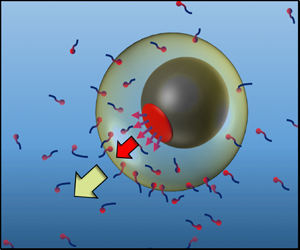
A colloidal motor driven by surface tension forces is theoretically designed by encapsulating an active Janus particle in a liquid drop which is immiscible in the suspending medium. The Janus particle produces an asymmetric flux of a solute species which induces surface tension gradients along the liquid–liquid interface between the drop and the surrounding fluid. The resulting Marangoni forces at the interface propel the compound drop/Janus particle system. The propulsion speeds of the motor are evaluated for a range of relative sizes and positions of the drop and the particle and across a range of transport properties of the drop and the suspending medium. It is demonstrated that the proposed design can produce higher propulsion velocities than the traditional Janus-particle-based colloidal motors propelled by neutral diffusiophoresis.