To save content items to your account,
please confirm that you agree to abide by our usage policies.
If this is the first time you use this feature, you will be asked to authorise Cambridge Core to connect with your account.
Find out more about saving content to .
To save content items to your Kindle, first ensure no-reply@cambridge.org
is added to your Approved Personal Document E-mail List under your Personal Document Settings
on the Manage Your Content and Devices page of your Amazon account. Then enter the ‘name’ part
of your Kindle email address below.
Find out more about saving to your Kindle.
Note you can select to save to either the @free.kindle.com or @kindle.com variations.
‘@free.kindle.com’ emails are free but can only be saved to your device when it is connected to wi-fi.
‘@kindle.com’ emails can be delivered even when you are not connected to wi-fi, but note that service fees apply.
This article investigates the personal history of Luo Longji, a distinguished Chinese liberal in the twentieth century. A controversial figure, Luo has two contradictory images in history: a democratic warrior and an enemy of the people. The two contrasting images, this article argues, reveal a fundamental dilemma of twentieth-century Chinese liberalism, which tries to reconcile the tension between the protection of individual freedom and a quest for a strong nation-state based on popular sovereignty. Defining himself as a disciple of Harold Laski, Luo reinterpreted the latter’s political ideas in a new historical context. On the one hand, Luo applauded individual disobedience of the despotic state and protested Chiang Kai-shek’s autocracy in favour of human rights and freedom. On the other, Luo’s nationalist fervour deeply shaped his liberal programme, hoping for a democratic nation-state as the guardian of people’s rights and freedom. This national liberalism led him to cast aside Laski’s anti-statist pluralism and instead exalt state sovereignty to represent the Chinese people’s general will. As a result, Luo was made an enemy in the 1950s by the democratic and constitutional polity he actively helped to build. Chinese liberalism was thus defeated by its own logic in Mao’s China.
There has been limited research on African policy instruments’ historical and institutional nature in health policy literature. However, in the field of health systems research, there are many examples that show the permanent use of financing instruments inspired by liberal (pro-market) ideas such as user fees, performance bonuses, or private practice of medicine in Africa. Through an analysis of archives (1840–1960), this article shows the presence of these instruments in the health system during the French colonial period in Senegal. Thus, this study shows that these financing policy instruments’ institutional presence and longevity are part of a liberal approach that predates international organizations’ contemporary (and liberal) promotion. This study uses a historical and institutionalist approach to understand the context, actors, and underlying factors that allowed for this historical continuity, resulting in the permanence of these instruments.
This article investigates marriage as a site for the historical study of time. Focusing on Hindu marriage in South Asia between the seventeenth and nineteenth centuries, the article studies (a) how the moment of a marriage is made and documented through what the article calls ‘temporal practices’, and (b) how, once this moment is made and documented, it is put to use in and for a marriage ceremony. The article has three sections. In the first section, it discusses the device used to measure the time of the marriage ceremony: the water clock. This section also addresses how the water clock was used, and who used it, within the marriage ceremony; and registers a shift in the nineteenth century from the water clock to the mechanical clock. In the second section, the article discusses documentary practices that record the moment of a marriage and addresses historical changes related to these practices in the nineteenth century. In the third section, the article examines the work that the moment of a marriage does once it has been brought into being and documented. This section argues that the moment of a marriage frames and makes efficacious a certain action through which the bride and groom are transformed. The article concludes by arguing that the moment of a marriage temporally regulates the activities of the marriage ceremony and explores how this moment reconfigures relations to the past and future for the bride and groom.
This article examines a 40-year policy history of efforts to redress survivors of egregious violations, such as torture, massacres, and genocides. Using oral history interviews and document analysis, it first focused on the ideas and creative advocacy that undergirded a burgeoning redress movement. By juxtaposing classic ideas with a relatively obscure statute (the Alien Tort Statute or ATS) and modern strategies, advocates won an improbable court case. Their case inspired Congress to introduce, debate, and pass the Torture Victim Protection Act, explicitly to support, affirm, and expand the ATS and the idea of universal jurisdiction, locally and globally. After advocates further developed these ideas with new court cases and NGOs, the Supreme Court began whittling the policies away, despite congressional intent, prioritizing the ideas that Congress had rejected, until the Court stripped the ATS of its universal jurisdiction power. This human rights retrenchment in the United States drove the advocates to seek new bases for human rights justice and to develop their ideas abroad where legal actions have succeeded in advancing some redress. In expounding this history, the article sheds light on four phenomena: the power and limitations of aspirational and practical ideas in constructing new pathways to justice; the role of creative advocacy to frame and amalgamate ideas toward developing paradigm-shifting policy and law; the flow and interactions between government branches and civil society with the ideas and policies, including how the courts initially led in advancing human rights redress then later reversed and truncated the pathway counter to Congressional intent.
Previous accounts have suggested a potential divergence between Xi Jinping and Li Keqiang in their approaches to economic governance. This study examines the policy orientations of the two leaders concerning state–market relations, providing empirical evidence for the recent manifestation of what insiders have termed the “dispute between north and south houses” (nanbeiyuan zhi zheng) and its economic implications. By applying semi-supervised machine learning methods to textual data, this study demonstrates that Li favoured market-oriented policies, whereas Xi displayed a pronounced preference for state-centric strategies. The findings notably indicate an initial divergence in policy orientation, which was followed by a considerable convergence during Xi's second term. Our analysis further reveals that Li's market-oriented rhetoric was particularly prominent during “Mass innovation week,” indicating a campaign-style policy mobilization. Moreover, the analysis identifies that the discursive differences between the two leaders are associated with a decline in firm-level investment, suggesting that disparities in policy orientation may engender political uncertainty. This study contributes to the extant literature on the impact of leadership dynamics on economic policy, the implications of mixed signals from the central leadership and the phenomenon of campaign-style mobilization in China.
In this article, I argue that leaders of the U.S. Department of War and U.S. Army developed the organizational form and management practices of the modern corporation, decades before the advent of the railroads. Following Mark R. Wilson’s call to “bring the military in” to organizational analysis, I show how leaders of the U.S. military developed modern management practices and organizational structures as a way of maintaining control over officers, soldiers, and workers over long distances, as they provided the organized violence necessary for domestic imperialist expansion. By the time that elite merchants and real estate interests in the Atlantic port cities of the U.S. became interested in building railroads, in the late 1820s and 1830s, the U.S. Army already evidenced the key characteristics of modern business enterprise as defined by Alfred Chandler: a multi-unit organization coordinated by a hierarchy of professional, salaried, career-oriented middle and top managers. All the characteristic coordination mechanisms of the corporation: staff and line hierarchies, divisional and departmental structure, and bureaucratic systems of information gathering, surveillance, and control, were developed by the state in the course of building a continental empire.
This collection explores the richness of Scottish intellectual life, its currents and controversies, from the French Revolution to the First World War, focusing in particular on the legacy of the Scottish Enlightenment. Offering a series of cutting-edge interventions, the contributors cast light on a range of individuals, themes and episodes from the period. Topics range from the role of women as intellectuals to the rise of a science of race, and from freethinking secularism to the debate over George Davie's influential account of nineteenth century universities.
Collectively, the chapters represent a pioneering overview of Scottish intellectual life during the long nineteenth century.
Ethical consumption and consumer choice are at the heart of public debates today, but consumer activism has a long history. At the end of the nineteenth century, groups of women activists in different countries weaponised their reputation as consumers to mount campaigns against labour exploitation. By the early twentieth century, they had built an international network of Consumers' Leagues that influenced public opinion and achieved legislative change. Analysing the campaign writing of women activists, including both well-known and recently rediscovered historical figures, Flore Janssen provides new insights into the campaigns that underpinned important developments in the rights of workers and the social position of women. Highlighting the social, economic and political influence of women as activists, this book discusses campaign strategies, but also draws attention to problematic politics within these campaigns. Through its critically contextualised analysis of this specific consumer movement, the book reveals the origins of many consumer campaign strategies that remain familiar today.
A growing flow of visitors in the nineteenth century turned the Alhambra into a touristic destination and a major trope of Orientalism, created by Western authors and artists from François-René de Chateaubriand to Owen Jones and from Washington Irving to Jean-Léon Gérôme. Yet behind this Western infatuation lie scores of 'Oriental' observers of the monument, as revealed by its visitors' book, kept since 1829.
This book uses this untapped source to analyse the perceptions of the Alhambra by multiple actors, including Westerners, Spaniards, Maghrebines, Ottoman Turks, Christian Arabs and Muslim Arabs from the Mashreq. In doing so, it reveals the existence of significant variations in both Western and Oriental perceptions of the monument, from 'Oriental Orientalism' to Arab nationalism. Examining the contemporary press, memoirs, travelogues and photographs - as well as the visitors' book - it uses the Alhambra to build a history of the complex and entangled relations between East and West, North and South, Islam and Christianity, centre and periphery during the heyday of Orientalism and Western hegemony.
Displacement and Erasure in Palestine: The Politics of Hope explores the ways in which Palestinians negotiate physical and symbolic erasures by producing their own archives and historical narratives. With a focus on the city of Jaffa and its displaced Palestinian population, Noa Shaindlinger argues that the Israeli state 'buried' histories of mass expulsions and spatial appropriations. Based on a wide-variety of sources, this book brings together archival, literary, ethnographic and oral research to engage with ideas of settler colonialism and the production of history, violence and memory, refugee-hood and diaspora.
This multi-sited study traces Jaffa's refugee experience beyond 1948 to the West Bank and the diaspora in Toronto and Cape Town, re-inscribing the erased experience of Palestinians into an account of Israeli state practices of dispossession. By integrating rigorous archival research, ethnographic fieldwork, literary and spatial analysis, the book reveals Palestinian's (and their Israeli-Jewish allies') creative responses that challenge displacement and argue for their right to belong to their homeland and their city.
In the first months of the Spanish Civil War, the Spanish doctor Frederic Duran Jordà developed a new method of blood transfusion which overcame the era of direct arm-to-arm transfusions. While Duran was experimenting in Barcelona and the Aragon front, hundreds of foreign doctors came to Spain with the help of internationalist associations and offered their services to the Republican government. The Czechoslovak Dr Karel Holubec entered Spain in May 1937 and practiced in a mobile hospital funded by the Czechoslovak Committee to Aid Democratic Spain, receiving blood from Duran’s laboratory. This article aims to study how Duran and Holubec transferred the method of blood transfusion to Czechoslovakia through interpersonal contact, conferences, and performances. This paper argues that while individual actors played a crucial role in the diffusion of medical practices, this circulation was determined by a unique historical and socio-political framework. The Spanish Civil War, the International Brigades, and the invasion of Czechoslovakia by Nazi Germany were not only the historical context of medical innovation but an integral part of it.
The maritime expansion of the early modern period and the discovery of new continents necessitated a profound revision in traditional cosmology, bringing into question the millennia-old practices that were framed around that cosmology. Among these practices was astrology, which in the early modern period reached an unprecedented level of popularity through the development of the printing press. The application of the astrological corpus in tropical and southern latitudes questioned many of the foundational Ptolemaic concepts. At the core of this problem was the reversal of the seasons in the southern hemisphere. Since Ptolemy had firmly grounded the natural explanation of astrological attributes of the zodiac and the planets on the seasonal qualities, their reversal would imply a complete change in the zodiacal and planetary properties. Authors such as Girolamo Cardano, Tommaso Campanella and Athanasius Kircher addressed this matter, but it never became a central point of debate in the astrological literature of the period. However, practitioners in the New World, whose empirical view was very different to that of European authors, reached different conclusions. This problem offers an example of the difficulty in reconciling traditional authority with new knowledge. At the same time, it exposes the sharp contrast between the theoretical perspective of Europe-based authors and the actual experience of astrologers practising in the New World.
Raymond Williams’ concept of “structure of feelings” with particular reference to the residual form, underpins experiences of deindustrialization in the embodiment of industry, gendering identities, and community values. This is a complex relationship between work, health, community and culture, where working life reached beyond the coalface. This article analyzes the significance of these interconnecting factors through the oral history accounts of former miners and residents within the Kent Coalfield. In drawing on Williams’ concept of “structure of feelings” with particular reference to “residual culture,” it reveals how ill-health was seen as “remarkable” and “traumatic,” yet equally “unremarkable” and “normal.” Having recognized the expectant inevitability of these issues, the discussion focuses on a particular understanding of community culture, social interactions and memories within the context of health and illness, which highlights the centrality embodiment in understanding deindustrialization as a process of change.
Mission, race and colonialism were three forces shaping Malawi's history during the early years of the twentieth century. These three found a concentrated meeting point in the life of Scottish missionary Alexander Hetherwick, who led Blantyre Mission from 1898 to 1928. This book presents a fresh assessment of this towering figure in Malawi's history, contesting the scholarly consensus that Hetherwick betrayed the early ideals of Blantyre Mission by compromising too much with the colonial system that was in force during his leadership. The book assesses the pervasive influence of colonialism, from which Hetherwick was not exempt, and traces the ways in which he resisted such influence through his relentless commitment to the interests of the African community and the inspiration he found in the emergence of the African church.
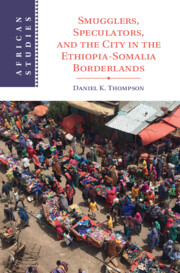
For a century, the Ethiopian city Jigjiga was known as a dusty hub of cross-border smuggling and a hotbed of rebellion on Ethiopia's eastern frontier. After 2010, it transformed into a post-conflict boomtown, becoming one of Africa's fastest-growing cities and attracting Somali return-migrants from across the globe. This study examines Jigjiga's astonishing transformation through the eyes of its cross-border traders, urban businesspeople, and officials. Daniel K. Thompson follows traders and return-migrants across borders to where their lives collide in the city. Analysing their strategies of mobility and exchange, this study reveals how Ethiopia's federal politics, Euro-American concerns about terrorism, and local business aspirations have intertwined to reshape links between border-making and city-making in the Horn of Africa. To understand this distinctive brand of urbanism, Thompson follows globalized connections and reveals how urbanites in Africa and beyond participate in the “urban borderwork” of constructing, as well as contesting, today's border management regimes.