To save content items to your account,
please confirm that you agree to abide by our usage policies.
If this is the first time you use this feature, you will be asked to authorise Cambridge Core to connect with your account.
Find out more about saving content to .
To save content items to your Kindle, first ensure no-reply@cambridge.org
is added to your Approved Personal Document E-mail List under your Personal Document Settings
on the Manage Your Content and Devices page of your Amazon account. Then enter the ‘name’ part
of your Kindle email address below.
Find out more about saving to your Kindle.
Note you can select to save to either the @free.kindle.com or @kindle.com variations.
‘@free.kindle.com’ emails are free but can only be saved to your device when it is connected to wi-fi.
‘@kindle.com’ emails can be delivered even when you are not connected to wi-fi, but note that service fees apply.
During the second half of the tenth/fourth century, the Umayyad caliphate of al-Andalus became a powerful political formation in Western Europe. Described by the contemporary German nun Hrotsvitha as the 'ornament of the world', Cordoba was the destiny of embassies and traders coming from places as far away as Constantinople, the Ottoman empire and Italy. The zenith of this political supremacy coincided with the rule of al-Ḥakam II (961 - 976 CE), whose name is associated with the enlargement of the mosque of Cordoba, the magnificent palatine city of Madīnat al-Zahrāʼ and the rich caliphal library which housed Arab, Latin and Hebrew manuscripts.
This book is based on an extraordinary source that had never been the subject of a comprehensive study: the annals written by an official and chronicler of the caliph's court, 'Īsà b. Ahmad al-Rāzī, who carefully annotated the big and small events of the court. Used by Ibn Hayyān to compose one of the volumes of his celebrated Muqtabis, these 'annals' have come to us in a substantial fragment of more than 135 folia that cover the period from June 971 to July 975 CE. This source provides an eye-witness account of the caliphate, which describes with stunning detail all the events, characters, places and narratives of the Umayyad caliphate, and is a fundamental work in helping us to understand the configuration of the Mediterranean in the tenth century CE.
Seditious Spaces tells the story of the Tailor's Conspiracy, an anti-colonial, anti-racist plot in Bahia, Brazil that involved over thirty people of African descent and one dozen whites. On August 12, 1798, the plot was announced to residents through bulletins posted in public spaces across the city demanding racial equality, the end of slavery, and increases to soldiers' pay: an act that transformed the conspiracy into a case of sedition. Routinely acknowledged by experts as one of the first expressions of Brazilian independence, the conspiracy was the product of groups of men with differing statuses and agendas who came together and constructed a rebellion. In this first book-length study on the conspiracy in English, Greg L. Childs sheds light on how relations between freed people, slaves, soldiers, officers, market women, and others structured political life in Bahia, and how the conspirators drew on these structures to plot, help, and heal each other through the resistance.
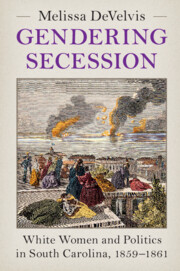
Gendering Secession explores the lives and politics of South Carolina's elite white women from 1859 to 1861. The political drama that unfolded during the secession crisis of 1860 has long captured our attention, but scant regard has been paid to the secessionist women themselves. These women were astute political observers and analysts who filtered their “improper” political ideas through avenues gendered as feminine and therefore socially acceptable. In recreating the rhythms of the year 1860, Melissa DeVelvis spotlights the moments when women realized that national events were too overwhelming to dismiss. Women processed these changes through religious metaphor and prophecy, comparisons to history and the American Revolution, and language borrowed from popular novels. Drawing from emotions history, literary analysis, and even handwriting analysis, DeVelvis reveals how these fiercely patriotic South Carolinian women responded to threats of disunion with fears and misgivings that men would or could not express.
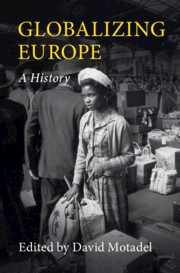
Globalizing Europe explores modern Europe's myriad entanglements with the wider world, considering the continent not only as an engine but also as a product of global transformations. It looks at the ways in which the global movements of peoples and ideas, goods and raw materials, flora and fauna have impacted life on the continent over the centuries. Bringing together a group of leading historians, the book shows how the history of Europe can be integrated into global history. Taken together, its chapters will help reshape our understanding of the boundaries of Europe – and the field of modern European history.
On a cold Thursday evening in January 2023, I accompanied a friend to the Shah Farid graveyard in the Sabzazar Housing Scheme. Located on the western edge of Lahore, right off Multan Road, which is the main traffic artery in this part of the city, Sabzazar is a dense mix of planned middle-class housing, expanding commercial markets, and pockets of working-class neighborhoods. The Shah Farid graveyard takes its name from the eponymous saint entombed here, whose glittering shrine hovers over the area. However, we were not here to visit this shrine but were looking for Sakina Bibi, an acquaintance of my friend, who had invited us to spend the evening with her sangat. Even before we had alighted from our car, we spotted her waving and gesturing toward us. After exchanging warm greetings, Sakina beckoned us to follow her to the baithak of her saint, Syed Shabbir Shah. This was a narrow clearing between graves in a section of this graveyard where a group of men were seated close to a fire. Sakina proudly informed us that this was the place where her Qalandari sarkar, Shabbir Shah, spent many years when he was alive. While his actual grave and tomb are in another part of the city, his local followers had carved out a small space around a replica grave, which they claimed to be imbued with his sacred presence.
A few minutes after I had paid my respects to the saint by bowing and touching this “grave,” I found myself comfortably seated next to the fire, using a grave as a backrest. Sakina proudly introduced the four men present here as members of her Qalandari sangat and fellow devotees of Syed Shabbir Shah. I also noticed another small group of men a few feet away, who all seemed younger and were seated in a row in a narrow crevice between another set of graves. Initially I was under the impression that Pannu, who was seated right across from me, was the leader of this gathering as the others were showing him some deference.
In 1953, the Arabic litterateur Wadiʿ al-Bustani received the Golden Medal of Merit for his Arabic versification of the Indian Mahabharata in the United Nations Educational, Scientific, and Cultural Organization (UNESCO) building in central Beirut. Camille Chamoun, then president of Lebanon, awarded the honour to this member of the famous literary and scholarly al-Bustani family. Wadiʿ's life encapsulates the high degree of global mobility of intellectuals in the first half of the twentieth century. His hometown, Dibbieh, now lay in the newly independent state of Lebanon. He was born in 1888 in what was then still the Ottoman Empire, studied at the prestigious Syrian Protestant College (later the American University of Beirut), worked as an interpreter at the British Consulate of Hodeida in Yemen in 1909, translated Umar al-Khayyam's Persian poems into Arabic in London in 1911, and set sail to India in 1912 to dedicate himself to Indian literary works. While in India, he met Rabindranath Tagore. The following years brought him to Johannesburg in South Africa and through political appointments to Cairo and the British mandate in Palestine. He became a vocal critic of Zionist politics and a founding member of several Muslim–Christian societies, taking part in the countrywide general strike of 1936. Later in life, he turned away from politics and dedicated most of his time to versifying Arabic translations of Indian literary works. In 1953, he finally returned to Lebanon, where he died in 1954.
While scholarship has shed light on translation movements from Sanskrit into Arabic during the early Abbasid period (eighth–tenth centuries), such as the Arabic ‘telling’ of Kalila wa-Dimna, there is a huge gap in academic research in terms of studying such translation itineraries between the Arabic and the Indian literary-intellectual spheres, when it comes to the nineteenth and twentieth centuries. However, there are several recent advances which aim to remedy this by approaching those intellectual exchanges and itineraries from an Indian Ocean perspective. Esmat Elhalaby studied Wadiʿ al-Bustani's life and work through the notion of an ‘Arabic rediscovery of India in the 20th century’. Elhalaby writes an intellectual history across the modern Indian Ocean region and thereby globalizes the Nahda, often framed as the ‘cultural and literary reawakening’, beyond the Middle East.5 He places Wadiʿ within the conceptual framework of ‘a history of global philology and an enabling colonial frame’.
One difficulty in studying “astronomers” and “mathematicians” as distinct classes in ancient China is that the important ones were neither specialists nor professionals, but polymaths, with little to distinguish them from any other intellectual. Another difficulty, confounding any modern taxonomy, is the tight relationship between astronomy, mathematics, Classical exegesis, and ritual. This article uses the thousands of lost and extant works cataloged under discrete emic categories in the Hanshu, Suishu, and Jiu Tangshu bibliographic treatises to weigh the place of the sciences and their practitioners vis-à-vis other contemporary forms of knowledge and, using polymathy as a vector, to map the connectivity and clusters between fields. It presents numerous findings about relative anonymity, fame, productivity, and the fields in which “scientists” were most implicated, but its principal interest is in proposing a method to sidestep modern observer’s categories.
In the context of postwar Europe, Germany was long an exception (Decker and Hartleb 2006). Unlike in neighbouring France, Austria, Denmark, or Poland, for example, in Germany, until fairly recently, populist parties and movements did not play a major role. Only with the emergence of the right-wing Alternative für Deutschland (Alternative for Germany, or AfD) did populism become a significant political force in German politics. Founded on 6 February 2013, the party only narrowly missed the 5 per cent threshold needed to enter parliament in the September 2013 federal elections. Within the next 12 months, it successfully contested the elections for the European parliament and in the East German states of Brandenburg, Saxony, and Thuringia.
The AfD's first leader, Bernd Lucke, was a professor of economics who pursued a neoliberal political agenda and advocated for Germany to leave the Eurozone. While the economic policies of Lucke and other AfD founders attracted many followers in the wake of the Greek sovereign debt crisis, the AfD's meteoric rise between 2013 and 2019 was largely due to its ability to gain the support of voters dissatisfied with official attempts to value cultural diversity and with Germany's asylum and immigration policies, particularly the Merkel government's decision in 2015 to not close Germany's borders and to admit more than a million asylum seekers over a two-year period. In the 2017 federal elections, the AfD won 12.6 per cent of the votes and became the third-largest party in the Bundestag, Germany's federal parliament. Although immigration did not feature prominently in the next federal election campaign, in September 2021 the AfD was largely able to consolidate its position; in Saxony and Thuringia, it finished ahead of all other parties.
In terms of its elected representatives, its members, and its voters, the AfD has included and appealed to a wide range of people, from social conservatives at one end of the spectrum to sympathizers of the New Right at the other. The AfD's heterogeneity has been a strength because it has broadened the party's appeal, but it has also been a weakness because the AfD has always been riven by factional conflicts.
A switch was flicked, and a hologram, 8 metres long and 2 metres wide, appeared. Under the impressive India Gate of New Delhi, on 23 January 2022, India's prime minister, Narendra Modi, inaugurated a hologram monument of the politician and military leader Subhas Chandra Bose (1897–1945) (ABP News 2022). The statue celebrates the controversial, authoritarian, and anti-Semitic Bose for his defiance of the British during the independence struggles in the 1930s and 1940s. It fits with the Bharatiya Janata Party's (BJP) agenda to show that ‘the history of India is not just what was written by those who enslaved the country’ (Times of India 2021). Modi's party seeks to challenge a supposedly ‘elitist’ and ‘colonial’ narrative of Indian history (Khan et al. 2017; Zachariah 2020). The BJP finds examples in ‘heroes’ such as Bose, uses DNA to claim a link between contemporary Hindus and India's first inhabitants many thousands of years ago, and treats ancient Hindu scripture as fact and not myth (Chapter 5; Jain and Lasseter 2018).
Sixteen thousand kilometres away from New Delhi, a different populist ‘politics of history’ unfolded over the past two decades. Evo Morales, the leader of the left-wing populist Movimiento al Socialismo (MAS) and the first indigenous president of Bolivia between 2006 and 2019, promoted a policy of anti-imperialist and anti-neoliberal ‘cultural and democratic revolution’ to inaugurate a ‘new phase of history’ after colonialism (Morales 2006). By performing highly mediatized political ceremonies at indigenous heritage sites such as his alternative ‘spiritual’ inauguration at the Tiwanaku site, by celebrating figures such as eighteenth-century indigenous rebel Túpac Katari (c. 1750–1781), and by using indigenous notions such as pachakuti (the future in the past), Morales attempted to ‘decolonize’ Bolivian history (Dangl 2019; García Jerez and Müller 2015). Grand symbolic gestures were familiar to Morales, too. On 21 June 2014, his government installed a counterclockwise running timepiece on the Congress building of La Paz. Symbolizing that Bolivians must ‘undo their history’ and challenge colonial standards, this ‘clock of the south’ invited them to ‘think creatively and disobey Western norms’ (BBC News 2014). Although the MAS started out along ethno-populist lines and was dominated by Quechua-speaking indigenous people, it never defined this indigeneity in strict exclusivist terms.
In 2013, when I first met the elderly Baba Nazir, he was introduced to me as the jharu kash of the Bodianwale shrine. Jharu kash literally translates as “the one who sweeps” and evokes a life of selfless devotion and service to a saint and their shrine. In fact, one of its most common representations in Punjab is the image of a woman sweeping the floor of her saint's shrine with her long, flowing tresses. However, in many shrines, including Bodianwale, jharu kash are assigned the far more “worldly” role of a caretaker, which involves looking after the shrine's premises and managing its everyday affairs. Nazir had been appointed to this particular position, a few years ago, by pir Syed Hassan Gillani (henceforth, pir Hassan), the gaddi nashin of Bodianwale and scion of a powerful Sufi family that had controlled Bodianwale and an associated shrine complex for many generations. Nazir had been associated with this family for almost fifty years and served them in a variety of capacities. His position in Bodianwale as pir Hassan's point person required him to live on the shrine's premises and shoulder several responsibilities. He was given authority over the other men who lived in the shrine and supervised their work of cleaning and maintaining the space. Ensuring the shrine's security, keeping an eye on things, and reporting the goings-on to pir Hassan were all part of his mandate. Importantly, he was also assigned the duty of collecting and delivering cash and other offerings made by devotees to the pir as well as encouraging devotees to contribute to the upkeep of the shrine.
Nazir generally adopted a laid-back approach to the caretaker role. While he kept a vigilant eye on things, he preferred to not get involved in most aspects of the shrine's operations. Instead, he ceded space to other individuals and groups to take the lead in organizing and managing events and daily activities at Bodianwale. Even though he possessed the powers and authority that come from being the pir's appointee, Nazir was hardly pushed to exercise and expand his influence. His identification as a malang, which calls for a distance from worldly affairs, was certainly a factor in his attitude toward this managerial role.
This chapter studies the first Hall of Fame established in the United States: NYU’s Hall of Fame of Great Americans in 1900. The episode shines a light on the American conception of greatness and how that relates to fame. At the beginning of the twentieth century, the United States faced an “inflation” of fame while greatness became a scarce resource. To understand the complex differences between greatness and fame, this chapter’s narrative weaves together the European tradition of status, the seedy transatlantic history of eugenics, and the unusual Hall of Fame candidacy of Edgar Allan Poe.
Sheikh Mujib had no ears, no cheeks, no jaw, no nose, no brows and no forehead. He was just a face, a face without features. When he looked at Sheikh Mujib, [the barber] saw himself. That happened to every citizen in the country.
—Neamat Imam (2015: 55)
Introduction
In Neamat Imam's 2015 novel The Black Coat, the reader follows the path of a former Bangladesh Liberation War journalist and his charge, a rural migrant adept at impersonating Sheikh Mujibur Rahman amidst the raging famine of 1974. Imam takes stock of the populist potential of Sheikh Mujib by portraying him as both the exalted leader and every Bengali. In effect, he has no features as he subsumes the whole people.
Sheikh Mujibur Rahman was the leader of the Bangladesh Awami League (AL), the principal national liberation party during Bangladesh's independence struggle and currently still the country's ruling faction. With the end of British colonialism in the subcontinent and the partition of India in 1947, the eastern part of Bengal became East Pakistan, a province geographically separated from its West Pakistan counterpart. The Pakistan period is often remembered in Bangladesh as the second period of colonial rule. Mujib became the leading figure not only within the AL but for the entire independence struggle, which eventually culminated in the 1971 Liberation War. Although imprisoned for nearly the entire war, he became known as the Father of the Nation and was attributed the honorific title ‘Bangabandhu’ (Friend of Bengal) by his followers.
After independence, Mujib was lauded as the country's first president and later prime minister. However, unable to resolve the high levels of internal conflict and graft in the early years after independence, and following a devastating famine in 1974, Mujib saw his attraction and that of his party erode. In 1975, Mujib moved towards a one-party model to maintain control over his crumbling polity and to control AL greed more directly. Before his plan could be fully executed, he – and his whole family, apart from his daughters, Sheikh Hasina and Sheikh Rehana – were killed in a coup attempt in August 1975 (Ali 2010: 55–113).
German philosophers of the eighteenth and nineteenth centuries reacted with much interest and even enthusiasm to the growth of knowledge about Indian intellectual history at that time. Johann Gottfried Herder and Friedrich Schlegel praised India as the cradle of human culture, and Indian thinkers were dealt with in contemporary histories of philosophy. Philosopher and philologist Wilhelm von Humboldt participated in this intellectual development. He was proficient in Sanskrit, knowledgeable about Indian culture, and keen to share his knowledge with his contemporaries. His publication of two commendatory articles about the Bhagavadgita can be seen as the apex of the positive reception of Indian philosophy in Germany.
The positive attitude towards Indian thought changed at some point in history. It seems to be the influence of G. W. F. Hegel, in particular, that led to a negative evaluation or, more often, to a disinterest in Indian literature and thought that is typical for German philosophers since the second half of the nineteenth century. Hegel expressed his position concisely in his critical review of Humboldt's two positive articles about the Gita. Basically, he denies that the Gita – or any other ancient Indian text – deserves to be included in the scope of philosophy. The dispute between Humboldt and Hegel was a crucial turning point for the evaluation of Indian thought in Germany and, thereby, for the future development of philosophy as a discipline. It is thus no exaggeration when Aakash Singh Rathore and Rimina Mohapatra state that ‘the reception of the Gita was critical to philosophical developments taking place in Germany’.
In the globalized world of the twenty-first century, the question of whether there are philosophical texts and debates that are not ‘footnotes to Plato’ – as Alfred North Whitehead poignantly defined Western philosophy – is of eminent concern. Although the question still does not receive the attention it deserves, there is nowadays an ongoing debate about non-Western philosophy. The controversy between Humboldt and Hegel is an important contribution to this debate for two reasons. First, it is a very early dispute that defined the contours of later discussions. Second, in contrast to many contemporary debates about non-Western thought, Humboldt and Hegel argue explicitly and elaborately about the question of whether such thought should be understood as philosophy.
After the demise of the communist system in 1989, Poland experienced a rapid and largely successful transition to the market economy and liberal democracy. The democratic institutions, although newly established, seemed well grounded and, for a long time, were not overtly contested by any major political forces, including post-communists. The challenge to the Polish version of the liberal, representative democracy came with the rise to power of the Prawo i Sprawiedliwość (Law and Justice, or PiS). The latter, founded in 2001, governed for the first time in 2005–2007 and, later, in 2015–2023. The first period was relatively short and could be seen as forming the concepts and methods which were fully implemented only after the second accession to power. The policy of the PiS has been aimed at subverting the rule of law, especially the division of powers and the independence of the judiciary. The core of the rhetoric of the PiS has been the claim of representing ‘the nation’, which so far was mute, culturally neglected, and economically exploited. The PiS presents itself as the first Polish party that embodies the interests and values of ‘average people’ versus elites, provinces versus large cities, ‘true’ Poles versus cosmopolites, and traitors acting on foreign orders (Germany, the European Union [EU]). The indispensable element of its discourse is the condemnation of allegedly corrupt, inept, post-communist, or liberal elites that ruled Poland for most of the time after the 1989 breakthrough (Kim 2021; Sadurski 2019). The key features of the politics and ideology of the PiS place this party, despite many important differences, among other European populist movements of right-wing and nationalistic orientation. The PiS is often seen alongside the Hungarian Fidesz, whose example it openly declares to follow, the French Rassemblement National, the Fratelli d`Italia, and even, to some extent, the Alternative für Deutschland, although any allegiance with the latter is deliberately avoided.
The specific trait of the PiS as a political and social movement is the importance of culture and religion as sources of mass mobilization and identification and, consequently, its political successes and resilience in holding power. Marta Kotwas and Jan Kubik coined the expression ‘symbolic thickening of public culture’ to refer to the specific cultural grounds from which the Polish version of populism arose and benefited (Kotwas and Kubik 2019).
When Perso-Arabic script renditions of the Mahabharata receive popular or academic attention, it is often in defence of elite Indo-Islamic cosmopolitanism. Mughal engagement with the Mahabharata is held up as evidence of interest in Hinduism or pre-Islamic Indic traditions among Muslim South Asian dynasties. Because the Mughal Persian translation of the Mahabharata, known as the Razmnamah (Book of War), was a courtly project, it is easy to overlook the fact that Mahabharatas in Perso-Arabic script reached broader, and increasingly transregional, publics, especially in the age of lithographic print. Focusing on the preparation and circulation of Persian and Urdu print editions of the Mahabharata, this chapter aims to reorient discussions of Persianate understandings of Sanskrit epics, emphasizing middle-class, popular readerships in both Iran and India.
Following a brief overview of the translation and circulation of the Razmnamah in Mughal India, the chapter analyses lithographic publications of Persian and Urdu Mahabharatas. In the second half of the nineteenth century, the rapid growth of lithographic print in South Asia allowed for the relatively inexpensive publication and circulation of Mahabharatas in Perso-Arabic script. The chapter argues for a reconsideration of the intellectual work of cadres of printers, translators, scribes, and other workers employed by Indian presses. Late nineteenth-century Persian and Urdu Mahabharatas reflected norms of production within a negotiated system of capitalist print labour, distinguishing them from their courtly manuscript predecessors.
The chapter subsequently turns to the transregional consumption and reception of these Mahabharatas in Perso-Arabic script. In the late nineteenth century in both India and Iran, readers within a Persianate cultural–intellectual milieu understood the Mahabharata in a comparative frame, often with reference to the Persian epic poem, the Shahnamah. Popular audiences in Iran often read the two works through an emerging ‘national’ lens that associated epic literature with discrete peoples and nations. In India, on the other hand, middle-class Persian and Urdu readers often used both the Mahabharata–Razmnamah and the Shahnamah to claim an elite Persianate and cosmopolitan past.
Ultimately, the chapter reorients narratives of shared Indo-Iranian intellectual history by critiquing portrayals of Persianate transregional exchange as exclusively elite or courtly projects. Centring lithographic printers and popular reading publics, the chapter interrogates the reinterpretation of the Mahabharata within transregional communities of Persian and Urdu readers in the late nineteenth and early twentieth centuries.