To save content items to your account,
please confirm that you agree to abide by our usage policies.
If this is the first time you use this feature, you will be asked to authorise Cambridge Core to connect with your account.
Find out more about saving content to .
To save content items to your Kindle, first ensure no-reply@cambridge.org
is added to your Approved Personal Document E-mail List under your Personal Document Settings
on the Manage Your Content and Devices page of your Amazon account. Then enter the ‘name’ part
of your Kindle email address below.
Find out more about saving to your Kindle.
Note you can select to save to either the @free.kindle.com or @kindle.com variations.
‘@free.kindle.com’ emails are free but can only be saved to your device when it is connected to wi-fi.
‘@kindle.com’ emails can be delivered even when you are not connected to wi-fi, but note that service fees apply.
In 2022, the Centre for Global South Asia (CGSA) at Royal Holloway University of London developed a small research project entitled ‘Exhibit Asia’. The aim was to explore the use of exhibitions in nation-making in postcolonial South and East Asia in contrast to the scholarly preoccupation with investigating the region’s history of museums and exhibitions primarily in a colonial context. Its academic outcomes were to be a conference and related publication; but we also wanted our research to be relevant to our students. The resulting intervention in the teaching and learning of history took the form of a curatorial fellowship for an international cohort of ten students from Taiwan, Japan, India, Pakistan and the UK, leading to a co-curated online exhibition. The first section of this article sets out the development, design and delivery of the fellowship and discusses the viability and relevance of such projects. The subsequent three sections are co-authored by several of the participating students. They outline their methods, reflections and learnings; share their insights on the role of exhibitions in perceptions of Asia in the UK today; and analyse responses to ‘Tea and Tigers’, the online exhibition that was the outcome of the fellowship.
Human migration is defined here as a comprehensive process of a movement of people within and between geographic spaces. The background, direction, depth and result of this process encompass factors within the regions of origin and destination as well as regions crossed during the movement from origin to destination. Like integration of immigrants, as defined above, it is usually a complex, long-term and multidimensional process, which occurs throughout history.
Migration
Detailed definitions of ‘migration’ are provided by dictionaries and other lexical resources, such as The Historical Thesaurus of English. The Thesaurus charts the development of use and meaning in the huge and varied vocabulary of English. It aims to include almost every word in English recorded from early medieval times to the present day, arranged in detailed hierarchies of meaning. It records ‘migration’ as a noun under ‘Society’ (‘Furnishing with inhabitants’). With this meaning ‘migration’ was used since 1527. A later meaning occurs from 1611: change of place of a thing. ‘Migration’ can have the sense of ‘movement’, which itself is listed since the fourteenth century, with ‘transmigration’ listed since the seventeenth century.
The Online Etymology Dictionary defines ‘migration’ as a change of residence or habitat, removal or transit from one locality to another, especially over a distance. The English word came from the Latin migrationem (a removal, change of abode). ‘Migration’ is a noun of action from the past participle stem of migrare (to move from one place to another).
The Oxford English Dictionary (OED) lists ‘migration’ as: 1. the action or an act of moving from one place to another and 2. the migrating of a person or a people from one country or place of residence to settle in another, or an instance of this. According to the OED, ‘migration’ can also involve animals, plant distribution or the random movement from one place to another by a cell, atom, molecule and so forth. All these meanings appear neutral. Similarly neutral are the definitions of ‘migration’ of humans in Merriam-Webster Dictionary– the act, process or an instance of migrating – and Collins English Dictionary – the act or an instance of migrating. However, Cambridge Dictionary7 defines ‘migration’ also as the process of people travelling to a new place to live, usually in large numbers.
After 1991, the direction, pace and scale of immigration into Britain changed. From less than 2 million in 1991, the foreign-born population in Britain as registered in the census rose to just under 10 million in 2021. The growth was uneven; between 1991 and 2001 it was over 1 million, sped up towards the end of the 1990s, reached almost 3 million between 2001 and 2011 and continued its upward trend. The proportion of people born abroad in the total UK population also increased, from just over 6 per cent in 1991, 8 in 2001, just over 12 in 2011 and 15 in 2021. In that year one in six residents of England and Wales was born outside the UK. Over half of the increase in the total population of England and Wales, from 56.1 million 2011 to 59.6 million in 2021, was the result of positive net migration – the number of people arriving in the UK minus the people leaving.
In terms of immigration Britain did not stand out internationally. Davies has stated that the 2001 proportion mentioned above was ‘a rather lower percentage’ compared to other European countries, such as France or Germany. And not all foreign-born individuals registered in the UK census can be regarded as immigrants who settled permanently in Britain. Many of them were students and short-term contract workers, who were expected to leave after their studies and contracts were finished or terminated earlier, although many of these individuals stayed in Britain, often with their families who had come over.
Nevertheless, the number of immigrants in Britain expanded dramatically between 1991 and 2021. The increasing proportional presence of immigrants appeared as emigration from Britain declined. The Times in 1962 mentioned a report from the Economist Intelligence Unit which stated that between 1951 and 1960 ‘net immigration into Britain was almost exactly balanced by the net outflow of United Kingdom citizens’. In 1964, 60,000 more people left the country than arrived here. Nine years later, the figure was 41,000. During the next 15 years an average of 5,000 more people per year emigrated from Britain than came here.
It's a ‘crisis’. In Calais thousands of migrants are preparing to cross the Channel. They hope to find work, attempting to overcome economic difficulties in their country of origin, but some are also fleeing for their lives, trying to escape persecution. According to British newspapers, such as the Nottingham Review, they have been met with ‘the greatest hostility’ in France. The migrants are not welcome in England either. After arriving here ‘wholly destitute’, hundreds of them are transported to distant countries, with which Britain has made special arrangements.
This tale of ill-fated migration sounds familiar to present-day newspaper readers. It has all the hallmarks of modern attitudes to migrants and official measures to stop them crossing the Channel or transport those who do cross, sending them to countries like Albania and Rwanda. But it happened in 1848, not the present.
In fact, it concerned lacemakers from Nottingham who had lost their jobs due to technical changes in lace production. During the 1830s thousands of them had migrated to Calais, where in 1848 they got caught up in unemployment and revolutionary disturbances. Their troubles were aggravated by a wave of Anglophobia. Many of the lacemakers wished to return to Britain. A British government enquiry was instigated. A charitable body, the Committee of Noblemen and Gentlemen for the Relief of British Workmen, Refugees from France, took up their cause and received royal support. A plan was forged to seek free passage for the lacemakers to emigrate to Australia. A public subscription raised funds to cover the expenses of the voyage. Colonial emigration commissioners relaxed regulations. Several hundred migrants left for Australia. However, on arrival there in 1849, they found little opportunity for lacemaking; the colony's economy was in recession and its labour market was overstocked. Life was hard and housing accommodation poor (in some instances worse than mud cabins). A few ended up minding sheep in the Australian outback, wishing they had never left England.
The Nottingham lacemakers were ill-fated migrants – a typical situation of immigrants who have the misfortune of arriving at a time of economic downturn, when they become a target of complaints in a receiving society.
In 1921 Britain had a sizeable immigrant population. It consisted of over 311,000 persons in England and Wales (0.8 per cent of the total population there of almost 38 million) and over 24,000 in Scotland (0.5 per cent of the total Scottish population of almost 5 million). The total foreign-born population of Britain had declined from just over 409,000 in 1911. If people born in Ireland are included, about 750,000 residents of England and Wales in 1921 were born abroad, forming 2 per cent of the total population – figures that rose to over 1 million (2.7 per cent) in 1931 and got close to 2 million (4.3 per cent) in 1951. The total number of foreigners would be significantly higher if it included visitors, sailors present in British ports, soldiers stationed in Britain and transmigrants passing through the country. Descendants of immigrants born in Britain were also numerous.
The immigrants arrived in Britain through different movements from a variety of countries. In 1911 and 1921 the largest group of foreign-born people in Britain was made up by individuals from Russia, Poland and the Baltic states, in total 110,000 in 1921. The second largest group in 1911 was from Germany – over 55,000 – but it fell to 22,000 in 1921. The number of Germans in Britain and people from Austria that had in 1938 become part of Germany rose again to 70,000 on the eve of the Second World War. Other sizeable groups came from the USA, France and Italy – each 40,000 before 1945 (from, respectively, 39,000, 34,000 and 26,000 in 1921). The US figure increased with American GIs in Britain after the Second World War. Throughout the period between 1921 and 1948 people from many other countries lived in Britain. For example, in 1921, just over 4,500 persons born in China were in Britain, increasing to over 12,500 in 1951, three years after the foundation of the People's Republic of China and the end of the Chinese Civil War, which had caused some Chinese refugees to flee to Britain, often via Hong Kong and Malaysia.
Legumes are a large and diverse family of plants that provide us with food, feed, fuel and feedstocks for industry. They can use atmospheric di-nitrogen for growth, via symbiotic nitrogen fixation (SNF) with bacteria called rhizobia, making them key to sustainable agricultural systems. There are opportunities to increase SNF in legumes to help tackle critical challenges related to the overuse of fertilizer nitrogen in agriculture. The last two decades have seen enormous progress in our understanding of the genetics of SNF, although this is yet to be leveraged to improve SNF in legumes. In principle, two main plant-based approaches exist to improve SNF, one involving genetic engineering and the other using existing natural variation in this complex trait. These approaches are not mutually exclusive and now is an opportune time to attempt to increase SNF in legumes via plant genetics and genomics.
In nineteenth-century London, theater-going was a genuinely mass activity. Within a rapidly expanding entertainment industry, working-class playgoers abounded. Opened to the public in 1818, the Coburg Theatre, later renamed the Victoria and known as the Vic, developed an especially strong association with popular drama. Although much has been written on the kind of work that places like the Vic presented, much less has been said about their operation as plebeian public spheres, or what I term here “radical half-spaces.” Active in the campaign for political reform in the early 1830s, and the site of numerous socially critical melodramas, under the joint managerial team of David Osbaldiston and Eliza Vincent, the Coburg/Victoria would later align itself to Chartism. All the while, the theater continued to function as a profitable commercial enterprise. By showing how audiences at the Vic sought (and found) knowledge and cultural capital, as much as entertainment and spectacle, the article suggests that when considering the period's alternative radical spaces, account should be made of such avowedly populist establishments as London's minor theaters, and the complex assemblages of time, place, and people they represented.
Immigration into Britain rose after the Second World War; some of it connected and some of it unconnected to earlier population movements, but all of it changed British society. Panayi has stated that after 1945, ‘the reality, regularity and scale of migration makes it a central factor in the evolution of [Britain]’. The diversity of immigration was also unprecedented. A million Irish moved here. New communities of hundreds of thousands of West Indian, South Asian and African people came into being. The Chinese population of Britain grew too. Meanwhile, immigration from the European continent continued, hundreds of thousands came from Poland and Italy, tens of thousands made their way from a variety of different European states, and others came from Cyprus and Malta.
However, this was also a period of large-scale emigration, with people leaving Britain to live abroad in countries such as the USA, Canada, Australia and New Zealand, from which some later returned. During the interwar years, the number of people leaving Britain had probably been higher than the number coming in, but that changed in 1951, when the first census period was reported since 1871 in which more people immigrated into the UK than emigrated out of it. In the years between 1951 and 1961, immigration and emigration were reported as being almost equal.
Those who came to fill labour shortages and work in Britain during the first five years after the Second World War were largely welcomed, according to a 1951 editorial in The Times:
[…] the presence of workers from the Continent is now accepted without remark in most of the principal industries and services of this country. In five years of patient and careful work, some 200,000 foreigners have been recruited, housed, and placed in the occupations where their capacities can be best used for the national benefit […] most of the Polish and European volunteer workers are ready to become permanent members of the British community which would be welcomed by all who have come into close contact with them.
After that, there was occasional resistance to labourers from the continent. For example, in 1955 the Scottish branch of the National Union of Mineworkers opposed a plan to import 10,000 Italian workers in coalfields and condemned the plan ‘as a substitute’ for better wages and conditions and improved mechanisation in British mines.
To delay paying wages to seamen, the late Stuart Navy issued them instead with “tickets” to be redeemed for cash after months or years of delay. Seamen often sold the tickets at deep discounts to ticket buyers, who became government creditors for unpaid wages, one of the largest items in the national debt. Ticket buyers were savagely attacked in pamphlets. This article is a preliminary exploration of ticket buying, focusing on the large minority of buyers who were women. It shows that many of them were in fact the wives and widows of the seamen, working in the crowded streets around the Navy Office and in the cottages of the maritime communities nearby. Navy pay books are introduced as a key source; the business of one trader is evaluated using her financial papers, and the work of others assessed from probate records. Ticket buying opened up related opportunities for women as brokers of deals and as professional receivers of wages. But while pawning could be used as protection against the growing hazard of unpaid tickets, even with deep discounts it was difficult to make even a moderate return in the trade. Ticket buying was not a route to fortunes.
This book aims to describe and analyse what has changed in public attitudes towards immigrants. With that objective in mind, it examines expressions of feelings about immigrants in Britain during the period between 1921 and 2021, and investigates how these attitudes were expressed, what words and phrases were used, in what context attitudes were articulated and where they came from.
In a broad sense, this description and analysis address a wider issue: If history is made by humans, what external influences direct their actions or are they guided by unchangeable basic instincts?
By focussing on one aspect of immigration history, namely the changes in how immigrants in Britain were perceived during the hundred years after 1921, this book also strives to contribute to the historiography on the integration of immigrants into modern Western societies. It hopes to increase knowledge and deepen understanding of the past, but this book also has a contemporary relevance, because attitudes to immigrants and their integration into the society of the country where they settle continue to be topics of debate.
This is not the first book on immigrants in Britain. Much research on this subject has been published, from comprehensive historical surveys to reviews of specific aspects of immigration, with attention usually focussed on specific groups, locations and periods. However, this book applies a rather new historical-linguistic approach with brief international comparisons to investigate the expression of attitudes to immigrants in Britain in the hundred years after 1921, revealing long-term developments, many of which started well before 1921. It also attempts to resolve an apparent contradiction in the existing literature: if Britain cannot be classified as a country in which immigrants faced unremitting hostility, how come negative views about immigrants remained fairly constant – was there really not much new under the sun or was the expression of attitudes to immigrants more fluid, despite seemingly obvious similarities between past and present? Furthermore, this study draws on primary sources that for this purpose have so far been relatively unused, such as newspapers and dictionaries, and analyses them with the help of the existing historical and linguistic literature.
In the second half of the ninth century, a new period of confrontation between the Armenian and Byzantine Churches began. The goal of Byzantine religious policy was the abolition of the independence of the Armenian Church and its unification with the imperial Church. In his letters addressed to the ecclesiastical and political leaders of Armenia, the patriarch Photios proposed that they abandon Monophysitism and accept Chalcedonianism. Under this religious veil were disguised the empire's real political, cultural and socio-economic goals. Although Photios could not achieve the final unification of the two Churches, his mission did bring about a temporary religious rapprochement between the Armenians and the Greeks.
Irenaeus has tended to be a bit player in modern narratives of the Nestorian controversy. Where the count features in accounts of the church politics of the 430s, it is as an essentially ‘secular’ figure: a conduit to the palace and supplier of coercive force for Nestorius and his Syrian episcopal allies. This article argues that Irenaeus was much more directly involved in doctrinal debate and the maintenance of ecclesiastical alliances than has been appreciated. The theological engagement and startling career shifts of this imperial count-turned-heresiarch-turned-bishop exemplify the significance of elite Christian patronage and official doctrinal engagement in 430s Constantinople.
This article revises interpretations of the post-Reformation English Chapel Royal as a place for the performance of ‘conservative’ or ‘traditional’ forms of the Book of Common Prayer and establishes its importance as a space for negotiating Protestant royal worship. By detailed analysis of the sound and appearance of royal chapels under Elizabeth i and James vi & i the Chapel Royal is emphasised not for its anticipation of a Laudian ascendancy, but its sensitivity to the ceremonial boundaries of the reformed Church of England, and ability to negotiate a form of Protestant majesty in royal worship.
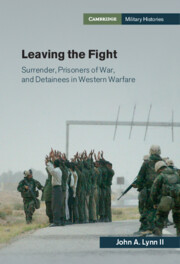
Surrender in warfare has determined the fate of governments, states, and nations. It has reduced powerful commanders to powerless captives and inflicted submission, degradation, and even death on common soldiers held as prisoners of war. It has also led to civilian detainees being grossly mistreated and murdered. However, surrender, prisoners of war, and detainees have rarely been addressed as general phenomena in warfare. Leaving the Fight is then an essential history of the evolution of surrender from the Middle Ages to the present day. John A. Lynn II explores the different forms taken by surrender, from the abject capitulation of armies and states to the withdrawal of forces from military interventions deemed to be unwinnable, such as in Vietnam and Afghanistan. He also considers the fates of prisoners of war and civilians detained by military forces from harsh treatment intended to intimidate foes to attempts to win over hearts and minds.
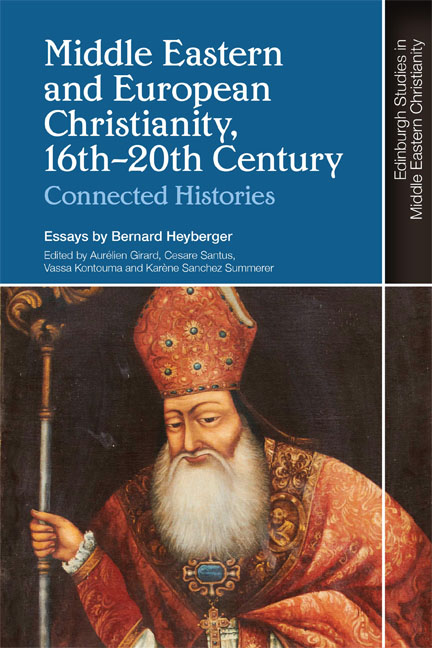
Bernard Heyberger carved new paths in the study of Middle Eastern Christianity, helping to shed fresh light on aspects of the connected history of the Near East that had previously been neglected. His ground-breaking work has spanned many disciplines, his approach to 'global microhistory' has focused on questions of space and circulation (people, texts and objects). In addition, he has made important contributions to the social and cultural history of Early Modern Catholicism.
In order to allow the international public to access his work, this volume presents a collection of Heyberger's studies for the first time in English, accompanied by an essay discussing the importance and legacy of his work and a comprehensive bibliography of his writings.