To save content items to your account,
please confirm that you agree to abide by our usage policies.
If this is the first time you use this feature, you will be asked to authorise Cambridge Core to connect with your account.
Find out more about saving content to .
To save content items to your Kindle, first ensure no-reply@cambridge.org
is added to your Approved Personal Document E-mail List under your Personal Document Settings
on the Manage Your Content and Devices page of your Amazon account. Then enter the ‘name’ part
of your Kindle email address below.
Find out more about saving to your Kindle.
Note you can select to save to either the @free.kindle.com or @kindle.com variations.
‘@free.kindle.com’ emails are free but can only be saved to your device when it is connected to wi-fi.
‘@kindle.com’ emails can be delivered even when you are not connected to wi-fi, but note that service fees apply.
Corruption is observed in various processes of human activities, from governance to private life. An important element of preventing corruption is the implementation of codes of ethics, which by the very nature of these codes declare high ethical standards and principles and are consistent with the applicable laws. The effectiveness of codes of ethics in the field of labour relations as a tool for preventing corruption is also reinforced by other auxiliary anti-corruption instruments. The purpose of this article is to determine the role of codes of ethics in shaping corporate culture, outline the importance of ethical principles in labour relations, conduct a detailed analysis of the effectiveness of codes of ethics in the field of labour relations in the framework of corruption prevention, and analyse the application of comprehensive codes of ethics and disciplinary codes as a stimulating tool for the effectiveness of the codes of ethics. As a result, we have drawn conclusions about the importance of using other auxiliary tools alongside codes of ethics to increase efficiency, and in the course of studying the problematic aspects of implementing codes of ethics in the framework of corruption prevention, we have formulated recommendations for their elimination.
A recurring issue of debate for scholars of Central Europe has been the extent to which analyses of European colonialism apply to Austria-Hungary and its successor states. This article considers this issue in relation to the theologian, archeologist, and scholar of Arabic culture, Alois Musil (1868–1940). Long celebrated in Austria and Czechoslovakia, he has seldom been subject to critical analysis. A loyal Habsburg subject—and confessor to the Empress Zita until 1918—then an enthusiastic promoter of Czechoslovakia and co-founder of the Institute of Oriental Studies in Prague, Musil was a striking example of how individuals in Central Europe adapted to changing political realities. The article focuses in particular on his attitudes to European colonialism. On the one hand, he was critical of British and Italian colonialism, but he worked to further Habsburg imperial interests in the Middle East. When discussing Japanese ambitions in the 1930s, he emphasized the superiority of European colonial rule. He illustrates the complex stance of many Czechs (and other Central Europeans) toward colonialism. They imagined they were innocent of its taint but were in fact enmeshed in it, often endorsing it or acting as agents of the schemes of the European powers.
Marine plastic pollution is an issue that threatens most places around the world, including the remote and unique Galapagos archipelago. We used the archaeological framework of object itineraries as part of a story-writing workshop to explore perceptions of marine plastic litter (MPL) by students from two schools in Puerto Ayora, Santa Cruz. Their stories, adopting an archaeological approach to plastic litter as artefacts, told the itinerary of MPL collected on Galapagos shores. We also analysed surveys evaluating their self-reported knowledge, pro-environmental behaviours (PEBs) and perceptions of the issue of MPL before and after the workshop. Our findings showed good awareness of MPL origins and impacts, reflecting the specific pathways of litter reaching this Pacific archipelago from mainland South America, regional marine activities including fishing in and around the Galapagos Marine Reserve, and local sources, although those are thought to be limited. Yet the lack of focus on solutions in the stories and the emphasis on recycling PEBs suggest more targeted activities are needed to address the need of complementary solutions and to place more emphasis on reducing plastic use.
The English protectorate began in 1653 with a conspiracy of politicians, army officers, and religious leaders against a theocratic strain of puritanism. Among the plotters was John Owen (1616–83), the leading religious authority of the Interregnum, vice-chancellor of Oxford University, and the ‘Cajoler of Cromwell’. When amid a military and republican coup parliament was dissolved and Richard Cromwell removed in 1659, Owen was again at the heart of events. But the narrative became that this time he had used his influence to oppose the Cromwells. As minister of a congregation at the centre of the nation’s halls of power composed of the military and political elite, Owen became seen as Richard Cromwell’s ‘instrument of ruine’. This article challenges that narrative and its appearance in histories of early 1659 and of Owen’s biography by utilizing new sources and re-evaluating known evidence within the broader context of religious and political divisions at the end of the protectorate. Owen supported whatever political form could best preserve the long-term safety of the English commonwealth and godly rule against the Stuarts. Yet Owen’s legacy became contested among the godly after the Restoration, as the agent of the protectorate’s fall and the failure of puritan politics.
Passions and affections, notwithstanding their potential and capacity for disorder, were fundamental to the workings of the early modern world and lay at the centre of ethical life. Yet, most scholarship ignores the inseparability of emotion and ethics for early modern society. This article reviews the current state of scholarship in three fields: history of philosophy, history of emotions, and English society and governance, highlighting the assumptions and arguments which have led to the mistaken severance of affect from morality, the exclusion of ethics from histories of emotion, and the omission of emotion from studies of English power and authority. It argues that this separation is anachronistic and impairs our ability to understand governance in early modern England. This was a world of fused affect and morality which underpinned particular notions of power and authority. That governance was located within an ethical/emotive paradigm has been given insufficient attention.
Earlier objects are frequently identified in later contexts, though rarely form the focus of discussion. This paper presents 34 sites where earlier Bronze Age metalwork has been found in later Bronze Age contexts in southern Britain, including hoards and non-hoard contexts. These ‘out-of-time’ objects follow complex trajectories and can inform us about the potential ways past societies conceived their own pasts, especially when contextualized in broader integrated landscapes. Out-of-time objects might be deposited singly or within hoards to reinforce community boundaries and legitimize links with past communities. The form, wear and treatment of these objects pre-deposition (e.g. curation and/or deformation) as well as the places in which they were buried represent indicators of prehistoric processes of commemoration and/or forgetting.
Marks and figurative representations have been recognized as crucial socio-cognitive components that contributed to the transition from foraging to farming of the Neolithic in southwest Asia, during a period in which communities adopted novel social interactions and economic strategies. This article investigates image production and the trajectories tied to the creation of visual codes. We show that since the early Neolithic phases (c. 9700–6600 cal. bc) societies in southwest Asia engaged with specific symbols and created narrative and operational semasiographies, intended to serve as key communicative devices that functioned as community ties and contributed to social interaction across distant groups.
Forgetting, and having recourse to unremembering the past, is useful for different populations. The modern world has provided a range of examples, but the effectiveness of short-term amnesia has not always been highlighted in archaeological scholarship. In this article, a case study from the Roman-period Netherlands highlights that the significance of memory-making in the past may have been overstated. Especially among those societies living under imperial rule, forgetting played an important role, one that calls for more critical focus and understanding. The utilization of cross-cultural and historical examples provides the background for a close analysis of the remains from a single graveyard. The study brings out the repeated amnesiac changes that indigenous groups underwent to adapt themselves to the continuing fact of occupation.
Although historians have given close attention to the anti-vaccination movement that gripped late-Victorian England, relatively little scholarship explores how doctors and health officials responded or asks what strategies and assumptions structured how they might oppose the vaccine opponents. This article traces the advent and actions of the Jenner Society, a smallpox vaccination advocacy group founded in 1896 by Dr. Francis Bond. His goal was to publicly confront the leading anti-vaccinationists and to effectively conduct an anti-anti-vaccination campaign. The Jenner Society appeared amidst disputes over how and even whether vaccination should be publicly debated – disputes shaped both by long-standing attitudes toward professional propriety and also by indecision about what sorts of political advocacy were suitable for medical practitioners. Vaccination was shifting toward a more voluntary administration, and the Jenner Society represents how civil society, the popular press, and the modern tools of persuasion were becoming increasingly central to public health governance. The Jenner Society encapsulated the profession’s disdainful attitude toward populist medical dissent, and this essay argues that the tone and deportment of anti-anti-vaccinationism had the effect of encouraging doctors to overlook and neglect other, probably more significant, sources of vaccine skepticism. Preoccupied with rebutting and attacking vaccination’s enemies, public “controversialists” like Bond waged the first true large-scale pro-vaccination propaganda campaign, but they ultimately were unable to address the underlying dynamics of vaccine evasion. This history holds important lessons today for those interested in constructing more effective ways to effectively counteract medical misinformation and anti-vaccinationist beliefs.
This article examines a frequently overlooked aspect of cuneiform writing in Egypt: the materiality and technology involved in the production of cuneiform tablets, with a particular focus on the process of tablet firing. It is argued that firing was an integral part of tablet production that required learning and practice by the Amarna scribes. The successful firing of tablets to temperatures around 800°C is attributed to the robust and longstanding tradition of tablet manufacture in Mesopotamia, Anatolia, northern Syria and Hazor. In contrast, the lower firing temperatures observed in tablets from Egypt, Alašiya and much of the Levant are associated with the production and firing of cuneiform tablets as a recent technological innovation that required thorough mastery.
This paper explores the evolving landscape of comparative research between ancient Egypt and China, focusing on various aspects such as culture, writing systems, political economy, and motivations behind these comparisons done in China and international environments. Embedded with the historical context, motivations and methodologies of scholars engaged in this comparative endeavour, the authors suggest that such research is linked to modern China's intellectual history and global engagement. It discusses potential motivations, including economic factors, national agenda and interdisciplinary integration. The authors also raise the need for more deliberate theorizations of Egypt–China comparisons, emphasizing the importance of greater reflexivity and inclusivity in shaping the trajectory of comparative studies. Overall, the document sheds light on the complexities, motivations and potential impacts of Egypt–China comparative research, highlighting its relevance in understanding both historical civilizations and contemporary global dynamics.
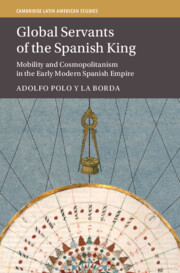
From 1580 to 1700, low-ranking Spanish imperial officials ceaselessly moved across the Spanish empire, and in the process forged a single coherent political unit out of multiple heterogeneous territories, creating the earliest global empire. Global Servants of the Spanish King follows officials as they itinerated between the Americas, Asia, Europe, and Africa, revealing how their myriad experiences of service to the king across a variety of locales impacted the governance of the empire, and was an essential mechanism of imperial stability and integration. Departing from traditional studies which focus on high-ranking officials and are bounded by the nation-state, Adolfo Polo y La Borda centers on officials with local political and administrative duties such as governors and magistrates, who interacted daily with the crown's subjects across the whole empire, and in the process uncovers a version of cosmopolitanism concealed in conventional narratives.
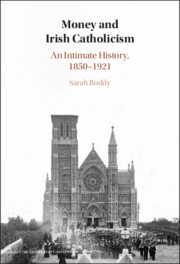
In the decades after the Great Famine, from about 1850, the Irish Catholic Church underwent a 'devotional revolution' and grew wealthy on a 'voluntary' system of payments from ordinary lay people. This study explores the lives of the people who gave the money. Focusing on both routine payments made to support clerical incomes and donations towards building the vast Catholic infrastructure that emerged in the period, Money and Irish Catholicism offers an intimate insight into the motivations, experiences, and emotions of ordinary people. In so doing, it offers a new perspective on the history of Irish Catholicism, focused less on the top-down exploits of bishops, priests, and nuns, and more on the bottom-up contributions of everyday Catholics. Sarah Roddy also demonstrates the extent to which the creation of the modern Irish Catholic Church was a transnational process, in which the diaspora, especially in the United States, played a vital role
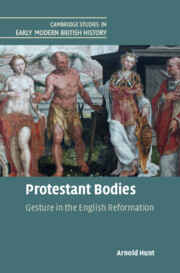
Religious worship is an embodied act, consisting not of words alone, but of words and gestures. But what did early modern English Protestants think they were doing when they went through the motions of worship? In Protestant Bodies, Arnold Hunt argues that the English Reformation was a gestural reformation that redefined the postures and motions of the body. Drawing on a rich array of primary sources, he shows how gestures inherited from the medieval liturgy took on new meanings within a drastically altered ritual landscape, and became central to the enforcement of religious uniformity in the sixteenth and seventeenth centuries. Protestant Bodies presents a challenging new interpretation of the English Reformation as a series of experiments in shaping and remaking the body, both individual and collective, with consequences that still persist today.
At the end of the twentieth century the discovery of 'slow', affective touch nerves in humans known as C Tactile (CT) afferents, which are entirely separate from the faster pathways for touching objects, had huge social implications. The Swedish neuroscientists responsible formulated an “affective touch hypothesis” or “social touch hypothesis” to consider their purpose. Part I offers a history of the science of social touch, from related discoveries in mammals by physiologists in the 1930s, to the recent rediscoveries of the CT nerves in humans. Part II considers how these findings are being intentionally folded into technologies for interaction. First, as mediated social touch, communicating at a distance through haptics. Second, with the increasing number of social and service robots in health care and domestic settings, the role of affective touch within human-robot interaction design.
This Element assesses the claim that Central Asian countries hold a special position as Russia's near abroad. The region has been important for millennia, and only after conquest in the second half of the nineteenth century did Russia become important for Central Asia. This connection became stronger after 1917 as Central Asia was integrated into the Soviet economy, with rail, roads, and pipelines all leading north to Russia. After independence, these connections were gradually modified by new trade links and by new infrastructure, while Russia's demand for unskilled labour during the 1999–2014 oil boom created a new economic dependency for Tajikistan and the Kyrgyz Republic. In 1991, political independence could not be accompanied by economic independence, but over the next three decades economic dependence on Russia was reduced, and the Central Asian countries have felt increasingly able to adopt political positions independent of Russia.
The Element challenges histories of the League of Nations that present it as a meaningful if flawed experiment in global governance. Such accounts have largely failed to admit its overriding purpose: not to work towards international cooperation among equally sovereign states, but to claim control over the globe's resources, weapons, and populations for its main showrunners (including the United States) – and not through the gentle arts of persuasion and negotiation but through the direct and indirect use of force and the monopolisation of global military and economic power. The League's advocates framed its innovations, from refugee aid to disarmament, as manifestations of its commitment to an obvious universal good and, often, as a series of technocratic, scientific solutions to the problems of global disorder. But its practices shored up the dominance of the western victors and preserved longstanding structures of international power and civilizational-racial hierarchy. This title is also available as Open Access on Cambridge Core.