To save content items to your account,
please confirm that you agree to abide by our usage policies.
If this is the first time you use this feature, you will be asked to authorise Cambridge Core to connect with your account.
Find out more about saving content to .
To save content items to your Kindle, first ensure no-reply@cambridge.org
is added to your Approved Personal Document E-mail List under your Personal Document Settings
on the Manage Your Content and Devices page of your Amazon account. Then enter the ‘name’ part
of your Kindle email address below.
Find out more about saving to your Kindle.
Note you can select to save to either the @free.kindle.com or @kindle.com variations.
‘@free.kindle.com’ emails are free but can only be saved to your device when it is connected to wi-fi.
‘@kindle.com’ emails can be delivered even when you are not connected to wi-fi, but note that service fees apply.
Exogenous shocks play a crucial role in cluster evolution and change. Yet the mechanisms and processes driving these changes have been relatively underexplored. Furthermore, cluster change studies have focused more on cooperative dynamics. The conflict dynamics in a cluster have received somewhat less attention. Therefore, the present study examines the impact of the exogenous shock on conflicts in a cluster. The Howrah foundry cluster in India constitutes the empirical context of this study. Our findings point to group-level conflict and fragmentation as crucial mechanisms of cluster change. The study further explores the role of rival associations in cluster governance. It shows that rival associations can lead to equitable distribution of opportunities in the cluster. The study also contributes to Indian business history literature. It sheds light on the growth dynamics of small-scale industries and indigenous entrepreneurship in the Howrah district of India. It further brings attention to relatively underexplored data sources in Indian business history.
Hary's Wallace is a compelling assertion of Scottish medieval national identity, drawing on tropes of blood and faith; it is the ultimate source for Braveheart.
Showcases Michael Herman's critical reflections from his thirty-five years of intelligence experience to examine the past and present of British intelligence.
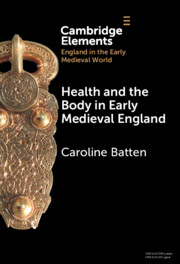
This Element explores ideas about the sick and healthy body in early medieval England from the seventh to the eleventh centuries, proposing that surviving Old English texts offer consistent and coherent ideas about how human bodies work and how disease operates. A close examination of these texts illuminates the ways early medieval people thought about their embodied selves and the place of humanity in a fallen world populated by hostile supernatural forces. This Element offers a comprehensive and accessible introduction to medical practice and writing in England before the Norman Conquest, draws on dozens of remedies, charms, and prayers to illustrate cultural concepts of sickness and health, provides a detailed discussion of the way impairment and disability were treated in literature and experienced by individuals, and concludes with a case study of a saint who died of a devastating illness while fighting demons in the fens of East Anglia.
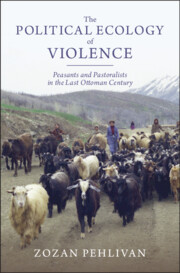
In this innovative, interdisciplinary work, Zozan Pehlivan presents a new environmental perspective on intercommunal conflict, rooting slow violence in socioeconomic shifts and climatic fluctuations. From the nineteenth to the early twentieth centuries, recurrent and extreme climate disruptions became an underlying yet unacknowledged component of escalating conflict between Christian Armenian peasants and Muslim Kurdish pastoralists in Ottoman Kurdistan. By the eve of the First World War, the Ottoman state's shifting responses to these mounting tensions transformed the conflict into organized and state-sponsored violence. Pehlivan upends the 'desert-sown' thesis and establishes a new theoretical and conceptual framework drawing on climate science, agronomy, and zoology. From this alternative vantage point, Pehlivan examines the impact of climate on local communities, their responses and resilience strategies, arguing that nineteenth-century ecological change had a transformative and antagonistic impact on economy, state, and society.
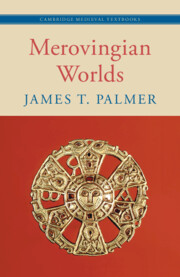
The Merovingian Kingdoms (c. 450–751) dominated much of what is now France, Belgium, and Germany, and were the most powerful and long-lived of the states that transformed the inheritance of Rome after the Crisis of the Fifth Century. Yet they often remain representative of an imagined 'Dark Age', in which civility was eroded by migration, violence, illiteracy, superstition, and a retreat from globality. Through a deep exploration of manuscripts, charters, and burials, Merovingian Worlds offers a fresh account of the period, outlining its complexities, diversity and creativity. This was a world built on dynamic political, socio-economic, cultural, and religious interactions, and shaped by its wide-ranging connections from Britain and Ireland to Byzantium and beyond. The book provides a critical introduction to the rich source material and the modern debates that shaped our perception of Western Europe after the Fall of Rome.
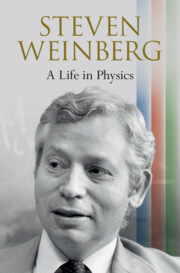
Steven Weinberg shares his candid thoughts, in his own words, on theoretical physics and cosmology, along with personal anecdotes and recollections of the people who helped shape his career. These memoirs of his life as a scientist and public figure cover his student days and early career, through the golden age of particle physics in the 1970s, his being awarded the Nobel prize, through to the end of the twentieth century. In addition to his research insights, Weinberg provides glimpses into his life in academia more broadly: dealing with the 'two-body problem', tenure, international conference travel, his book-writing, advisory work with JASON, and his advocacy for the Superconducting Super Collider. Physicists, historians of science and interested readers will find the presentation engaging and often witty, as Weinberg reflects on his life in physics.
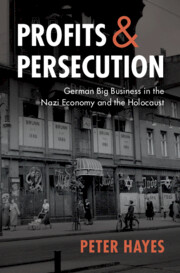
What role did German big business play in the persecution of European Jews during the Holocaust? What were its motivations? And how did it respond to changing social and economic circumstances after the war? Profits and Persecution examines how the leaders of Germany's largest industrial and financial enterprises played a key part in the catastrophes and crimes of their nation in the first half of the twentieth century. Drawing on evidence concerning the roughly one hundred most significant German firms of the Nazi era, Peter Hayes explores how large German corporations dealt with Jews, their property, and their labor. This study unites business history and the history of the Holocaust to consider both the economic and personal motivations that rendered German corporate leaders complicit in the actions of the Nazi Party. In doing so, it demonstrates how ordinary, familiar thought processes came to serve the ideological purposes of the Third Reich with lethal consequences.
'Globalizing Urban Environmental History' melds the methodological prescriptions of global urban history, the innovative methods of environmental history, and the interdisciplinary field of urban political ecology to trace the contours of a global urban environmental history. I argue that a global lens fixed on material, political, and cultural flows, movements, and connections-all of which were founded upon the structural integration of urban spaces through capitalist expansion and empire-sheds new light on the histories of specific urban political ecologies, on the one hand, and large-scale urban patterns on the other. These patterns comprise shared urban environmental imaginaries, strategies of environmental governance, and a global urban physical and cultural landscape stitched together by the adoption of fossil-fuel energies.
Is the history of emotions a methodology or a subject? What is the relationship between emotions and culture? What role does the body play in the human experience? Addressing these questions and more, this element emphasizes the often-overlooked role of emotional and sensory experiences when examining the Zionist experience in the early twentieth century. Focusing on the visceral and embodied historical aspects of the linguistic modernization of Hebrew, it argues that recent cultural studies on Jewish daily life in Palestine have reached an impasse, which the history of emotions could help us overcome. Interpreting Zionist texts not solely as symbolic myths but as a historical, lived experience, this element advocates for the significance of the history of emotions and experience as an innovative methodology with profound ethical implications for our polarized era.
Understanding the origins of policy ideas can be crucial when trying to explain dynamics of political change and continuity. Paradigmatic changes in the German pension system have been attributed to the import of “foreign” neoliberal policy ideas from transnational organizations and other countries. The literature describes such processes as policy diffusion, transfer, or translation. In contrast, this article argues that foreign pension ideas did not have a substantive influence on local policy innovations and preference-formation processes. Instead, pension policy pioneers developed their ideas predominantly “from within” through bricolage by reconfiguring long-standing domestic schools of thought. Drawing on a wide range of primary and secondary sources, the analysis combines a broad historical perspective with case studies of individual policy makers. This sheds new light on the careers of ideas and why significant actors pick them up at certain points.
This article scrutinizes public contestations over Black history during 1963’s Emancipation Centennial. Specifically, it investigates how the Kennedy administration censored the historian John Hope Franklin’s drafts for the chief commemorative effort Freedom to the Free, a history of civil rights since 1863. Reflecting the hubris of mid-twentieth-century racial liberalism, these edits excised white supremacy from American history, instead celebrating a confining definition of racial progress that prioritized Black equalization, adjustment, and incorporation into a deracialized liberal nationhood. The censoring of Franklin’s dissident Americanism therefore highlights how racial liberalism simultaneously promoted and suppressed Black history, historians, and public figures more generally.