To save content items to your account,
please confirm that you agree to abide by our usage policies.
If this is the first time you use this feature, you will be asked to authorise Cambridge Core to connect with your account.
Find out more about saving content to .
To save content items to your Kindle, first ensure no-reply@cambridge.org
is added to your Approved Personal Document E-mail List under your Personal Document Settings
on the Manage Your Content and Devices page of your Amazon account. Then enter the ‘name’ part
of your Kindle email address below.
Find out more about saving to your Kindle.
Note you can select to save to either the @free.kindle.com or @kindle.com variations.
‘@free.kindle.com’ emails are free but can only be saved to your device when it is connected to wi-fi.
‘@kindle.com’ emails can be delivered even when you are not connected to wi-fi, but note that service fees apply.
This article looks again at the history of British migration policy in the 1940s and 1950s by centering international and imperial politics, and by drawing on archives related to shipping. These sources suggest that the British government sought to reactivate a system of race-segregated mobility across the Empire-Commonwealth after the Second World War. This involved subsidizing fares for emigrants bound for Australia, transporting migrants from Europe to the UK, and withdrawing shipping from routes that connected the Caribbean to the UK. Very soon, however, these policies came under strain. There were not enough deep-sea ships to meet demand for berths to Australia or to bring over recruited European migrants. Then the Australian government found new ways to ship migrants from continental Europe by signing a deal with the International Refugee Organization, challenging UK policy to keep Australian immigration British. Meanwhile, new routes were opened up from the Caribbean and South Asia to the UK. These trends raised a host of dilemmas for policymakers and all related to transport infrastructure. Thinking about transport can deepen our understanding of migration history, and the article's conclusion suggests some of the ways that taking such an approach can contribute to existing explanations for the government's fateful decision to amend the UK's nationality and citizenship legislation during the 1960s.
Cartels today are illegal and illegitimate across the globe. Yet until the end of World War II, cartels were legal, ubiquitous, and popular—especially in Europe. How, then, did cartels become bad, if they had been considered a positive force for capitalist stabilization and peace in the first half of the 20th century? That is the question this dissertation poses. By the 1930s, over 1,000 monopolistic agreements regulated nearly half of world trade. International cartels governed the interwar world economy, setting prices and output quotas, dividing world markets, regulating trade flows, and even controlling the transfer of patents across firms and sovereign state borders. I conceptualize this regime as “cartel capitalism.” Most cartels were headquartered in industrial Europe. First, I trace how a surprising consensus in interwar Europe—comprising national governments; international organizations like the League of Nations; industrialists, led by the International Chamber of Commerce; federalists; and even socialists—backed cartels as a panacea to the problems of reconstruction after 1918, namely the quest for peace and stable markets. However, in the wake of 1945, most countries in Western Europe—along with the new supranational European Coal and Steel Community (ECSC, 1951) and European Economic Community (EEC)—started prohibiting cartels. My project illuminates the causes and consequences of this great reversal. Monopoly Menace reveals, for the first time, how Europe’s transnational reckoning with the shocks of the Great Depression, fascism, and total war produced a genuine anticartel revolution that rewrote the rules of the modern European and global economy. Monopoly Menace ends by illuminating how American, British, French, and West German postwar planners designed new national welfare states, the Bretton Woods Order, and the European Union on the neglected foundation of anti-cartel policies.
In this article I analyze Salvador Allende’s economic program and policies. I argue that the explosion of inflation during his administration (above 1,500% on a six-month annualized measure) was predictable, and I show that the government’s response to it was political. I postulate that runaway inflation generated major disaffection among the middle class and that that unhappiness paved the way to Pinochet’s coup d’état in 1973.
“Imperial Crucible” tells the story of the Aluminum Company of America (Alcoa) from the company’s founding in Pittsburgh in 1888 through the 1950s. Although scholars have long contended that American multinational corporations played a pivotal role in the industrialization of the United States, the building of a global working class, and the transformation of European empires, they have tended to see these stories as distinct, rather than interconnected. In contrast, Imperial Crucible focuses on a single firm to draw together the political-economic, working-class, and imperial history of American business. What the industrialists behind Alcoa built, I argue, was not a multinational but a transimperial corporation.
This article considers a significant but overlooked set of policy developments in the latter half of the twentieth century: the extension of collective bargaining rights to most health care workers, many of whom were formally excluded for three decades under the 1947 Taft-Hartley amendments. Drawing on primary sources including archival records, an exhaustive review of congressional testimony, and rulings from the quasijudicial agency governing private sector industrial relations, this article shows that health care workers did so in two interrelated processes. First, in coordination with the civil rights movement, workers mobilized and used both disruptive and legal social movement tactics. Second, in doing so they drew the state into and revealed its position in the collective bargaining process between workers and health institutions, facilitating what is conceptualized as cross-domain policy feedback. Cross-domain policy feedback occurs when a policy in one domain (e.g., public health spending) influences the politics of a policy in a seemingly separate one (e.g., labor and employment relations). Such effects, this article suggests, are likely to occur when a policy is relatively large in scale, implicates actors with a diverse set of interests, and offers significant ambiguity and discretion in its implementation. Empirically, this article is the first to chart the institutionalization of collective bargaining rights for health care workers, among the largest group of private sector employees in the postindustrial economy. It also offers a new theoretical and conceptual framework through which to study the ways by which public policies reshape political dynamics—an enduring research agenda for students of American politics and policy.
This article examines three high-profile House ethics cases involving former Speakers James Wright (1988–1989) and Newt Gingrich (1994–1997) and former House Majority Leader Tom DeLay (1997–2004). The analysis of the filing and disposition of charges in the three cases provides some evidence for the “politics-by-other-means” or “partisan-ethics-wars” framework that is sometimes used to evaluate ethics enforcement in Congress. However, the analysis also provides evidence of bipartisan agreement both in the ethics committee and on the floor. The article highlights the areas of bipartisan consensus and the principles behind that consensus. In paying attention to the content of the cases, it also highlights an important change in ethics investigations over time, specifically an increase in “political gain” cases. The article thus calls attention to aspects of House ethics investigations that are undervalued and inadequately addressed by the partisan-ethics-wars framework.
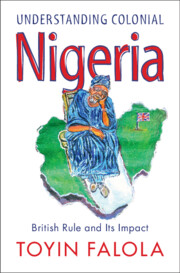
In this landmark new history, Toyin Falola analyses the impact of Britain's colonization of Nigeria from the late nineteenth century to 1960, when the country regained independence. Falola covers major events in depth, from the initial conquest and denial of Indigenous sovereignty, to the emergence and functioning of the colonial state, and later nationalist movements, offering fascinating insights into labour and trade relations, regionalism and nationalism, and Nigeria's role during the First and Second World Wars. Understanding Colonial Nigeria assesses the economic, political, social, and cultural changes that culminated in the emergence of a coalition of diverse groups agitating for the end of colonial rule from the 1940s – from labor coalitions and politicians to youth groups and market women. From the country's borders and state structure, to the present conflicts, Falola powerfully reflects on the lasting consequences of British intervention in the affairs of Nigerian states and communities.
Nineteenth-century London was not only the greatest city of its time but it had an equally immense port. Although the relationship between the two physically shaped the city and profoundly affected the lives and livelihoods of its inhabitants, historians have always told their stories separately. Sarah Palmer's authoritative work instead paints a picture of London as a maritime hub driven by trade, shipping, marine insurance, shipbuilding and meeting the needs of seafarers ashore. Drawing on disparate archival materials from dock company records, the National Archives, the London Metropolitan Archives and more, she reveals both the economic importance of international and domestic sea-borne trade and the unique urban geography it created. In creating this more interconnected understanding of Britain's capital, Palmer argues that the nineteenth-century transition from sail to steam didn't just affect London's port, but transformed the city and its economy with an impact comparable to that of the railways.
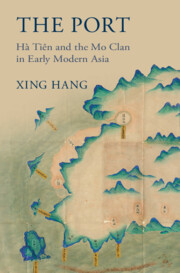
The Port (present-day Hà Tiên), situated in the Mekong River Delta and Gulf of Siam littoral, was founded and governed by the Chinese creole Mo clan during the eighteenth century and prospered as a free-trade emporium in maritime East Asia. Mo Jiu and his son, Mo Tianci, maintained an independent polity through ambiguous and simultaneous allegiances to the Cochinchinese regime of southern Vietnam, Cambodia, Siam, and the Dutch East India Company. A shared value system was forged among their multiethnic and multi-confessional residents via elite Chinese culture, facilitating closer business ties to Qing China. The story of this remarkable settlement sheds light on a transitional period in East Asian history, when the dominance of the Chinese state, merchants, and immigrants gave way to firmer state boundaries in mainland Southeast Asia and Western dominance on the seas.
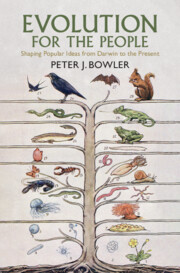
From Darwin's The Origin of Species to the twenty-first century, Peter Bowler reinterprets the long Darwinian Revolution by refocussing our attention on the British and American public. By applying recent historical interest in popular science to evolutionary ideas, he investigates how writers and broadcasters have presented both Darwinism and its discontents. Casting new light on how the theory's more radical aspects gradually grew in the public imagination, Evolution for the People extends existing studies of the popularization of evolutionism to give a more comprehensive picture of how attitudes have changed through time. In tracing changes in public perception, Bowler explores both the cultural impact and the cultural exploitation of these ideas in science, religion, social thought and literature.
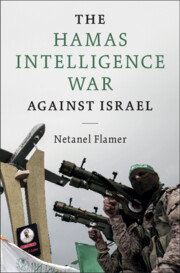
Since its founding in 1987, the political and ideological dimensions of the terror organisation Hamas have been well discussed by scholars. In contrast, this innovative study takes a new approach by exploring the entire scope of Hamas's intelligence activity against its state adversary, Israel. Using primary sources in Arabic, Hebrew and English, Netanel Flamer analyzes the development of Hamas's various methods for gathering information, its use of this information for operational needs and strategic analysis, and its counterintelligence activity against the Israeli intelligence apparatus. The Hamas Intelligence War against Israel explores how Hamas's activity has gradually become more sophisticated as its institutions have become more established and the nature of the conflict has changed. As the first full-length study to analyze the intelligence efforts of a violent non-state actor, this book sheds new light on the activities and operations of Hamas, and opens new avenues for intelligence research in the wider field.
Chapter 5 recounts the 2nd Texas’ first battle experience at Shiloh and the subsequent allegations of cowardice. It explains efforts by the men to defend themselves, as well as their supporters. Their Col. John C. Moore filed multiple reports to explain his unit’s actions the second day of the fight; their Lt. Col. William P. Rogers vowed to prove his men’s valor.