To save content items to your account,
please confirm that you agree to abide by our usage policies.
If this is the first time you use this feature, you will be asked to authorise Cambridge Core to connect with your account.
Find out more about saving content to .
To save content items to your Kindle, first ensure no-reply@cambridge.org
is added to your Approved Personal Document E-mail List under your Personal Document Settings
on the Manage Your Content and Devices page of your Amazon account. Then enter the ‘name’ part
of your Kindle email address below.
Find out more about saving to your Kindle.
Note you can select to save to either the @free.kindle.com or @kindle.com variations.
‘@free.kindle.com’ emails are free but can only be saved to your device when it is connected to wi-fi.
‘@kindle.com’ emails can be delivered even when you are not connected to wi-fi, but note that service fees apply.
A brief poem about Cixous’s encounter with a feather in the author’s garden. This closing piece picks up motifs of the garden, the secret, and the relation between human and non-human animals (especially birds) developed over the course of the book.
For several decades the importance of Cixous’s work In the English-speaking world has been represented primarily in terms of ‘feminism’, ‘feminist theory’ and ‘women’s writing’. This chapter proposes that it might more aptly be construed in terms of ‘the uncanny’, the troublingly strange and/or strangely familiar. This figure, it is argued, also proves crucial for understanding the affinities between Cixous and Derrida. Particular attention is given to Cixous’s reading of Freud’s ‘The Uncanny’ in her remarkable essay ‘Fiction and Its Phantoms’ (1972), together with her somewhat later reflections on Lewis Carroll’s Alice in Wonderland and Through the Looking-Glass. F. W. J. Schelling memorably described the feeling of the uncanny as arising when ‘what ought to have remained secret and hidden … comes to light’. This sense of unveiling links up with Cixous’s reading of Carroll as the author of ‘escaping texts’, where ‘escape’ is understood first of all as literally ‘getting out of one’s cape’. Exposition of another ‘cloak’-word, Humpty Dumpty’s neologistic ‘portmanteau’ (literally, ‘cloak-’ or ‘mantle- carrying’), leads to an account of Cixous’s work as double- or portmanteau-writing. The portmanteau comes to designate an uncanny double logic of the ‘escaping text’ and what ‘escapes text’.
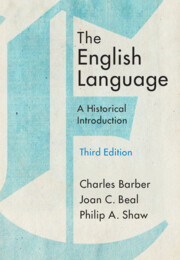
A comprehensive yet concise history of the English language, this accessible textbook helps those studying the subject to understand the formation of English. It tells the story of the language from its remote ancestry to the present day, especially the effects of globalisation and the spread of, and subsequent changes to, English. Now in its third edition, it has been substantially revised and updated in light of new research, with an extended chapter on World Englishes, and a completely updated final chapter, which concentrate on changes to English in the twenty-first century. It makes difficult concepts very easy to understand, and the chapters are set out to make the most of the wide range of topics covered, using dozens of familiar texts, including the English of King Alfred, Chaucer, Shakespeare, and Addison. It is accompanied by a website with exercises for each chapter, and a range of extra resources.
Second language (L2) pronunciation research has measured speech comprehensibility by asking listeners to assess L2 learners’ speaking performance with rating scales. While some studies have provided validity evidence for these rating scales, few studies have examined the extent to which those scales effectively distinguish among L2 speakers. To fill this gap, the present study examines the 9-point scale used in Saito et al. (2020: Annual Review of Applied Linguistics, 40, 9–25.) and the 100-point scale in Huensch and Nagle (2023: Studies in Second Language Acquisition, 45(2), 571–585.) from a Rasch measurement perspective and showcases post hoc score category collapsing as a potential countermeasure against suboptimal rating scale functioning. Findings suggested that different score categories represented the same ability level and were therefore interchangeable. Collapsing these score categories yielded shorter but more functional scales without compromising the psychometric qualities of the original scales. These findings suggest that researchers need to empirically refine their scale lengths rather than uncritically following their conventional measurement practices.
Most theories of sentence structure acknowledge predicates, yet what one understands a predicate to be can vary significantly from one theory to the next, and from one grammarian to the next. This article surveys how the predicate notion is understood in semantics, syntax, and grammar studies quite generally. It scrutinizes the various predicate concepts, and then argues in favor of one particular understanding of predicates in syntax, one that is especially congruent with a dependency grammar (DG) approach to sentence structures. Predicates are catenae, the catena being a concrete unit of syntactic analysis. The catena-based approach to predicates is motivated in three areas: in terms of the synthetic vs. analytic realizations of meaning, in terms of entailment patterns, and in terms of pronoun resolution. The catena-based approach makes insightful generalizations in these areas possible.
The ending speech in Aesopic fables, where stories conclude with direct utterances from characters, is not merely a didactic tool but a crucial narrative device constructing hermeneutic complexity. This study systematically examines the narrative function of ending speech through computational analysis of 600 Aesopic fables from Laura Gibbs’ edition. We quantitatively analyzed the complex relationships between ending speech, story content, explicit morals and speaker identity using natural language processing techniques. The analysis reveals three key findings. First, the average similarity of ending speeches (0.1820) is significantly lower than that of stories (0.3578), confirming that ending speech forms a unique semantic domain rather than serving as a simple summary of the narrative. Latent Dirichlet allocation analysis also shows that ending speeches are differentiated into 13 topics, displaying a more complex structure than stories (seven topics). Second, we found that ending speech constitutes a distinct narrative domain from epimythium, with an overwhelming ratio of their relationships being either independent (76.8%) or tensional (21.4%). This indicates that the ending speech is a narrative device that amplifies interpretive complexity, often clashing with the epimythium rather than reinforcing it. Third, 249 different ending speech speakers each represent unique voices and perspectives, with the frequency of utterances – fox (34 times), lion (19 times) and wolf (18 times) – demonstrating a value system in Aesopic fables where wisdom is prioritized over physical strength. These findings indicate that the ending speech establishes complex and sometimes tensional relationships with both story and epimythium, thereby transforming fables into “open work” that can be newly interpreted. This study provides empirical evidence for understanding Aesopic fables not as simple didactic tales but as complex narratives with structural features supporting polyphonic interpretation, demonstrating the potential of computational narratology.
'Transfiction' refers to the phenomenon of language mediators portrayed as characters in literature. Research investigating this phenomenon has developed through a long series of case studies. While providing in-depth analyses of different instances of transfiction, case studies have produced findings that are anchored to specific texts, consequently precluding theoretical observations at a higher level of abstraction. Thus, this Element constructs a concentrated profile of transfiction. It asks about the state of the art of this research area and its potential to inform other subfields of translation studies. By adopting a meta-analytical research style, the Element retraces the development of transfiction studies, identifying patterns and lacunae. It then goes on to thread transfiction together with previously disconnected research strands, such as translator studies, suggesting new research questions and methodologies. Ultimately, Charting Transfiction provides a reference point for future research in this area, as well as other subfields of translation studies.
This study proposes a new qualitative method in historical pragmatics to extract politeness formulae for master-servant directives from nineteenth-century French advice literature. Whereas traditional politeness models study strategic face-saving, this study investigates non-strategic, routinized or conventionalized politeness by mapping explicit linguistic instructions in historical prescriptive metasources. Because etiquette and conduct books targeted middle-class households – typically defined as having at least one live-in servant – they routinely discussed interactions with servants. The self-built corpus comprises 43 sources: etiquette and conduct manuals, alongside servant manuals. Through close reading I manually extract politeness formulae, which are compiled into a formulary. Historians underline servants’ harsh conditions and social erasure, typically mirrored by bare imperatives. Advice on a kind prosody is widespread, but politeness formulae (e.g. voulez-vous? – je vous prie) only emerge in the 1870s, when the crisis of domestic service begins. This shift suggests that domestic service was increasingly viewed in transactional rather than purely hierarchical terms. Despite these changes, master-servant, servant-master and peer directives remain rigidly compartmentalized. The article addresses a notable gap in French historical im/politeness studies by showing how politeness formulae in prescriptive discourse reveal the persistence of caste-like social structures in nineteenth-century French domestic service.
Some of the most fundamental questions in linguistic theory concern grammatical architecture. Focusing on morphosyntax specifically, how many components are ‘morphosyntactic’ phenomena distributed over, and how do they divide up their labor? Answers differ: some versions of Distributed Morphology posit a rich postsyntactic morphological component, whereas Morphology-as-Syntax approaches sharply reduce its role. Against that backdrop, this article investigates theme vowels, which are often analyzed as purely morphological (nonsyntactic). A diagnostic is introduced for their derivational origin, based on the narrow-syntactic phenomenon of lexical selection (L-selection): if a theme vowel is L-selected (to the exclusion of others) by a higher head, it must be in the narrow syntax; otherwise, the test is inconclusive. The former situation obtains in Latin: in synthetic causatives, fac- ‘make’ can be immediately preceded by -ē/-e but no other theme vowel. An analysis is developed on which theme vowels are syntactic and hence L-selectable. Alternative analyses on which theme vowels realize dissociated nodes added postsyntactically fail empirically or become notational variants of the syntactic analysis, since they must give theme vowels narrow-syntactic featural ‘precursors’. Theme vowels, then, are syntactic, introduced by (External) Merge. Insofar as dissociated-node insertion can be replaced with Merge, suspicious theoretical duplications are avoided, in line with minimalist goals.
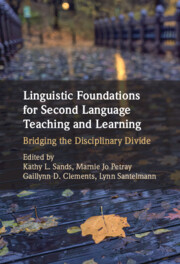
Bringing together an international team of scholars from various linguistic areas, theoretical viewpoints, and educational contexts, this book makes the case for strengthening the role of linguistics in second language (L2) teaching and learning. Seeing firsthand how the strengths and tools of the science of language contribute greatly to pedagogical effectiveness in the L2 classroom, the authors of each chapter lay out the strengths of linguistics for L2 teaching and learning with examples, case studies, research, anecdotal evidence, illustrations, and sample activities for the language classroom. The book argues as well for the place of L2 theory and data in linguistic inquiry and linguistics education. Bringing these disparate disciplines together around the shared reality of language itself has great promise of mutual benefit. Accessibly written with readers from both disciplines in mind, each chapter includes recommended readings and discussion questions intended to spark conversations across the disciplines.