To save content items to your account,
please confirm that you agree to abide by our usage policies.
If this is the first time you use this feature, you will be asked to authorise Cambridge Core to connect with your account.
Find out more about saving content to .
To save content items to your Kindle, first ensure no-reply@cambridge.org
is added to your Approved Personal Document E-mail List under your Personal Document Settings
on the Manage Your Content and Devices page of your Amazon account. Then enter the ‘name’ part
of your Kindle email address below.
Find out more about saving to your Kindle.
Note you can select to save to either the @free.kindle.com or @kindle.com variations.
‘@free.kindle.com’ emails are free but can only be saved to your device when it is connected to wi-fi.
‘@kindle.com’ emails can be delivered even when you are not connected to wi-fi, but note that service fees apply.
The fourth Lateran Council coincided with the rise of the universities and of the new orders of friars, those of St Francis and St Dominic, and marked the beginning of a new era in the pastoral life of the church. When it called the direction of souls ‘the art of arts’ it made clear the purpose of the pastoral programme which its decrees laid upon bishops and clergy: an informed laity instructed by a reformed clergy. The clergy, who had to be disciplined, educated, orthodox and fitted by character and training for the direction of souls, were the key to its success. They had, in effect, to live good lives and to study theology. The friars grasped the full implication of the conciliar decrees and made a determined effort to put them into practice. Their studies always had a practical side: ‘the purpose of study is preaching, and of preaching the salvation of souls’, as Humbert of Romans (master general of the Dominicans 1254–63) put it. The studies of the friars were aimed at their apostolate of preaching in the pulpit and instruction in the confessional. This combination of learning and its practical application to Christian life made them indispensable to those committed to making a reality of the conciliar decrees.
The young John Duns was committed to the ideals and expectations of his Order and the renewal program of the Church. Initially, he had missed Paris. At Oxford he had already been professor designatus. Now, after about twenty years in Oxford, he sailed for France.
According to the Renaissance view of the development of Western philosophy there is a ‘breakdown of traditional thought’ around 1500. This approach leads to the paradoxical view that English and French, German and Italian, Spanish and Dutch, Scandinavian, Middle and Eastern European philosophy start only after 1500 and that modern European philosophy is not much older than American thought. Moreover, modern history of modern philosophy pays a great deal of attention to the great individual philosophers outside the universities. Hobbes and Descartes, Locke and Berkeley, Spinoza and Leibniz are those so privileged.
However, this approach begs some questions: can systematic thought of the sixteenth, seventeenth and eighteenth centuries be understood without taking into account university thought? Can the thought of the universities be understood without interpreting it in the light of the thirteenth-, fourteenth- and fifteenth-century universities? Can a realistic approach to the history of Western philosophy ignore the continuity of thought from about 1200 to about 1800? The European university shows a remarkable continuity between its birth in around 1200 till around 1800. The six first centuries of the Western university (±1200–±1800), consisting of two sets of three centuries, form one specific whole.
The traditional view overlooks medieval thought and the philosophical contributions of its Augustinian main line. The separation of modern languages from Latin and the separation of modern philosophy from medieval philosophy are linked with the separation of philosophy from theology, but what we now call theology is the key to understanding the dynamics of Western and medieval thought in an alternative way.
The originality of medieval philosophy and the creativity of its logic and theory of knowledge speak very much in its favor. Medieval philosophy may have been considered uninteresting because of its alleged lack of originality. However, its contributions are actually of tremendous cultural importance and they are theoretically interesting for modern philosophy and systematic theology. The reason is that many of its innovations do not have parallel theories in ancient philosophy. Medieval thought yields plenty of evidence refuting the popular view that systematic thought during these dark centuries was unilluminating, but the legacy of medieval theories is fresh and particularly conspicuous in logic and semantics, theology and philosophy. L. M. de Rijk brilliantly pointed out how creative medieval thought has been. In his important introduction to medieval philosophy, De Rijk lists four examples of original contributions that excel the inventions of ancient Greek, Hellenistic and Latin philosophy: terminist logic, which is in fact a part of the much wider phenomenon of the logica modernorum, the metaphysics of Thomas Aquinas, the critical theory of knowledge of the fourteenth and fifteenth centuries, and a way of thought which differs markedly from necessitarian Greek philosophy. Duns Scotus' contributions to a critical theory of knowledge are the main theme of this chapter.
The union of existential and intellectual forces in the thirteenth and fourteenth centuries created many theoretical innovations. Revelation influenced philosophy in terms of a specific theological model of thought.
From Parmenides onwards, ancient and medieval thought had a special liking for metaphysical speculation. No doubt, speculative thought was most influentially outlined by Plato and Aristotle. However, what the Christian thinkers achieved in metaphysics was definitely more than just applying and adapting what was handed down to them. No student of medieval speculative thought can help being struck by the peculiar fact that whenever fundamental progress was made, it was theological problems which initiated the development. This applies to St Augustine and Boethius, and to the great medieval masters as well (such as Anselm, Thomas Aquinas, Duns Scotus). Their speculation was, time and again, focused on how the notion of being and the whole range of our linguistic tools can be applied to God's Nature (Being).
The originality of medieval philosophy and the creativity of its logic and theory of knowledge make themselves felt in many contributions without any counterpart in ancient philosophy. Its novelties possess a tremendous cultural importance in general and great theoretical interest for modern philosophy and current systematic theology in particular.
In his important introduction to medieval philosophy L. M. de Rijk lists four examples of original contributions that excel the inventions of ancient Greek, Hellenistic, and Roman philosophy: (1) terminist logic (which is in fact to be seen as a part of the wider phenomenon of the logica modernorum); (2) the metaphysics of Thomas Aquinas; (3) the critical theory of knowledge of the fourteenth and fifteenth centuries; and (4) a way of thought which markedly differs from necessitarian Greek philosophy.
Philosophy written in Arabic and in the Islamic world represents one of the great traditions of Western philosophy. Inspired by Greek philosophical works and the indigenous ideas of Islamic theology, Arabic philosophers from the ninth century onwards put forward ideas of great philosophical and historical importance. This collection of essays, by some of the leading scholars in Arabic philosophy, provides an introduction to the field by way of chapters devoted to individual thinkers (such as al-Farabi, Avicenna and Averroes) or groups, especially during the 'classical' period from the ninth to the twelfth centuries. It also includes chapters on areas of philosophical inquiry across the tradition, such as ethics and metaphysics. Finally, it includes chapters on later Islamic thought, and on the connections between Arabic philosophy and Greek, Jewish, and Latin philosophy. The volume also includes a useful bibliography and a chronology of the most important Arabic thinkers.
The Cambridge Companion to Medieval Philosophy, first published in 2003, takes its readers into one of the most exciting periods in the history of philosophy. It spans a millennium of thought extending from Augustine to Thomas Aquinas and beyond. It includes not only the thinkers of the Latin West but also the profound contributions of Islamic and Jewish thinkers such as Avicenna and Maimonides. Leading specialists examine what it was like to do philosophy in the cultures and institutions of the Middle Ages and engage all the areas in which medieval philosophy flourished, including language and logic, the study of God and being, natural philosophy, human nature, morality, and politics. The discussion is supplemented with chronological charts, biographies of the major thinkers, and a guide to the transmission and translation of medieval texts. The volume will be invaluable for all who are interested in the philosophical thought of this period.
Anselm of Canterbury (1033–1109), Benedictine monk and the second Norman archbishop of Canterbury, is regarded as one of the most important philosophers and theologians of the Middle Ages. The essays in this volume explore all of his major ideas both philosophical and theological, including his teachings on faith and reason, God's existence and nature, logic, freedom, truth, ethics, and key Christian doctrines. There is also discussion of his life, the sources of his thought, and his influence on other thinkers. New readers will find this the most convenient, accessible guide to Anselm currently available. Advanced students and specialists will find a conspectus of developments in the interpretation of Anselm.
Each volume in this series of companions to major philosophers contains specially commissioned essays by an international team of scholars, together with a substantial bibliography, and will serve as a reference work for students and non-specialists. One aim of the series is to dispel the intimidation such readers often feel when faced with the work of a difficult and challenging thinker. John Duns Scotus (1265/6–1308) was (along with Aquinas and Ockham) one of the three principal figures in medieval philosophy and theology, with an influence on modern thought arguably even greater than that of Aquinas. The essays in this volume systematically survey the full range of Scotus' thought. They take care to explain the technical details of his writing in lucid terms and demonstrate the relevance of his work to contemporary philosophical debate. New readers will find this the most convenient and accessible guide to Scotus currently available.
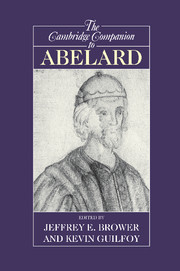
Peter Abelard (1079–1142) is one of the greatest philosophers of the medieval period. Although best known for his views about universals and his dramatic love affair with Heloise, he made a number of important contributions in metaphysics, logic, philosophy of language, mind and cognition, philosophical theology, ethics, and literature. The essays in this volume survey the entire range of Abelard's thought, and examine his overall achievement in its intellectual and historical context. They also trace Abelard's influence on later thought and his relevance to philosophical debates today.
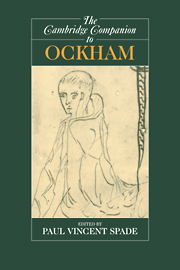
The Franciscan William of Ockham (c. 1288–1347) was an English medieval philosopher, theologian, and political theorist. Along with Thomas Aquinas and Duns Scotus, he is regarded as one of the three main figures in medieval philosophy after around 1150. Ockham is important not only in the history of philosophy and theology, but also in the development of early modern science and of modern notions of property rights and church-state relations. This volume offers a full discussion of all significant aspects of Ockham's thought: logic, philosophy of language, metaphysics and natural philosophy, epistemology, ethics, action theory, political thought and theology. It is the first study of Ockham in any language to make full use of the new critical editions of his works, and to consider recent discoveries concerning his life, education, and influences.
This book has two main strands of ideas that encompass not only the beginnings of philosophy, but also the foundation of Western civilization and much of what we take for granted in our mental outlook in the modern world. The two strands are: ancient – Plato, Aristotle, Lucretius, Sextus Empiricus and Plotinus; and medieval – Augustine, Anselm, Aquinas, Duns Scotus and Ockham. These comprise, roughly speaking, two thousand-year stretches from respectively 600 BCE to 300 CE, and 300 CE to 1600 CE. Without knowledge of these thinkers an understanding of the Western world would be a poor thing indeed. The ancient strand, which extends into the Roman period, is pre-Christian in its dominant ideas and contrasts with the medieval strand when Christian ideas prevailed. However, Christian European philosophy does not mark a break with ancient philosophy, but rather selectively incorporates it within the overarching Christian worldview. This is not a book of history that is concerned with the causes and influences of ideas whatever their merit, but a book of philosophy that is concerned with outstanding ideas and the quality of the arguments for them.
We begin with Plato (427–347 BCE) because philosophy proper begins with Plato. Plato's work marks perhaps the most important turning point in the development of mankind. For the first time in human history, when considering what is true, what we should believe, how we ought to live, the answers are advocated not on the basis of ideas found in supposedly holy books, or the word of great authorities, or the mere length of time an idea has been around.
Beyond a few details, little is known of the life of John Duns Scotus (c.1266–1308). Both the generally accepted date and place of his birth are speculative. According to scholars, 1266 is most likely, given one date that is secure, namely, that of his ordination to the priesthood in Northampton on 17 March 1291. Under canon law, 25 was the earliest age allowable for ordination. The Bishop of Lincoln (in whose huge diocese both Northampton and Oxford were then located) conducted an earlier ordination on 23 December 1290. Thus, assuming that Scotus was ordained at the first opportunity, this makes his birth sometime between late December 1265 and mid-March 1266. Scholars now hold that the “Duns” in his name should be understood to refer to the town of Duns just north of the border between England and Scotland, in Berwickshire, curiously only a few miles away from Hume's birthplace.
His ordination in Northampton implies that Scotus was in Oxford by 1291. Another concrete reference places Scotus in Oxford in 1300. Scotus's name appears in a letter, dated 26 July, as one of 22 friars presented to the bishop of Lincoln for a licence to hear confessions. The list of names includes Philip Bridlington as the incoming Franciscan regent master (i.e. full professor) in theology. Bridlington was regent master for the year 1300–1301. And we know that Scotus took part in a disputation under Bridlington during this year.
Until recently, Sextus Empiricus's Outlines of Pyrrhonism had been little read in modern times, and less understood. But in the last quarter-century, a revival of interest in later Greek philosophy in general, and scepticism in particular, has seen it largely restored to its rightful place as one of the most influential texts in the entire history of Western philosophy. In this chapter, I shall concentrate upon producing my own outline of its contents; but I shall also seek to put it in its proper place in the Greek sceptical tradition, as well as within the longer tradition of Western epistemology, upon which, principally through the mediation of Descartes, it has exercised an incalculable, if often largely obscured, influence.
Sextus the empiricist
The sobriquet empeirikos indicates in all probability that Sextus was a member of the empirical school of medicine, which flourished from the middle of the third century BCE at least until the third century CE. We cannot date his career with any certainty; but it must have unfolded in the late second or early third centuries CE. He is mentioned in Diogenes Läertius's Lives of the Philosophers, in the list of prominent Pyrrhonian philosophers (DL 9.116); but we do not know precisely when Diogenes wrote (although, again, the third century seems likely), and nor can we date those philosophers said by Diogenes to be his teacher and his pupil (Herodotus of Tarsus and Saturninus).
Augustine is one of the most influential authors who have ever existed; perhaps only Aristotle has had more effect through his writings on the development of Western culture. That does not in itself make Augustine a fit subject for a volume concerned with philosophy; but I shall try to show that in fact he does qualify to be counted among the philosophers, in our narrow contemporary Anglophone understanding of the word, even though his place among them is not in the premier division (he did not lack the aptitude, I believe, but he did lack the training, and the time).
The reason why Augustine can be counted as one of our founding philosophers is that among the voluminous writings that survive from him (more words than from any other ancient author) many contain discussion of what in our tradition are instantly recognizable as philosophical problems, conducted at an instantly recognizable standard of step-by-step reasoning: put otherwise, he has a place in the line of succession that stretches to us over 25 centuries from Parmenides and Socrates in the fifth century bce. Within the collection of these philosophy-rich works stands, perhaps pre-eminently, City of God. In a later section I shall outline its structure; but first let us see how it came to be written, who was the man who wrote it, and in what ways that man, although mainly famous for non-philosophical reasons, nevertheless ranks among the philosophers.
The presence of a book whose title translates as “Summary of Theology” might seem odd in a list of great works of philosophy. Yet Aquinas's major work does make a significant contribution to the history of philosophy and has had wide-ranging influence on many philosophers. However, the initial puzzlement one might feel about the title is reflected in the different kinds of scholarly responses to Aquinas's work. Over the centuries, some philosophers have delighted in attacking Aquinas as the philosophical representative of the Catholic Church, and in so doing exposing the perceived errors and perniciousness of that institution. Others have treated Aquinas's writings as almost holy writ and have exhibited excessive reverence and lack of critical distance in their appreciation of his thought. In both approaches there has been a layer of non-philosophical baggage obscuring the philosophical merits or demerits of Aquinas's work.
This issue is ongoing and is reflected in recent scholarship on Aquinas. While there has been some excellent work investigating the philosophical value of Aquinas's thought, much recent work focuses on Aquinas as a theologian and seeks to downplay the independent philosophical value of his writing. Some of this seeks to counterbalance readings of Aquinas that treat him anachronistically and ignore the historical context of the production of his work. However one can be hermeneutically faithful to that context while simultaneously treating his work as a contribution to the history of philosophy.
Plato's Republic is many things to many people. To some it is among the first works in political theory in the Western tradition. To others it is a penetrating discussion of the relationship between the arts and the state, the nature of education or the sociological role of myth. To others still it may be the first examination of a fundamental ethical question, or the presentation of a fundamental metaphysical theory, or simply the locus classicus of classical Platonism. And as far as I can tell they may all be right. Nevertheless, I believe that the Republic contains a single thread of argument that one must come to terms with before the other issues in the Republic can be properly understood, and it is this thread of argument that will be the focus of this essay.
Before turning to the Republic, let me say a brief word about its author. To the best of our knowledge Plato was born to an aristocratic family in Athens in 427 BCE. His father, Ariston, who traced his lineage to the old kings of Athens, died in Plato's youth. His stepfather, Pyrilampes was a personal friend of Pericles, the great Golden Age Athenian statesman, and his mother, Perictione, was related to Solon, the famous Athenian legal reformer. Some time in his late teens or early twenties, Plato began to associate with Socrates (469–399 BCE), who was executed for impiety by the Athenians in 399 BCE.
The philosopher, as Aristotle is called by St Thomas Aquinas, was born in Stagira, northeast Greece, in 384 BCE, and was the most eminent of Plato's students. His father was doctor to King Amyntas of Macedon, and tradition has it that Aristotle later became the tutor of King Philip's son, the future Alexander the Great. Early on in the Nicomachean Ethics, one of his two major works on ethics, Aristotle says that his enquiry is “a sort of Politics”. Despite the lip service to kingship in his Nicomachean Ethics, the virtues Aristotle describes, especially the “nameless” ones, seem well suited to a democracy. Aristotle's interests in medicine and biology, no doubt gained from his father, lead him to compare the good human being with a doctor. The analogy had already been drawn by Protagoras, but whereas Protagoras held that whatever some person happens to think is good is good for that person, Aristotle has an objective account of happiness. What happiness is does not depend upon what anyone happens to think, although the good person will have the right view of what happiness is.
Aristotle has often been called a “eudaimonist” because he thinks that our ultimate goal in life is happiness: eudaimonia. The Greek word suggests that someone who is happy has a favourable guardian spirit (“daimōn”), and Aristotle discusses the question of how much of happiness is due to luck and how much is up to us.