To save content items to your account,
please confirm that you agree to abide by our usage policies.
If this is the first time you use this feature, you will be asked to authorise Cambridge Core to connect with your account.
Find out more about saving content to .
To save content items to your Kindle, first ensure no-reply@cambridge.org
is added to your Approved Personal Document E-mail List under your Personal Document Settings
on the Manage Your Content and Devices page of your Amazon account. Then enter the ‘name’ part
of your Kindle email address below.
Find out more about saving to your Kindle.
Note you can select to save to either the @free.kindle.com or @kindle.com variations.
‘@free.kindle.com’ emails are free but can only be saved to your device when it is connected to wi-fi.
‘@kindle.com’ emails can be delivered even when you are not connected to wi-fi, but note that service fees apply.
Studying for the GRE can be overwhelming! This book is long because it contains all the information you need to ace the exam, but not every student needs to study every chapter in equal detail. Here are some suggestions for how to use this book.
• Only numbered equations are worth remembering. The Physics GRE is a test of outside knowledge, so some memorization is inevitable. However, we have made a concerted effort to separate equations that are only used in specific worked examples from equations that are worth remembering for the test. Only the equations worth remembering are given equation numbers and are included in the Equation Index at the back of the book along with the page number where they appear; anything else you can safely forget for test day. This is still quite a long list, so rather than memorize each equation, check out Chapter 9 for suggestions on how to reduce your memorization workload by deriving more complex equations from more basic ones.
• Use these sample exams as diagnostics. ETS has released precious few actual GREs, and only the most recent (from 2001, 2008, and 2017) are representative of the current content of the test. We strongly suggest you leave the ETS exams until shortly before the actual test, where you can take them under simulated test-taking conditions. To start your studying, consider taking one of the sample exams provided in this book as a diagnostic, and note which areas you need to review the most. You can then focus on the review chapters covering these particular subject areas. Once you feel you've sufficiently filled in the gaps in your knowledge of undergraduate physics, you can take another sample exam and track your improvement, leaving the last exam for extra practice a week or two before the test, should you need it. Because we don't have access to ETS's proprietary scoring formula, we do not attempt to offer any conversion between raw score and scaled score (200–990) for our sample exams. Guessing at a formula would be extremely misleading at best, so use your score on our exams only as an estimate, but by all means use the ETS-provided conversion charts when taking the ETS exams.
Photometric observations in V and I bands and low-dispersion spectra of 10 ultrashort-period binaries (NSVS 2175434, NSVS 2607629, NSVS 5038135, NSVS 8040227, NSVS 9747584, NSVS 4876238, ASAS 071829-0336.7, SWASP 074658.62+224448.5, NSVS 2729229, NSVS 10632802) are presented. One of them, NSVS 2729229, is newly discovered target. The results from modelling and analysis of our observations revealed that (i) eight targets have overcontact configurations with considerable fill-out factor (up to 0.5), while NSVS 4876238 and ASAS 0718-03 have almost contact configurations; (ii) NSVS 4876238 is rare ultrashort-period binary of detached type; (iii) all stellar components are late dwarfs; (iv) the temperature difference of the components of each target does not exceed 400 K; (v) NSVS 2175434 and SWASP 074658.62 + 224448.5 exhibit total eclipses and their parameters could be assumed as well determined; (v) NSVS 2729229 shows emission in the Hα line. Masses, radii, and luminosities of the stellar components were estimated by the empirical relation ‘period, orbital axis’ for short- and ultrashort-period binaries. We found linear relations mass–luminosity and mass–radius for the stellar components of our targets.
We report the results of Long Baseline Array observations made in 2001 of ten southern sources proposed by Mattox et al. as counterparts to EGRET >100 MeV gamma-ray sources. Source structures are compared with published data where available and possible superluminal motions identified in several cases. The associations are examined in the light of Fermi observations, indicating that the confirmed counterparts tend to have radio properties consistent with other identifications, including flat radio spectral index, high brightness temperature, greater radio variability, and higher core dominance.
We present the first data release of the SkyMapper Southern Survey, a hemispheric survey carried out with the SkyMapper Telescope at Siding Spring Observatory in Australia. Here, we present the survey strategy, data processing, catalogue construction, and database schema. The first data release dataset includes over 66 000 images from the Shallow Survey component, covering an area of 17 200 deg2 in all six SkyMapper passbands uvgriz, while the full area covered by any passband exceeds 20 000 deg2. The catalogues contain over 285 million unique astrophysical objects, complete to roughly 18 mag in all bands. We compare our griz point-source photometry with Pan-STARRS1 first data release and note an RMS scatter of 2%. The internal reproducibility of SkyMapper photometry is on the order of 1%. Astrometric precision is better than 0.2 arcsec based on comparison with Gaia first data release. We describe the end-user database, through which data are presented to the world community, and provide some illustrative science queries.
Results from BVRI photometric observations of the young stellar object V2492 Cyg collected during the period from August 2010 to December 2017 are presented. The star is located in the field of the Pelican Nebula and it was discovered in 2010 due to its remarkable increase in the brightness by more than 5 mag in R-band. According to the first hypothesis of the variability, V2492 Cyg is an FUor candidate. During subsequent observations, it was reported that the star shows the characteristics inherent to EXor- and UXor-type variables. The optical data show that during the whole time of observations the star exhibits multiple large amplitude increases and drops in the brightness. In the beginning of 2017, we registered a significant increase in the optical brightness of V2492 Cyg, which seriously exceeds the maximal magnitudes registered after 2010.
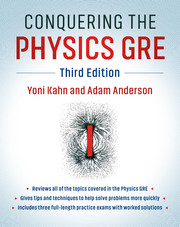
The Physics GRE plays a significant role in deciding admissions to nearly all US physics Ph.D. programs, yet few exam-prep books focus on the test's actual content and unique structure. Recognized as one of the best student resources available, this tailored guide has been thoroughly updated for the current Physics GRE. It contains carefully selected review material matched to all of the topics covered, as well as tips and tricks to help solve problems under time pressure. It features three full-length practice exams, revised to accurately reflect the difficulty of the current test, with fully worked solutions so that students can simulate taking the test, review their preparedness, and identify areas in which further study is needed. Written by working physicists who took the Physics GRE for their own graduate admissions to the Massachusetts Institute of Technology, this self-contained reference guide will help students achieve their best score.
The coronal field typically reorganizes itself to attain a force-free field configuration. We have evaluated the power law index of the energy distribution f(E) = f0E−α by using a model of relaxation incorporating different profile functions of winding number distribution f(w) based on braided topologies. We study the radio signatures that occur in the solar corona using the radio data obtained from the Gauribidanur Radio Observatory (IIA) and extract the power law index by using the Statistic-sensitive nonlinear iterative peak clipping (SNIP) algorithm. We see that the power law index obtained from the model is in good agreement with the calculated value from the radio data observation.
The properties of the acoustic modes are sensitive to magnetic activity. The unprecedented long-term Kepler photometry, thus, allows stellar magnetic cycles to be studied through asteroseismology. We search for signatures of magnetic cycles in the seismic data of Kepler solar-type stars. We find evidence for periodic variations in the acoustic properties of about half of the 87 analysed stars. In these proceedings, we highlight the results obtained for two such stars, namely KIC 8006161 and KIC 5184732.
The Solar Mean Magnetic Field (SMMF) is generally defined as the disc-averaged line-of-sight (LOS) magnetic field on the sun. The role of the active regions and the large-scale magnetic field structures (also called the background) has been debated over the past few decades to understand whether the origin of the SMMF is either due to the active regions or the background. We, in this paper have investigated contribution of sunspots, plages, networks and the background towards the variability of the SMMF using the datasets from the SDO-AIA & HMI, and found that 89% of the SMMF is due to the background whereas the remaining 11% originates from the active regions and the networks.