To save content items to your account,
please confirm that you agree to abide by our usage policies.
If this is the first time you use this feature, you will be asked to authorise Cambridge Core to connect with your account.
Find out more about saving content to .
To save content items to your Kindle, first ensure no-reply@cambridge.org
is added to your Approved Personal Document E-mail List under your Personal Document Settings
on the Manage Your Content and Devices page of your Amazon account. Then enter the ‘name’ part
of your Kindle email address below.
Find out more about saving to your Kindle.
Note you can select to save to either the @free.kindle.com or @kindle.com variations.
‘@free.kindle.com’ emails are free but can only be saved to your device when it is connected to wi-fi.
‘@kindle.com’ emails can be delivered even when you are not connected to wi-fi, but note that service fees apply.
This comprehensive and accessible guide provides a practical introduction to Cognitive Behavioural Therapy (CBT) and a clear overview of the full range of cognitive and behavioural interventions used across health settings. Covering all major schools of CBT, including third wave interventions, it explains key techniques through real-world case examples and makes complex concepts easy to understand and apply. Designed for early-careers psychiatrists, medical students, and other mental health practitioners, this book fills an important gap between specialist CBT and everyday clinical practice. Recognising that most patients presenting with mental health problems have multiple diagnoses, the authors explore CBT applications across a wide range of conditions. Uniquely, this book also considers how medication can be used alongside CBT to optimise outcomes. Written by CBT pioneer Professor Lynne Drummond, this is an indispensable text for all mental health professionals.
Intersectorality has long been presented as essential to improving human health. Yet its meaning, practice, and limits remain insufficiently examined. This book offers a systematic exploration of how intersectoral thinking emerged, why it has proved difficult to translate into practice, and how it can be reimagined for contemporary human, urban, and ecological health challenges. It traces modern intersectorality to emancipatory movements of the 1960s and 1970s and historically locates its first formal call to action. Throughout the text, these foundations of intersectorality provide a backdrop for social and political analyses that cast the net wider to include life, planetary and ecohealth perspectives in urban contexts, or 'One Urban Health'. The analyses are extended beyond human approaches to collaboration, to ecological governance and Indigenous cosmologies. The time has come to listen and to make meaningful changes to how the health and wellbeing of all and everything must be regarded. This book is also available open access on Cambridge Core.
As a psychiatrist, you may be the only medically qualified person available to manage the physical healthcare of a patient in a mental health setting. Do you know how to: Recognise sepsis? Diagnose headache disorders? Manage Type 1 Diabetes? Written by leading experts in medicine, surgery, pharmacy, physiotherapy, primary care, disease prevention and the law, this book contains a wealth of information specifically for psychiatrists about physical healthcare. With full-colour illustrations, there is information about the management of acute illness, infectious diseases, cardiac, respiratory and neurological emergencies, and long-term conditions e.g., endocrine, renal and gastrointestinal disorders. Whether you are an experienced psychiatrist or a trainee or GP, you will find practical guidance about making the 'first response', delivery of routine physical healthcare and referral to colleagues. This book is essential reading to help update your knowledge, help you to make the right decisions, and avoid traps for the unwary.
This book offers an introduction to critical and anti-oppressive quantitative research. Quantitative scholarship has often fallen short of the liberatory values of social work, education, public health, and related disciplines, reinforcing majority interests rather than challenging oppression. This book reimagines quantitative research practice and frameworks though the lens of critical and anti-oppressive theory. It provides practical coverage of the research lifecycle from formulating a research topic, to participant recruitment and voice, measurement, data analysis, and dissemination. It also tackles important questions related to the definition of and inclusion of specific and intersecting identities including gender and sexuality, race, disability, social class, and age. Ideal for upper-level undergraduate and graduate quantitative research methods courses, this book equips students with the practical and theoretical tools to pursue anti-oppressive research in social work and beyond.
Sleep medicine and dream science have long been dominated by empirical approaches. Volume 2 of this handbook highlights emerging theories of sleep disorders and the role of social and environmental factors in sleep health, showing how conceptual models guide effective application of empirical work. Featuring contributions from leading experts, chapters examine mechanisms of sleep regulation, functions of sleep and dreaming, and present diverse frameworks side by side, outlining core assumptions, mechanisms, and implications before addressing deeper complexities. Designed for students, researchers, and clinicians across sleep science, neuroscience, psychology, biology, and medicine, the handbook invites critical engagement with models and reflection on how they shape contemporary understanding and research.
Mental health professionals know firsthand how societal stigma may prevent many individuals from seeking care. What has been discussed less, however, is the experience of mental health providers who themselves are dealing with a serious mental illness. This book aims to educate readers about the contributions of and discrimination against mental health professionals who manage mental health challenges, providing support and proposing new avenues for research, advocacy, and organizational change. Each chapter features a comprehensive review of the relevant empirical literature, brought to life through personal narratives. Many also provide strategic recommendations for addressing the systemic impact of exclusion and stigma on the mental health profession and broader culture as a whole. Designed for academic educators, clinicians, and researchers, as well as individuals managing mental health challenges, this volume is a valuable resource for undergraduate and graduate courses in diversity, disability, mental health, as well as industrial and organizational psychology.
Sleep medicine and dream science have long been dominated by empirical approaches. Volume 1 of this handbook underscores the critical importance of models and theories of sleep and dreams, which provide the conceptual frameworks needed to interpret empirical findings – spanning biological, psychological, and philosophical perspectives. Featuring contributions from leading experts, chapters examine mechanisms of sleep regulation, functions of sleep and dreaming, and present diverse frameworks side by side, outlining core assumptions, mechanisms, and implications before addressing deeper complexities. Designed for students, researchers, and clinicians across sleep science, neuroscience, psychology, biology, and medicine, the handbook invites critical engagement with models and reflection on how they shape contemporary understanding and research.
Hope theory is a central current in positive psychology, one that explores the cognitive and motivational states under which individuals perceive multiple pathways to achieving desired goals. This book takes hope theory as a starting point, drawing out the implications of hope for positive change at the individual and collective levels. It examines what it means for individuals to live with agency and dignity and how communities pursue healing and liberation. From overcoming fear, healing in the face of past trauma, or advocating for social change, a variety of contexts from individual to collective levels are examined. Combining psychology, education, and philosophy, this book offers a rigorous interdisciplinary account of how imaginative possibility is cultivated, enacted, and sustained.
An essential, accessible introduction to Dialectical Behaviour Therapy (DBT) for reducing self-harm, suicidal behaviours, and other major problems associated with emotional dysregulation. It breaks the treatment down into user-friendly steps for novice clinicians while refreshing knowledge for more experienced practitioners. Covering all modes of DBT, chapters also span case formulation, recent research, the DBT suicide crisis protocol, case studies, running standalone DBT skills training, and implementing a DBT programme. Authored by accredited DBT therapists and supervisors who are all senior members of the British Isles DBT National Training Team which has seeded 650+ DBT teams in the UK and across Europe since 1997, this practical textbook is packed with rich, everyday clinical examples and useful ideas for practice. Part of the Cambridge Guides to the Psychological Therapies series, offering all the latest scientifically rigorous, and practical information on a range of key, evidence-based psychological interventions for clinicians.
Disconnected explores a powerful idea, that our modern world is fundamentally at odds with the brains we inherited from our hunter-gatherer ancestors. Drawing on evolutionary theory, psychiatry, and anthropology, Dr Paul Keedwell argues that the tight-knit, cooperative groups that once shaped our instincts fostered extraordinary mental resilience. Today's culture, on the other hand, driven by competition, individualism, and artificial rewards, overwhelms ancient neural systems designed for belonging, purpose, and shared responsibility. Offering a fresh lens for mental health professionals, students, and anyone seeking deeper insight into modern psychological distress, this book explores practical, culture-shifting solutions from neighbourhood cohesion and communal living to alloparenting and valuing intrinsic esteem over external validation. Disconnected ultimately reveals why prevention may matter more than treatment, and how re-aligning our priorities with our evolutionary heritage could help reduce the global burden of mental illness for future generations.
Globally, unprecedented levels of stress and uncertainty have left youth increasingly vulnerable to emotional turmoil, challenges that psychological and educational theories alone struggle to address. Enlightenment Beyond Self-Actualization introduces a unique form of spiritual transcendence called cor meum perpetuum – Latin for “my heart forever.” Situated at the deepest core of social and emotional intelligences, cor meum perpetuum describes a spiritual transcendence within a sacred relationship that fosters an awakening to the profundity of the here and now. Expanding upon concepts of social and emotional intelligences, the book offers professionals and caring adults a spiritually responsive approach to supporting holistic well-being. Drawing on multicultural perspectives and empirical research, it guides readers through cor meum perpetuum as a means for youth to transcend cultural borders, rediscover the preciousness of life, and reimagine spirituality beyond self-actualization.
Black girls face a mental-health crisis. Acting as a call to action, this book examines the long history of overlooking Black girls' pain and analyzes how expectations of resilience place harmful pressure on them, contributing to anxiety, depression, and delayed self-care. Chapters trace the trauma Black girls have shouldered since enslavement and pair this history with first-hand accounts from contemporary Black girls who describe the pressures they face today and the limited emotional support they receive in educational and social settings. By amplifying these voices, the text challenges the 'Strong Black Girl' image and calls for expanded mental-health resources to ensure Black girls' well-being is prioritized. With current policies failing to meet Black girls' needs, In Plain Sight makes their pain visible and offers concrete steps that equip parents, schools, community members, health providers, and policymakers with tools to take meaningful action to support and protect Black girls.
The relation of mind and body is a longstanding puzzle in philosophy. This book explores how mind-body problems show up in contemporary biomedicine and psychiatry through dualistic models and metaphors that shape clinical practice. It discusses how the resultant tensions and contradictions that plague healthcare can be resolved. This begins with disentangling the knots that constitute the mind-body problem and applying ideas from systems biology, cognitive science, and anthropology to understand mind, consciousness, and agency as processes that emerge from embodied engagements with a social world. The text takes the reader on a journey across diverse clinical situations to consider: the power of multilevel systems theory; problems of knowledge, truth, and explanation in psychiatry; the mechanisms of placebo effects and hypnotic suggestion; the role of stories in constructing the self; the power and limits of imagination; and the prospects for an integrative view of the person in health and illness.
Major depressive disorder is not a single, uniform condition. Different causes of depression produce distinct symptom patterns, creating discrete subtypes. The human capacity for mood variation evolved because it once offered adaptive benefits, but rapid cultural change has created a mismatch between ancestral and modern environments, making some traits that used to be beneficial maladaptive in contemporary environments. An evolutionary framework suggests that systemic inflammation, chronic stress, and gut dysbiosis can intensify symptoms and prolong adaptive mood states into maladaptive depression episodes.This book demonstrates that lifestyle interventions can be effective in both preventing and treating depression. After critically evaluating current treatments, Markus J. Rantala and Severi Luoto argue for individualized treatment approaches. They propose a new hypothesis for depression founded in evolutionary science. Written for researchers, clinicians, and informed readers, the book challenges how depression is currently diagnosed and treated.
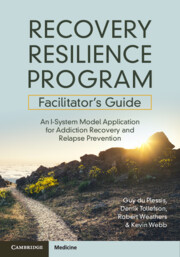
A manual for those working with addicted populations (from lay counsellors to psychiatrists) for delivering the evidence-based Recovery Resilience Program (RRP). RRP is a person-centered, strength and resiliency-based relapse prevention and recovery-oriented intervention that works in synergy with other models, especially 12-Step programs. Presenting practices that enhance 'recovery resilience' – an individual's capacity to effectively apply coping and self-regulation skills in dealing with cravings, triggers, stress, and high-risk situations without reverting to substance use. The program helps individuals to enhance and use their recovery capital at any stage of recovery, and ultimately reach recovery and life goals. It effortlessly integrates with other evidence-based relapse programs, from the original cognitive-behavioral approaches to the newer mindfulness-based and metacognitive approaches. Written by clinicians who have worked with addicts and their families for many decades, the program is easy-to-implement and very little preparation is necessary with handouts and PowerPoints included in each session.
As legislation continues to evolve and the stigma surrounding addiction persists, new findings on the impact of substances on the brain are an important public issue. This second edition integrates major developments in human and animal neuroscience to explain how addictive substances and behaviors reshape brain circuits governing reward, stress, habit formation, and self-control. New and enhanced coverage addresses individual differences-including age, sex, stress, pain, comorbidity, and emerging substances-as well as advances in neuroimaging, genetics, and treatment science. Students are supported by learning objectives, real-world examples and applications, review questions, and further reading lists, equipping them with the conceptual tools needed to understand vulnerability, persistence, relapse, and recovery in addiction. Instructors have access to supplementary resources, including lecture slides, review questions and answers, and a test bank.
This practical guide to Interpersonal Psychotherapy (IPT) covers the history and supporting theory, through to the most recent empirical evidence and practical aspects of delivery. The structure of IPT is covered in detail, allowing practitioners to use the book as a thorough guide to delivering therapy in their clinical practice. Numerous case studies are included to help readers learn through examples, as well as the key applications of IPT to a variety of disorders, including perinatal depression, social anxiety, bipolar disorder and eating disorders. An overview of various adaptations of the therapy for applications in different populations and settings is also covered, allowing the clinician to tailor therapy to different settings. Part of the Cambridge Guides to the Psychological Therapies series, offering all the latest scientifically rigorous and practical information on a range of key, evidence-based psychological interventions for clinicians.
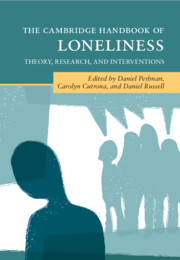
Everyone has experienced loneliness – perhaps briefly – perhaps for many years. This handbook explores why people of all ages can become lonely, and features steps that can be taken by individuals, communities, and entire societies to prevent and alleviate loneliness. Chapters present rigorous scientific research drawn from psychology, relationship science, neuroscience, physiology, sociology, public health, and gerontology to demystify the phenomenon of loneliness and its consequences. The volume investigates the significant risks that loneliness poses to health and the harmful physiological processes it can set in motion. It also details numerous approaches to help people overcome loneliness from multiple perspectives, including traditional and cognitive psychotherapy, online interventions, efforts to connect individuals to their communities, and designing communities as well as public health programs and policies to create a greater sense of social connection. Using accessible terminology understandable to a non-medical audience, it is an important work for social science scholars, students, policymakers, and practitioners.
This textbook establishes Critical Race Theory (CRT) as a central framework for social work education and praxis. Addressing and ultimately moving beyond models of cultural competence and diversity, it offers a comprehensive framework for integrating CRT into pedagogy, research, and practice. It introduces analytical tools to address issues such as systemic racism, the social construction of race, critiques of liberalism, interest convergence, intersectionality, and counternarratives. Chapters contributed by renowned social work researchers highlight how social work has been entangled with white supremacy, neoliberalism, and colonialism, while also presenting a road map for a change in the future. With case examples, narratives, and reflective questions, this book is designed for all levels of social work study, as well as for committed practitioners of anti-racism. Although grounded in the US context, global perspectives are included, making it relevant for international audiences facing systematic racism or colonial legacies.