


Introduction
Antimicrobial Resistance (AMR) is a phenomenon that threatens the effective treatment of infections due to the ability of microorganisms to resist the effects of various antimicrobial drugs. AMR has emerged as one of the major public health concern in recent years, which can partly be attributed to the ease of accessibility and inappropriate use of antimicrobials. Reference Atif, Asghar, Mushtaq, Malik, Amin and Babar1 Appropriate use of antimicrobials is essential, as very few new antimicrobials have been discovered in recent times. Appropriate antimicrobial use remains the key strategy to prevent AMR. Antimicrobial stewardship programs (ASP) aims to improve the patient care, rationalizing antimicrobial use and reduction of excessive associated costs. Reference Fishman2 Therefore, every healthcare professional needs to fulfill their responsibilities as the forefront antimicrobial stewards to tackle AMR. Reference Dyar, Huttner, Schouten and Pulcini3
Like many other diseases being mismanaged, pharyngitis is also generally not treated adequately by the masses, mostly attributed to self-prescribing and misdiagnosis. Pharyngitis is primarily of viral origin with Epstein-Barr virus (EBV), Adenovirus, coronavirus, and influenza virus being the major pathogen. Reference Long, Prober, Fischer and Kimberlin4 However, around 15%–30% of patients have pharyngitis of bacterial origin, most commonly due to Group A Beta Hemolytic Streptococci bacteria (GABHS). Reference Sykes, Wu, Beyea, Simpson and Beyea5 Most healthcare practitioners and patients rely on antimicorbials for the treatment of pharyngitis considering that the antimicrobial regimen may aid in decreasing the clinical presentations of the condition (1). According to the 2018 annual outpatient antimicorbial prescription data by the Centers for Disease Control and Prevention (CDC), more than 249.8 million prescriptions containing antimicrobials have been distributed across the United States. This antimicrobial distribution corresponds to 763 prescriptions for every 1,000 individuals. 6
In Pakistan, like many other Low- and Middle-Income Countries (LMIC), limited healthcare access and affordability leads to most patients rely mainly on community and retail pharmacies. Reference Aslam, Zin, Jamshed, Rahman, Ahmed and Pallós7 In Pakistan, pharmacies are legally required to have pharmacist present at all time, but many operate without one for most of the time. Dispensing of antimicrobials, neuroleptics, and cytotoxic agents is carried out by unauthorized and untrained personnel. Moreover, most of the drugs are easily attainable even without a prescription. In view of the above, it can be suggested that pharmacists serve as “independent prescribers” per se at most of the community pharmacy setups in Pakistan. Therefore, pharmacists have an opportunity to provide adequate and effective healthcare support to the poorly structured healthcare system of Pakistan, especially against the emerging diseases. Reference Aslam, Zin, Jamshed, Rahman, Ahmed and Pallós8 Moreover, rapid antigen detection tests (RADTs) are not routinely available in community pharmacy settings in Pakistan and employing point-of-care testing by pharmacists is not a standard practice. Pharmacists are, therefore, expected to have the basic knowledge and training related to common health conditions including diabetes, hypertension, and infections.
Training pharmacists on pharyngitis symptoms and the use of the Centor/McIsaac score—a validated tool for assessing the likelihood of GABHS infection—can support guideline-based management. Educational programs should emphasize the common viral causes of sore throat, proper use of the scoring system, and relevant treatment guidelines. This study aimed to develop an intervention to train pharmacists and pharmacy trainees to support clinical decision-making regarding the need for further evaluation and testing, thereby promoting appropriate antimicrobial use.
Methods
Research design
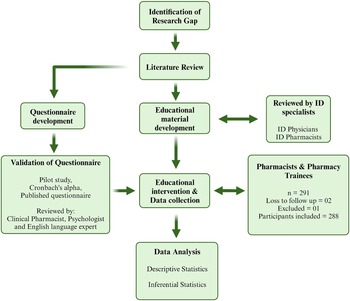
The study was conducted through cross-sectional, interventional research design. The study design has been summarized in Figure 1. The study was approved by the Institutional Review Board and Ethics Committee; Shifa Tameer-e-Millat University vide letter no. 245-735-2020. There were two sets of participants in the study; pharmacists working in community pharmacy settings and the clinical pharmacy trainees who would be pharmacists within a year. Using the data of pharmacists and the eligible candidates of the city, the population size was considered to be 1,150. Thereafter, using the Rao soft sample size calculator, the sample size was find out to be 289, keeping the confidence interval as 95%, margin of error 5% and assuming 50% response distribution rate. The participants were recruited by convenience sampling. In addition, snowball sampling was applied to get leads of community pharmacists who were willing to participate in the study. These participants were initially contacted via telephone call and subsequently approached in person at their community pharmacies. The training sessions for pharmacists were held at community pharmacies while clinical pharmacy trainees were trained at their respective universities.
Flow diagram showing the research methodology adopted for the current study.
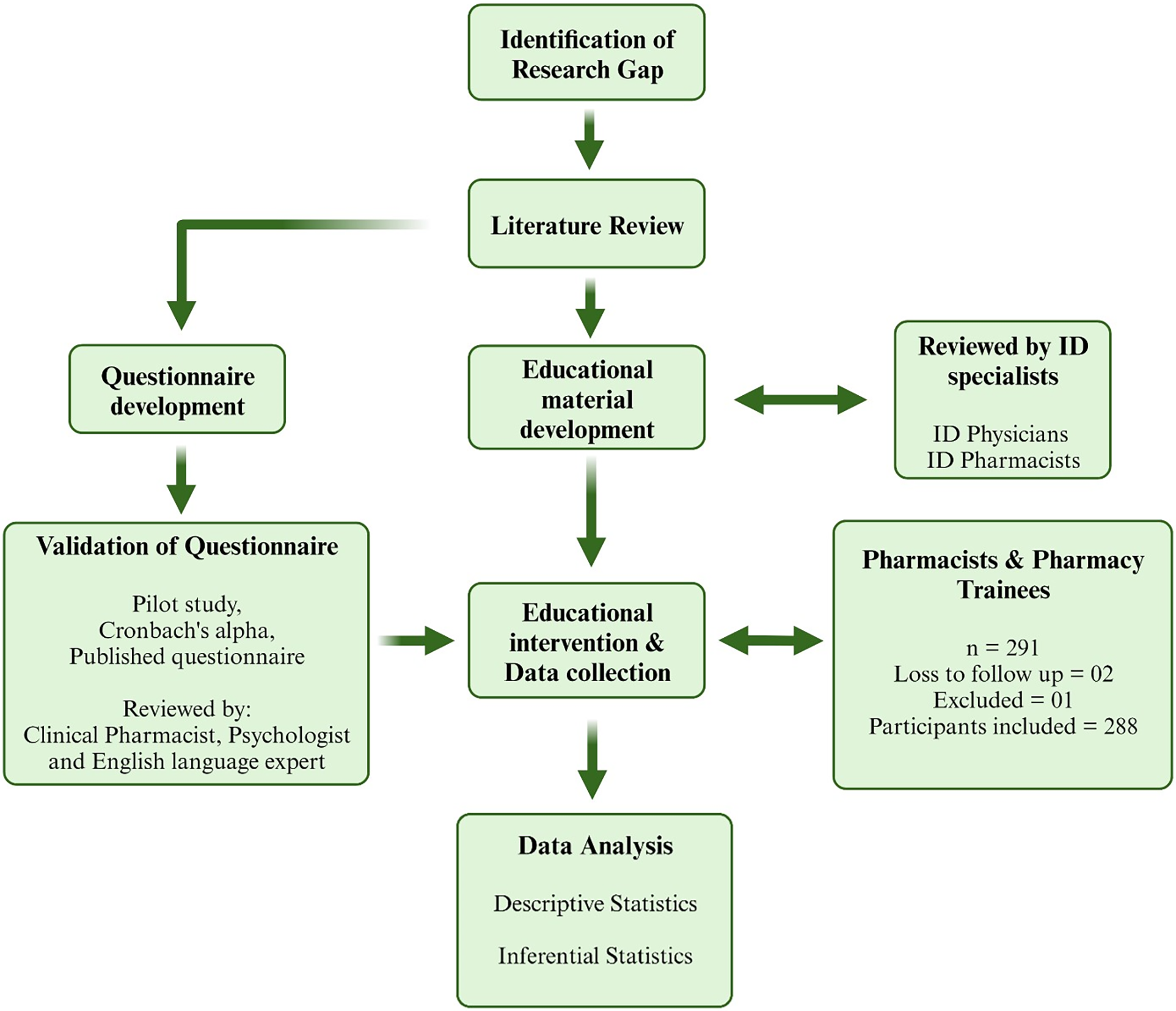
Figure 1. Long description
A flowchart illustrating the research methodology adopted for the current study on antimicrobial resistance. The process begins with the identification of a research gap, followed by a literature review. The next step is the development of educational materials, which are reviewed by infectious disease specialists, including ID physicians and ID pharmacists. Concurrently, a questionnaire is developed and validated through a pilot study, Cronbach’s alpha, and a published questionnaire, reviewed by a clinical pharmacist, psychologist, and English language expert. The validated questionnaire and educational materials are used in an educational intervention and data collection phase involving pharmacists and pharmacy trainees. The data collected is then analyzed using descriptive and inferential statistics.
Development of training material
The training material, developed through an extensive literature review and reviewed by infectious disease experts (one physician and two pharmacists), included a Microsoft PowerPoint presentation and a brochure. It covered AMR prevalence, strategies to combat AMR, the pharmacist’s role in infectious disease management, an overview of pharyngitis, the Centor/McIsaac scoring system, and IDSA treatment guidelines. The brochure was provided to participants for reference.
Questionnaire development
The questionnaire was developed on the basis of a similar study that determines the knowledge regarding pharyngitis and application of Centor/McIsaac score among Thai community pharmacists. Reference Saengcharoen, Jaisawang, Udomcharoensab, Buathong and Lerkiatbundit9 The tool was slightly modified to contextualize it to the local settings. The questionnaire comprised of following sections; demographic characteristics, knowledge related to pharyngitis and its signs and symptoms, attitudes, beliefs and factors related to antimicrobial use in pharyngitis management, and two clinical case scenarios. Response options included a 5-point Likert scale (1 = strongly disagree to 5 = strongly agree), true/false, and item-specific formats, as outlined in the Results section and detailed in the questionnaire in the Supplementary files. The assessment tool was reviewed by 3 clinical pharmacists, 1 psychologist, and 1 English language expert to ensure the scientific, clinical, and grammatical correctness and quality. The questionnaire was also validated by conducting a pilot study on 15 pharmacists, who were excluded from final analysis. The Cronbach value of 0.77 also indicated the internal consistency and reliability of the tool.
Data collection
Data was collected by using the structured and validated questionnaire during a period of 6 months (March 2024–August 2024). After obtaining the informed consent, the training for clinical pharmacy trainees was conducted at their respective universities while the community pharmacists were trained by visiting their community pharmacies. Before training, participants were asked to fill out the questionnaire to determine the baseline knowledge about pharyngitis, its clinical presentations and the beliefs about antimicrobial use. Thereafter, training sessions were conducted by the primary investigator while using the designed training material. After the completion of training program, the same questionnaire was filled out by the participants to assess the impact of training on improving the knowledge and belief system related to pharyngitis management considering the antimicrobial stewardship principles.
Data analysis
Data analysis was carried out using the Analysis ToolPak of MS Excel. Descriptive statistics such as frequency, percentages, and mean were calculated for demographic variables and questionnaire items. The normality of the data was assessed using the Kolmogorov-Smirnov test. The χ2 test was used to compare individual items. Similarly, Wilcoxon signed-rank test was employed for comparing knowledge and beliefs before and after the training intervention. A P-value of less than .05 was considered statistically significant.
Results
Demographical characteristics
A total of 291 pharmacists (n = 107) and clinical pharmacy trainees (n = 184) agreed to participate in the study. However, two of the participants were lost to follow up as they did not complete the training while one participant was excluded due to the submission of an incomplete questionnaire. A total of 288 participants completed the training and questionnaire which were included in the final analysis indicating a completion rate of 99%.
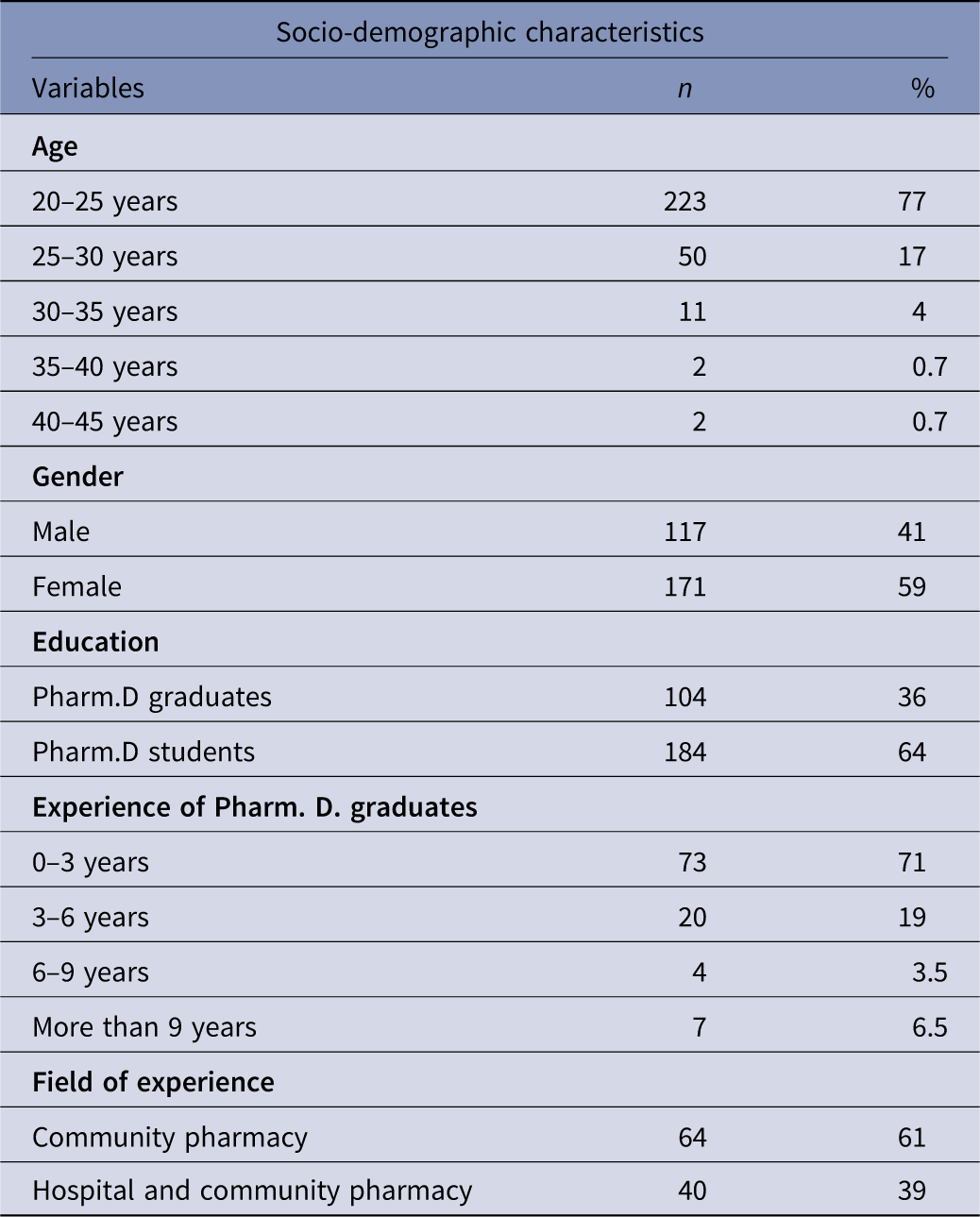
Out of these 288 participants, 171 (59%) were female and 117 (39%) were male. Majority of participants that is 77% were between 20 and 25 years of age. Among the participants, 104 were pharmacy graduates and 184 were clinical pharmacy trainees.
Out of these 104 community pharmacists, 71% had an experience of less than 3 years while 19% had an experience of between 3 and 6 years. Only 26 participants had postgraduate education. Demographic characteristics are summarized in Table 1.
Demographic characteristics of participants
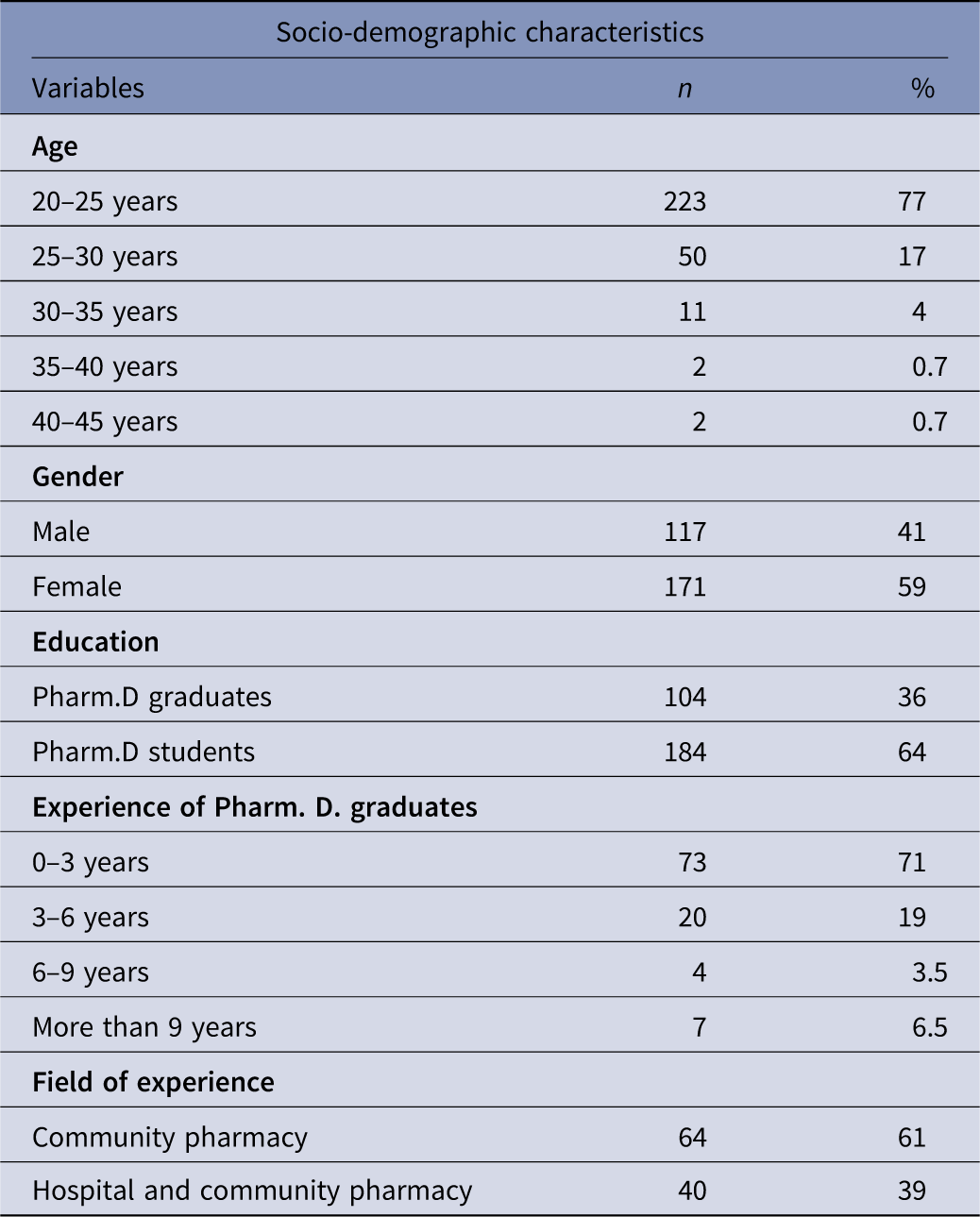
Table 1. Long description
A table titled ‘Socio-demographic characteristics’ with variables and their corresponding values in number and percentage. The table has 5 rows and 3 columns. The columns are labeled ‘Variables’, ‘n’, and ‘%’. The variables include Age, Gender, Education, Experience of Pharm. D. graduates, and Field of experience. Age is divided into five categories: 20-25 years, 25-30 years, 30-35 years, 35-40 years, and 40-45 years. Gender is divided into Male and Female. Education is divided into Pharm.D graduates and Pharm.D students. Experience of Pharm. D. graduates is divided into 0-3 years, 3-6 years, 6-9 years, and More than 9 years. Field of experience is divided into Community pharmacy and Hospital and community pharmacy.
Effect of training intervention on the knowledge of participants
The knowledge section included two parts: 11 questions on clinical signs to decide on antimicrobial use, and 8 true/false questions on pharyngitis complications, causes, and types. Participants submitted the questionnaire before and after training, with responses evaluated as correct or incorrect based on Centor criteria and relevant literature. Pre and posttraining results were analyzed separately.
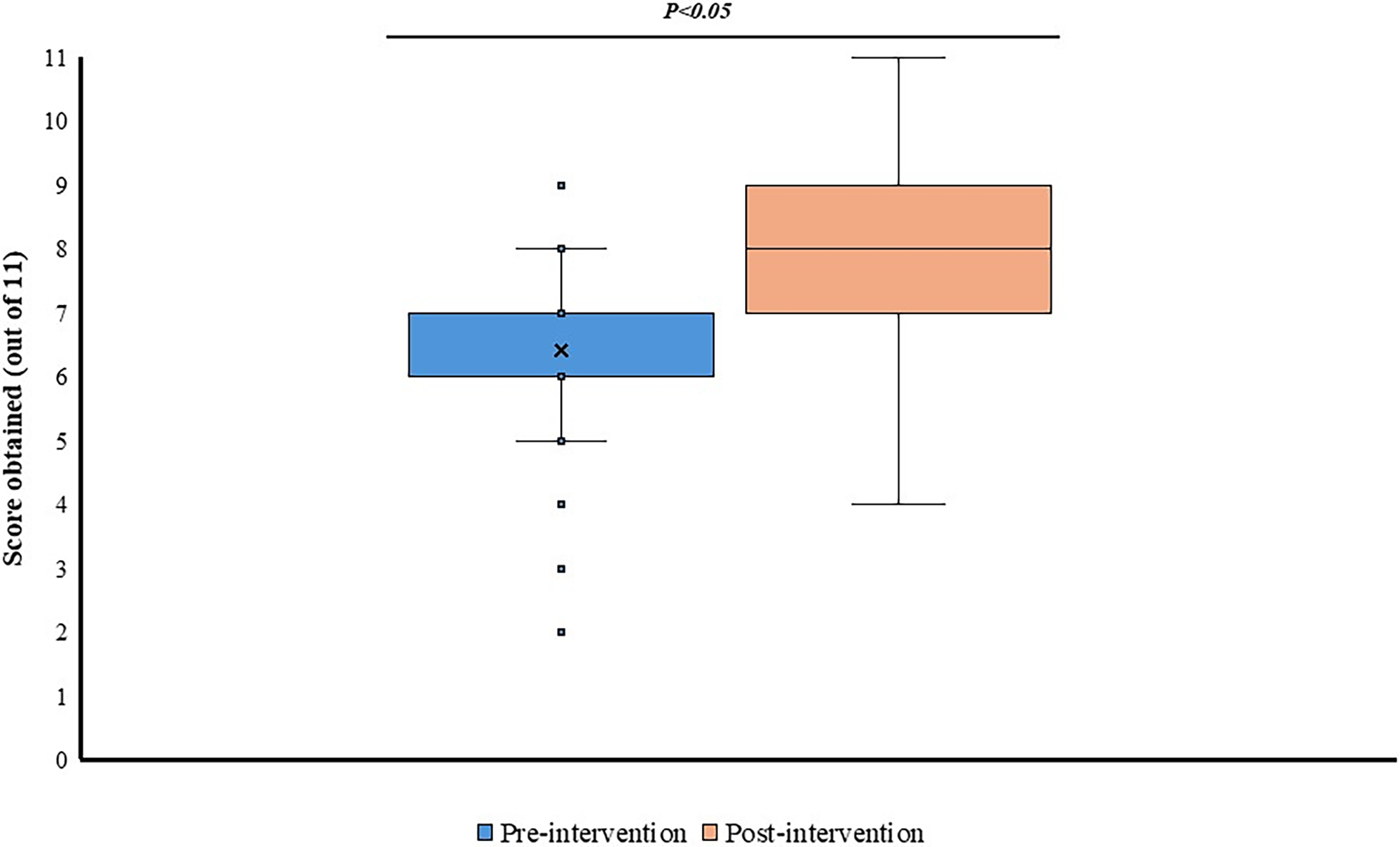
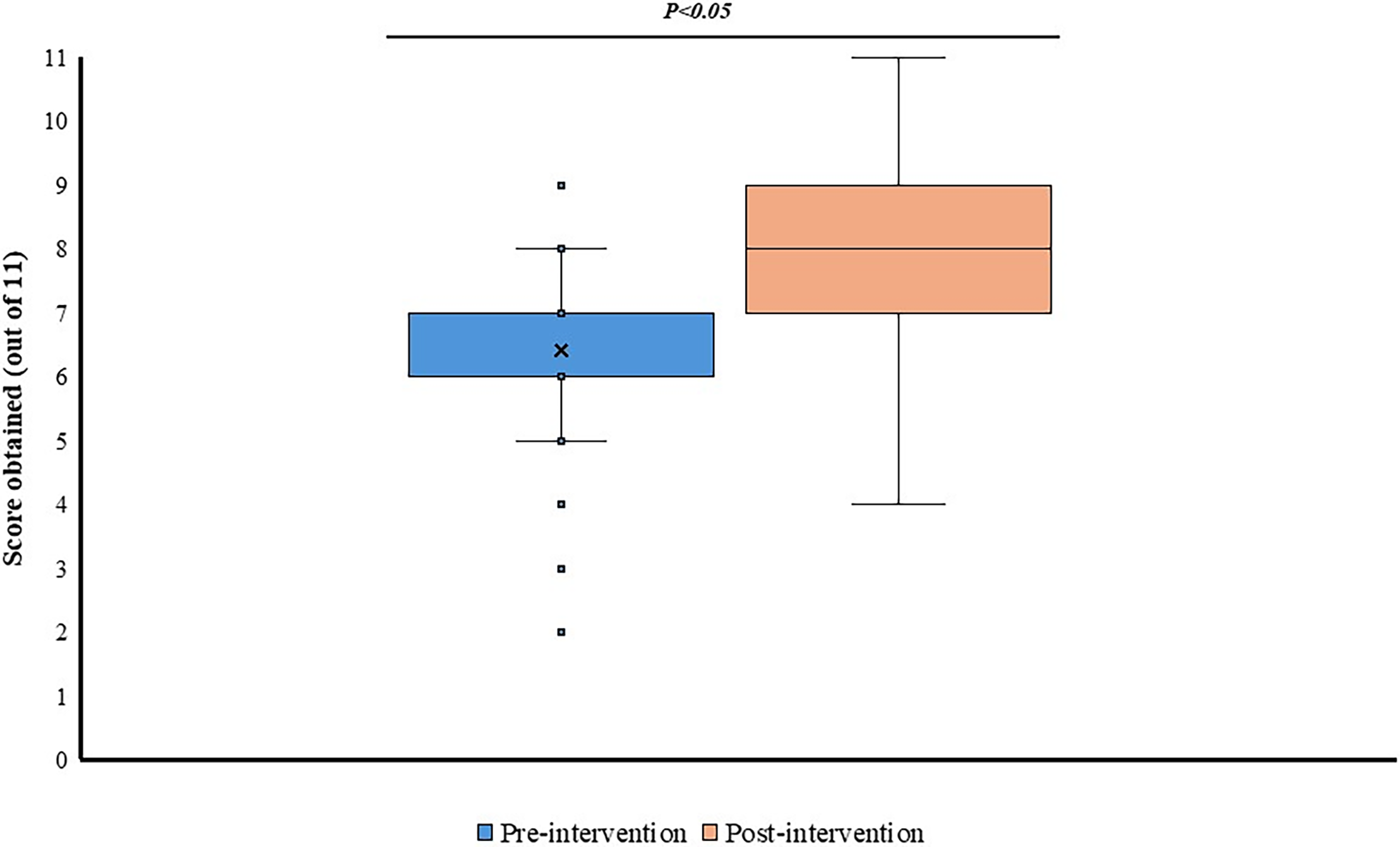
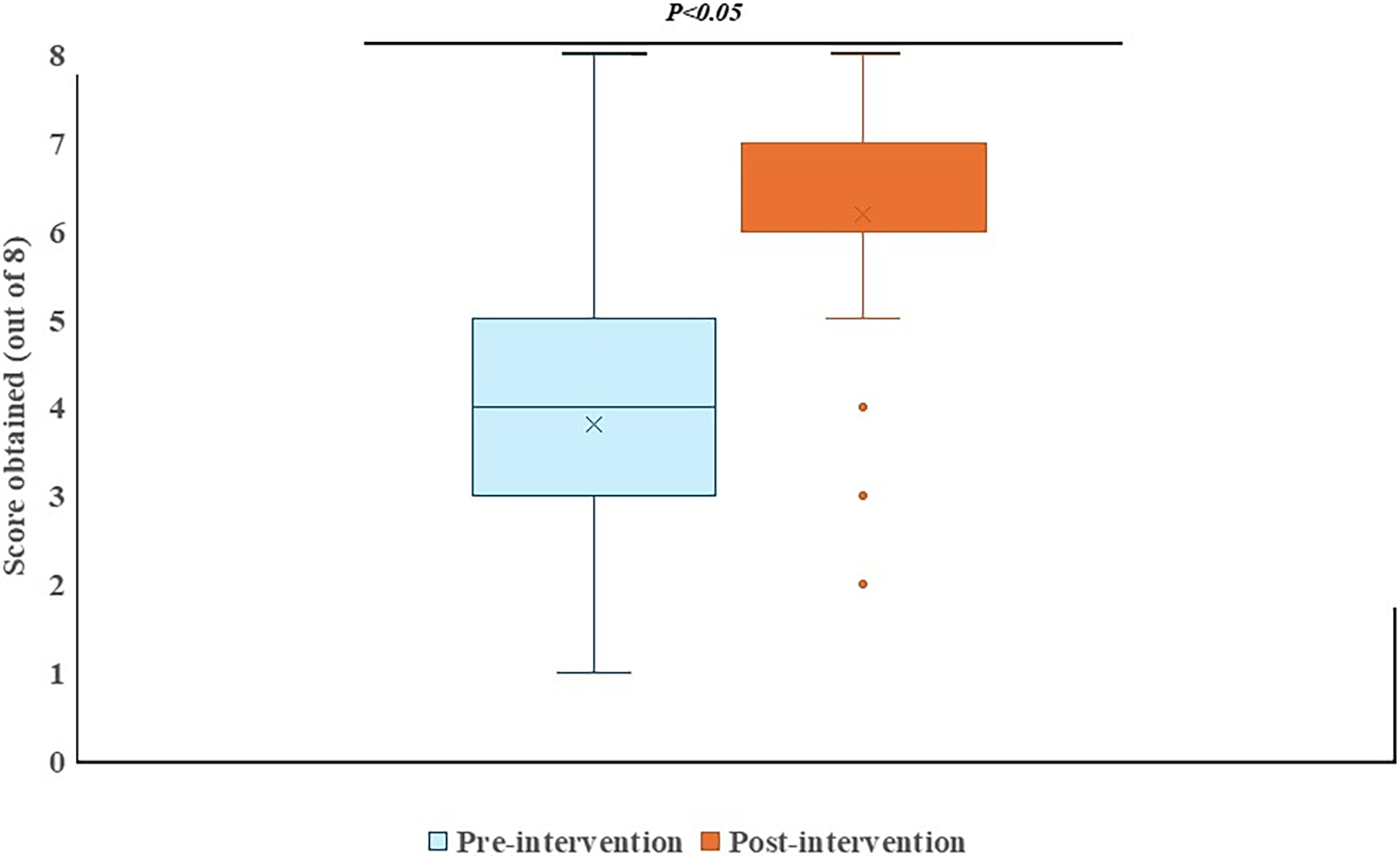
Before training, 58% of the responses were correct for the first section and 48% correct responses for second section which were increased to a correct response rate of 77% and 78% respectively, after training session (P < .05). The lowest percentage of correct responses before training were for questions about age group and absence of cough, 8% and 7% which were significantly increased to 71% and 62% respectively after training (P < .05). Figures 2 and 3 represent the changes in scores in the knowledge domain of the participants before and after the training intervention. Detailed results of the χ2 analysis comparing responses to individual items are provided in the Supplementary Tables 1 to 4.
Box plot showing the distribution of scores (out of 11) based on responses to 11 clinical sign–related questions used to guide antimicrobial use, before and after antimicrobial stewardship training. The box represents the interquartile range (IQR), the horizontal line indicates the median, and the marker denotes the mean score. Mean scores increased from 6.41 (preintervention) to 7.94 (postintervention). A statistically significant improvement was observed following the intervention (P < .05).
Box plot showing the distribution of scores (out of 8) before and after antimicrobial stewardship training on responses to 8 questions related to etiology, types and complications of pharyngitis. The box represents the interquartile range (IQR), the horizontal line indicates the median, and the marker denotes the mean score. Mean scores increased from 3.81 (preintervention) to 6.19 (postintervention). A statistically significant improvement was observed following the intervention (P < .05).
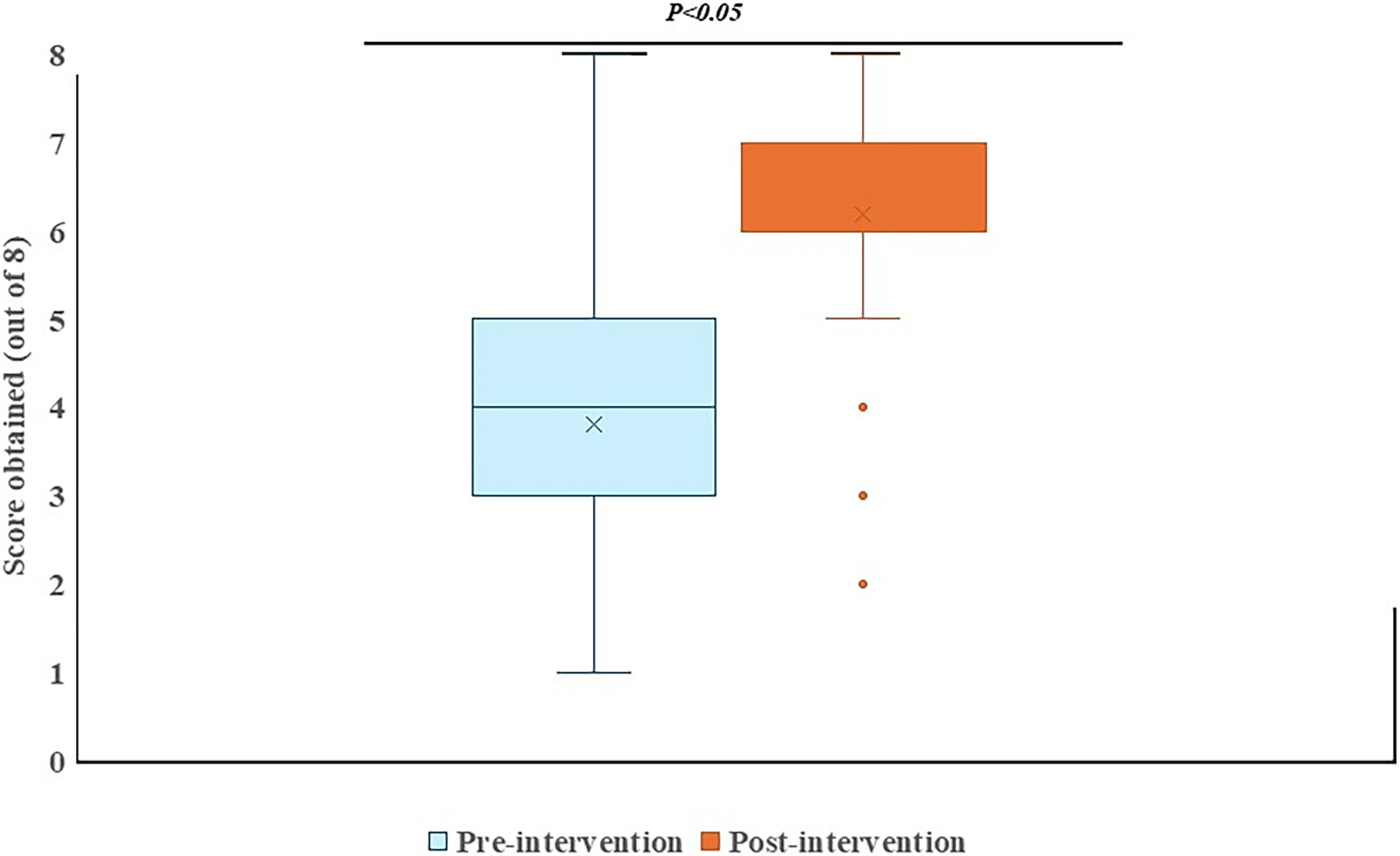
The highest percentage of correct responses (88% correct) before training was for mild sore throat not requiring antimicrobials. The only exception where there was negative effect of our training intervention was for severe sore throat where correct response rate was decreased after training session. Before training, 4 out of 11 questions from first section and 5 out of 8 questions from second section had correct response rate of less than 50%. After training, all 19 question items from knowledge section had correct response rate of more than 50%. The Wilcoxon signed-rank test was performed to determine the impact of educational intervention on knowledge of participant, a significant difference (P-value < .05) was observed before and after the training session, signifying the positive impact of educational intervention.
Effect of training intervention on beliefs of participants
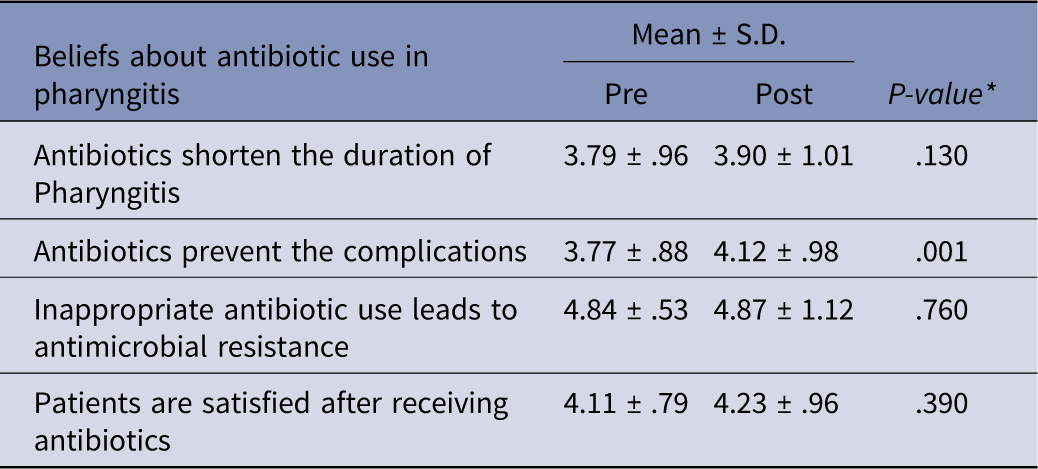
The attitudes and beliefs section included four Likert-scale items. Mean scores and percentages were compared pre and posttraining. Before training, participants believed that antimicrobials shorten the duration of pharyngitis with the mean score 3.79 which was increased to mean score of 3.90 after the training session. Nearly, 72 % of the participants agreed to the statement that antimicrobials can prevent the complications (Mean = 3.77) which was increased to 86% of the participants agreeing to the same statement after the training session (Mean score = 4.12) as presented in Table 2. Highest percentage of participants agreed to the statement “inappropriate use of antibiotics leads to antibiotic resistance” which was 97% (mean score = 4.84) before training and 98% (mean score = 4.87) after training. Most of the participants believed that patients are satisfied after receiving antimicrobials, as 78% (mean score = 4.11) agreed to the statement before training which was increased to 83% (mean score = 4.23) after the training session. Wilcoxon signed-rank test showed significant difference with P-value < .05 for beliefs before and after the training intervention.
Comparison of pre and posttraining means of beliefs about antibiotic use
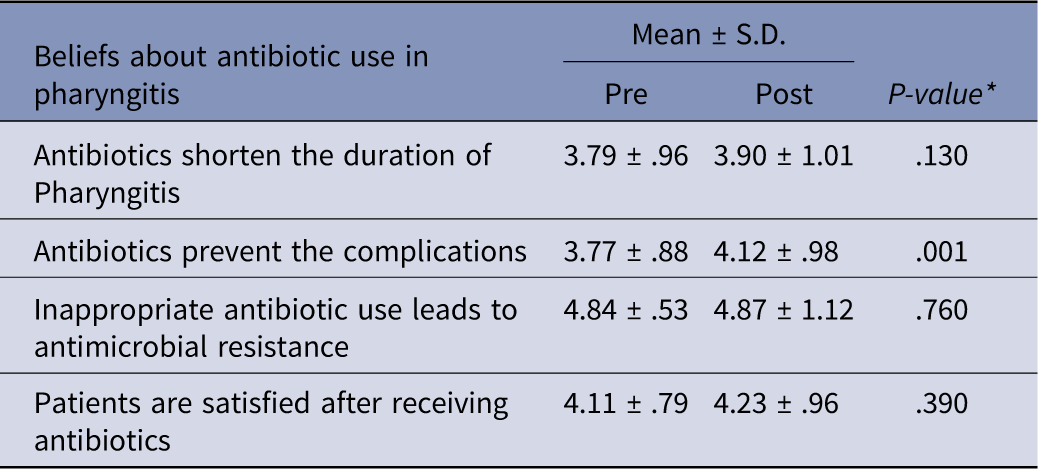
Table 2. Long description
A table comparing beliefs about antibiotic use in pharyngitis before and after training. The table has four rows and four columns. The columns are labeled ‘Beliefs about antibiotic use in pharyngitis’, ‘Mean ± S.D. Pre’, ‘Mean ± S.D. Post’, and ‘P-value’. The rows are labeled with different beliefs: ‘Antibiotics shorten the duration of Pharyngitis’, ‘Antibiotics prevent the complications’, ‘Inappropriate antibiotic use leads to antimicrobial resistance’, and ‘Patients are satisfied after receiving antibiotics’. The values in the table are as follows: Row 1: Antibiotics shorten the duration of Pharyngitis, 3.79 ± .96, 3.90 ± 1.01, .130. Row 2: Antibiotics prevent the complications, 3.77 ± .88, 4.12 ± .98, .001. Row 3: Inappropriate antibiotic use leads to antimicrobial resistance, 4.84 ± .53, 4.87 ± 1.12, .760. Row 4: Patients are satisfied after receiving antibiotics, 4.11 ± .79, 4.23 ± .96, .390.
* Wilcoxon signed-rank test (P-value < .05).
Factors influencing antimicrobial use in pharyngitis
To assess factors influencing antimicrobial dispensing in Pakistani community pharmacies, participants responded to five Likert-scale questions. Mean scores for each item were calculated and analyzed. Based on participant responses, the demographic profile of antimicrobial recipients was reflected by mean scores of 3.73 for ‘patients are regular customers’ and 3.61 for ‘customers are adults. Time constraints in providing patient care were reported by participants, with a mean score of 3.48 for ‘pharmacists have less time to serve patients. However, for evaluation of accessibility and service efficiency of healthcare setups, the participants assigned a mean score of 3.76 to the statement that there are surrounding pharmacies and mean score of 3.72 to the statement that there are neighboring clinics. The intervention had no effect on the overall scores in this section.
Effect of training intervention on the application of clinical decision-making tools
This section comprised of two simulated clinical cases of diverse scenarios. Participants had to assess these case studies and decide their course of action according to the Centor/McIsaac criteria from among the three options provided with each case scenario.
Case Scenario 1 had clinical presentations that indicated viral pharyngitis which meant that there was no need for antimicrobial in this case. Before the training, only 72 (25%) participants answered it correctly while after the training session correct response rate significantly increased to 154 (53%). Case Scenario 2 had a better correct response rate, 182 (63%) participants responded correctly before training which was further improved to 224 (78%) after the training session. Wilcoxon signed-rank test was used to evaluate the effectiveness of training intervention on case scenarios which showed statistically significant results (P < .05).
Discussion
The aim of the study was to train and educate pharmacists and clinical pharmacy trainees about the differential diagnosis of bacterial and viral pharyngitis to manage these conditions according to clinical guidelines. Pre and posttraining questionnaires were used to collect responses which were then analyzed supported by descriptive and inferential statistics, to evaluate the effectiveness of the training program. To summarize, the findings of this study revealed that training programs had a significant impact on participant’s knowledge, belief system, and application of the acquired knowledge on clinical case scenarios as supported by other studies with similar study design and context. Reference Tahoon, Khalil, Hammad, Morad, awad and Ezzat10,Reference Pempek, Masterson, Portillo-Gonzalez, Creutzinger, Cheng and Habing11
Sociodemographic characteristics of the population under study revealed that majority (59%) of the participants were female which shows the general inclination of females toward healthcare sciences in Pakistan. Only 2 of 104 pharmacists owned their pharmacies, suggesting most are run by non-pharmacists or chains. Additionally, 73 had less than 3 years’ experience and 89 were aged 20–30 years, indicating that community pharmacy practice in Pakistan is largely handled by young, inexperienced pharmacists. This suggest a need for continuous training, development programs and incentives to improve patient care and effectively implement antimicrobial stewardship programs at community level, similar to findings from a study conducted in Indonesia, another Low- and Middle-Income Country (LMIC). Reference Athiyah, Setiawan, Nugraheni, Zairina, Utami and Hermansyah12
The cross-sectional aspect of the study helped us evaluate the knowledge of participants about pharyngitis, explore their beliefs and the factors influencing antimicrobial dispensing in pharyngitis management. The application of participant’s knowledge on clinical case scenarios was also assessed. Majority of pharmacists and trainees showed inadequate level of knowledge before training, thus revealing gaps in their professional development and, thereby, a lack of regulatory reinforcement. Limited familiarity with clinical guidelines and decision support systems may explain these findings. However, the underlying reasons (gaps in training and knowledge retention) were not specifically assessed. These findings highlight the need to strengthen the integration of evidence-based practices within pharmacy training. Reference Silverberg, Zannella, Countryman, Ayala, Lenton and Friesen13 As a future healthcare practitioners, pharmacy trainees shall develop skills to use clinical decision support systems and adhere to evidence-based practice. This is in line with a similar study from UK that also stresses the importance of building antimicrobial stewardship competencies in undergraduate healthcare students. Reference Courtenay, Lim, Castro-Sanchez, Deslandes, Hodson and Morris14
The lack of well-established continuous professional development (CPD) programs is one major contributor to inadequate level of knowledge and skills of community pharmacists. Promoting self-learning and online continuing pharmacy education (CPE) courses can provide pharmacists with easy and flexible means of expanding their knowledge base. Conferences, workshops, and tailored educational sessions could be planned to address such contemporary healthcare issues. Reference Erku15,Reference Rehman, Asad, Bukhsh, Ali, Ata and Dujaili16 Postgraduate certifications should be encouraged and considered for hiring process of pharmacists to create a positive culture of continual growth.
The investigation of factors influencing antimicrobial dispensing in pharyngitis provided valuable insights into pharmacists’ beliefs and practice settings. Approximately 79% of participants agreed with the statement “patients are satisfied after receiving antibiotics” highlighting the need for patient education and public awareness to support effective implementation of antimicrobial stewardship programs. This also implies that the pharmacists agree to providing antimicrobials to their patients even when not needed, thereby, indicating the necessity to develop assertive patient-counseling skills. Similar findings were reported in a study conducted in India. Reference Mathew, Ranjalkar and Chandy17 Approximately 60% participants affirmed that patients that receive antimicrobials for pharyngitis are mostly adults and regular customers. Moreover, a comparable proportion of participants reported the presence of nearby pharmacies, suggesting that competition for customer retention and financial incentives may contribute to inappropriate antimicrobials dispensing as reported in other studies conducted in community pharmacy settings. Reference Klein, Makowsky, Orlando, Hatna, Braykov and Laxminarayan18,Reference Saleem, Hassali, Hashmi, Godman and Saleem19
Participants highlighted time constraint as a key factor limiting informed antimicrobial dispensing decisions, potentially resulting in the neglect of resistance patterns, patient history, and appropriate indications. Time constraint has already been recognized as a barrier to evidence-based clinical pharmacy practice in earlier studies. Reference O’Donnell20,Reference Burkiewicz and Zgarrick21 Participants acknowledged that inappropriate antimicrobial use contributes to antimicrobial resistance. They, however, exhibited limited knowledge of the differential diagnosis between viral and bacterial pharyngitis. This shows the existence of critical gap—awareness about AMR alone is not sufficient for effective implementation of stewardship programs. There is an urgent need for tailored, targeted training interventions that address the practical needs of pharmacists beyond mere awareness initiatives, consistent with recent evidence highlighting the role of education in antimicrobial stewardship. Reference Satterfield, Miesner and Percival22 The training programs need to designed according the targeted population while considering the barriers encountered while implementing such programs. Bearing in mind the busy schedules of pharmacists, for the current study, the time duration of the training session was set between 40 and 60 minutes. In other similar studies, the duration of training varied from 2 to 3hr 40 min. Reference Rouleau, Beauchesne and Laurier23,Reference García Corpas, Ocaña Arenas, González García, López Domínguez, García Jiménez and Amariles24 The study had several limitations. First, it was conducted in limited geographical settings (Islamabad and Rawalpindi) which may affect the generalizability of findings. Second, the use of convenience and snowball sampling may have introduced selection bias. Additionally, the possibility of Hawthorne effect cannot be excluded as participants may have modified their responses and behaviors due to the awareness of being observed. Furthermore, the study evaluated an educational intervention alone, which may have limited impact on sustained changes in AMS practices without integration into the clinical side. Moreover, the study did not assess the long-term retention of knowledge or translation of training into real-world community pharmacy encounters.
Conclusion
This research study evaluated the impact of antimicrobial stewardship training on pharmacists and clinical pharmacy trainees managing pharyngitis. The findings demonstrate that the educational intervention significantly improved knowledge, beliefs, and perceptions related to pharyngitis management. Despite baseline gaps in clinical knowledge, participants showed awareness of antimicrobial misuse, highlighting the need for targeted training interventions. These findings emphasize the importance of continued professional education in strengthening antimicrobial stewardship practices. Future research should evaluate the impact of such interventions on real-world patient outcomes and long-term knowledge retention.
Lesson for practice
-
• Training sessions can aid the reinforcement of cognitive, psychomotor, and affective domains with reference to antimicrobial stewardship
-
• Directed, short-duration sessions can be equally effective in enhancing participants’ knowledge and improving practice attributes
-
• Mandatory regulatory inclusion of continuing professional development activities for community pharmacists can ensure improved compliance to AMS goals
Supplementary material
The supplementary material for this article can be found at https://doi.org/10.1017/ash.2026.10765.
Data availability statement
Authors are willing to provide the educational material and questionnaire upon request.
Acknowledgements
The authors wish to thank the participants of the study and their respective institutes for their academic and administrative support.
Financial support
This work was supported by the academic funds by the Shifa Tameer-e-Millat University, Pakistan.
Competing interests
The authors declare no competing interests.
Ethical standard
The study was approved by the Institutional Review Board and Ethics Committee, Shifa International Hospital (Pvt.) Ltd. and Shifa Tameer-e-Millat University, Islamabad, Pakistan. vide letter no. 245-735-2020.


 Open access

