


Introduction
Eating disorders (EDs) are common and serious mental health conditions. Their main treatments are psychological or nutritional, with medications playing only a limited role [Reference Schmidt, Claudino, Fernández-Aranda, Giel, Griffiths and Hay1]. The etiology of EDs is biopsychosocial, with large genome-wide association studies pointing toward shared and unique metabo-psychiatric origins across ED subtypes [Reference Termorshuizen, Davies, Lee, Dennis, Hübel and Johnson2]. Even with the best available treatments, only around 50% of those with EDs recover, and 20%–30% develop a chronic and/or disabling illness [Reference Schmidt, Claudino, Fernández-Aranda, Giel, Griffiths and Hay1].
It is unclear how or why some people develop more severe and persistent EDs. Neuroimaging and behavioral studies highlight the importance of habit formation (the process by which contextual stimuli come to drive behavior independently of reward [Reference Wang, Kuijper, Barbosa, Hagan, Lee and Tong3]) in the development and persistence of maladaptive behaviors in anorexia nervosa (AN) [Reference Foerde4] and binge spectrum disorders (e.g., bulimia nervosa [BN], binge eating disorder [BED]) [Reference Wang, Kuijper, Barbosa, Hagan, Lee and Tong3]. Habit strength also increases with longer illness duration [Reference Davis, Walsh, Schebendach, Glasofer and Steinglass5]. Network analyses demonstrate a shift in symptom profiles over time, with cognitive symptoms (over-valuation of weight, shape, and appearance) central in shorter-duration illness (<3 years) and behavioral symptoms (e.g., dietary restriction, compulsive exercise) central in longer-duration illness (≥10 years) [Reference Christian, Williams, Hunt, Wong, Ernst and Spoor6, Reference Christian, Perko, Vanzhula, Tregarthen, Forbush and Levinson7]. Although such findings allude to the processes that may shape different ED trajectories, traditional illness and treatment models struggle to capture these fluid and varied illness presentations in mental health [Reference Scott, Iorfino, Capon, Crouse, Nelson and Chanen8].
Clinical staging offers a framework toward better delineating illness progression and severity, defining a continuum of disorder progression from asymptomatic or at-risk states, into early forms of illness, and late-stage, severe, or more persistent illness [Reference Clarke, Soons, Videler, van Alphen, Van and Dil9, Reference Scott, Leboyer, Hickie, Berk, Kapczinski and Frank10]. Originating in oncology [Reference Gonnella, Hornbrook and Louis11, Reference Scott and Henry12], established staging models of illness have advanced prevention and early intervention. By clearly defining emerging and early forms of illness and intervening at these stages, progression to more established forms of illness can be delayed or averted [Reference McGorry, Purcell, Hickie, Yung, Pantelis and Jackson13].
In psychiatric research, disorder-specific and transdiagnostic staging models have been proposed to better reflect the spectrum, progression, and heterogeneity of mental illness [Reference Scott, Iorfino, Capon, Crouse, Nelson and Chanen8]. Early work focused primarily on psychotic and severe mood disorders, defining stages based on progression status, likely population, indicative biological/endophenotypic biomarkers, and potential interventions [Reference McGorry, Hickie, Yung, Pantelis and Jackson14].
Research on staging in EDs is still limited [Reference Clarke, Soons, Videler, van Alphen, Van and Dil9]. A recent systematic scoping review sought documents on explicit staging models or empirical evidence testing them, identifying nine staging models, which primarily focused on AN [Reference Tomba, Tecuta, Gardini, Tomei and Lo Dato15]. Models varied in their definitions and number of stages, with no consistent criteria, only two had been empirically tested, and evidence for stage-targeted treatments was lacking. Models generally followed a continuum from early/at-risk stages through acute illness to chronic presentations. Remission, relapse, and recovery stages were limited or poorly defined. Further empirical testing, application to broader ED populations, and integration of biomarkers were identified as key research priorities.
Further refinements within the wider staging literature include adding progression (“P” factors) and extension (“E” factors) stage modifiers to better capture individual differences in illness course and guide treatment selection [Reference Scott, Iorfino, Capon, Crouse, Nelson and Chanen8]. P factors describe the development and changing of the core disorder over time (e.g., at-risk to full symptoms). E factors refer to additional related symptoms or conditions (e.g., comorbidities, physical health problems, or metabolic factors). P factors map out the longer-term prognosis and likelihood of progression, whereas E factors reflect the added complexity of an individual presentation. These have been applied primarily in psychotic and mood disorders and, to the best of our knowledge, have not yet been integrated within ED staging models.
This scoping review aims to build upon recent work [Reference Clarke, Soons, Videler, van Alphen, Van and Dil9, Reference Tomba, Tecuta, Gardini, Tomei and Lo Dato15] by incorporating a broader range of evidence beyond explicit staging models, such as qualitative studies and research on clinical, psychosocial, and biological factors that may inform illness progression and potential stage modifiers. Other feeding disorders, such as Avoidant/Restrictive Food Intake Disorder (ARFID) are also considered to assess if staging literature is applied to the full spectrum of EDs.
Our research questions are:
-
1. What is the scope, range, and nature of research investigating illness staging paradigms for EDs?
-
2. What evidence is available for specific illness stages, including high-risk/prodromal stage, early stage, and late-stage illness across different EDs?
-
3. Which different clinical, biological, and neuroscientific domains of assessment/functioning does this research cover?
-
4. What evidence is there that demonstrates the implications of different illness stages for treatment and outcomes across the EDs?
Methods
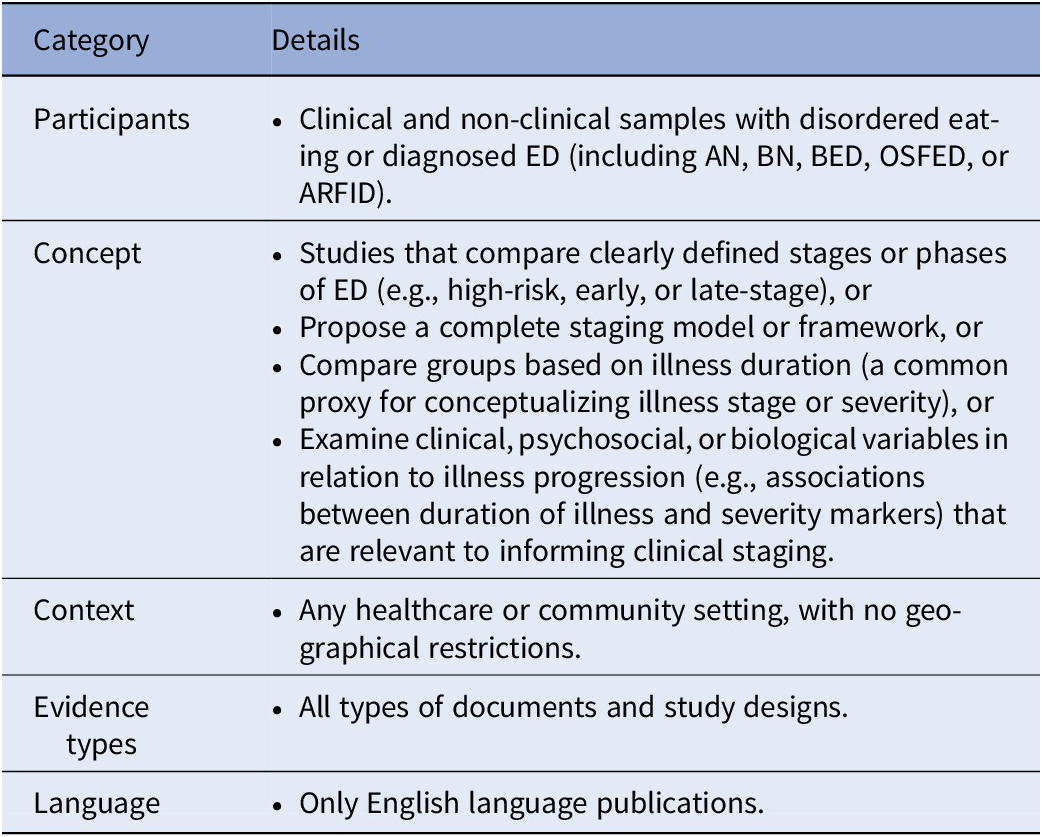
A scoping review design was adopted, given our exploratory research aims. Further, Tomba et al.’s recent review [Reference Tomba, Tecuta, Gardini, Tomei and Lo Dato15] on staging models included only 11 studies; thus, a broader focus was considered necessary to map the full range of potentially informative literature. This review followed the Joanna Briggs Institute (JBI) methodology for scoping reviews and the PRISMA extension for Scoping Reviews [Reference Tricco, Lillie, Zarin, OʼBrien, Colquhoun and Levac16, Reference Peters, Godfrey, McInerney, Soares, Khalil, Parker and Aromataris17]. Significant modifications of the protocol [Reference Hyam, Phillips, Gracie, Allen and Schmidt18] were required to reduce the number of irrelevant studies identified (see Supplementary Material). The revised inclusion criteria are listed in Table 1.
Inclusion criteria

Table 1. Long description
The table consists of two columns: Category and Details.
* Participants: Includes clinical and non-clinical samples with disordered eating or diagnosed E D, including A N, B N, B E D, O S F E D, or A R F I D.
* Concept: Studies comparing defined stages or phases of E D (high-risk, early, or late-stage); proposing a complete staging model; comparing groups based on illness duration; or examining clinical, psychosocial, or biological variables related to illness progression and severity markers.
* Context: Any healthcare or community setting with no geographical restrictions.
* Evidence types: All types of documents and study designs.
* Language: Only English language publications.
Footnote abbreviations: A N (anorexia nervosa), A R F I D (avoidant restrictive food intake disorder), B E D (binge eating disorder), B N (bulimia nervosa), E D (eating disorder), O S F E D (other specified feeding or eating disorder).
Abbreviations: AN, anorexia nervosa; ARFID, avoidant restrictive food intake disorder; BED, binge eating disorder; BN, bulimia nervosa; ED, eating disorder; OSFED, other specified feeding or eating disorder.
Search strategy
Searches were conducted on PubMed, PsycINFO, MEDLINE, and Web of Science. After discussion and testing the search terms, it was decided to remove “severity,” “transdiagnostic,” “biomarker,” and “presymptomatic” to refine the search. Exact search terms are available in supplementary Table S3. Briefly, variations of the terms “eating disorders,” “clinical staging,” “progression,” “illness stage,” and “persistent” were used.
In total, three searches were completed. The first search was completed on 5 January 2024 and the second on 10 June 2025. A top-up search was conducted on 10 January 2026. Identified studies were imported into Endnote citation management software [Reference Gotschall19] and duplicates were removed. All screening was completed in Rayyan screening software [Reference Ouzzani, Hammady, Fedorowicz and Elmagarmid20]. Six authors screened titles, abstracts, and full texts; subsequent searches were screened by new authors but according to the same criteria. Disagreements were brought to the senior authors (U.S. and K.A.) for a decision.
Given the scoping nature of the review and the substantial overlap observed between databases in the initial search, the top-up search was conducted on PubMed and Embase only.
Data charting
A charting form was adapted from the template from the JBI manual, with some changes made to the protocol (detailed in Supplementary Table s1). Data extraction was completed by three authors, and a random selection (n = 11) of the studies was cross-checked by a separate author for quality checking. Each source was appraised using the JBI Levels of Evidence for effectiveness, prognosis, and meaningfulness by two authors [Reference Jordan, Lockwood, Munn and Aromataris21].
A narrative synthesis of the text is provided to address the research questions, with findings organized by study design, clinical domain, and implications for staging.
Results
Identification of evidence
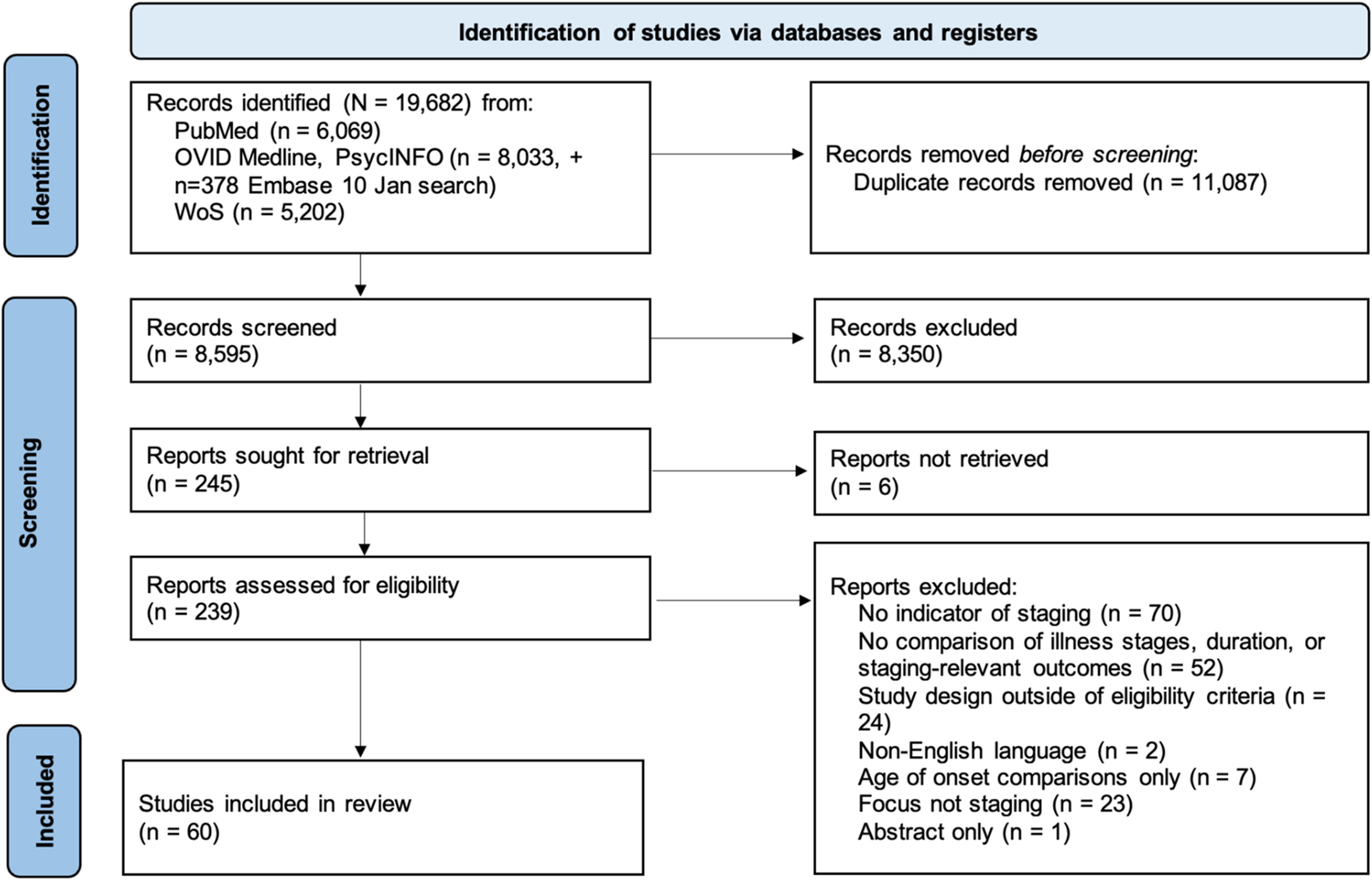
The initial searches identified 18,907 records across PubMed, Medline, and PsycINFO via OVID, and Web of Science. After removal of 10,918 duplicates, 7,989 records underwent title and abstract screening, with 6,883 excluded. Full-text screening was conducted for 240 articles, of which 195 were excluded, and 55 were included.
The top-up search retrieved 775 records (397 PubMed; 378 Embase). After removing 169 duplicates, 606 records proceeded to title and abstract screening. Seven studies progressed to full-text screening, and a total of five studies were included from this search, resulting in a total of 60 studies for inclusion.
The flow of screening and selection of records is shown in Figure 1. Condensed tables detailing the included studies and extracted data are available in Supplementary Material S1 (Supplementary Tables S4–S6). The full table of extracted data (spanning 28 A3 pages) is available from the authors upon request.
Flow diagram of the review search.

Figure 1. Long description
The flowchart is organized into three vertical phases: Identification, Screening, and Included.
1. Identification Phase:
* Top central box: Records identified (N = 19,682) from PubMed (n = 6,069), O V I D Medline, Psyc I N F O (n = 8,033, plus n = 378 Embase 10 Jan search), and W o S (n = 5,202).
* Right box: Records removed before screening: Duplicate records removed (n = 11,087).
2. Screening Phase:
* Central box 1: Records screened (n = 8,595).
* Right box 1: Records excluded (n = 8,350).
* Central box 2: Reports sought for retrieval (n = 245).
* Right box 2: Reports not retrieved (n = 6).
* Central box 3: Reports assessed for eligibility (n = 239).
* Right box 3: Reports excluded (total n = 179) for the following reasons: No indicator of staging (n = 70), No comparison of illness stages, duration, or staging-relevant outcomes (n = 52), Study design outside of eligibility criteria (n = 24), Non-English language (n = 2), Age of onset comparisons only (n = 7), Focus not staging (n = 23), and Abstract only (n = 1).
3. Included Phase:
* Bottom central box: Studies included in review (n = 60).
Features of included studies
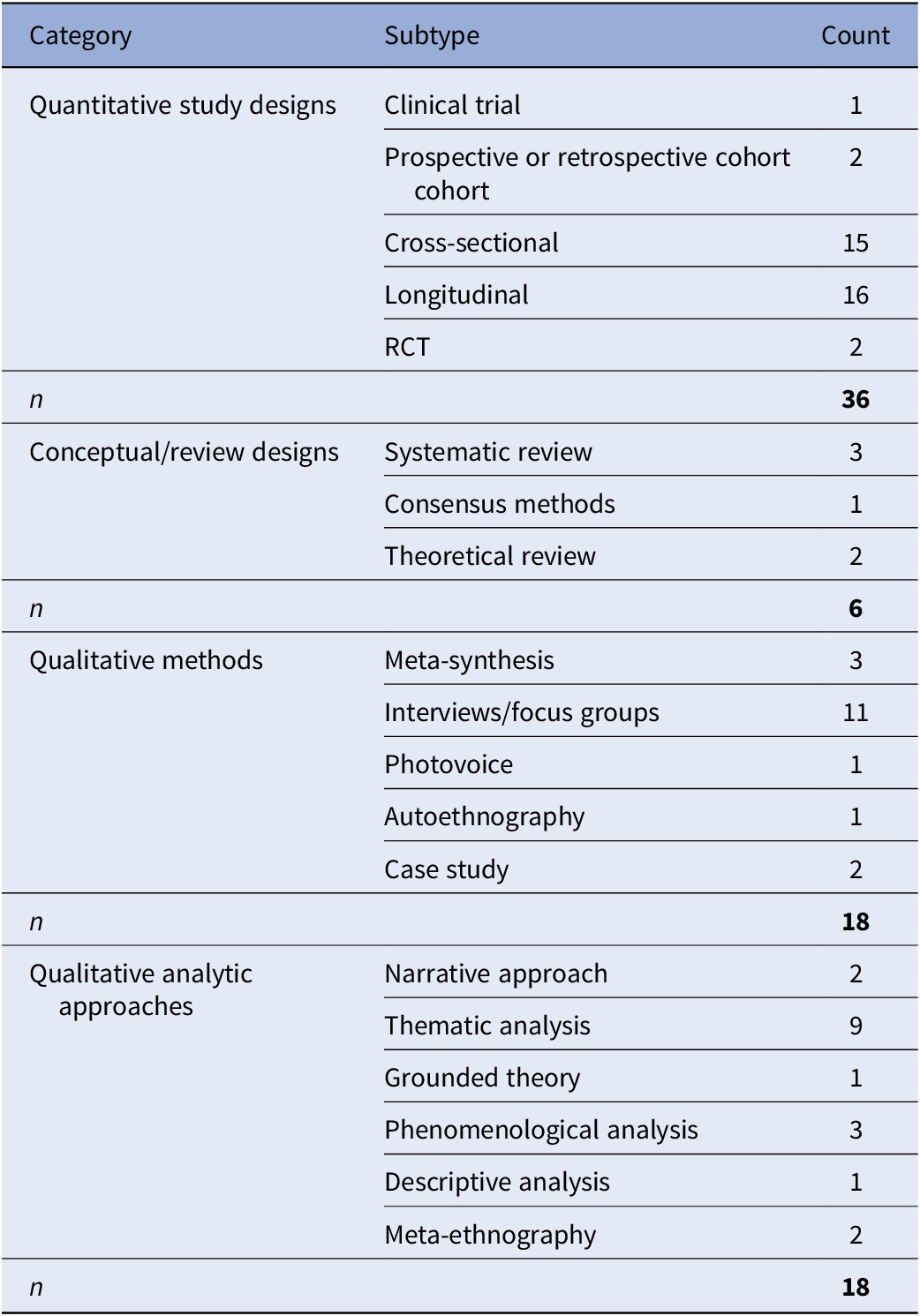
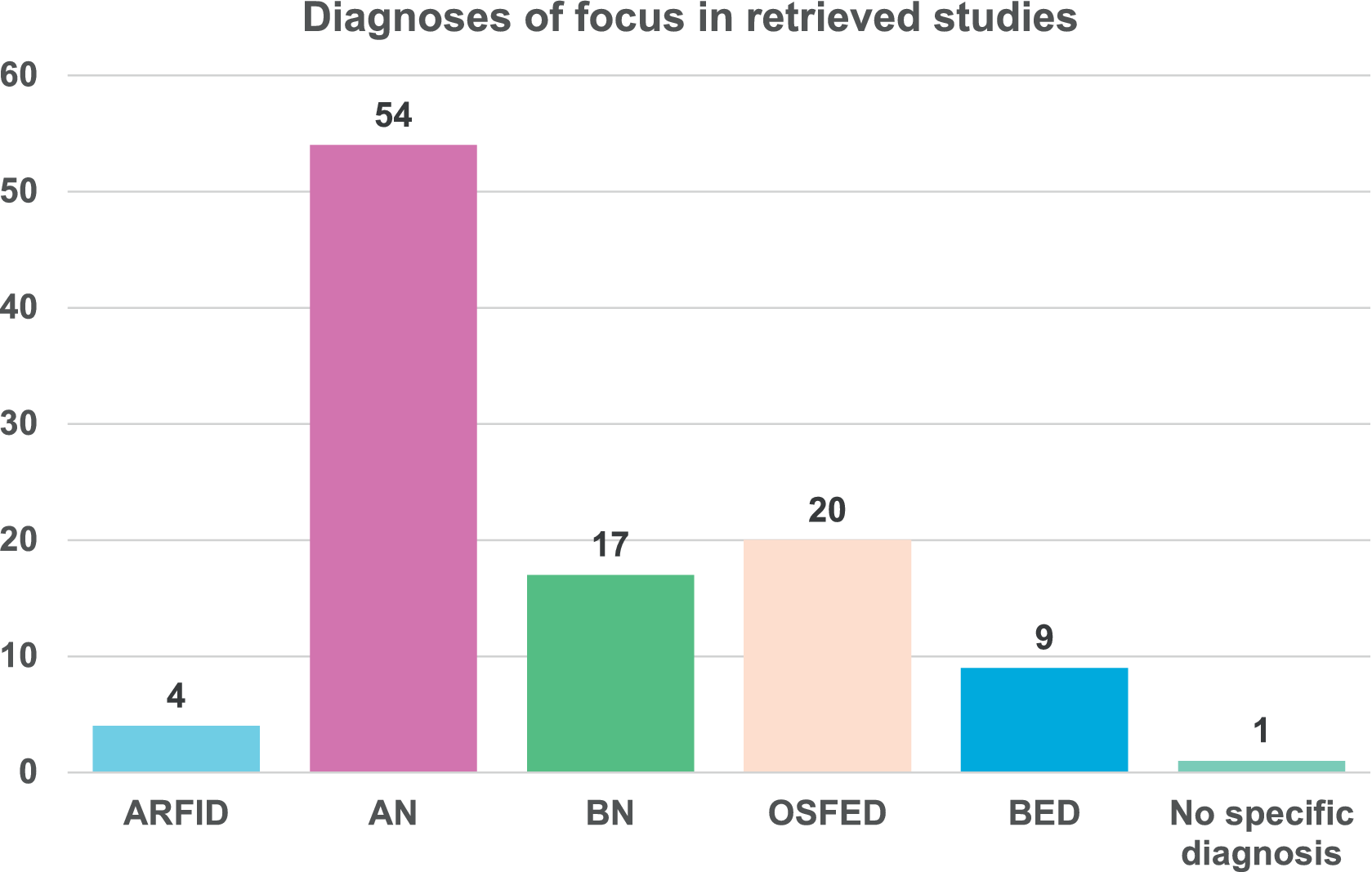
Of the 60 included sources, 36 were quantitative studies, 18 were qualitative studies, and six were conceptual/review papers. These mostly originated from European countries (n = 30; UK: n = 8; Italy: n = 7; Germany: n = 3; France: n = 3; Portugal: n = 2; Sweden: n = 2; Spain: n = 1; Czech Republic: n = 1; Netherlands n = 1; Norway: n = 1; Ireland: n = 1), followed by the USA (n = 14), Australia (n = 11), Canada (n = 1), and Chile (n = 1). Three papers had samples or authors from multiple countries. No manuscripts were retrieved from Africa or Asia. Study design and diagnoses examined are summarized in Table 2 and Figure 2.
Study designs, qualitative methods, and analytic approaches represented in the included literature

Table 2. Long description
The table consists of three columns: Category, Subtype, and Count.
1. Quantitative study designs (Total n = 36):
- Clinical trial: 1
- Prospective or retrospective cohort: 2
- Cross-sectional: 15
- Longitudinal: 16
- R C T: 2
2. Conceptual/review designs (Total n = 6):
- Systematic review: 3
- Consensus methods: 1
- Theoretical review: 2
3. Qualitative methods (Total n = 18):
- Meta-synthesis: 3
- Interviews/focus groups: 11
- Photovoice: 1
- Autoethnography: 1
- Case study: 2
4. Qualitative analytic approaches (Total n = 18):
- Narrative approach: 2
- Thematic analysis: 9
- Grounded theory: 1
- Phenomenological analysis: 3
- Descriptive analysis: 1
- Meta-ethnography: 2
Note: R C T stands for randomized controlled trial.
Abbreviation: RCT, randomized controlled trial.
Cumulative frequency bar charts of diagnoses included in papers. Note: Papers focusing on multiple EDs were counted in each relevant diagnostic category rather than as a single combined group; therefore, totals exceed the number of included studies. AN, Anorexia nervosa; ARFID, avoidant/restrictive food intake disorder; BED, binge eating disorder; BN, bulimia nervosa; OSFED, other specified feeding or eating disorder.
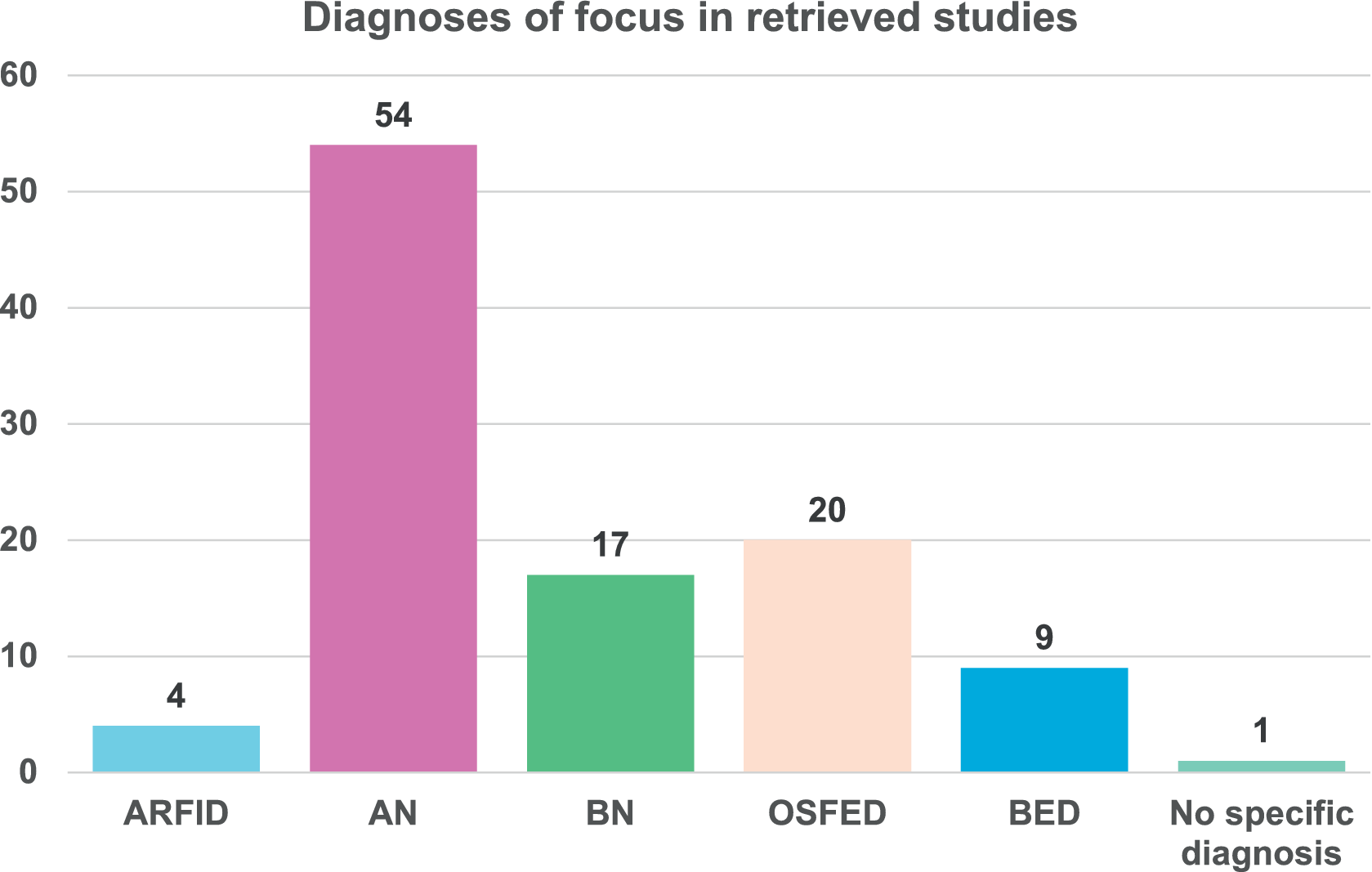
Studies were predominantly clinical or behavioral in focus, examining psychological symptom severity, treatment response, and BMI change [Reference Abber, Presseller, Richson, Joiner and Wierenga22–Reference Tomei and Tomba51]. A smaller number examined neurobiological domains, such as a dopamine-based staging model [Reference Beeler and Burghardt52], bone health, cardiovascular health, and gut microbiome structure and metabolic signatures [Reference Bass, Saxon, Corral, Rodda, Strauss and Reidpath53–Reference Prochazkova, Jezkova, Roubalova, Zadakova, Coufalova and Kubisova58]. Some studies investigated brain structure and function [Reference Treasure, Stein and Maguire47, Reference Beeler and Burghardt52, Reference Bodell and Racine59–Reference Zucker, Kragel, Wagner, Keeling, Mayer and Wang62]. Qualitative studies focused on psychosocial domains such as personality, identity, autonomy, and trauma [Reference Blackburn, OʼConnor and Parsons63–Reference Meneguzzo, Bonello and Todisco81].
Demographic information is not reported for the conceptual/review papers. Across 54 qualitative and quantitative studies, age was reported in 52 (96.3%), gender in 49 (90.7%), and ethnicity in 18 (33.3%) studies.
Staging in quantitative papers
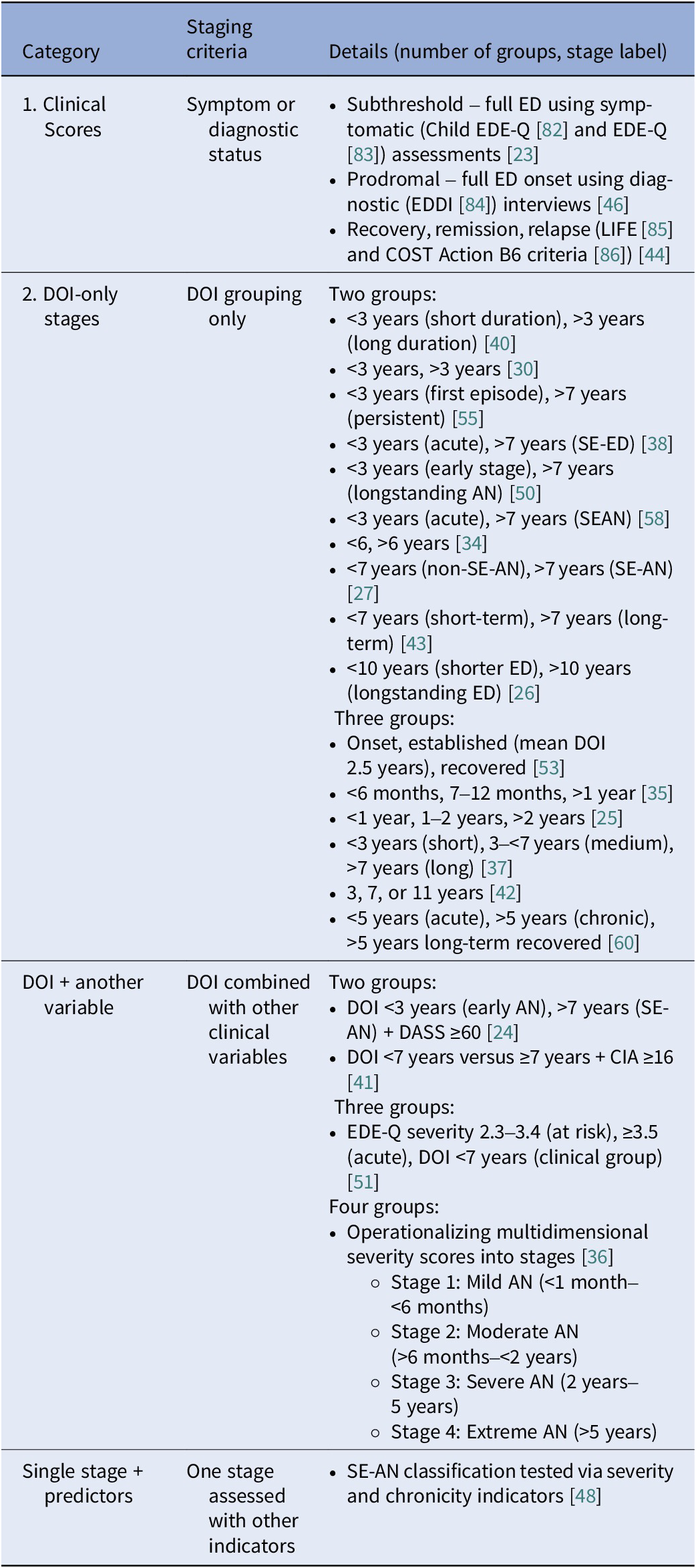
A variety of methods were used to operationalize ED “stages” (see Table 3). A minority of studies looked dimensionally, examining symptom severity continuously from subsyndromal to full-symptom EDs [Reference Allen, Byrne, Oddy and Crosby23, Reference Stice, Desjardins, Rohde and Shaw46]. Duration of illness (DOI) was used as the primary marker of stage, with several studies relying on DOI alone to distinguish stages/phases [Reference Andrade, Gonçalves-Pinho, Roma-Torres and Brandão25–Reference Calugi, El Ghoch and Dalle Grave27, Reference Dare, Eisler, Russell and Szmukler30, Reference Herzog, Wild, Giel, Junne, Friederich and Resmark34, Reference Lin, Jhe, Vitagliano, Milliren, Spigel and Woods35, Reference Marzola, Martini, Brustolin and Abbate-Daga37, Reference Meneguzzo and Todisco38, Reference Perkins, Schmidt, Eisler, Treasure, Berelowitz and Dodge40, Reference Raykos, Erceg-Hurn, McEvoy, Fursland and Waller42, Reference Redgrave, Schreyer, Coughlin, Fischer, Pletch and Guarda43, Reference Kiely, Hay and Conti50, Reference Bass, Saxon, Corral, Rodda, Strauss and Reidpath53, Reference Lopes, Ahmed, Beaman, Stubbs, Campbell and Schmidt55, Reference Prochazkova, Jezkova, Roubalova, Zadakova, Coufalova and Kubisova58, Reference Erdur, Weber, Zimmermann-Viehoff, Rose and Deter60]. A handful of studies added additional clinical metrics to DOI-based stages. These included measures of ED-related psychosocial impairment, depression, anxiety, and stress [Reference Ambwani, Cardi, Albano, Cao, Crosby and Macdonald24, Reference Ramos, Vaz, Rodrigues, Pinto-Bastos, Brandão and Neves41, Reference Tomei and Tomba51].
Quantitative studies – stage conceptualizations

Table 3. Long description
The table is organized into three columns: Category, Staging criteria, and Details (number of groups, stage label).
1. Category: 1. Clinical Scores. Staging criteria: Symptom or diagnostic status. Details include subthreshold versus full E D using symptomatic assessments (Child E D E-Q and E D E-Q), prodromal versus full E D onset using diagnostic interviews (E D D I), and recovery, remission, or relapse criteria.
2. Category: 2. D O I-only stages. Staging criteria: D O I grouping only. Details are split into two groups and three groups. Two-group examples include less than 3 years (short duration) versus greater than 3 years (long duration), and less than 7 years (non-S E-A N) versus greater than 7 years (S E-A N). Three-group examples include onset, established, and recovered; or less than 3 years (short), 3 to less than 7 years (medium), and greater than 7 years (long).
3. Category: D O I plus another variable. Staging criteria: D O I combined with other clinical variables. Details include two groups (e.g., D O I less than 3 years plus D A S S score), three groups (e.g., E D E-Q severity plus D O I), and four groups operationalizing multidimensional severity into Stage 1 (Mild A N, less than 6 months), Stage 2 (Moderate A N, 6 months to 2 years), Stage 3 (Severe A N, 2 to 5 years), and Stage 4 (Extreme A N, greater than 5 years).
4. Category: Single stage plus predictors. Staging criteria: One stage assessed with other indicators. Details include S E-A N classification tested via severity and chronicity indicators.
Abbreviations: AN, Anorexia nervosa; CIA, Clinical Impairment Assessment questionnaire [Reference Bohn87]; COST, European Cooperation in Science and Technology; DASS, Depression Anxiety Stress Scale [Reference Lovibond and Lovibond88]; DOI, duration of illness; ED, eating disorder; EDDI, Eating Disorder Diagnostic Interview [Reference Stice, Gau, Rohde and Shaw84]; EDE-Q, Eating Disorder Examination Questionnaire [Reference Fairburn and Beglin83]; LIFE, Longitudinal Interval Follow-up Evaluation; SE-AN, Severe and enduring anorexia nervosa; SE-ED, severe and enduring eating disorder.
One study empirically tested a multi-component AN staging model incorporating measures of motivation, weight, obsessionality, bulimic behaviors, and “acute issues” [Reference Maguire, Surgenor, Le Grange, Lacey, Crosby and Engel36]. One study focused on a single “severe and enduring AN” (SE-AN) stage only, but examined associations among several indicators (DOI, treatment history, BMI, binge eating, purging, quality of life) to investigate whether distinct subgroups or dimensions emerged within this stage [Reference Wildes, Forbush, Hagan, Marcus, Attia and Gianini48]. Another examined stages of partial remission and subsequent relapse in AN and BN, identifying disorder-specific predictors and high-risk periods to inform illness progression [Reference Richard, Bauer and Kordy44].
Definitions of stages varied widely. Some described only two stages, usually an “early stage” and a “severe and enduring” stage, using DOI thresholds ranging from under a year to more than a decade. Others outlined several stages, from acute or recent-onset illness through to more established or chronic presentations. A small number also included a recovery stage [Reference Bass, Saxon, Corral, Rodda, Strauss and Reidpath53, Reference Erdur, Weber, Zimmermann-Viehoff, Rose and Deter60].
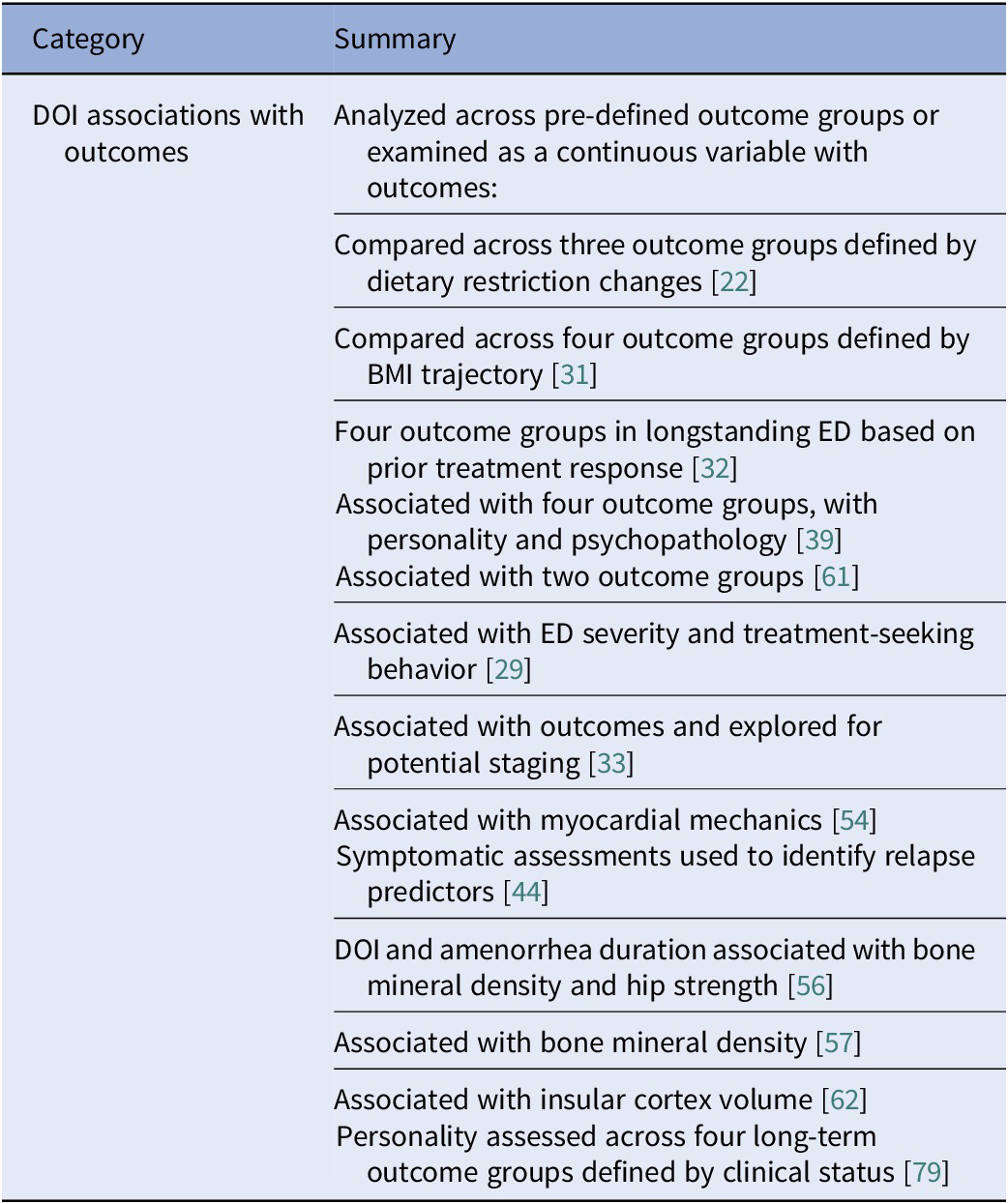
Finally, several studies did not explicitly investigate specific illness stages, but explored the relationship between DOI and various clinical outcomes (see Table 4). While these studies did not evaluate defined stages, they were included as DOI is often used to approximate illness stage within the literature.
Quantitative studies – duration of illness associations

Table 4. Long description
The table consists of two columns: Category and Summary.
Under the Category ‘D O I associations with outcomes’, the Summary column lists the following points:
* Analyzed across pre-defined outcome groups or examined as a continuous variable with outcomes.
* Compared across three outcome groups defined by dietary restriction changes.
* Compared across four outcome groups defined by B M I trajectory.
* Four outcome groups in longstanding E D based on prior treatment response; associated with four outcome groups, with personality and psychopathology; associated with two outcome groups.
* Associated with E D severity and treatment-seeking behavior.
* Associated with outcomes and explored for potential staging.
* Associated with myocardial mechanics; symptomatic assessments used to identify relapse predictors.
* D O I and amenorrhea duration associated with bone mineral density and hip strength.
* Associated with bone mineral density.
* Associated with insular cortex volume; personality assessed across four long-term outcome groups defined by clinical status.
Abbreviations provided at the bottom: B M I stands for body mass index; D O I stands for duration of illness; E D stands for eating disorder.
Abbreviations: BMI, body mass index; DOI, duration of illness; ED, eating disorder.
Staging in qualitative studies
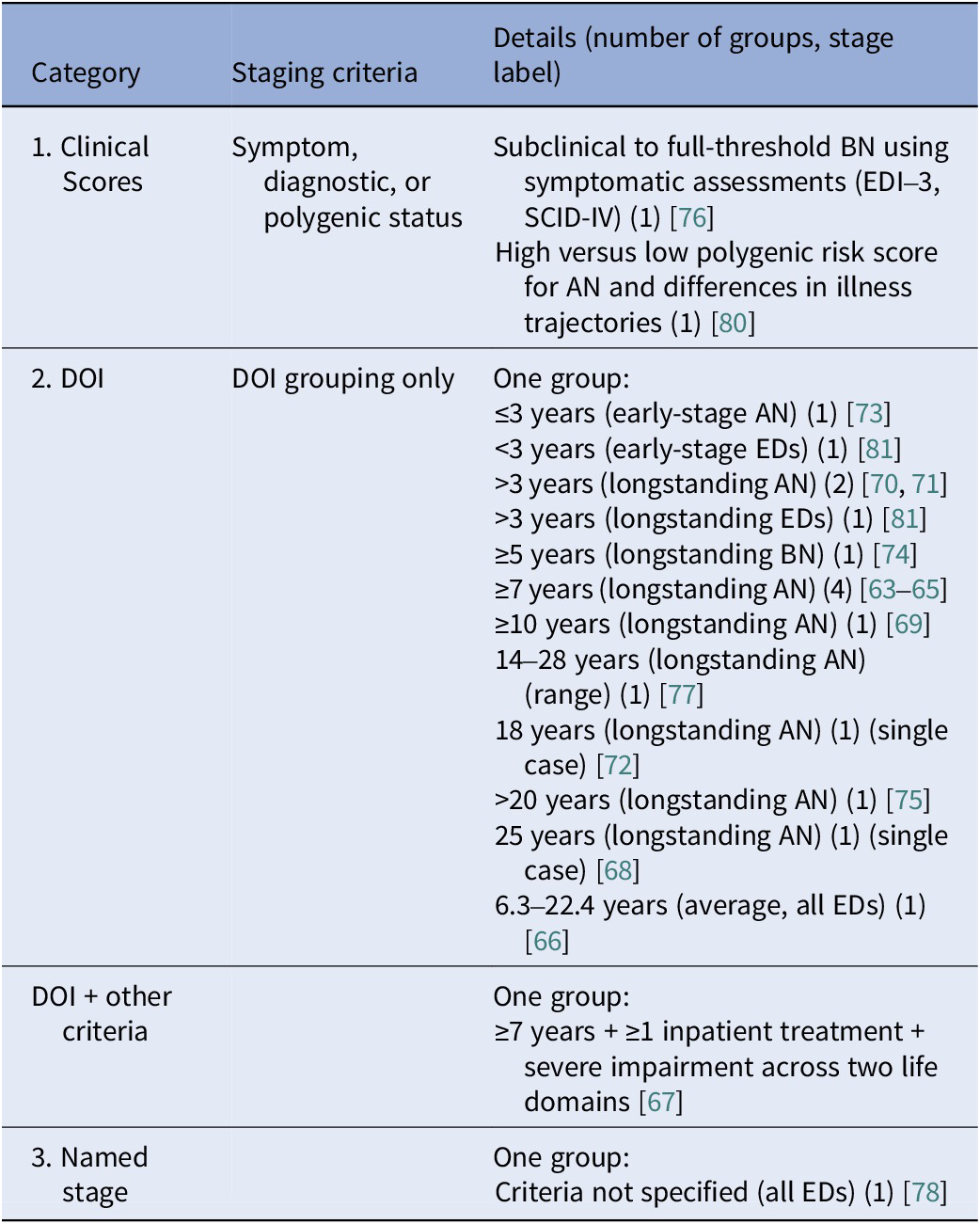
Table 5 summarizes the stages examined and definitions used in qualitative studies. These studies mostly focused on a later stage of AN, with only two studies examining early ED stages [Reference Koskina and Schmidt73, Reference Meneguzzo, Bonello and Todisco81]. A minority of studies took different approaches. One compared subclinical versus full-threshold BN using symptom scores [Reference Skoufalos76], and another explored how individuals with high versus low polygenic risk for AN describe differences in illness onset, course, symptom experience, and recovery [Reference Lindstedt, Monell, Birgegård, Bulik, Termorshuizen and Clinton80].
Qualitative studies – stage conceptualizations

Table 5. Long description
The table is organized into three columns: Category, Staging criteria, and Details (number of groups, stage label).
1. Category: Clinical Scores. Staging criteria: Symptom, diagnostic, or polygenic status. Details: Subclinical to full-threshold B N using symptomatic assessments E D I-3 and S C I D-I V. High versus low polygenic risk score for A N and differences in illness trajectories.
2. Category: D O I (Duration of Illness). Staging criteria: D O I grouping only. Details: Lists various timeframes including less than or equal to 3 years (early-stage A N), less than 3 years (early-stage E Ds), greater than 3 years (longstanding A N or E Ds), greater than or equal to 5 years (longstanding B N), greater than or equal to 7 years (longstanding A N), greater than or equal to 10 years (longstanding A N), 14 to 28 years (longstanding A N), 18 years (longstanding A N single case), greater than 20 years (longstanding A N), 25 years (longstanding A N single case), and an average of 6.3 to 22.4 years for all E Ds.
3. Category: D O I plus other criteria. Details: One group defined as greater than or equal to 7 years plus at least 1 inpatient treatment plus severe impairment across two life domains.
4. Category: Named stage. Details: One group where criteria are not specified for all E Ds.
Abbreviations: AN, anorexia nervosa; BN, bulimia nervosa; DOI, duration of illness, EDI-3, Eating Disorders Inventory-3 [Reference Garner89]; EDs, eating disorders; SCID-IV, Structured Clinical Interview for DSM-IV [Reference First, Spitzer, Gibbon and Williams90].
The terminology/labels used for longstanding EDs varied, with the majority referring to severe and enduring AN (“SE-AN”) [Reference Cummings, Alexander and Boswell67, Reference Kiely, Conti and Hay70–Reference Kiely, Conti and Hay72, Reference Stockford, Stenfert Kroese, Beesley and Leung77] or “longstanding AN” [Reference Blackburn, OʼConnor and Parsons63–Reference Broomfield, Rhodes and Touyz65, Reference Elwyn, Williams, Smith and Smith68]. Other studies used terms such as “chronic AN” [Reference Jack69], “longstanding and severe ED” [Reference Burke, Higgins and MacGinley66] “SE-ED” [Reference Wojtkowiak, Geusendam, van Dijk and Smid78], “enduring ED” [Reference Meneguzzo, Bonello and Todisco81], “SEED-AN” [Reference Robinson, Kukucska, Guidetti and Leavey75], or “SEED-BN” [Reference Robinson, Guidetti, Kasriel, Khawandanah, Hughes and Hachem74].
Staging in review/conceptual papers
For the six review/conceptual papers, a range of staging approaches were proposed. Some emphasized stages based on specific mechanisms involved in the progression of an ED. For example, Beeler and Burghardt proposed two stages of “development” and “entrenchment” in AN, focused on dopaminergic plasticity and collapse; early restriction and exercise initially elevate dopamine, reinforcing learning and the development of AN behaviors [Reference Beeler and Burghardt52]. With continued restriction, the system collapses, reducing plasticity and leading to increasingly inflexible and compulsive behaviors.
Bodell and Racine focus on reward dynamics in BED, proposing a three-stage model from risk, to recent-onset illness, to established illness [Reference Bodell and Racine59]. At-risk individuals show heightened wanting and liking; recent-onset illness shows food-specific reward tuning; and in later stages, wanting remains high but liking drops, driving binge eating without satisfaction. Rizk et al. introduce a five-stage model of problematic physical activity in AN (the inappropriate intensity, frequency, or duration of activity, or a problematic relationship to activity), highlighting voluntary and biologically driven components of excessive exercise and its association with poorer outcomes [Reference Rizk, Mattar, Kern, Berthoz, Duclos and Viltart49].
Other models outlined broader trajectories. Cosci and Fava, and Treasure et al., outlined four-stage models for AN and BN and across EDs, respectively [Reference Cosci and Fava28, Reference Treasure, Stein and Maguire47]. These trace the linear progression of EDs from prodromal features (e.g., “safe foods,” emerging mood and anxiety symptoms), to acute manifestations (e.g., restriction, compulsive exercise, binge-purge cycles), to residual symptoms, and finally to chronic phases characterized by entrenched behaviors, medical complications, and psychiatric comorbidity. Steinglass et al. outline a five-stage model of AN based on expert consensus, defining stages from subsyndromal to full syndrome, persistent illness, and stages of partial or full remission [Reference Steinglass, Glasofer, Dalack and Attia45].
Synthesis and application to staging
Across quantitative studies, longer DOI in AN was associated with poorer psychological, work, and social well-being outcomes [Reference Ambwani, Cardi, Albano, Cao, Crosby and Macdonald24, Reference Ramos, Vaz, Rodrigues, Pinto-Bastos, Brandão and Neves41]. Across studies using a range of ED samples, longer DOI was sometimes associated with poorer treatment outcomes [Reference Abber, Presseller, Richson, Joiner and Wierenga22, Reference Andrade, Gonçalves-Pinho, Roma-Torres and Brandão25, Reference Dare, Eisler, Russell and Szmukler30, Reference Herzog, Wild, Giel, Junne, Friederich and Resmark34] and with delays in accessing specialized treatment [Reference Dapelo, Gil, Lacalle and Vogel29]. However, other studies in AN or underweight OSFED samples reported mixed or no clear differences in treatment response or dropout for different DOI groups [Reference Calugi, Dalle Grave and Marchesini26, Reference Calugi, El Ghoch and Dalle Grave27, Reference Raykos, Erceg-Hurn, McEvoy, Fursland and Waller42, Reference Redgrave, Schreyer, Coughlin, Fischer, Pletch and Guarda43]. For example, effects were sometimes only present alongside other factors such as higher age [Reference Dare, Eisler, Russell and Szmukler30] or comorbid depression [Reference Herzog, Wild, Giel, Junne, Friederich and Resmark34].
Effects on biological markers also varied; longer DOI in AN was associated with worse myocardial strain, suggesting compromised heart function [Reference Krantz, Watters, Oakes, Frazier and Mehler54], and altered insular cortex structure [Reference Zucker, Kragel, Wagner, Keeling, Mayer and Wang62]. Findings relating to bone health were mixed. In AN, bone density loss increased with longer DOI, but improved with recovery [Reference Bass, Saxon, Corral, Rodda, Strauss and Reidpath53], whereas another study demonstrated increased fracture risk compared to healthy controls for women with both first-episode and persistent AN [Reference Lopes, Ahmed, Beaman, Stubbs, Campbell and Schmidt55]. In contrast, a study in males across AN, subthreshold AN, atypical AN, and ARFID reported lower bone mineral density associated with longer DOI, reduced muscle mass, and vitamin D deficiency [Reference Schorr, Drabkin, Rothman, Meenaghan, Lashen and Mascolo57].
One study used mixture modeling to investigate whether longstanding AN may be better represented by a hybrid of severity groups and continuous dimensions rather than DOI alone. The authors found no evidence for discrete classification based on chronicity; instead, a hybrid model comprising two severity groups (higher versus lower) and three continuous dimensions reflecting ED behaviors, quality of life, and illness burden, with DOI serving as a continuous indicator of chronicity [Reference Wildes, Forbush, Hagan, Marcus, Attia and Gianini48].
Qualitative studies mostly explored the lived experience of long-duration EDs. Longstanding AN was associated with ambivalence, diminished motivation, and loss of confidence in treatment, although individuals still hoped for meaningful improvement [Reference Cummings, Alexander and Boswell67, Reference Jack69, Reference Robinson, Guidetti, Kasriel, Khawandanah, Hughes and Hachem74, Reference Robinson, Kukucska, Guidetti and Leavey75]. Participants across studies described unmet treatment needs or harmful experiences of treatment [Reference Kiely, Hay and Conti50, Reference Blackburn, OʼConnor and Parsons63, Reference Broomfield, Rhodes and Touyz64, Reference Cummings, Alexander and Boswell67, Reference Elwyn, Williams, Smith and Smith68, Reference Kiely, Conti and Hay71]. Longstanding EDs were often associated with past trauma or abuse [Reference Blackburn, OʼConnor and Parsons63, Reference Broomfield, Rhodes and Touyz64, Reference Burke, Higgins and MacGinley66, Reference Elwyn, Williams, Smith and Smith68] and longstanding AN was frequently linked to identity and serving functional roles such as regulating emotions or relationships [Reference Broomfield, Rhodes and Touyz64, Reference Burke, Higgins and MacGinley66–Reference Jack69, Reference Kiely, Conti and Hay72]. One study found that individuals at higher polygenic risk described a more persistent, internally, identity-driven illness course [Reference Lindstedt, Monell, Birgegård, Bulik, Termorshuizen and Clinton80].
Only one study investigated longstanding BN, demonstrating enduring physical problems, such as dental and gastrointestinal symptoms, difficulties in relationships, and reduced confidence in treatment [Reference Robinson, Guidetti, Kasriel, Khawandanah, Hughes and Hachem74]. Another study investigating subclinical to full-threshold BN found that while core factors such as body image concerns and fear of rejection were shared across diagnostic status, they varied in intensity and those with full-threshold BN reported greater loneliness, distress, and more intense binge-purge cycles [Reference Skoufalos76].
Discussion
This scoping review aimed to map literature informative for clinical staging in EDs. Studies generally covered three broad stages: a high-risk/prodromal stage of early symptoms or risk factors; an early stage of recent-onset illness and response to treatment (commonly defined as within <3 years DOI); and a later or “severe and enduring” equivalent stage (commonly defined by 7+ years DOI). There was limited attention to intermediate or middle stages such as partial/full remission stages [Reference Steinglass, Glasofer, Dalack and Attia45]. Most models described a linear progression across stages. As in Tomba et al., we found little consensus on stage definitions [Reference Tomba, Tecuta, Gardini, Tomei and Lo Dato15] and terminology, particularly for later stages [Reference Ambwani, Cardi, Albano, Cao, Crosby and Macdonald24, Reference Calugi, Dalle Grave and Marchesini26, Reference Calugi, El Ghoch and Dalle Grave27, Reference Herzog, Wild, Giel, Junne, Friederich and Resmark34, Reference Redgrave, Schreyer, Coughlin, Fischer, Pletch and Guarda43, Reference Lopes, Ahmed, Beaman, Stubbs, Campbell and Schmidt55].
Stage modifiers
The current evidence base has not yet explicitly differentiated stage modifiers such as progression factors concerning illness course, or extension factors demonstrating increasing diversity of signs beyond the primary illness [Reference Dwyer, Ye, Nelson and McGorry91].
DOI is often used as a proxy for progression, and longer DOI, predominantly within AN samples, was associated with adverse physical outcomes including reduced bone density, fracture risk, cardiovascular strain, gastrointestinal and dental complications, and structural brain changes [Reference Andrade, Gonçalves-Pinho, Roma-Torres and Brandão25, Reference Fernández-Aranda, Treasure, Paslakis, Agüera, Giménez and Granero33, Reference Lin, Jhe, Vitagliano, Milliren, Spigel and Woods35, Reference Bass, Saxon, Corral, Rodda, Strauss and Reidpath53–Reference Schorr, Drabkin, Rothman, Meenaghan, Lashen and Mascolo57, Reference Zucker, Kragel, Wagner, Keeling, Mayer and Wang62, Reference Robinson, Guidetti, Kasriel, Khawandanah, Hughes and Hachem74]. In other studies, other factors were stronger predictors of treatment outcome than DOI, such as discharge BMI [Reference Redgrave, Schreyer, Coughlin, Fischer, Pletch and Guarda43], or else DOI was only predictive of outcomes alongside, for example, perfectionistic traits, impairment, or child sexual abuse [Reference Eielsen, Ulvenes, Hoffart, Rø, Rosenvinge and Vrabel32, Reference Nilsson, Sundbom and Hägglöf39, Reference Ramos, Vaz, Rodrigues, Pinto-Bastos, Brandão and Neves41]. Thus, while commonly used, DOI alone does not consistently predict outcome and is an insufficient proxy for stage. As many studies were AN-only, generalizability to other EDs is unclear.
Only a small number of papers empirically tested DOI with other measures in AN or AN-type OSFED presentations [Reference Ambwani, Cardi, Albano, Cao, Crosby and Macdonald24, Reference Maguire, Surgenor, Le Grange, Lacey, Crosby and Engel36, Reference Wildes, Forbush, Hagan, Marcus, Attia and Gianini48]. Research on specific cognitive and biological progression factors was limited, with studies tending to identify state–trait distinctions rather than clear, stage-specific biomarkers. The wider literature demonstrates that cognitive impairments may worsen with longer DOI across ED diagnoses [Reference Grau, Magallón-Neri, Faus and Feixas92, Reference Miranda-Olivos, Testa, Lucas, Sánchez, Sánchez-González and Granero93]. For AN, eye-tracking studies show that attentional avoidance of high-calorie foods increases over time [Reference Werthmann, Simic, Konstantellou, Mansfield, Mercado and van Ens94], and that structural brain changes are more pronounced and slower to reverse in individuals with longer DOI [Reference Walton, Bernardoni, Batury, Bahnsen, Larivière and Abbate-Daga95, Reference Fonville, Giampietro, Williams, Simmons and Tchanturia96]. These findings are fragmented across individual studies, requiring systematic integration into clinical staging models.
Qualitative studies highlighted dimensions rarely integrated into staging frameworks. Most studies focused on longstanding AN, contributed little to early/recent-onset EDs, and rarely attempted to connect lived experience across illness phases. Identity entanglement, shame, hopelessness, and lost autonomy were frequently cited as characteristic of longstanding AN, as were recurrent treatment failures [Reference Broomfield, Rhodes and Touyz64, Reference Burke, Higgins and MacGinley66, Reference Kiely, Conti and Hay70], which may inform progression to this stage.
Across studies, several additional physical and diagnostic features such as cardiovascular strain [Reference Krantz, Watters, Oakes, Frazier and Mehler54], gastrointestinal and dental problems [Reference Robinson, Guidetti, Kasriel, Khawandanah, Hughes and Hachem74], and metabolic or microbiome disruption [Reference Prochazkova, Jezkova, Roubalova, Zadakova, Coufalova and Kubisova58] represent increased illness complexity beyond core ED symptoms. Under a staging framework, these represent extension factors occurring independently of progression or as a direct consequence of the ED [Reference Scott, Iorfino, Capon, Crouse, Nelson and Chanen8]. Wider literature on the longer-term outcomes of EDs also demonstrates physical sequelae such as osteopenia/osteoporosis [Reference Hambleton, Pepin, Le, Maloney, Aouad and Barakat97], obesity [Reference Schmidt, Claudino, Fernández-Aranda, Giel, Griffiths and Hay1], and adverse reproductive outcomes such as miscarriage, preterm delivery, and pregnancy complications [Reference O’Brien, Whelan, Sandler, Hall and Weinberg98].
While some studies demonstrate increased comorbid anxiety [Reference Abber, Presseller, Richson, Joiner and Wierenga22] and depression [Reference Lin, Jhe, Vitagliano, Milliren, Spigel and Woods35] over time, some evidence suggested that diagnostic diversity decreases over time, with early-stage presentations shaped by broader psychological vulnerabilities and later stages characterized by more fixed and tightly clustered ED-specific symptoms [Reference Perkins, Schmidt, Eisler, Treasure, Berelowitz and Dodge40, Reference Tomei and Tomba51], consistent with qualitative accounts of EDs becoming increasingly entangled with identity over time.
Treatment implications
Earlier detection and effective intervention appear important for improving outcomes, partly because of the risk of worsening symptoms [Reference Allen, Byrne, Oddy and Crosby23, Reference Andrade, Gonçalves-Pinho, Roma-Torres and Brandão25, Reference Fernández-Aranda, Treasure, Paslakis, Agüera, Giménez and Granero33, Reference Herzog, Wild, Giel, Junne, Friederich and Resmark34] but also to avoid the need for costly, intensive, and invasive treatments [Reference Blackburn, OʼConnor and Parsons63, Reference Broomfield, Rhodes and Touyz64, Reference Burke, Higgins and MacGinley66, Reference Elwyn, Williams, Smith and Smith68, Reference Kiely, Conti and Hay71]. Some clinical features may help identify those at risk of poorer trajectories at an earlier stage, including purging behaviors and externalizing problems, while delayed intervention has been associated with greater treatment intensity and poorer functional outcomes [Reference Abber, Presseller, Richson, Joiner and Wierenga22–Reference Ambwani, Cardi, Albano, Cao, Crosby and Macdonald24]. Notably, shorter-duration AN showed less improvement in body image concerns following inpatient CBT than longer-DOI groups [Reference Marzola, Martini, Brustolin and Abbate-Daga37], consistent with network analyses suggesting cognitive symptoms are most central in early illness [Reference Christian, Williams, Hunt, Wong, Ernst and Spoor6], highlighting body image as a key treatment target at this stage.
Longstanding EDs appeared to carry unique treatment needs. Addressing trauma and early adversity was identified as an important treatment target [Reference Eielsen, Ulvenes, Hoffart, Rø, Rosenvinge and Vrabel32, Reference Elwyn, Williams, Smith and Smith68, Reference Kiely, Conti and Hay70, Reference Stockford, Stenfert Kroese, Beesley and Leung77], with trauma-informed, autonomy-supportive models specifically recommended [Reference Burke, Higgins and MacGinley66, Reference Cummings, Alexander and Boswell67, Reference Kiely, Conti and Hay70, Reference Kiely, Conti and Hay71]. A focus on quality of life and social and occupational functioning were also key treatment targets for this stage, with psychosocial interventions prioritized over weight-focused treatment [Reference Broomfield, Rhodes and Touyz64, Reference Robinson, Guidetti, Kasriel, Khawandanah, Hughes and Hachem74, Reference Robinson, Kukucska, Guidetti and Leavey75]. Longstanding AN was frequently described as interwoven with identity, whereas a case study exploring identity in the treatment of early-stage AN was found to be effective in reducing the dominance of AN [Reference Koskina and Schmidt73]. Further details of the treatment recommendations and clinical implications for each individual study are provided in the Supplementary Tables S4–S6.
Quality of evidence and suggestions for future research
Most studies were rated as moderate to low strength of evidence. Overall, stronger experimental and multimethod designs were missing. All JBI rankings can be found in Supplementary Tables S4–S6.
Randomized controlled trials (RCTs) evaluating interventions tailored to proposed stages would elucidate whether treatment outcomes differ between stages. Although some trials exist, for example for longstanding AN [Reference Dalton, Bartholdy, McClelland, Kekic, Rennalls and Werthmann99, Reference Touyz, Le Grange, Lacey, Hay, Smith and Maguire100] and for indicated prevention [Reference Schlegl, Hirler, Gerich, Højlund, Stice and Wade101], few test interventions across multiple stages of illness, and large-scale, stage-stratified RCTs are scarce [Reference Mills, Hyam and Schmidt102]. Prospective longitudinal studies using multimodal ([epi]genetic, neural, cognitive and psychosocial) assessments to deeply phenotype participants could inform illness stages and stage transitions, including but not limited to ABCD, IMAGEN, ESTRA, STRATIFY [Reference Bartholdy, O’Daly, Campbell, Banaschewski, Barker and Bokde103–Reference Martin, Schulz, Hildebrandt, Sysko and Li106], and the newly established “STORY” cohort, which also includes novel digital markers [Reference Kuehne, Phillips, Moody, Bryson, Campbell and Conde107].
Further research is needed across BN, BED, OSFED, and ARFID, as the evidence focused on AN and few diagnosis-specific conclusions could be drawn. Given high rates of diagnostic crossover in EDs [Reference Attia and Walsh108], staging frameworks should account for diagnostic changes over time.
Moving the field forward: A tentative new staging model
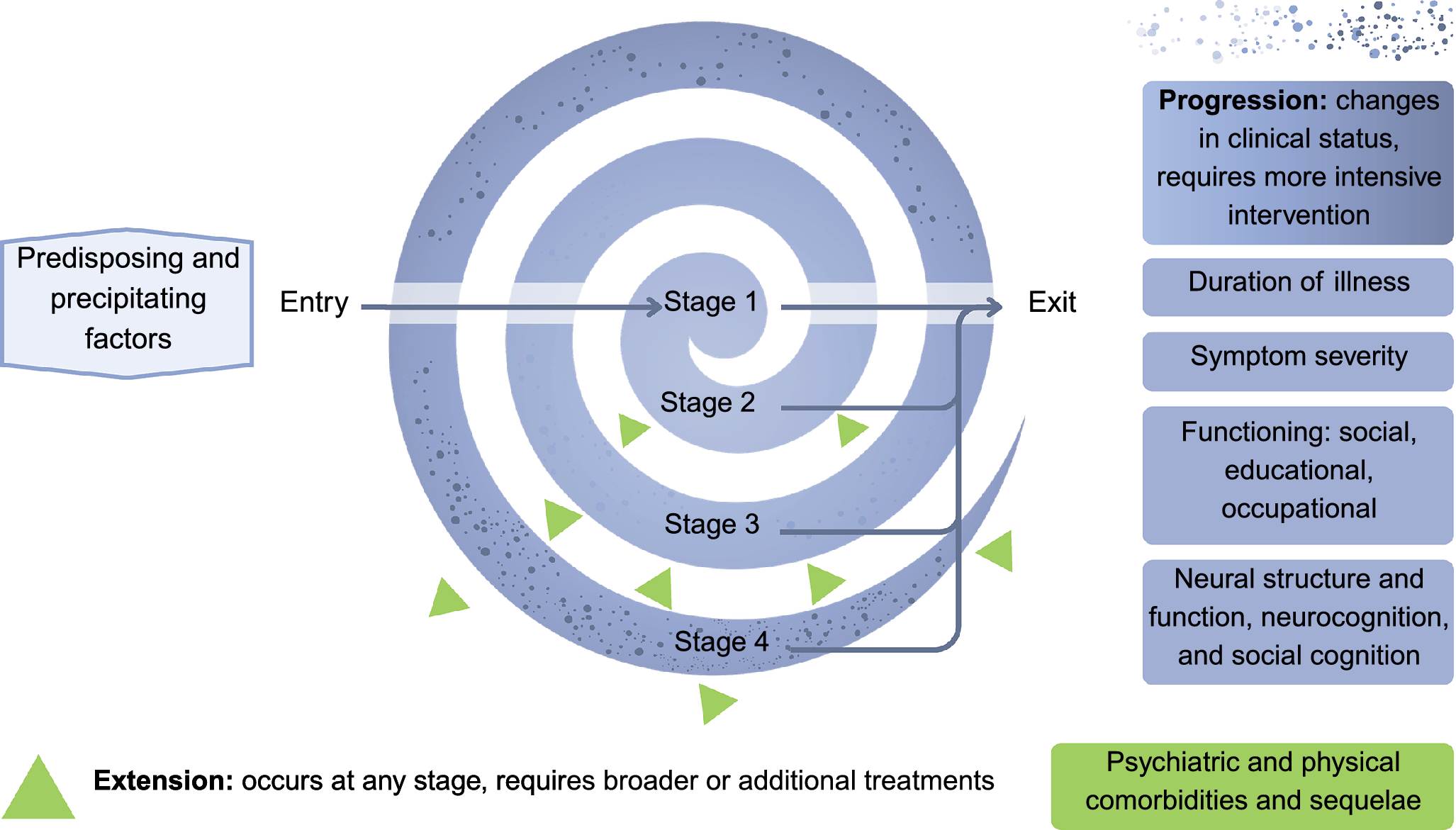
Based on the findings of this review, we propose a tentative, heuristic staging model for EDs in Figure 3, intended to guide future research rather than serve as a prescriptive clinical tool. The text is inspired by Haas et al. [Reference Haas, Pan, Hickie and Czepielewski109] and the model is also informed by parallel qualitative work exploring lived-experience perspectives on staging, which highlights concerns about linear models and rigid “boxes,” supporting a more fluid representation of illness trajectories [Reference Hyam110].
Working staging model for eating disorders.

Figure 3. Long description
The central feature is a purple, textured spiral with four numbered stages. At the core is Stage 1. Moving outward through the spiral layers are Stage 2, Stage 3, and finally Stage 4 at the outermost perimeter.
Horizontal flow:
- On the far left, a hexagonal box labeled Predisposing and precipitating factors leads to an Entry arrow.
- The Entry arrow passes through the spiral layers directly to Stage 1.
- From each stage (1 through 4), horizontal lines emerge to the right, curving upward to converge at a single Exit point on the right side of the spiral.
External elements:
- Green triangles point inward toward the spiral at various points. A legend at the bottom defines these as Extension: occurs at any stage, requires broader or additional treatments.
- A green box at the bottom right is labeled Psychiatric and physical comorbidities and sequelae.
Vertical list on the right:
- A column of blue boxes defines Progression as changes in clinical status, requires more intensive intervention.
- Below this, criteria for progression include: Duration of illness, Symptom severity, Functioning (social, educational, occupational), and Neural structure and function, neurocognition, and social cognition.
A key feature of this staging model is the use of a spiral to reflect the varied trajectories individuals with EDs experience. Four stages were selected, as this is a common configuration in the identified literature and aligns with established staging frameworks in other mental disorders [Reference Scott, Iorfino, Capon, Crouse, Nelson and Chanen8, Reference Haas, Pan, Hickie and Czepielewski109]. However, the optimal number of stages is not currently known. Each stage is not a fixed category; transitions reflect changes in clinical status and treatment needs across multidimensional indicators identified in the reviewed evidence, including DOI, symptom severity, psychosocial functioning, cognitive and neurobiological changes, and medical and psychiatric factors. Other configurations may prove more valid as evidence develops. At any point, individuals may require broader or more intensive interventions due to comorbid psychiatric or physical complications. The spiral also includes an all-stage accessible exit point to better showcase that individuals can recover at any stage [Reference Eddy, Tabri, Thomas, Murray, Keshaviah and Hastings111].
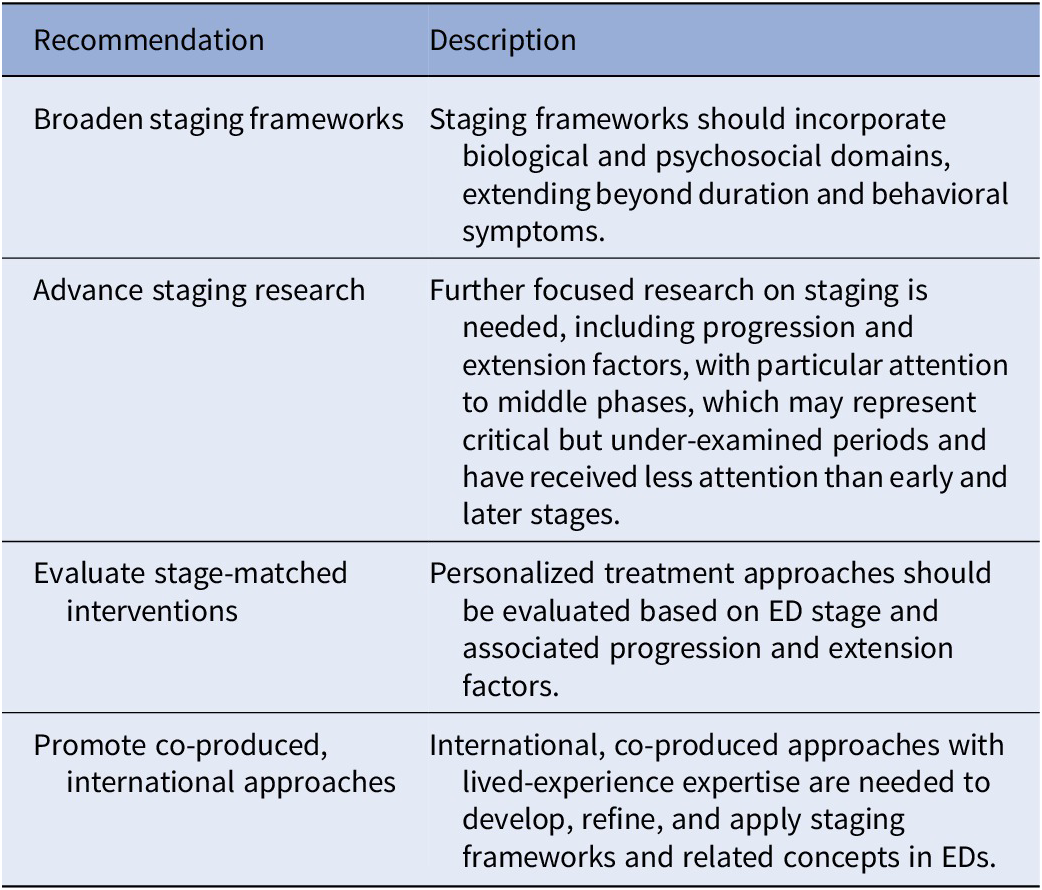
Table 6 details some key recommendations to facilitate onward progress in this area.
Key recommendations for advancing clinical staging in EDs

Table 6. Long description
The table consists of two columns titled Recommendation and Description.
* Row 1: Broaden staging frameworks. Description: Staging frameworks should incorporate biological and psychosocial domains, extending beyond duration and behavioral symptoms.
* Row 2: Advance staging research. Description: Further focused research on staging is needed, including progression and extension factors, with particular attention to middle phases, which may represent critical but under-examined periods and have received less attention than early and later stages.
* Row 3: Evaluate stage-matched interventions. Description: Personalized treatment approaches should be evaluated based on E D stage and associated progression and extension factors.
* Row 4: Promote co-produced, international approaches. Description: International, co-produced approaches with lived-experience expertise are needed to develop, refine, and apply staging frameworks and related concepts in E D s.
A footer notes that E D stands for eating disorder.
Abbreviation: ED, eating disorder.
Limitations
The included studies used various methods, samples, and terminology, making it difficult to draw firm conclusions about how ED stages should be defined. Conceptual ambiguity and inconsistent language regarding staging or progression meant that staging concepts were often inferred retrospectively, where it was not the intention of the original authors.
Limiting our search to articles published only in the English language raises the possibility of bias. Our study retrieved no studies from Asia or from Africa, and only one study from South America (Chile). In addition, reporting of ethnicity was low across the included studies. Consequently, staging-relevant literature appears to rest on a demographically narrow or, in many cases, ambiguous evidence base. Notably, the Chilean study suggested that DOI criteria may be inappropriate outside Western contexts [Reference Dapelo, Gil, Lacalle and Vogel29], potentially reflecting differences in healthcare structures, service access, or cultural context, and indicating an absence of contextually informed evidence to guide clinical staging.
Finally, we were unable to complete forward citation searching, meaning some newer studies may have been missed. Given the heterogeneity and conceptual variation in the existing literature, a broader search may have added further complexity to synthesis.
Conclusion
Clinical staging frameworks can add valuable structure for supporting diagnosis, prognosis, prevention, and tailored intervention in EDs. However, stages are currently inconsistently used, and international collaboration and co-production are required to develop consistent language and criteria [Reference Dwyer, Ye, Nelson and McGorry91]. As such, we invite critical appraisal and evaluation of the newly proposed staging model from researchers, clinicians, and those with lived/living ED experience.
Supplementary material
The supplementary material for this article can be found at http://doi.org/10.1192/j.eurpsy.2026.12241.
Data availability statement
The data generated from this study are available from Lucy Hyam (lucy.e.hyam@kcl.ac.uk) upon reasonable request.
Author contribution
U.S., K.L.A., and L.H. jointly devised the concept and research questions. L.H. led the review process, including record searches, title, abstract, and full-text screening, data extraction, charting, and quality appraisal. L.G. supported title, abstract, and full-text screening as well as data charting. R.M. supported record searches and title and abstract screening. C.K. supported full-text screening and data charting, while M.C.D. supported full-text screening. L.G. and M.J.P. supported data charting. L.H. drafted the manuscript, and all authors reviewed, edited, and approved the final manuscript. U.S. and K.L.A. provided senior supervision of the whole study.
Financial support
L.H. was supported by a PhD studentship from the Health Foundation during the completion of this work. L.H. is currently supported by a research grant from The Psychiatry Research Trust (grant no. PRT2026LH). C.K is supported by a National Institute of Health Research (NIHR) Maudsley Biomedical Research Centre (BRC) PhD scholarship. M.C.D. receives a PhD scholarship from the Hans-Boeckler Foundation. M.J.P. was supported by a PhD studentship from the Australian Government and traveling scholarships from Graduate Women’s NSW Inc and the University of Sydney, during the completion of this work. U.S. receives salary support from the NIHR Maudsley BRC, part of the NIHR and hosted by South London and Maudsley NHS Foundation Trust in partnership with King’s College London. U.S. and K.L.A. are supported by the Medical Research Council/Arts and Humanities Research Council/Economic and Social Research Council Adolescence, Mental Health and the Developing Mind initiative as part of the EDIFY programme (grant no. MR/W002418/1). K.L.A and U.S. are additionally supported by the Medical Research Council grant no. MR/X030539/1. The views expressed in this publication are those of the authors and not necessarily those of the NHS, the NIHR or the UK Department of Health and Social Care.
Competing interests
The authors declare none.
Artificial intelligence
AI-assisted tools were employed solely for language editing, including shortening wording. The authors reviewed and approved all content and take full responsibility for the manuscript.


 Open access


Comments
No Comments have been published for this article.