


Introduction
Comorbid substance use disorders (SUDs) and other mental health disorders (MHDs) accounted for more than one million years lived with disability in Europe, according to the Global Burden of Disease estimates for 2019 (IHME 2024; Castelpietra et al. Reference Castelpietra, Knudsen, Agardh, Armocida, Beghi, Iburg, Logroscino, Ma, Starace, Steel, Addolorato, Andrei, Andrei, Ayuso-Mateos, Banach, Bärnighausen, Barone-Adesi, Bhagavathula, Carvalho, Carvalho, Chandan, Chattu, Couto, Cruz-Martins, Dargan, Deuba, da Silva, Fagbamigbe, Fernandes, Ferrara, Fischer, Gaal, Gialluisi, Haagsma, Haro, Hasan, Hasan, Hostiuc, Iacoviello, Iavicoli, Jamshidi, Jonas, Joo, Jozwiak, Katikireddi, Kauppila, Khan, Kisa, Kisa, Kivimäki, Koly, Koyanagi, Kumar, Lallukka, Langguth, Ledda, Lee, Lega, Linehan, Loureiro, Madureira-Carvalho, Martinez-Raga, Mathur, McGrath, Mechili, Mentis, Mestrovic, Miazgowski, Mirica, Mirijello, Moazen, Mohammed, Mulita, Nagel, Negoi, Negoi, Nwatah, Padron-Monedero, Panda-Jonas, Pardhan, Pasovic, Patel, Petcu, Pinheiro, Pollok, Postma, Rawaf, Rawaf, Romero-Rodríguez, Ronfani, Sagoe, Sanmarchi, Schaub, Sharew, Shiri, Shokraneh, Sigfusdottir, Silva, Silva, Socea, Szócska, Tabarés-Seisdedos, Torrado, Tovani-Palone, Vasankari, Veroux, Viner, Werdecker, Winkler, Hay, Ferrari, Naghavi, Allebeck and Monasta2022). Dual disorders poses significant challenges for affected individuals and the healthcare systems (Szerman et al. Reference Szerman, Torrens, Maldonado, Balhara, Salom, Maremmani, Sher, Didia-Attas, Chen and Baler2022). It is an area of increasing relevance for both clinical research and healthcare practice (European Monitoring Centre for Drugs and Drug Addiction [EMCDDA], 2015; Fernández-Miranda et al. Reference Fernández-Miranda, Fontoba-Díaz, Díaz-Fernández and Pascual-Pastor2021, 2021; National Institute on Drug Abuse [NIDA], 2010; Pascual-Pastor et al. Reference Pascual-Pastor, Fernández-Miranda, Díaz-Fernández and Sala-Año2017). Patients with dual disorders face difficulties associated with both conditions, alongside additional complications arising from their interactions. Having a comorbid mental health and substance use disorder is linked to severe adverse clinical and societal consequences, including impaired social relationships (Bhalla et al. Reference Bhalla, Stefanovics and Rosenheck2018; Dixon Reference Dixon1999), disruptive behaviours (Dixon Reference Dixon1999; Syan et al. Reference Syan, Minhas, Oshri, Costello, Sousa, Samokhvalov, Rush and MacKillop2020), and accelerated cognitive and functional decline (Moraleda-Barreno et al. Reference Moraleda-Barreno, Cáceres Pachón, Lozano, Pérez Moreno, Lorca Marín, Fernández-Calderón, Díaz Batanero and Gómez-Bujedo2021; Scott et al. Reference Scott, Lynch, Cenkner, Kehle-Forbes, Polusny, Gur, Chen, Foa and Oslin2021). Also, individuals with dual disorders are at higher risk of psychiatric hospitalisation, frequent emergency department visits, recurrent relapses into substance use and mental health crises, and premature death (Blackwood et al. Reference Blackwood, Lynskey and Drummond2021; Ramadan et al. Reference Ramadan, Alharbi, Ahmad, Alkhalaf, Alhusseini, Algarni and Mohamed2022; Torrens-Mèlich and Adan Reference Torrens-Mèlich and Adan2023).
Moreover, the simultaneous presence of multiple disorders complicates diagnosis and treatment. Identifying and managing psychiatric comorbidity is complex due to the continuous interplay between the two disorders. Several pathways may lead to comorbidity, the disorders may occur independently, or a mental disorder may serve as a risk factor for developing an SUD. Alternatively, substance use could trigger or exacerbate an existing mental disorder, or both conditions may interact in a way that perpetuates and intensifies each other (Benabarre Reference Benabarre2020; Drake and Wallach Reference Drake and Wallach2000; EMCDDA 2015; Sánchez-Peña et al. Reference Sánchez-Peña, Alvarez-Cotoli and Rodríguez-Solano2012; Volkow and Blanco Reference Volkow and Blanco2023). Additionally, some substances may induce transient psychiatric symptoms due to acute intoxication, leading to a substance-induced disorder.
Although prevalence data are still limited, the common occurrence of dual disorders in populations of people using drugs and the significant impact on the quality of life and the socio-economic burden indicates a need for a comprehensive evidence-based response to comorbid SUDs and MHDs and a common approach at European level (EMCDDA 2015; Lund et al. Reference Lund, Brooke-Sumner, Baingana, Baron, Breuer, Chandra, Haushofer, Herrman, Jordans, Kieling, Medina-Mora, Morgan, Omigbodun, Tol, Patel and Saxena2018).
Nevertheless, despite several international recommendations advocating for such an approach (CND 2022; Council of the European Union 2023; EMCDDA 2015; Jegede et al. Reference Jegede, Rhee, Stefanovics, Zhou and Rosenheck2022), there is a lack of comparable epidemiological data across European countries and a considerable variability in the treatment of patients with dual disorders in the European countries and elsewhere. Areas where treatment networks for addictive disorders and other mental disorders exist separately makes it difficult for these patients to access the centres (the so called “wrong door syndrome”) leading to the patients with the most complex history encountering the greatest barriers (Szerman et al. Reference Szerman, Torrens, Maldonado, Balhara, Salom, Maremmani, Sher, Didia-Attas, Chen and Baler2022). To address gaps in dual disorders recording and the existing diversity in European treating these comorbidities across European countries, a common screening tool and evidence-based treatment approach is required. The European Union Drugs Agency (EUDA) is committed to addressing comorbid mental health and substance use disorders by supporting the development of a common European approach in epidemiological data, assessment and service provision for people with dual disorders (European Union 2006, 2023).
This paper examines the current European landscape, based on the (limited) available epidemiological data on people entering specialised treatment for SUD who have co-occurring MHDs and a mapping of existing services in the European countries, proposing the implementation of a common European approach to address comorbid mental health and substance use disorders.
Methods
Since 2020, the EUDA has worked in two key areas: improving the availability and comparability of epidemiological data and mapping the available interventions to address comorbidity in substance use disorder services across Europe. The EUDA established an EUDA Advisory Board on dual disorders, composed of European experts and clinicians working in the field, which guides and oversees the EUDA’s efforts and supports the conceptualisation of a common approach to comorbidity across European countries.
The information presented in this paper is based on a) the first piloting European voluntary data collection on mental health disorders among patients entering specialised treatment for SUD and b) the mapping of available services to address dual disorders in the European countries through the RTX National Focal PointsFootnote 1 and an assessment of the level of integration between mental health and substance use disorder services.
Background data
Pilot data collection of dual disorders in drug treatment demand in three countries. In 2022, the REITOX National Focal Points (NFPs)Footnote 2 approved the introduction of an item on MHD in the routine data collection on patients entering specialised SUD treatment, based on the Treatment Demand Indicator Protocol (TDI) (EMCDDA 2012) (Annex 1). From 2024 onwards, countries could voluntarily provide the EUDA with data on dual disorders. The additional variables included in the European drug treatment reporting system (TDI) comprised information on the type of mental health disorders and the method of identification of the disorders. The reported disorders were classified according to the ICD-10 classification and its ICD-11 adaptation (WHO 2022,), covering depressive disorder, psychotic disorder, bipolar disorder, anxiety disorder, post-traumatic stress disorder, attention deficit and hyperactivity disorder, personality disorders, obsessive–compulsive disorder, and organic mental disorders. The methods of identification of the MHD included self-reported data or data based on a diagnosis made by a clinician.
In 2023, three (out of 29 EUDA reporting countries) – Austria, Bulgaria, and Luxembourg – reported data on mental health data based on a systematic sample of patients, using the following national data sources within the TDI:
-
– Austria: In Austria, the national register “Dokumentationssystem der Klientinnen und Klienten der Drogenhilfe (DOKLI)” compiles data from specialised drug treatment services across the country. It covers 122 outpatient centres (91% coverage) and 17 inpatient centres (81% coverage). It does not cover other types of treatment centres, including general practitioners, which provide treatment to a large part of drug treatment patients in Austria. The data on mental health disorders were based on diagnoses made by clinicians.
-
– Bulgaria: In the case of Bulgaria, the “National Monitoring System for Drug-Related Treatment Demand (I-MIS)” gathers both disaggregated and aggregated data from specialised drug treatment centres nationwide, including outpatient, inpatient, and prison-based units. The system covers 24 out of 41 outpatient units, 20 out of 39 inpatient units, and 10 out of 12 prison treatment units. Mental health information within the drug treatment reporting system is self-reported.
-
– Luxembourg: In Luxembourg, the “Réseau Luxembourgeois d’Information sur les Stupéfiants (RELIS)” is the national drug monitoring system, covering all treatment centres included in the TDI Protocol (outpatient, inpatient, and low-threshold agencies, excluding general practitioners and prisons) through individual paper questionnaires. The system covers four out of five outpatient units, four out of five inpatient units, and all five low-threshold agencies. The mental health disorders of patients within the TDI reporting system are self-reported.
A descriptive statistical analysis was conducted on the data of the three countries.
Ethical considerations were made in data collection by following the national data protection regulations of each country; data were anonymised prior to collection and provided to the EUDA in an aggregated form.
Mapping of available services
In 2022, an online survey was conducted through the network of the REITOX NFPs, with the aim of mapping the availability of services addressing comorbid MHDs and SUDs and describing their main treatment approaches. The survey included the following two questions: 1. What t is the prevailing model in the country? 2. Can you provide a short description of the services targeting comorbidity in your country?
To respond to the first question, the NFPs had to choose an approach among the following a predefined classification of services targeting dual disorders:
1. different spaces, where there is communication between practices; 2. same space, but separate services, where the services can be co-located, may have shared care or specialised shared care; 3. same space and same services, where the care is unified in the same space; 4. same space, same services and same professionals, which is a fully integrated system of care (Annex 2).
Results
Epidemiological data: TDI data collection
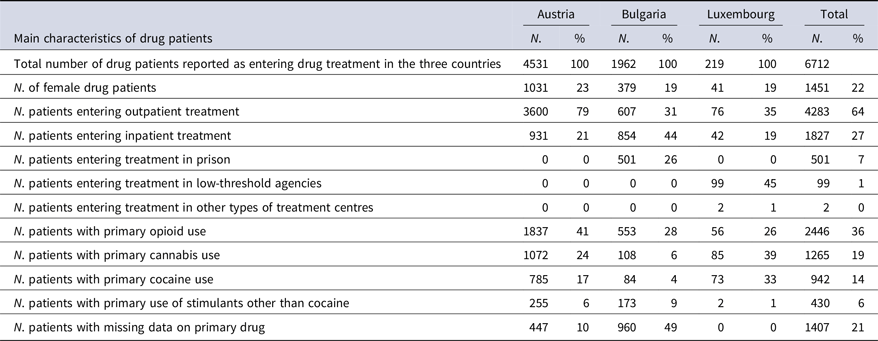
In 2023, a total of 6,712 patients began SUD treatment in the three reporting countries (Austria, Bulgaria and Luxembourg), with 1,003 MHDs conditions being reported. Among the study population, 22% of clients were women, and the majority of patients (64%) started treatment in outpatient treatment centres. Patients primarily sought treatment for primary opioid useFootnote 3 (36%), cannabis (19%) and cocaine (14.0%). In 21.0% of cases information on primary substance of use was missing or unknown. Further data on the clients who have entered treatment in the three countries are provided in Table 1.
Background data on people who have entered drug treatment in 2023 in Austria, Bulgaria and Luxembourg

Table 1. Long description
The table presents data on drug patients entering treatment in Austria, Bulgaria, and Luxembourg in 2023. It has 13 rows and 7 columns. The columns are labeled as follows: Main characteristics of drug patients, Austria (N, %), Bulgaria (N, %), Luxembourg (N, %), and Total (N, %). The rows include the total number of drug patients, number of female drug patients, patients entering outpatient treatment, patients entering inpatient treatment, patients entering treatment in prison, patients entering treatment in low-threshold agencies, patients entering treatment in other types of treatment centres, patients with primary opioid use, patients with primary cannabis use, patients with primary cocaine use, patients with primary use of stimulants other than cocaine, and patients with missing data on primary drug. Each row provides the number and percentage of patients for each country and the total across the three countries.
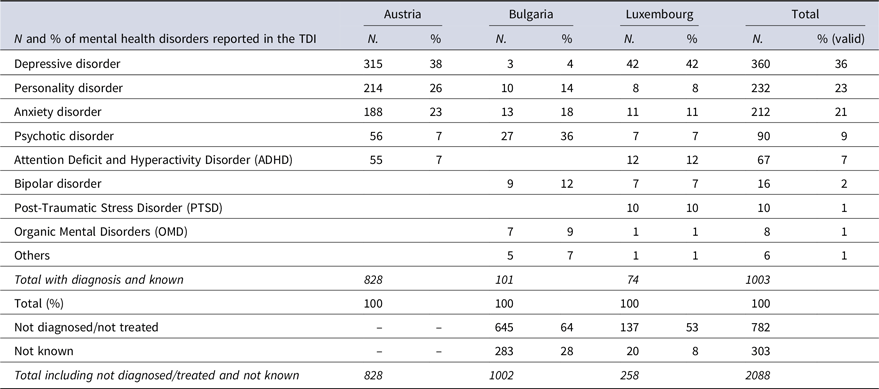
Table 2 presents the distribution of comorbid MHD in the study population, represented by the total patients who have primary entered drug treatment in the three countries in 2023, regardless their drug of use. Each person could have multiple disorders, and we could not quantify the disorders out of the total population (see limitations section). Depressive disorders were the most prevalent conditions, followed by personality disorders and anxiety disorders. Psychotic disorders were identified in less than 10% of cases, while attention deficit and hyperactivity disorder (ADHD) accounted for around 7% of the mental health conditions. Bipolar disorders and post-traumatic stress disorders (PTSD) were less frequent and obsessive–compulsive disorders (OCD) and organic mental disorders (OMD) even less common. Other comorbid disorders were almost not reported.
Prevalence of comorbid mental health conditions in drug treatment patients reported through the EUDA Treatment Demand Indicator (TDI) in Austria, Bulgaria and Luxembourg in 2023

Table 2. Long description
A table comparing the prevalence of various mental health disorders among drug treatment patients in Austria, Bulgaria, and Luxembourg in 2023. The table has 15 rows and 7 columns. The columns are labeled as follows: Austria (N, %), Bulgaria (N, %), Luxembourg (N, %), and Total (N, %, %). The rows are labeled with different mental health disorders and totals. Row 1: Depressive disorder, 315, 38; 3, 4; 42, 42; 360, 36. Row 2: Personality disorder, 214, 26; 10, 14; 8, 8; 232, 23. Row 3: Anxiety disorder, 188, 23; 13, 18; 11, 11; 212, 21. Row 4: Psychotic disorder, 56, 7; 27, 36; 7, 7; 90, 9. Row 5: Attention Deficit and Hyperactivity Disorder (ADHD), 55, 7; 12, 12; 67, 7. Row 6: Bipolar disorder, 9, 12; 7, 7; 16, 2. Row 7: Post-Traumatic Stress Disorder (PTSD), 10, 10; 10, 1. Row 8: Organic Mental Disorders (OMD), 7, 9; 1, 1; 8, 1. Row 9: Others, 5, 7; 1, 1; 6, 1. Row 10: Total with diagnosis and known, 828, 101, 74, 1003. Row 11: Total (%), 100, 100, 100, 100. Row 12: Not diagnosed/not treated, 645, 64, 137, 53, 782. Row 13: Not known, 283, 28, 20, 8, 303. Row 14: Total including not diagnosed/not treated and not known, 828, 1002, 258, 2088.
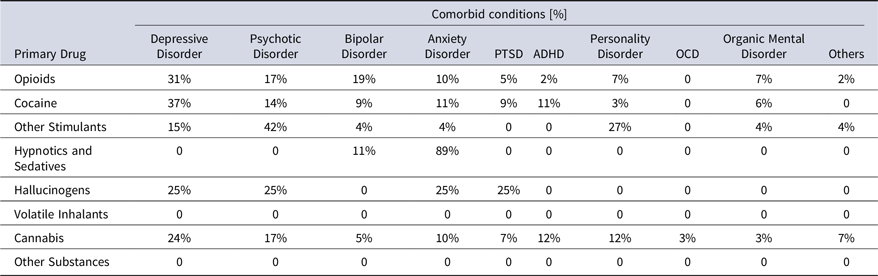
Table 3 presents the analysis of the type of mental health disorders combined by the substance of use (primary drug of use for which people enter treatment). Among individuals with primary opioid use, depressive disorder was the most frequently observed comorbidity by more than one third of the diagnosis, followed by 1/5 with bipolar disorder and less with psychotic disorder. Among people with cannabis as their primary substance, depressive disorder was the most frequently observed comorbid condition (24%), followed by psychotic disorder (17%), ADHD (12%), and personality disorder (12%). In the case of primary cocaine use, depressive disorder exhibited a prevalence of 37% of the comorbid diagnoses in this group, followed by psychotic disorder (14%) and other conditions with lower prevalence. For people with primary use of stimulants other than cocaine (mainly amphetamines and methamphetamines), psychotic disorder was the most frequently reported psychiatric comorbidity (42% of the conditions known in this group), followed by personality disorder (27%). Among those using hypnotics and sedatives as their primary substance, anxiety disorder predominated (89% of comorbid conditions), followed by bipolar disorder at a much lower rate (11%). The number of cases reporting other substances as their reason for entering treatment was low and is not described in the text.
Prevalence of comorbid mental health conditions among drug treatment patients reported through the EUDA Treatment Demand Indicator (TDI) in 2023 according to primary substance of use in Bulgaria and Luxembourg*

Table 3. Long description
The table presents the prevalence of comorbid mental health conditions among drug treatment patients reported through the EUDA Treatment Demand Indicator (TDI) in 2023, categorized by the primary substance of use in Bulgaria and Luxembourg. The table has 8 rows and 10 columns. The columns are labeled as follows: Primary drug, Depressive disorder, Psychotic disorder, Bipolar disorder, Anxiety disorder, PTSD, ADHD, Personality disorder, OCD, Organic mental disorder, Others. The rows are labeled with different primary drugs: Opioids, Cocaine, Other stimulants, Hypnotics and sedatives, Hallucinogens, Volatile inhalants, Cannabis, Other substances. Each cell contains the number and percentage of patients with specific comorbid conditions. For example, among individuals with primary opioid use, 31 percent have depressive disorder, 17 percent have psychotic disorder, and so on. The table provides a detailed breakdown of the prevalence of various mental health conditions associated with different primary substances of use.
*Austria did not report data on mental Health conditions by primary drug for which people have entered treatment.
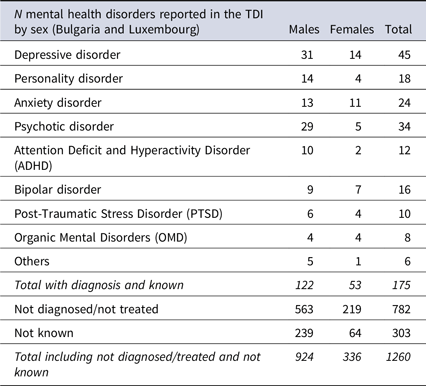
Table 4 shows the sex differences in the distribution of mental health disorders in two countries where the data were available. The data show that compared to males, female patients report higher percentages of anxiety, attention deficit and hyperactivity, bipolar and depressive disorders.
N. of reported mental health disorders by sex in in drug treatment patients reported through the EUDA Treatment Demand Indicator (TDI) in Bulgaria and Luxembourg in 2023

Table 4. Long description
A table comparing mental health disorders by sex in Bulgaria and Luxembourg. The table has 12 rows and 4 columns. The columns are labeled Males, Females, and Total. The rows are labeled with different mental health disorders and categories. Row 1: Depressive disorder, 31, 14, 45. Row 2: Personality disorder, 14, 4, 18. Row 3: Anxiety disorder, 13, 11, 24. Row 4: Psychotic disorder, 29, 5, 34. Row 5: Attention Deficit and Hyperactivity Disorder (ADHD), 10, 2, 12. Row 6: Bipolar disorder, 9, 7, 16. Row 7: Post-Traumatic Stress Disorder (PTSD), 6, 4, 10. Row 8: Organic Mental Disorders (OMD), 4, 4, 8. Row 9: Others, 5, 1, 6. Row 10: Total with diagnosis and known, 122, 53, 175. Row 11: Not diagnosed/not treated, 563, 219, 782. Row 12: Not known, 239, 64, 303. Row 13: Total including not diagnosed/treated and not known, 924, 336, 1260.
Mapping of available services
A total of 25 countries responded to the two questions sent by the EUDA on availability of services addressing comorbid SUDs and MHDs. Five countries did not reply to the questions.Footnote 4
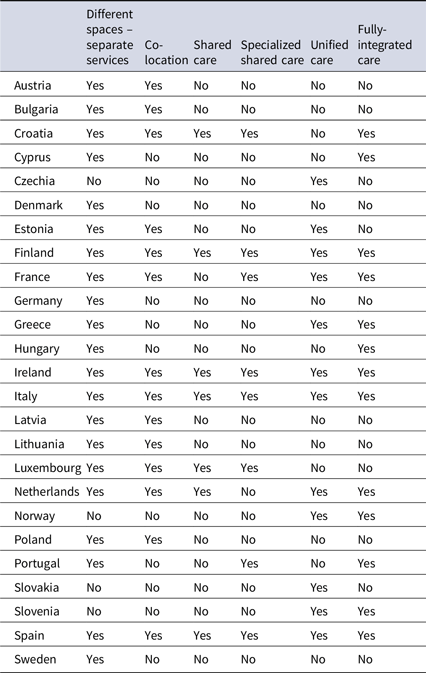
Table 5 and Figure 1 provide an overview of the organisation of services for patients with dual disorders in those 25 European countries. The data reported as follows reflect what the NFPs have reported to the EUDA based on the online survey. In order to provide a simplified overview the countries are classified on the basis of the most integrated level of care, according to the hierarchy sequence presented in method (1. different spaces-separate services; 2. co-location, but separate services; 3. specialised shared care; 4. fully integrated care); however this does not imply that they do not have other forms of treatment (see Annex 2).
Availability of treatment approaches to dual diagnosis in Europe

Table 5. Long description
A table with 25 rows and 6 columns comparing the availability of different treatment approaches to dual diagnosis across various European countries. The columns are labeled ‘Different spaces – separate services’, ‘Co-location’, ‘Shared care’, ‘Specialized shared care’, ‘Unified care’, and ‘Fully-integrated care’. Each row lists a country and indicates the availability of different treatment approaches with ‘Yes’ or ‘No’. The table shows that Austria, Bulgaria, Croatia, Cyprus, Czechia, Denmark, Estonia, Finland, France, Greece, Hungary, Italy, Latvia, Lithuania, Luxembourg, Netherlands, Poland, Portugal, Slovakia, Slovenia, Spain, and Sweden have communication between practices in different spaces and separate services. Co-location is available in Austria, Bulgaria, Croatia, Estonia, Finland, France, Italy, Latvia, Lithuania, Luxembourg, Netherlands, Poland, Portugal, Spain, and Sweden. Shared care is available in Croatia, Finland, Italy, Netherlands, and Spain. Specialised shared care is available in Croatia, Finland, France, Italy, Netherlands, Portugal, and Spain.
Note: data were not received from Belgium, Ireland, Malta, Romania and Türkiye.
Availability of integrated care for dual diagnosis in Europe (reporting countries).

In 20 countries,Footnote 5 services are available that have different locations and separate services communicating between them to treat people with comorbidity. In 14 countries,Footnote 6 services with the same location but different services, co-located with collaborative care, are available. In seven countries,Footnote 7 services are available that share not only the location but also some care interventions, including follow-up by monitoring individual responses and adherence to treatment and the provision of education and self-management. In eight countries,Footnote 8 the available services have same space and separate services offering specialised shared care, where specialised multidisciplinary teams are involved. In 12 countries,Footnote 9 there are services that share both the same location and services, providing unified care, including full-service primary care and integrated drug and psychiatric care in one location. Finally, 13 countriesFootnote 10 reported that they offer fully integrated care, where services for mental health and substance use disorders share space, services, and professionals (this might not imply that this model is implemented at national level as it might be one or more services available in some locations of each country).
Regardless of the prevailing model, the type of services provided to address comorbidity of SUD and MHD varies by country and even within each country. A description of the services provided for those countries who provided in-depth information is as follows.
Croatia is equipped with three specialised departments located in specialised hospitals targeting people with comorbidity of SUDs and MHDs. They are treated in inpatient settings, combining pharmacological and psychosocial treatment, both individually and in groups.
The most prominent model in Cyprus is the separation of services for treating SUDs and MHDs, although individuals with comorbidity are treated by an external psychiatrist within the SUD services However some integrated care is provided in the country.
In Czechia, there are several options in place to address people with comorbidity. The main providers of substance use treatment are the so-called addictology services, which have played a central role within the psychiatric care reform in the country in 2013. The case manager – a professional working in the addictology services – has a central role in facilitating communication between clients and different segments of care, including psychiatric and other health or social services.
Individuals with comorbid SUDs and MHDs in Estonia are treated separately by either substance use or mental health services, with limited connection between them; nevertheless, some private services provide unified care for patients with comorbidity.
In Finland, SUD services are provided by welfare service counties, with close integration of substance use and mental health services delivered through a multidisciplinary team.
In France, specialised services for treating dual disorders have been set up to address the needs of patients with comorbidity within existing services with a long tradition of treating mental health disorders. These include the “Marmottan” hospital, “un chez soi d’abord,” and “Microstructure médicale et Addictions”; all of which provide a personalised coordinated care pathway for patients.
General practitioners in Hungary have a central role in SUD treatment in cases of comorbidity, wherein SUD or mental health professionals liaise with the GP to address individuals comprehensively. Furthermore, an integrated SUD service provides specialised SUD and mental health treatment with trained professionals.
In Greece, three types of services are available for people with comorbidity: specialised services for people with SUDs and severe psychiatric illness (“dual diagnosis programmes”); psychiatric comorbidity care in opioid agonist treatment (OAT) units; and psychiatric comorbidity care in SUD treatment units based on a psychosocial approach.
In Ireland, the Dual Diagnosis National Clinical Programme of the public health service (Health Service Executive) have started establishing integrated teams for adults and adolescents to address severe mental illness and comorbid substance use disorders and behavioural addictions. This is in addition to the existing addiction services and the community mental health services as part of the public health service, providing support for those with less severe mental illness and comorbid substance use disorder.
In Italy, the situation varies by region, with some regions offering fully integrated care, while others adopt a model of enhanced communication and collaboration between MHD and SUD services. The focus for all services is the provision of individual care and follow-up for the patient’s pathway.
The separation of substance use and mental health services is the most common model of intervention in the Netherlands. Although less frequent, other models are available, including SUD services with dedicated hours for psychological counselling and a limited number of facilities offering fully integrated care for patients with comorbidity, including social services.
A national guideline for treating comorbid SUDs and MHDs have been available in Norway since 2012 (Reitan and Lien Reference Reitan and Lien2023; Norwegian Health Directorate 2012), along with other relevant practice normative publications by the Norwegian Health Directorate. MHDs and SUDs have separate specialised healthcare services. Each speciality should generally be able to treat both the SUD and psychiatric comorbidities, where the MHD-specialised services have the main responsibility between the two for individuals with co-occurring severe SUD and severe MHD, according to the national guideline. Cross-sectoral cooperation (integrated treatment) between specialist and municipality services is the prevalent ideology. One major national investment in recent years has been the development of assertive community treatment (ACT) teams and especially the related flexible ACT (FACT) teams. Their establishment is still ongoing and has extended to include teams specialising in forensic and youth FACT (Reitan and Lien Reference Reitan and Lien2023).
The most common approach to address comorbidity in Portugal is contact between practices, especially for patients with moderate to severe comorbid psychiatric disorders, where clinical follow-up is ensured. Specialised shared care services exist, but they are rarer and mainly found in inpatient services. Fully integrated care is mainly organised within psychiatric hospitals.
In Slovenia, people with psychiatric comorbidity are usually treated in centres for the prevention and treatment of illicit drug addiction, which also employ a psychiatrist and a psychologist to manage patients. Additionally, psychiatric hospitals address the needs of patients with SUD and comorbid MHDs, and a specialised therapeutic community has been set up to treat patients with comorbidity.
The treatment of psychiatric comorbidities in people who use drugs in Slovakia is integrated into SUD treatment, wherein psychiatrists working there treat both substance use and other psychiatric conditions.
Spain has a highly decentralised healthcare system, with responsibilities given to the 17 autonomous regions. A point of coordination is the Spanish Strategy on Addictions, which highlights the importance of providing individualised processes to address substance use and mental health disorders. Spanish services range from outpatient centres, which often serve as a point of contact for patients, to highly structured services, often located in inpatient units, addressing people with comorbidities with a fully integrated approach.
Discussion
The objective of this study was to examine the epidemiological and service provision situation of comorbid SUDs and MHDs throughout Europe to better understand the phenomenon and support the implementation of effective services for individuals with dual disorders.
The first exploratory analysis of epidemiological data collected through the TDI system in three countries (Austria, Bulgaria, Luxembourg), which only represents a small percentage of the drug treatment patients entering treatment in Europe (6712 or 2% of drug treatment patientsFootnote 11) confirms the relevance of MHDs in patients in drug treatment, with different patterns emerging according to the type of substances used. Overall, depressive disorder was identified as the most prevalent MHD, with several studies confirming the link between depression and illicit drug use; depression ranges from 12 to 80% of people who use drugs, depending on the diagnostic criteria applied and the clinical context of the sample (Castillo-Carniglia et al. Reference Castillo-Carniglia, Keyes, Hasin and Cerdá2019; Conner et al. Reference Conner, Pinquart and Holbrook2008; EMCDDA 2015; Hunt et al. Reference Hunt, Malhi, Lai and Cleary2020). Lai et al. (Reference Lai, Cleary, Sitharthan and Hunt2015) found the risk of depression to be four times higher in people who use drugs compared to those who do not. According to the latest EUROSTAT data in 2019 among the 18–44 adult population the prevalence of depressive symptoms was: 5.6% in Austria, 4.5% in Bulgaria and 8.3% in Luxembourg, but these data only provide a general indication of mental health problems and are not comparable with those collected in the treatment centres.Footnote 12 Opiates exert a direct influence on the central nervous system, engendering not only physical dependence but also the individual’s emotional state (Ghabrash et al. Reference Ghabrash, Bahremand, Veilleux, Blais-Normandin, Chicoine, Sutra-Cole, Kaur, Ziegler, Dubreucq, Juteau, Lestage and Jutras-Aswad2020). Chronic use of both cocaine and cannabis appears to play a significant role in the exacerbation of depressive disorders. The euphoric effect induced by cocaine use is often followed by compensatory neuroadaptations that reduce reward sensitivity and promote anhedonia over time (Conner et al. Reference Conner, Pinquart and Holbrook2008; Oliva et al. Reference Oliva, Mangiapane, Nibbio, Berchialla, Colombi and Vigna-Taglianti2021). Similarly, the sustained use of cannabis has been observed to disrupt the endocannabinoid system, which plays a crucial role in mood regulation. This disruption can lead to an increased vulnerability to depressive symptoms (Hasin and Walsh Reference Hasin and Walsh2020). Furthermore, the bidirectional relationship between these substances and depression is compounded by the tendency for self-medication, which has the potential to precipitate or exacerbate depressive conditions, thereby engendering a vicious cycle between substance use and deteriorating mental health.
Data also indicate that psychotic disorders were reported in people who use stimulants other than cocaine. The literature suggests that, in addition to exacerbating psychotic symptoms in patients with pre-existing conditions, stimulant use may also precipitate psychotic episodes in individuals without any prior history (Moran et al. Reference Moran, Skinner, Shinn, Nielsen, Rao, Taylor, Cohen, Erkol, Merchant, Mujica, Perlis and Ongur2024; Murrie et al. Reference Murrie, Lappin, Large and Sara2020; Starzer et al. Reference Starzer, Nordentoft and Hjorthøj2018). Stimulant drugs are the second most used illicit substances globally (UNODC 2025), and their use is increasing in Europe according to the latest data from wastewater analysis (EUDA 2025); this poses further challenges for mental health outcomes and treatment strategies, particularly with the emergence of novel compounds.
Furthermore, anxiety disorder was predominant among individuals using hypnotics and sedatives. Although these medications are often prescribed to alleviate anxiety and facilitate sleep, their long-term use may contribute to an increase in anxiety symptoms (Garrido et al. Reference Garrido, Prigerson, Penrod, Jones and Boockvar2014; Lai et al. Reference Lai, Cleary, Sitharthan and Hunt2015). The therapeutic benefits of hypnotics and sedatives might be offset by unintended consequences in vulnerable individuals.
Patients with other mental health disorders are reported to be few in this data collection. This includes ADHD (7%), bipolar disorders (2%) and others. In recent years, there has been increasing interest in the comorbidity of ADHD and substance use. A study conducted among people in prison undergoing methadone treatment show that the high prevalence of ADHD in this population was associated (without established causal relation) with starting substance use at an early age, with fifty per cent of the study participants screened positive for childhood ADHD and 17% for adult ADHD. People with ADHD symptom status were significantly younger at first substance misuse, reported more drug overdoses, longer duration of cocaine and prescribed medication misuse and more in- and outpatient treatments (Silbernagl et al. Reference Silbernagl, Slamanig, Stegemann, Sterzer, Mayer, Fischer and Unger2019). However, it must be considered that due to self-reported diagnosis in two out of three countries, underdiagnosis of some disorders, including ADHD, ASD, OCD and others may have occurred.
Regarding the most effective approaches to tackling comorbid MHD and SUD, there is broad agreement in the literature that they should be addressed using a multidisciplinary approach where MHD and SUD are treated simultaneously (EMCDDA 2015; Magura Reference Magura, Rosenblum and Betzler2009).
The therapeutic approaches employed to address comorbidity, whether pharmacological, psychological, or both, must tackle both disorders from the first point of contact and identify the best option for each individual, with a systematic integrated approach (Lie and Lien Reference Lie and Lien2026; EMCDDA 2015).
Information collected through the survey conducted among the NFPs reveals a variable picture of services provided in Europe, where most countries are reporting to provide integrated services for people with comorbidity through communication or shared care between mental health and substance use services. Some countries (13) report to have implemented fully integrated services. The main barrier to treat comorbid MHD and SUD is the separation of mental health and drug use treatment networks. This often means that each treatment service tends to work in silos and lacks sufficient expertise to treat both types of disorders at the same time, leading to a proliferation of different treatment approaches, regulations, and financial resources (EMCDDA 2015). As more comprehensive analysis is required to understand what “integration of services” entails, an in-depth analysis of selected models of integrated care was conducted.
Finally updated and comparable data on treatment outcome would be necessary with the development of further research, showing the level of effectiveness of integrated care, which resulted the most effective approach to comorbidity according to the analysis conducted in 2015 at European level (EMCDDA 2015).
Limitations
While the current study provides valuable insights into the epidemiology of and service provision for dual disorders across Europe, several limitations should be considered.
Regarding the epidemiological data, this was the first data collection conducted on a voluntary basis by the countries reporting to the EUDA through the TDI indicator. Only three countries out of 29 reporting to the EUDA (Austria, Bulgaria, Luxembourg) provided the data, representing a small proportion of the European situation (2% of all patients entering drug treatment), due to the low number of participating countries and the lack of large size countries (e.g. Germany, France, etc.), data were reported in an aggregated form, following the EUDA’s requirement; and this limits the potentialities for analysis. The reported data vary across countries, particularly on method to identify MHD. In Bulgaria and Luxembourg, MHD and SUD were based on patients’ self-reporting and in Austria on clinically diagnosis, which may have led to underdiagnosis, especially on some disorders, such as ADHD, ASD, OCD and others.
Furthermore, in Austria, data on MHD were not broken down by primary drug of use. Moreover, the patient sample was drawn from diverse healthcare systems with distinct diagnostic criteria, screening procedures and treatment organisation; it has to be highlighted that the individuals included in the data are not representative of the country. Finally, it was not possible to know the number of unique individuals with dual disorders, as the data were reported on mental health conditions, and each client could report more than one MHD; this limitation should be overcome in the next round of data where unique clients where included. These limitations underscore the need for standardised data collection methods. To enhance the quality and comparability of epidemiological data across European settings, it is crucial to implement a common European screening tool, which would allow each country to align on comparable data on MHD and SUD among drug treatment patients.
Regarding the mapping exercise on services addressing comorbidity, the available information relied on the reporting countries and expert opinion from NFPs. This deficiency hinders the ability to assess the actual availability of service provision. A significant variability between and within countries was emerging from the survey, with no standard definition of integrated care.
Nevertheless, this is the first European overview, albeit partial, of epidemiology and responses to comorbidity of MHD and SUD in Europe, helping to identify gaps and ways forward.
Conclusions
The paper highlights the need to move towards a common European approach to dual disorders in both epidemiology and approaches to care. These were the first important steps and the EUDA is continuing working in this direction through the support of the EUDA advisory board, the development of a common screening tool to detect mental health disorders in SUD patients, the identification of barriers and facilitators to the implementation of integrated care, with the final purpose to increase the agency’s preparedness in the field of comorbidity of MHD and SUD across Europe.
Supplementary material
The supplementary material for this article can be found at https://doi.org/10.1017/ipm.2026.10212.
Acknowledgements
We thank members of the EUDA Advisory Board on psychiatric comorbidity for their guidance on the integrated care centre survey and the representatives of European National Focal Points for their expertise and support in mapping integrated care services across Europe. We also are grateful to all respondents from surveyed integrated care centres for their valuable time and insights, which are crucial to advancing dual diagnosis treatment in Europe.
Funding statement
This study was funded by EMCDDA Contract CT.HEA.0116.10 and RIAPAd RD24/0003/0001 funded by Instituto de Salud Carlos III (ISCIII) and co-funded by the European Union.
Competing interests
The authors declare none.
Ethical standards
The authors assert that all procedures contributing to this work comply with the ethical standards of the relevant national and institutional committee on human experimentation and with the Helsinki Declaration of 1975, as revised in 2008. The study protocol was approved by the ethics committee of Hospital del Mar Institution.


 Open access

