


1. Introduction
To achieve a financially secure retirement, people not only need to save adequately throughout their working lives, but they also need to avoid withdrawing their savings prematurely. Both behaviors can be influenced by macroeconomic trends (OECD, 2024; Fuentes et al., Reference Fuentes, Mitchell and Villatoro2025) as well as pension schemes and policies (e.g., auto-enrolment, tax incentives, options for hardship withdrawals, and withdrawal penalties (Benartzi and Thaler, Reference Benartzi and Thaler2007; Beshears et al., Reference Beshears, Choi, Hurwitz, Laibson and Madrian2015)). Beyond such contextual factors, various characteristics of individuals – the focus of our study – also play a significant role. Whereas the relations of individual demographic and personality characteristics with saving behavior are relatively well researched (see Gerhard et al., Reference Gerhard, Gladstone and Hoffmann2018; Ye et al., Reference Ye, Post, Zou and Chen2025 for an overview), their associations with early withdrawal behavior remain understudied (see Loibl et al., Reference Loibl, Summers, McNair and Bruine de Bruin2019 for an exception). We address this gap by studying which characteristics are associated with not saving and with early withdrawal, and which of these overlap, constituting risk factors placing individuals into the ‘double jeopardy’ of not saving and withdrawing early.
The decisions to save for retirement and to withdraw savings early may be influenced by the same as well as by different factors. On the one hand, both saving and withdrawal are related to building up retirement assets, so one could expect withdrawal to be influenced by some of the same factors as savings. On the other hand, saving decisions involve trading small present losses for potential future gains, whereas withdrawal decisions involve trading large present gains for potential future losses, suggesting that each decision may also be sensitive to a unique set of factors. Indeed, prior literature has shown that reference points and aspirations influence risk-taking behavior over time (Hoffmann et al., Reference Hoffmann, Henry and Kalogeras2013), which is particularly relevant when individuals evaluate the trade-offs inherent in saving and withdrawal decisions.
Saving behavior is related to a variety of individual characteristics. For example, higher saving rates are associated with socioeconomic attributes such as higher income (Dynan et al., Reference Dynan, Skinner and Zeldes2004). In addition, higher savings are also related to personality traits, such as conscientiousness, suggesting that disciplined and organized individuals can withstand temptations for current consumption and generate persistent saving habits (Nyhus, Reference Nyhus2017). More broadly, personality traits such as conscientiousness help explain individuals’ simultaneous pursuit of a healthy lifestyle and financially responsible behavior (Hoffmann and Risse, Reference Hoffmann and Risse2020).
Much less is known about early withdrawals, potentially due to their episodic nature and lack of data. The limited existing research suggests that early withdrawals are used as a buffer against urgent financial needs (Amromin and Smith, Reference Amromin and Smith2003; Argento et al., Reference Argento, Bryant and Sabelhaus2015; Agarwal et al., Reference Agarwal, Pan and Qian2020; Wang-Ly and Newell, Reference Wang-Ly and Newell2022; Bateman et al., Reference Bateman, Dobrescu, Liu, Newell and Thorp2023) and are less common among people with higher general financial literacy (Tharayil and Walstad, Reference Tharayil and Walstad2022). We expect that just like regular saving, early withdrawal is not merely an economic decision, but psychological factors will play a role as well.
It is crucial to look for possible overlap of factors influencing both saving and early withdrawal decisions, as some groups of individuals could be in double jeopardy of risking building up too little retirement assets. Factors that concurrently intensify both behaviors will have a significantly greater impact. Thus, identifying these ‘double jeopardy’ factors is essential for developing targeted and effective interventions.
To this end, we explored a wide range of sociodemographic and psychological individual characteristics in relation to regular saving and early withdrawal decisions, utilizing three representative online household surveys from Estonia. The samples were collected around the 2021 reform that introduced the option to withdraw pension assets early (and completely), in an institutional setting where individual retirement savings adequacy is an economically relevant research question. According to the OECD, the pension savings of Estonians provide, on average, only 35 percent of their pre-retirement income, far behind the OECD average of 61 percent (OECD, 2023).
More specifically, Estonia’s pension system comprises three pillars. The first pillar is the pay-as-you-go state pension, where the current pensions are paid from current social tax revenues. First pillar pension income is a function of employment income and years of employment and provides only a very basic level of income (old-age poverty rates in Estonia are among the highest in the OECD; OECD, 2023). The second and third pillars consist of tax-favored, funded, individual accounts, similar to US 401(k) plans. Both pillars have tax benefits during the accumulation and decumulation phases. Individuals do not have to pay income tax on savings made (a universally applicable flat rate of 20% at the time of the study). At the time of data collection, contributions to the second pillar were 2 percent of gross salary (plus 4% added by the state). The tax benefit for the third pillar is capped at 15 percent of yearly income or €6,000 (whichever is lower). Savings in those pillars can be flexibly invested into a broad range of mutual funds differing in style (e.g., passive vs. active) and focus (e.g., index vs. specific economic sectors). Pension payouts at retirement age from those pillars can flexibly combine lump-sums, payout plans, and annuities. Tax rates on lump-sums are 10 percent, while income from payout plans and annuities is tax-free. Additionally, pension savings are inheritable upon death. Taken together, the tax incentives and investment flexibility make the second and third pillars an attractive scheme for retirement savings.
In this paper, we focus on a reform that affected the second pillar. Prior to the reform, participation in this pillar was obligatory; that is, contributions were made based on all taxable income for individuals born after 1984 (participation in the third pillar is optional). With the reform introduced in 2021, participation in the second pillar became voluntary, and for the first time, early withdrawals were permitted. At this stage, approximately 700,000 individuals had accumulated a total of €4 billion in the second pillar. Over 25 percent of account holders chose to withdraw funds in the first year after the reform, and by 2025, the proportion of withdrawers had reached 36 percent (Pension Registry, Nasdaq, 2025). Withdrawing savings comes with significant disincentives, including a 20 percent income tax, a 10-year waiting period to rejoin the second pillar, and inflexibility, as only complete balances can be withdrawn. Importantly, the reform combined two changes: making second-pillar participation voluntary and introducing the option of early (full) withdrawal. Our setting does not contain within-reform variation that would allow us to separate the effects of these two arms.
Our analysis of the three household surveys shows that, first, there is a set of ‘double jeopardy’ factors associated with both saving and early withdrawal decisions. Notably, lack of trust in financial institutions was the strongest predictor of both not saving for retirement and early withdrawal of funds after the reform, extending earlier findings on savings (Ricci and Caratelli, Reference Ricci and Caratelli2017; Goedkoop et al., Reference Goedkoop, Mangan, Mastrogiacomo and Hochguertel2023) to withdrawal decisions. Moreover, non-Estonian nationality (typically Russian) was consistently associated with a lower likelihood of saving and a higher likelihood of early withdrawal.
Second, we find that withdrawal decisions cannot be explained solely by economic motivations such as liquidity constraints, which were the main explanation highlighted in earlier research using data that did not include psychological factors (Argento et al., Reference Argento, Bryant and Sabelhaus2015; Agarwal et al., Reference Agarwal, Pan and Qian2020; Wang-Ly and Newell, Reference Wang-Ly and Newell2022; Bateman et al., Reference Bateman, Dobrescu, Liu, Newell and Thorp2023; Fuentes et al., Reference Fuentes, Mitchell and Villatoro2025). Third, in line with previous findings (e.g., Donnelly et al., Reference Donnelly, Iyer and Howell2012), conscientiousness was a significant predictor of saving but not of early withdrawal decisions, suggesting psychological differences between these decisions.
A deeper understanding of individual predictors of saving and early withdrawal decisions is important not only from an academic perspective but also for public policy (Newall and Peacey, Reference Newall and Peacey2021). For example, recent findings from Chile indicate that a quarter of national retirement assets were withdrawn early during the COVID pandemic, resulting in over 4 million individuals depleting their entire accounts (Fuentes et al., Reference Fuentes, Mitchell and Villatoro2025). Evidence from Australia, which allowed early withdrawals during COVID as well, indicates that total future pension payments will be reduced by €51 billion, amounting to €56,000 per person that withdrew (Chong, Reference Chong2024) or 2 percent of GDP (Hamilton et al., Reference Hamilton, Liu, Miranda-pinto and Sainsbury2024). In the United Kingdom, a total of more than £83.6 billion has been withdrawn flexibly from pensions since the pension freedom reform in 2015 (HM Revenue & Customs, 2024). Recent analysis also reveals that early withdrawal from 401(k) accounts in the United States has reduced the previously reported success of auto-enrollment efforts, with an estimated 42 percent of 401(k) balances withdrawn upon job separation (Choi et al., Reference Choi, Laibson, Cammarota, Lombardo and Beshears2024). In the long-term, therefore, such withdrawals can considerably decrease financial retirement security.
2. Literature review: individual differences in retirement saving and withdrawal behavior
2.1. Sociodemographic characteristics
Sociodemographic characteristics such as age, education, income, and job stability have been closely linked to how actively individuals save for retirement (Skinner, Reference Skinner2007; Soman and Cheema, Reference Soman and Cheema2011; Metzger, Reference Metzger2017; Yao and Cheng, Reference Yao and Cheng2017). First, an individual’s proximity to retirement age is a predictor of saving more (Board of Governors of the Federal Reserve System, 2017). Middle-aged individuals are more likely to engage in retirement planning (Ricci and Caratelli, Reference Ricci and Caratelli2017). In terms of gender, prior studies have shown that women tend to have lower retirement savings, often due to career interruptions for childcare and other family responsibilities (Hartmann and English, Reference Hartmann and English2009; Karim et al., Reference Karim, Hussin and Sahid2023). Further, gender differences in risk preferences between men and women may lead to differences in portfolio allocations (Charness and Gneezy, Reference Charness and Gneezy2012; Fisher and Yao, Reference Fisher and Yao2017). Higher education levels are associated with increased savings rates, mediated by better financial literacy and planning skills (Lusardi and Mitchell, Reference Lusardi and Mitchell2007; Yao and Cheng, Reference Yao and Cheng2017). Finally, employment status predicts higher saving (Suh, Reference Suh2022) and relatedly, those with higher income levels and job stability are more likely to voluntarily save and have accumulated substantial retirement savings (Topa et al., Reference Topa, Moriano and Moreno2012; Ricci and Caratelli, Reference Ricci and Caratelli2017; Yao and Cheng, Reference Yao and Cheng2017).
Known predictors of early withdrawals from retirement funds are the ease of access and the emergence of urgent financial needs due to, for example, unemployment and unexpected medical bills (Amromin and Smith, Reference Amromin and Smith2003; Argento et al., Reference Argento, Bryant and Sabelhaus2015; Jeszeck et al., Reference Jeszeck, Lehrer, McMurray, Fernandez, Miskell, Tessin and Wendel2019; Bekbossinova et al., Reference Bekbossinova, Oshanova, Khassenova, Alpysbayeva and Moldasheva2022; Wang-Ly and Newell, Reference Wang-Ly and Newell2022; Bateman et al., Reference Bateman, Dobrescu, Liu, Newell and Thorp2023; Fuentes et al., Reference Fuentes, Mitchell and Villatoro2025; Inzunza and Madeira, Reference Inzunza and Madeira2025) as well as ethnic minority status (Choukhmane et al., Reference Choukhmane, Colmenares, O’dea, Rothbaum and Schmidt2024).
2.2. Psychological characteristics
Personality traits have been found to offer further explanations for saving behaviors (Nyhus and Webley, Reference Nyhus and Webley2001). Conscientiousness has a positive relationship with retirement preparedness (Ye et al., Reference Ye, Post, Zou and Chen2025), whereas neuroticism has a negative relationship (Donnelly et al., Reference Donnelly, Iyer and Howell2012). Additionally, less intense present bias and identification with one’s future self increase saving (Jacobs-Lawson and Hershey, Reference Jacobs-Lawson and Hershey2005; Hartmann and English, Reference Hartmann and English2009; Hershfield et al., Reference Hershfield, Goldstein, Sharpe, Fox, Yeykelis, Carstensen and Bailenson2011; Earl et al., Reference Earl, Bednall and Muratore2015). The link between personality traits and withdrawal decisions has received limited attention, with the exception of Loibl et al. (Reference Loibl, Summers, McNair and Bruine de Bruin2019) who examined psychological factors (e.g., risk tolerance, future orientation) in the context of the UK pension freedom reform, finding no significant relations. Note, however, that those authors studied a different economic scenario. The UK reform introduced partial withdrawal options from age 55 or older to allow more flexibility from previously mandatory annuitization. In our context, the withdrawal refers to full account balances at any age.
In addition to personality traits that are defined to be independent of situational domains, financial decisions have also been related to more context-dependent psychological traits that are defined to manifest primarily in the financial domain. These include risk tolerance, financial locus of control, present bias, trust in financial institutions, and financial literacy.
Lower risk tolerance potentially fosters more prudent financial habits (Rabbani et al., Reference Rabbani, Yao and Wang2019), including increased savings as a financial buffer (Bommier and Le Grand, Reference Bommier and Le Grand2019). Locus of control is an individual’s tendency to believe that their life events are controlled by themselves rather than by external factors (Jacobs-Lawson and Hershey, Reference Jacobs-Lawson and Hershey2005). Individuals with an internal locus of control, who believe they have control over their financial outcomes, may be more proactive in planning for retirement and taking steps to save and invest appropriately (Cobb‐Clark et al., Reference Cobb‐Clark, Kassenboehmer and Sinning2016; Bucciol and Trucchi, Reference Bucciol and Trucchi2021). Also, longer saving horizons are associated with a higher likelihood of saving, highlighting the importance of present bias in financial decision-making (Fisher and Montalto, Reference Fisher and Montalto2010).
Trust in institutions is a joint function of the trustworthiness of institutions as well as personal predisposition toward trust (Van der Cruijsen et al., Reference Van der Cruijsen, de Haan and Roerink2023). Trust has been shown to play an important role in retirement saving and financial decision-making more broadly (Jacobs-Lawson and Hershey, Reference Jacobs-Lawson and Hershey2005; Guiso et al., Reference Guiso, Sapienza and Zingales2008; Georgarakos and Pasini, Reference Georgarakos and Pasini2011; Van der Cruijsen et al., Reference Van der Cruijsen, de Haan and Roerink2023). Higher trust in financial institutions is positively associated with supplementary pension savings (Goedkoop et al., Reference Goedkoop, Mangan, Mastrogiacomo and Hochguertel2023). Evidence from Singapore suggests that low trust is linked to lump-sum withdrawals at age 55 (Koh et al., Reference Koh, Mitchell and Fong2021). The importance of trust was also highlighted in the study of Chilean early withdrawals (Fuentes et al., Reference Fuentes, Mitchell and Villatoro2025), although in that context trust was inferred indirectly from regional-level indicators such as educational attainment, health status, positive image of pension system, and participation in voluntary pension schemes.
Higher financial literacy has been linked to saving more for retirement (Van Rooij et al., Reference Van Rooij, Lusardi and Alessie2011; Maule and Maule, Reference Maule and Maule2016; Dewi et al., Reference Dewi, Febrian, Effendi, Anwar and Nidar2020) as well as to a lower likelihood of early withdrawal (Tharayil and Walstad, Reference Tharayil and Walstad2022). However, overconfidence in financial knowledge makes hardship withdrawals more likely, potentially owing to underestimating the long-term ramifications of early withdrawals (Lee and Hanna, Reference Lee and Hanna2020). Studies that measured domain-specific knowledge about pensions and pension systems have shown that higher knowledge in this domain is related to more preparatory behaviors (Elinder et al., Reference Elinder, Hagen, Nordin and Säve‐Söderbergh2022), such as utilizing financial saving incentives (Chan and Stevens, Reference Chan and Stevens2008), saving more (Landerretche and Martinez, Reference Landerretche and Martinez2013), and making more active and conscious decisions (Debets et al., Reference Debets, Prast, Rossi and Van Soest2022). Regarding early withdrawals, Loibl et al. (Reference Loibl, Summers, McNair and Bruine de Bruin2019) found that those who planned to withdraw early in the United Kingdom had better pension literacy; that is, they seem to have understood, for example, the unfavorable tax implications of their decision.
3. Data
Our data include responses from three independent representative online household surveys conducted in August 2020, before the reform, and in May 2021 and May 2022, following the reform. These datasets incorporate information on savings and withdrawal decisions, sociodemographic variables, and psychological individual differences. Respondents in all three surveys were recruited through Kantar Estonia, a professional market research company, using their representative panel (August 2020, n = 921; May 2021, n = 1,072; May 2022, n = 1,278). Kantar uses stratified quotas by age, gender, and region and targets alignment to Statistics Estonia margins. Coverage includes remote regions as well. Participants had provided consent to receive survey invitations. Kantar panel members are incentivized through monthly and quarterly voucher raffles.
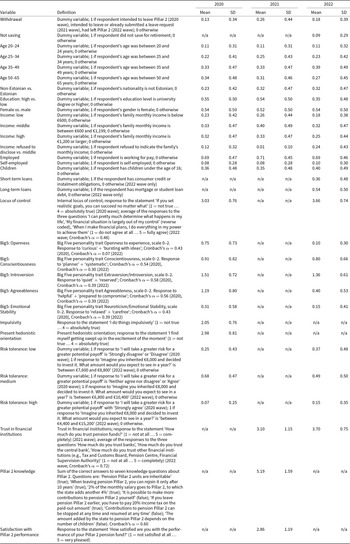
The surveys were designed by Kantar Estonia for different commercial clients who were, among other questions, interested in assessing the expected and actual nationwide impact of the pension reform. For that reason, while the three surveys include an identical set of sociodemographic characteristics, other variables are available in only two or one dataset (and in a few cases the measurements are similar but not identical). Table 1 shows question phrasings and descriptive statistics for all variables analyzed in this study.
Definitions of variables and descriptive statistics

Table 1 Long description
The table defines survey variables and reports their mean and standard deviation for three datasets from 2020, 2021, and 2022, with many items unavailable in some years. The main outcome, withdrawal from Pillar 2, averages 0.13 in 2020, rises to 0.26 in 2021, then falls to 0.18 in 2022. In 2022, 0.09 report not saving for retirement; short-term loans average 0.36 and long-term loans 0.54. Demographics are broadly stable across years: female averages about 0.52 to 0.54, non-Estonian averages 0.23 in 2020 and 0.32 in 2021 and 2022, and employment averages about 0.69 to 0.71. Education coded as high drops from about 0.55 in 2020 and 2021 to 0.35 in 2022, and the share refusing to disclose income increases to 0.24 in 2022 after being 0.12 in 2020 and 0.01 in 2021. Psychological and knowledge measures are year-specific: locus of control averages 3.03 in 2020 and 3.66 in 2022; trust in financial institutions averages 3.10 in 2021 and 3.70 in 2022; Pillar 2 knowledge averages 5.19 in 2021; satisfaction with Pillar 2 performance averages 2.86 in 2021. Risk tolerance shifts toward lower and higher categories in 2022 compared with 2020, with low at 0.37 versus 0.25 and high at 0.15 versus 0.07, while medium declines to 0.49 from 0.68. Interpret comparisons cautiously because some constructs and response scales differ by year, several multi-item scales have modest internal consistency, and some year-to-year differences reflect sampling and survey design rather than population change.
Notes: This table presents variable names, definitions, and descriptive statistics for the three datasets. An entry of ‘n/a’ indicates that this variable is not available for the particular dataset.
Please note that (1) the differences in higher education from 2020–2021 to 2022 are due to sample differences, the first waves were targeted to Pillar 2 account holders, (2) the increase in ‘income refused’ is due to survey design (hidden vs. salient option), and (3) Kantar uses weights to population margins; therefore, the raw data are close to but not fully representative. For context, Statistics Estonia reports the average disposable individual income in 2022 was €1,018; in our surveys, household/family income was asked.
Several multi-item scales show modest internal consistency. The 2022 Locus of Control scale (α = 0.48) combines three items tapping conceptually distinct facets – general life control, perceived financial control, and financial planning behavior – so a relatively low alpha is expected; an exploratory factor analysis confirmed that all three items load positively on a single factor, and dropping items did not improve reliability. The Pillar 2 knowledge scale (α = 0.60) consists of seven binary correct/incorrect items, for which Cronbach’s alpha is known to underestimate reliability relative to Likert items (Sijtsma, Reference Sijtsma2009); a single-factor solution again fits the data. The Big Five scales rely on only two adjectives per trait, and their alphas (0.07–0.58) reflect this two-item format rather than poor measurement; we therefore interpret Big Five results with appropriate caution. The Trust in financial institutions scale shows acceptable reliability (α = 0.72).
The first of our dependent variables Withdraw (1 = withdraw, 0 = otherwise) is included in all three datasets (intent for 2020, reported behavior for 2021 and 2022). Saving decisions were measured only in 2022 using a variable that captures not saving for retirement (1 = not saving, 0 = otherwise). The not-saving variable captures whether the respondent is currently saving for retirement at all, including saving in the voluntary third pillar or outside the pension system, and is therefore not mechanically tied to the second pillar withdrawal mechanism introduced by the 2021 reform. Pension Registry data confirm that the saving and withdrawal margins are largely separable in practice: in the first 5 years following the reform, approximately 264,000 individuals withdrew their second pillar balances, while only roughly 1,500 chose to suspend contributions without withdrawing (Pension Registry, Nasdaq, 2025).
In terms of sociodemographic characteristics, the surveys contain information on respondents’ gender, age, education, income, employment status, having children, and nationality (Estonian and non-Estonian, which is typically Russian).
In the 2022 survey wave, respondents were additionally asked about their loan obligations. We constructed two binary variables: (1) long-term loans, indicating whether the respondent had a mortgage or student loan, and (2) short-term loans, indicating whether the respondent had consumer credit or instalment obligations.
In terms of psychological factors, the surveys contain measurements of the Big Five (2020, 2022), locus of control (2020, 2022), impulsivity (2020), present hedonistic orientation as a proxy for present bias (2020), and risk tolerance (2020, 2022). These variables were measured using short scales mostly developed at Kantar to accommodate the overall survey length.
In 2020, Big Five personality traits were measured by having respondents choose adjectives from a pool of 31 adjectives to describe their personality. Using factor analysis, two adjectives were selected to represent each Big Five trait (Lesment and Pulver, Reference Lesment and Pulver2022). The number of these items that a respondent selected was treated as their score on each trait (range 0–2). In 2022, a shorter list of adjectives (based on the previous factor analysis) was used with restrictions on the number of keywords respondents could choose. Hence, the mean scores differed between 2020 and 2022 waves.
Impulsivity was measured as a response to the statement ‘I do things impulsively’ (Reynolds et al., Reference Reynolds, Ortengren, Richards and de Wit2006). Present hedonistic orientation was measured as a response to the statement ‘I find myself getting swept up in the excitement of the moment’ (Carelli and Olsson, Reference Carelli, Olsson, Stolarski, Fieulain and van Beek2015). Both items used a 1–4 scale.
Internal locus of control (2020) was measured as a response to the statement ‘If you set realistic goals, you can succeed no matter what’ on a 1–4 scale. Financial locus of control (2022) was measured using a validated index (Kempson et al., Reference Kempson, Finney and Poppe2017) computed by averaging the responses to three questions: ‘I can pretty much determine what happens in my life,’ ‘My financial situation is largely out of my control’ (reverse coded), and ‘When I make financial plans, I do everything in my power to achieve them.’
General risk tolerance (2020) was measured similar to the U.S. Survey of Consumer Finances as a response to the statement ‘I will take a greater risk for a greater potential payoff.’ on a 1–4 scale. Financial risk tolerance (2022) was measured by asking ‘Imagine you inherited €8,000 and decided to invest it. What amount would you expect to see in a year?’ with response options of ‘€7,600 to €8,800’, ‘€6,800 to €10,400’, and ‘€4,400 to €15,200’.
Trust in financial institutions was measured in 2021 as a response to ‘How much do you trust pension funds?’ and in 2022 as an average of responses to three questions: ‘How much do you trust banks?’, ‘How much do you trust the central bank?’, and ‘How much do you trust other financial institutions?’ (Hansen, Reference Hansen2012).
Pillar 2 knowledge was measured using a knowledge test (e.g., as in Landerretche and Martinez, Reference Landerretche and Martinez2013 or Elinder et al., Reference Elinder, Hagen, Nordin and Säve‐Söderbergh2022), that is, the number of correct answers to seven knowledge questions about the second pillar was scored (see Table 1 for details). Here, greater knowledge refers to pension-specific knowledge (seven-item Pillar-2 quiz), not general financial literacy.
Pillar 2 perceived performance was measured based on how satisfied respondents were with the past performance of their second pillar pension investments.
4. Results
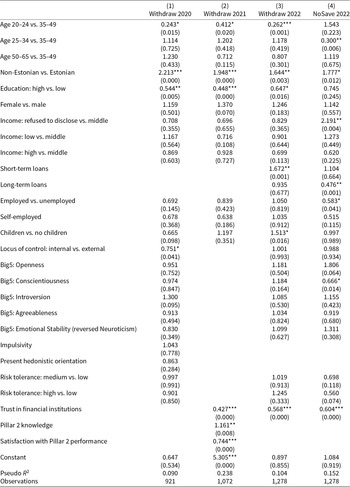
To identify factors related to saving and withdrawal decisions, we conducted separate logistic regressions predicting the binary outcomes of (1) not saving (vs. saving) for retirement and (2) early withdrawing (vs. not withdrawing) of retirement savings. We estimate separate models for each survey wave because the predictor sets available are not identical across waves. Trust in financial institutions is observed only in 2021 and 2022, the saving outcome only in 2022, and some psychological constructs are measured differently between 2020 and 2022. Pooling all three waves into a single specification with consistent treatment and control cells is therefore not feasible. Our approach allows us to examine how various sociodemographic and psychological factors are associated with both saving and withdrawal behaviors, providing insights into the double jeopardy of low regular saving and early withdrawal of retirement funds. Table 2 shows the logistic regression results.
Predicting the decision to save or withdraw early

Table 2 Long description
The table reports odds ratios from logistic regressions predicting early withdrawal in 2020, 2021, and 2022, and predicting not saving in 2022, using demographic, financial, and attitudinal predictors. Across all years, non-Estonians show higher odds of withdrawing early (about 1.6 to 2.2 times) and also higher odds of not saving in 2022 (about 1.8 times). Younger adults aged 20 to 24 have much lower odds of withdrawing early than ages 35 to 49 in every year (about one quarter to two fifths as high), while age 25 to 34 is linked to lower odds of not saving in 2022 (about 0.3 times). Higher education is associated with lower odds of early withdrawal in all three years (about 0.45 to 0.65 times), but is not clearly related to not saving in 2022. Trust in financial institutions is consistently linked to lower odds in every model where it appears, including not saving in 2022 (about 0.60 times). In 2022, short-term loans are associated with higher odds of early withdrawal (about 1.7 times), while long-term loans are associated with lower odds of not saving (about 0.48 times). Employment is associated with lower odds of not saving in 2022 (about 0.58 times), and conscientiousness is also linked to lower odds of not saving (about 0.67 times). Results are associations from regression models; statistical significance varies by predictor and year, and some variables are only included in certain columns.
Notes: This table shows the results of a logistic regression of the decision to withdraw early (columns 1–3) and not to save (column 4) on the largest set of predictor variables. Reported are odds ratios (p-values in parentheses). All variables are defined in Table 1. *** indicates significance at the 0.1% level, ** indicates significance at the 1% level, and * indicates significance at the 5% level.
4.1. Sociodemographic characteristics
The analyses revealed significant age-related patterns in withdrawal behavior. Compared to the reference group (35–49 years), young adults aged 20–24 demonstrated significantly lower withdrawal propensity, with odds ratios ranging from 0.243 to 0.412 across waves, indicating a 75.7–58.8 percent lower likelihood of withdrawal. For the saving decision in 2022, the relevant age effect appeared in the next age band: respondents aged 25–34 were significantly less likely than the 35–49 reference group to skip pension saving (OR = 0.300, p = 0.006). The presence of children proved significant only in the 2022 wave, where parents showed increased odds of withdrawal (OR = 1.513, p = 0.016).
Nationality emerged as a consistent predictor of both decisions. Non-Estonian nationals exhibited significantly higher odds of both early withdrawal (OR = 1.644–2.213) and not saving (OR = 1.777, p = 0.012). Higher education was associated with reduced withdrawal probability (OR = 0.448–0.647) but was not significantly related to the saving decision. Among employment-related variables, being employed (vs. unemployed) was associated with a significantly lower likelihood of not saving in 2022 (OR = 0.583, p = 0.041), while it was unrelated to the withdrawal decision in any wave. None of the income brackets reached significance for the withdrawal decision; for the saving decision, only the ‘income refused to disclose’ category differed significantly from the middle-income reference group (OR = 2.191, p = 0.004), while low and high income did not.
The two loan variables, available only in the 2022 wave, revealed an asymmetry between saving and withdrawal decisions. Having short-term loans (consumer credit or instalment obligations) was a significant positive predictor of early withdrawal (OR = 1.672, p = 0.001), indicating that individuals with such obligations were more likely to withdraw their pension savings, consistent with using accessible pension assets to repay high-interest debt. Short-term loans were, however, unrelated to the saving decision (OR = 1.104, p = 0.664). Having long-term loans (mortgage or student loan debt) showed the reverse pattern: it was a significant negative predictor of not saving (OR = 0.476, p = 0.001), meaning that individuals with long-term loan obligations were less likely to maintain regular savings, possibly because mortgage payments already direct substantial resources toward long-term asset home equity accumulation. Long-term loans were unrelated to the withdrawal decision (OR = 0.935, p = 0.677).
4.2. Psychological factors
Several psychological characteristics showed significant associations with withdrawal and saving behaviors. Internal locus of control, measured in the 2020 wave, demonstrated a protective effect against withdrawal (OR = 0.751, p = 0.041). Among the Big Five personality traits, conscientiousness appeared as a significant predictor of saving behavior (OR = 0.666, p = 0.014), indicating that more conscientious individuals were more likely to maintain regular savings habits, while it was unrelated to the withdrawal decision in any wave. None of the other Big Five traits, nor impulsivity, present hedonistic orientation, or risk tolerance, reached statistical significance in any model.
Higher knowledge of the system’s rules predicted a higher likelihood of withdrawal (OR = 1.161, p = 0.008). By contrast, higher satisfaction with Pillar 2 fund performance was a strong negative predictor of withdrawal (OR = 0.744, p < 0.001), indicating that respondents who were more satisfied with how their investments had performed were substantially less likely to withdraw. Trust in financial institutions stood out as the most robust psychological predictor, significantly relating to both saving patterns and withdrawal decisions. Higher trust was consistently associated with lower withdrawal probability (OR = 0.427–0.568) and higher likelihood of regular saving (OR = 0.604, p < 0.001).
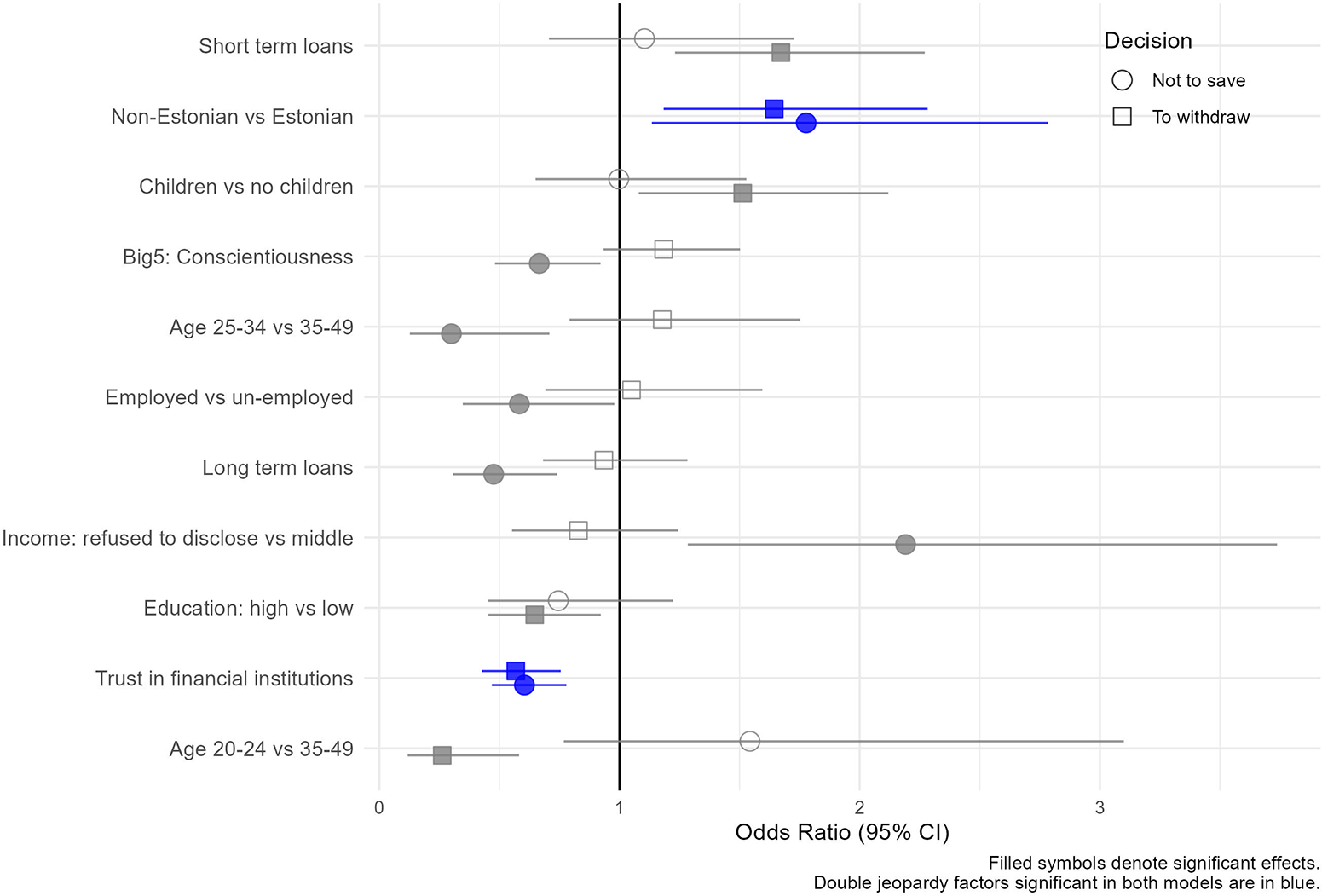
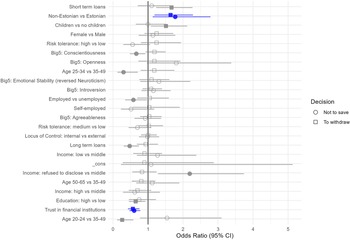
In summary, the key factors associated with both not saving and early withdrawal were low institutional trust and non-Estonian nationality. Figure 1 plots the odds ratios for the significant factors for the 2022 data (all factors are plotted in the Appendix Figure A1).
Odds ratios for significant factors in the 2022 regression models.

Figure 1 Long description
The forest plot displays odds ratios for significant factors in the 2022 regression models. The x-axis is labeled ′Odds Ratio (95 percent CI)′ and ranges from 0 to 5. The y-axis lists factors such as short-term loans, non-Estonian vs Estonian, children vs no children and trust in financial institutions. Two decision categories are shown: ′Not to save′ (filled symbols) and ′To withdraw′ (open symbols). A vertical reference line is at odds ratio equals 1. Factors like non-Estonian vs Estonian and trust in financial institutions show significant effects, with confidence intervals not crossing 1. The plot highlights that low institutional trust and non-Estonian nationality are associated with higher odds of not saving and early withdrawal.
5. Discussion and implications
We investigated which individual factors relate to what we call the ‘double jeopardy’ of retirement savings, where low regular saving and early withdrawal of retirement funds both jeopardize financial well-being in old age. Understanding these behaviors is essential for formulating policies and interventions that can mitigate retirement security risks. We rely on nationally representative data from three independent surveys taken around the time of a widely discussed pension reform in Estonia, which increased the personal relevance of the survey questions for respondents.
The decisions to save and to withdraw savings are similar in their implications for future retirement income but different in their psychological and economic structure. Saving small amounts regularly can be seen as routine behavior with minimal short-term costs. Withdrawing a significant sum, equivalent to monthly or annual salary levels, involves more substantial opportunity costs and alternative uses for the funds. Consequently, the decision to save regularly might be less likely to involve deliberation compared to the more consequential decision to withdraw funds. Some of our findings illustrate the differences between the decisions to save and to withdraw by identifying several factors associated with one but not the other decision.
However, there were ‘double jeopardy’ factors that were associated with both decisions. Across different survey waves, a consistent pattern emerged: lack of trust in financial institutions was the pivotal factor, predicting both the likelihood of not saving and early withdrawal of funds statistically and economically significantly. This finding contributes to the growing body of findings linking trust with retirement savings behavior (Ricci and Caratelli, Reference Ricci and Caratelli2017; Goedkoop et al., Reference Goedkoop, Mangan, Mastrogiacomo and Hochguertel2023). Our findings extend this research by indicating that trust plays a similarly important role in withdrawal decisions. The general trust in institutions, and in pension funds specifically, is near the European average in Estonia (World Values Survey, 2022; Eurobarometer 2024: Consumer trends in insurance and pension services – EIOPA, n.d.), suggesting that the present finding may generalize to many other countries as well.
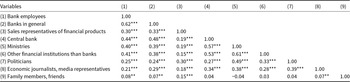
The measure of trust reflects not only the credibility of institutions but also individual differences in skepticism toward institutions. We found that those who do not trust financial institutions also do not trust other institutions, such as the media, the state, and politicians (see Appendix Table A1). Therefore, reverse causality (low trust reflecting an ex-post rationalization of the withdrawal decision) is unlikely. Moreover, in the 2021 wave, trust was measured before the respondents had received the withdrawn money.
Another characteristic that may place an individual in the double jeopardy of low saving and high withdrawal was nationality. Non-Estonian nationality (typically Russian) was consistently associated with a lower likelihood of saving and a higher probability of early withdrawal. Note that this relationship held even when controlling for other sociodemographic characteristics that covary with nationality, such as income. This highlights a vulnerability among this minority group, which may stem from cultural processes, such as exposure to different media narratives. For instance, the Russian-speaking minority tends to believe that retirement inevitably means living in poverty (Pulk et al., Reference Pulk, Riitsalu, Vain, Trankmann, Võrk, Tubelt and Espenberg2024). Our findings on the vulnerability of minority groups echo previous research. Migration seniority predicts lower expected pensions among immigrants in Europe (Topa et al., Reference Topa, Moriano and Moreno2012), while ethnic minorities are more likely to withdraw early from occupational pension plans in the United States (Choukhmane et al., Reference Choukhmane, Colmenares, O’dea, Rothbaum and Schmidt2024). These findings suggest that minority status may create consistent patterns of disadvantage in retirement preparation across different contexts. A recent analysis based on a systematic literature review describes this ‘migrant pension penalty’ as a combination of multiple factors, including institutional and economic constraints, language skills, cultural norms, and connections with others such as families and neighbors (Veldman et al., Reference Veldman, Henkens, Lössbroek and van Tubergen2025).
Furthermore, as Laudenbach et al. (Reference Laudenbach, Malmendier and Niessen-ruenzi2024) demonstrate, growing up under communism has long-lasting effects on attitudes toward financial markets. This is also relevant for Estonia, a former Soviet republic, where parts of the population lack generational experience with investing and seeing money grow in value. Such historical factors may particularly affect the Russian-speaking minority, whose continued exposure to Russian media narratives could reinforce skepticism toward market-based pension systems.
Next to the double jeopardy factors of low trust and non-Estonian nationality, several factors were related only to one of the two decisions. Lower educational attainment was linked to a higher probability of withdrawing funds early, but not to saving. Income, by contrast, was linked to regular saving, but not to early withdrawals. The latter finding suggests that economic hardship may not be the primary driver of early withdrawals in this context, potentially due to the fact that Estonia has unemployment insurance and universal health care. However, the significant and positive relation of having short-term (consumer credit) loans with withdrawal indicates that a specific form of financial pressure (high-interest consumer debt) does contribute to the withdrawal decision, consistent with Estonian Central Bank registry data (Meriküll, Reference Meriküll2025).
People with children were also more likely to withdraw. As we control for income and age in the model, this might reflect higher consumption needs in the present. Additionally, people with children might count on their support in old age. This narrative has been popularized by some politicians considering ‘children to be pension pillars’ (ERR News, 2018).
Conscientiousness was a significant predictor of regular saving, aligning with previous research that links this trait with disciplined and organized financial behavior. However, none of the Big Five personality traits were a significant predictor of early withdrawal decisions. This finding illustrates the differences between saving and withdrawal decisions, as only the relatively regular behavior of saving for retirement was associated with a trait that manifests in persistence and dutifulness.
Also, our analysis shows that lack of knowledge may not be a primary reason for early withdrawal. We found that people who preferred withdrawal had a higher rather than lower likelihood of knowing that withdrawing comes with a tax burden (essentially a high fee of 20%, meaning outperforming the second pillar withdrawal with alternative investments would therefore not be economically feasible). This contrasts with previous findings of a positive relationship between higher pension knowledge and better financial retirement decision-making (Chan and Stevens, Reference Chan and Stevens2008; Landerretche and Martinez, Reference Landerretche and Martinez2013; Debets et al., Reference Debets, Prast, Rossi and Van Soest2022; Elinder et al., Reference Elinder, Hagen, Nordin and Säve‐Söderbergh2022). One plausible interpretation of our findings could be reverse causality – those who decided to keep saving did not need to know all the terms and implications of withdrawal, mimicking similar findings from the United Kingdom (Loibl et al., Reference Loibl, Summers, McNair and Bruine de Bruin2019).
A key insight from our findings is that saving and withdrawal decisions cannot be fully explained by purely economic motivations such as liquidity constraints highlighted by previous early withdrawal research (Argento et al., Reference Argento, Bryant and Sabelhaus2015; Agarwal et al., Reference Agarwal, Pan and Qian2020; Wang-Ly and Newell, Reference Wang-Ly and Newell2022; Bateman et al., Reference Bateman, Dobrescu, Liu, Newell and Thorp2023; Fuentes et al., Reference Fuentes, Mitchell and Villatoro2025). As Estonia does not have a generous transfer system for retirement, the results are also unlikely to reflect a ‘moral hazard’, the idea that individuals would withdraw early in the hope of living from welfare transfers in retirement. Instead, our findings align with prior research showing that behavioral factors play crucial roles in retirement decision-making and that individual differences interact with contextual factors to influence retirement outcomes (Reyers et al., Reference Reyers, van Schalkwyk and Gouws2015).
Importantly, while we see some differences between factors relating to regular saving and early withdrawal, there is an important overlap between factors influencing both decisions. This creates a risk for the future, as some people are in what we call ‘double jeopardy’ – they save less, and when given a chance, withdraw early. The risk is further increased if the withdrawn funds go to immediate consumption rather than investments. In Australia, spending increased in the 8-week period after a reform allowing withdrawals, with gambling the largest spending category (Hamilton et al., Reference Hamilton, Liu, Miranda-pinto and Sainsbury2024). Some official statistics from Estonia point in the same direction. In September 2021, the month the funds were transferred, retail sales reached an all-time high of €790 million, compared to 640 million the year before (Statistics Estonia, 2021). There is also anecdotal evidence such as stories of flat-screen TV sets large enough to not fit into taxis servicing people on shopping sprees (Rajamäe, Reference Rajamäe2021). The first wave of withdrawal constituted almost 5 percent of national GDP, and it has been associated with 1–2 percentage points higher inflation than it would otherwise have been (Meriküll, Estonian Central Bank, Reference Meriküll2025).
Our findings can inform policy design to support better financial retirement outcomes. First, it seems evident that policies solely focused on providing tax benefits or penalties are insufficient to provide enough incentives to save for retirement. Second, additional efforts should also be directed toward (re)building trust in financial institutions. Third, interventions should be tailored to address the specific needs of specific groups, such as minorities. Finally, our study demonstrates that self-reported data can provide information about the heterogeneity and impact ahead of reforms. For instance, the reported intentions of withdrawal measured in the present study were remarkably close to the actual withdrawal rates observed (Emor, 2020; Nasdaq, 2025).
More generally, our results point to the need for policymakers to consider adopting a comprehensive approach to retirement savings interventions and policies. First, both regular savings and withdrawal behaviors should be jointly evaluated. Second, a reasonable balance between individual responsibility for retirement savings and mandatory system components should be considered, aligning with the i-frame and s-frame perspectives proposed by Chater and Loewenstein (Reference Chater and Loewenstein2023). That is, policymakers should evaluate if setting tax (dis)incentives for individual voluntary saving and early withdrawal decisions is sufficient (i-frame) or more fundamental systemic setting changes are needed (s-frame), such as requiring more mandatory pension contributions, as well as restricting early withdrawals.
Our findings, alongside evidence from the United Kingdom, the United States, Australia, and Chile, also demonstrate that allowing early withdrawal can create a considerable temptation to access these funds prematurely. This phenomenon, combined with the well-documented challenges of regular saving, poses double jeopardy for long-term retirement security. Contributing to existing evidence, we find that early withdrawal is not explained merely by economic needs but by trust and other factors.
Finally, we acknowledge several limitations of our research. First, due to survey length constraints, we measured Big Five personality traits using respondent-selected adjectives rather than the more common Likert-scale agreement items. Nevertheless, the direction and magnitude of the estimated coefficients are consistent with established findings on savings behavior, suggesting that this alternative approach provides valid personality assessments. Second, some constructs (e.g., risk tolerance) were measured differently across survey waves. While this variation could introduce measurement inconsistency, we find that the direction and statistical significance of the results remain stable across waves. This consistency suggests that our findings are not driven by specific measurements and may, in fact, show greater robustness. Third, our analysis of factors associated with saving and early withdrawal behavior draws on three high-quality representative cross-sectional datasets. Although we control for a wide range of relevant covariates, the cross-sectional nature of the data precludes causal inference. Two related identification caveats deserve emphasis. The 2021 reform combined two policy changes, making second-pillar participation voluntary and introducing the option of early withdrawal. Our setting does not contain within-reform variation that would allow us to separate the contributions of these two arms; an ideal design would require a four-arm comparison contrasting voluntary saving alone, early withdrawal alone, both, and neither, which is beyond the scope of our data. Relatedly, a standard difference-in-differences specification on the pooled waves is not feasible here, because the three surveys draw different individuals, so we cannot follow the same person before and after the reform; key predictors are not measured in all waves (trust in financial institutions is observed only in 2021 and 2022, and the saving outcome only in 2022); and essentially, the entire eligible population was treated by the reform simultaneously, leaving no untreated comparison group within the post-reform period. Our estimates should therefore be interpreted as descriptive associations between individual characteristics and the saving and withdrawal decisions in the wake of a major reform, rather than as causal effects of the reform itself.
Fourth, our data collection took place during the COVID-19 pandemic (2020–2022), which may have affected both objective and subjective financial fragility of individuals (Kleimeier et al., Reference Kleimeier, Hoffmann, Broihanne, Plotkina and Göritz2023) as well as the level of trust in institutions (Broihanne et al., Reference Broihanne, Plotkina, Kleimeier, Göritz and Hoffmann2025). Our empirical strategy focuses on individual-level variation: within each survey wave, where all respondents were exposed to the same macro environment. Our findings, therefore, reflect relative differences between individuals, rather than absolute levels. Nevertheless, future research could compare saving and withdrawal decisions across contexts with varying overall levels of institutional trust and economic stability. A particularly promising direction would be to study settings that vary the saving and withdrawal arms of pension reforms independently. For example, schemes that allow individuals to choose contribution amounts while restricting early access versus schemes that fix contributions but allow withdrawals, in order to identify how the individual factors documented here, especially trust and minority status, interact with each design feature.
Despite these limitations, our study contributes meaningfully to the literature on early retirement savings withdrawal, a behavior that remains comparatively understudied relative to savings accumulation. Whereas previous research has focused primarily on sociodemographic determinants, our work examines a broader set of correlates and identifies overlapping factors between low saving and early withdrawal behaviors. These findings provide an empirical foundation for future research to design and test targeted interventions and to establish causal relationships.
Acknowledgements
The fieldwork for research was conducted by Kantar Estonia, and we thank them for allowing us to use these datasets for analysis and academic publication. For their valuable comments and feedback on earlier versions of this paper, we thank conference and seminar participants at the IAREP Conference, Research in Behavioral Finance Conference, ICIR Conference on Gaps in Old-Age Provision and Other Protection Gaps, Maastricht University, as well as Sten Andreas Ehrlich, Arvid Hoffmann, and Gerrit Antonides.
AI statement
During the preparation of this work, the authors occasionally used Claude, ChatGPT, and Wordtune to improve readability and language of the work. After using these tools, the authors reviewed and edited the content as needed and take full responsibility for the content of the publication.
Data availability statement
The data used in this study cannot be publicly shared as they are proprietary and were provided by Kantar under a confidentiality agreement. Researchers interested in access may contact Kantar directly, subject to the company’s data sharing policies.
Funding statement
This research was supported by the Estonian Centre of Excellence for Well-Being Sciences EstWell (the Estonian Ministry of Education and Research grant TK218).
Appendix
Pairwise correlations of trust measures (2022 data)

Table A1 Long description
The table reports pairwise correlations among nine trust measures, including banks, public institutions, media, politicians, and personal contacts. Trust in bank employees and trust in banks in general move closely together, with a correlation of 0.62. The strongest association is between trust in ministries and trust in other financial institutions besides banks, at 0.61, and ministries also align strongly with the central bank at 0.57. The central bank is moderately related to other financial institutions besides banks at 0.53 and to banks in general at 0.48. Politicians show moderate links with ministries at 0.49 and with economic journalists and media at 0.39, while their ties to banks are weaker at about 0.24 to 0.25. Family and friends have near-zero relationships with most institutions, including a small negative correlation with ministries at minus 0.04 and small positives such as 0.08 with bank employees. Most correlations are statistically reliable, but correlation does not indicate causation and the table does not show sample size or uncertainty beyond significance markers. *** indicates significance at the 0.1% level, ** indicates significance at the 1% level, and * indicates significance at the 5% level.
Odds ratios for all factors in the 2022 regression models.

Figure A1 Long description
The forest plot displays odds ratios with 95 percent confidence intervals for a set of predictor variables. The x-axis is labeled Odds Ratio (95 percent CI) and appears to run on a linear scale with a visible reference line at odds ratio equals 1. Tick marks are visible at approximately 0, 1, 2 and 3. The y-axis lists the predictor variables from top to bottom as follows: Short term loans, Non-Estonian vs Estonian, Children vs no children, Female vs Male, Risk tolerance high vs low, Big5 Conscientiousness, Big5 Openness, Age 25 to 34 vs 35 to 49, Big5 Emotional Stability (reversed Neuroticism), Big5 Introversion, Employed vs unemployed, Self-employed, Big5 Agreeableness, Risk tolerance medium vs low, Locus of Control internal vs external, Long term loans, Income low vs middle, cons, Income refused to disclose vs middle, Age 50 to 65 vs 25 to 49, Age 40 to 49 vs 25 to 49, Income high vs middle, Education high vs low, Trust in financial institutions, Age 20 to 24 vs 35 to 49. Two decision categories are distinguished by marker shape: circles for Not to save and squares for To withdraw. For most predictors, the confidence intervals are wide and cross the reference line at odds ratio equals 1. Short term loans shows a point estimate visibly above 1 for the To withdraw category, with the confidence interval not crossing 1, indicating increased odds. Non-Estonian vs Estonian also shows a point estimate above 1 for the To withdraw category. Trust in financial institutions and Age 20 to 24 vs 35 to 49 show point estimates that appear below 1, with confidence intervals approaching or crossing 1. Several predictors such as Income high vs middle and Education high vs low show very wide confidence intervals, indicating low precision. The majority of predictors have point estimates clustered near odds ratio equals 1 for both decision categories.

 Open access

