To save content items to your account,
please confirm that you agree to abide by our usage policies.
If this is the first time you use this feature, you will be asked to authorise Cambridge Core to connect with your account.
Find out more about saving content to .
To save content items to your Kindle, first ensure no-reply@cambridge.org
is added to your Approved Personal Document E-mail List under your Personal Document Settings
on the Manage Your Content and Devices page of your Amazon account. Then enter the ‘name’ part
of your Kindle email address below.
Find out more about saving to your Kindle.
Note you can select to save to either the @free.kindle.com or @kindle.com variations.
‘@free.kindle.com’ emails are free but can only be saved to your device when it is connected to wi-fi.
‘@kindle.com’ emails can be delivered even when you are not connected to wi-fi, but note that service fees apply.
This book delivers an in-depth doctrinal analysis of the right to science under Article 15 ICESCR, focusing on the novel concept of its core content, as well as on its rights holders and duty bearers. Monika Plozza challenges the entrenched dichotomy between economic, social and cultural rights on the one hand and civil and political rights on the other, demonstrating that the right to science is indeed justiciable. Situating it within the wider framework of international human rights law, she traces its connections with a broad range of related rights. In doing so, this book equips scholars, practitioners and policymakers with the legal tools needed to invoke and implement the right to science in judicial and policy contexts. Timely and rigorous, it establishes the right to science as a vital legal framework for confronting global challenges ranging from climate change and disinformation to artificial intelligence. This title is also available as open access on Cambridge Core.
Human rights and the international legal framework which supports their protection have been subject to many challenges in recent years, in academic circles and politics. The rise of populism, in particular, has put pressure on the integrity of the rule of law and on democracy, with serious consequences for human rights law, and constitutional democracies. In Mind and Rights, Matthias Mahlmann combined historical, philosophical, and legal perspectives with research from psychology and cognitive science to address this criticism and present a comprehensive examination of the idea of human rights. Now, the contributors to this volume take inspiration from Mind and Rights to engage with idea of 'human rights' underpinning international human rights law by providing insights from law, philosophy, psychology, history, and politics. In doing so, this volume aims to critically engage with the arguments supporting resistance to human rights. This title is also available as open access on Cambridge Core.
As digital technologies transform governance, communication, and public life, human rights frameworks must adapt to new challenges and opportunities. This book explores four fundamental questions: how digitalisation changes the application of human rights, how human rights law can respond to the challenges of digital technology, how freedom of expression applies online, and how vulnerable groups are affected by digitalisation. With contributions from leading scholars, the book combines legal analysis with insights from ethics, environmental education, and medical research. It examines critical topics such as AI regulation, platform accountability, privacy protections, and disinformation, offering an interdisciplinary and international perspective. By balancing different viewpoints, this book helps readers navigate the complexities of human rights in the digital age. It is an essential resource for anyone seeking to understand and shape the evolving landscape of digital rights and governance. This title is also available as open access on Cambridge Core.
The triple planetary crisis of climate change, biodiversity loss, and pollution poses an existential challenge to human societies - and to human rights scholarship. This timely and ambitious volume asks whether human rights offer a meaningful response, and if so, how that potential can be realised. Bringing together scholars from across International Relations, Law, Political Science, Geography, and Sociology, the book offers a multidisciplinary assessment organised around three pillars: governance, litigation, and civic action. Case studies span the Global North and South, from global governance institutions to indigenous communities in the DRC, from climate migrants to Norwegian diplomats. The volume's conclusion is sober: the pace of change lags dangerously behind the urgency of the crises we face. Human rights do not offer a ready-made solution, but a vital common language for accountability and transformation. This title is also available as open access on Cambridge Core.
This volume aims to deliver the most comprehensive collective work on human rights for the mind to date, interrogating several ethical and legal issues arising from new and emerging (neuro)techniques from a human rights perspective. Compiling work from leading international scholars in law, philosophy, ethics, medicine and neuroscience, the volume provides systematic and up-to-date discussions of current debates in this field, while also identifying and interrogating issues that remain uncharted. It thus fills unmet needs across multiple academic fields and policy-oriented fora. The book introduces general and cross-cutting concerns permeating the debate about whether current means of implementing human rights adequately protect our minds. It then analyses specific moral and legal rights pertaining to the mind and the inter-relationships between these rights, before highlighting actionability considerations and pragmatic perspectives on how best to implement rights protections for the mind. This title is also available as Open Access on Cambridge Core.
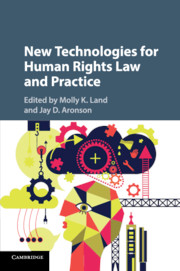
New technological innovations offer significant opportunities to promote and protect human rights. At the same time, they also pose undeniable risks. In some areas, they may even be changing what we mean by human rights. The fact that new technologies are often privately controlled raises further questions about accountability and transparency and the role of human rights in regulating these actors. This volume - edited by Molly K. Land and Jay D. Aronson - provides an essential roadmap for understanding the relationship between technology and human rights law and practice. It offers cutting-edge analysis and practical strategies in contexts as diverse as autonomous lethal weapons, climate change technology, the Internet and social media, and water meters. This title is also available as Open Access.
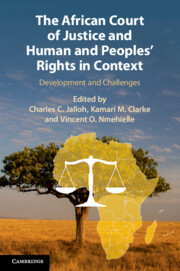
The treaty creating the African Court of Justice and Human and Peoples' Rights, if and when it comes into force, contains innovative elements that have potentially significant implications for current substantive and procedural approaches to regional and international dispute settlements. Bringing together leading authorities in international criminal law, human rights and transitional justice, this volume provides the first comprehensive analysis of the 'Malabo Protocol' while situating it within the wider fields of international law and international relations. The book, edited by Professors Jalloh, Clarke and Nmehielle, offers scholarly, empirical, critically engaged and practical analyses of some of its most challenging provisions. Breaking new ground on the African Court, but also treating old concepts in a novel and relevant way, The African Court of Justice and Human and Peoples' Rights in Context is for anyone interested in international law, including international criminal law and international human rights law. This title is also available as Open Access on Cambridge Core.
This book offers the first comprehensive account of causation in the case law of the European Court of Human Rights. It examines how the Court reasons about causation in finding breaches of the Convention and asks whether its approach is conceptually coherent and normatively justified. Through studies of modern slavery, environmental protection, detention, migration control, and child protection, the book demonstrates that causation as a foundational yet underexamined element of the Convention system. Causation has become an ever more important limiting mechanism. This title is also available as open access on Cambridge Core.
Eight United Nations human rights treaty bodies (UNTBs) can currently examine 'communications' (complaints) from individuals against states. This edited collection is the first in-depth analysis of the evidentiary regimes developed within this procedure. Nine case studies underscore the weak evidentiary basis of the UNTB decisions and the importance of addressing this issue, while the final chapter offers a set of practical recommendations. Grounded in academic research and legal practice, the volume incorporates doctrinal, critical, socio-legal, and anthropological perspectives. It provides an authoritative reference on UNTBs, whilst aiming at contributing to the strengthening of their evidentiary norms and practices. The title is also available open access on Cambridge Core.
That everyone has a human right to enjoy the benefits of the progress of science and its applications comes as a surprise to many. Nevertheless, this right is pertinent to numerous issues at the intersection of science and society: open access; 'dual use' science; access to ownership and dissemination of data, knowledge, methods and the affordances and applications thereof; as well as the role of international co-operation, human dignity and other human rights in relation to science and its products. As we advance towards superintelligence, quantum computing, drone swarms, and life-extension technology, serious policy decisions will be made at the national and international levels. The human right to science provides an ideal tool to do so, backed up as it is by international law, political heft, and normative weight. This book is the first sustained attempt at turning this wonder of foresight into an actionable and justiciable right. This title is also available as Open Access on Cambridge Core.
Mind and Rights combines historical, philosophical, and legal perspectives with research from psychology and the cognitive sciences to probe the justification of human rights in ethics, politics and law. Chapters critically examine the growth of the human rights culture, its roots in history and current human rights theories. They engage with the so-called cognitive revolution and investigate the relationship between human cognition and human rights to determine how insights gained from modern theories of the mind can deepen our understanding of the foundations of human rights. Mind and Rights argues that the pursuit of the human rights idea, with its achievements and tragic failures, is key to understand what kind of beings humans are. Amidst ongoing debate on the universality and legitimacy of human rights, this book provides a uniquely comprehensive analysis of great practical and political importance for a culture of legal justice undergirded by rights. This title is also available as open access on Cambridge Core.
Recent developments in the cognitive sciences, particularly the emergence of neurotechnologies and their potential applications in a variety of contexts, have prompted a debate on what freedoms and rights people have in relation to their brains and minds. Lawyers and philosophers are especially interested in the possibilities offered by the neurosciences in conducting risk assessments and risk management. Minds, Freedoms and Rights deepens our understanding of these legal issues by investigating the human rights that relate to the mind and by exploring their implications for possible uses for neurotechnology for criminal rehabilitation or 'neurorehabilitation'. By harnessing and integrating both legal and ethical perspectives, the authors establish possible uses of neurorehabilitation that are cutting-edge yet simultaneously protect and respect human rights and freedoms. This title is also available as open access on Cambridge Core.
Debating Humanity explores sociological and philosophical efforts to delineate key features of humanity that identify us as members of the human species. After challenging the normative contradictions of contemporary posthumanism, this book goes back to the foundational debate on humanism between Jean-Paul Sartre and Martin Heidegger in the 1940s and then re-assesses the implicit and explicit anthropological arguments put forward by seven leading postwar theorists: self-transcendence (Hannah Arendt), adaptation (Talcott Parsons), responsibility (Hans Jonas), language (Jürgen Habermas), strong evaluations (Charles Taylor), reflexivity (Margaret Archer) and reproduction of life (Luc Boltanski). Genuinely interdisciplinary and boldly argued, Daniel Chernilo has crafted a novel philosophical sociology that defends a universalistic principle of humanity as vital to any adequate understanding of social life. This title is available as Open Access on Cambridge Core.
Land rights for Indigenous Peoples are a global phenomenon and have become an important part of the liberal democratic state. But despite the promise of restoring land rights to Indigenous Peoples, most land justice frameworks have preserved the status quo in what is a slow and arduous process. In this work, William Nikolakis draws from the diverse experiences of Indigenous and non-Indigenous scholars and legal practitioners across the world to document both persistent barriers to 'Land Back' as well as opportunities to move forward for land justice. By bringing these voices together, Nikolakis seeks to share lessons from the land justice movement with the goal of advancing land rights for Indigenous Peoples across the world. This title is also available as open access on Cambridge Core.
Despite a constitutional right to food, a comprehensive social security structure, being a net exporter of agricultural products and maintaining a rising GDP, freedom from hunger remains a pipedream for millions of South Africans. With a constant surge in food prices, the availability of sustenance is often seriously threatened for all of South Africa's population. While the underprivileged majority residing in townships often demonstrate their discontent for poor service delivery on the streets, they rarely channel this strategy into taming food inflation. This study seeks to understand this irony and examine ways in which this trend could be reversed. Proposing a compelling argument for food activism, Bright Nkrumah suggests ways of mobilising disempowered groups to reclaim this inherent right. Presented alongside historical and contemporary case studies to illustrate the dynamics of collective action and food security in South Africa, he draws from legal, social and political theory to make the case for 'activism' as a force for alleviating food insecurity. Also available as Open Access on Cambridge Core.
If you work in a university, you are almost certain to have heard the term 'open access' in the past couple of years. You may also have heard either that it is the utopian answer to all the problems of research dissemination or perhaps that it marks the beginning of an apocalyptic new era of 'pay-to-say' publishing. In this book, Martin Paul Eve sets out the histories, contexts and controversies for open access, specifically in the humanities. Broaching practical elements alongside economic histories, open licensing, monographs and funder policies, this book is a must-read for both those new to ideas about open-access scholarly communications and those with an already keen interest in the latest developments for the humanities. This title is also available as Open Access via Cambridge Books Online.
Historically and conceptually, influential traditions of thought and practice associated with humanism and science have been deeply connected. This book explores some of the most pivotal relations of humanistic and scientific engagement with the world to inspire a reconsideration of them in the present. Collectively, its essays illuminate a fundamental but contested feature of a broadly humanist worldview: the hope that science may help to improve the human condition, as well as the myriad relationships of humanity to the natural and social worlds in which we live. Arguably, these relationships are now more profoundly interwoven with our sciences and technologies than ever before. Addressing scientific and other forms of inquiry, approaches to integrating humanism with science, and cases in which science has failed, succeeded, and could do more to promote our collective welfare, this book enjoins us to articulate a compelling, humanist conception of the sciences for our times. This title is also available as Open Access on Cambridge Core.
Draghici contends that the advent of assisted reproductive technologies has given rise to new fundamental, albeit not unqualified, rights. They include the right to use medically assisted procreation (e.g. artificial insemination, in vitro fertilisation, potentially gamete donation, posthumous conception or surrogacy) in order to become a parent (typically where natural procreation is hindered by infertility, sexual orientation, relationship status or adverse life events), the recognition of intention-based parenthood in relation to donor-conceived children jointly planned and raised with the genetic parent, and the right to pursue the conception of a healthy child (e.g. through recourse to preimplantation genetic diagnosis and embryo selection to avoid severe illness in future offspring). To substantiate this claim, the book relies on a comprehensive analysis of international case-law on procreative autonomy, contextualised by a discussion of highly divisive bioethical controversies, from the status of embryos to the morality of genetic screening and third-party reproduction.
This volume argues that the rise of the far right in Latin America represents a reactionary response to the partial success of democratic regimes in incorporating historically marginalized groups. Despite persistent inequalities, Latin American democracies have gradually weakened the dominance of traditional elites over majority–minority relations, creating fertile ground for a backlash against political, social and cultural change. Like their counterparts in Europe and the United States, far-right actors in the region resist adapting to ongoing transformations, instead invoking an idealized national past and mobilizing exclusionary ethnic, cultural, and political appeals to construct a radically homogeneous community. This volume employs a theoretical framework informed by contemporary debates on the far right in Europe and the United States and brings together leading scholars to examine key country cases across Latin America. This title is also available as open access on Cambridge Core.
This ground-breaking work delves into the world of sub-patent intellectual property rights, exploring utility model and similar protection offered by over 100 countries worldwide. Drawing on the expertise of leading scholars from around the globe, this volume provides a comprehensive analysis of sub-patent protection systems, comparing and contrasting statutory frameworks, registration requirements, corporate strategies and litigation tactics. The book also highlights current policy debates surrounding these systems, including their potential to promote local innovation and economic development, proposals for cross-border harmonization, and their interaction with increasingly integrated litigation systems. This book is an invaluable resource for scholars, attorneys, historians, economists, and anyone dealing with complex international intellectual property matters. This title is also available as Open Access on Cambridge Core.