A collection of out-of-copyright and rare books from the Cambridge University Library and other world-class institutions that have been digitally scanned, made available online, and reprinted in paperback.
To save content items to your account,
please confirm that you agree to abide by our usage policies.
If this is the first time you use this feature, you will be asked to authorise Cambridge Core to connect with your account.
Find out more about saving content to .
To save content items to your Kindle, first ensure no-reply@cambridge.org
is added to your Approved Personal Document E-mail List under your Personal Document Settings
on the Manage Your Content and Devices page of your Amazon account. Then enter the ‘name’ part
of your Kindle email address below.
Find out more about saving to your Kindle.
Note you can select to save to either the @free.kindle.com or @kindle.com variations.
‘@free.kindle.com’ emails are free but can only be saved to your device when it is connected to wi-fi.
‘@kindle.com’ emails can be delivered even when you are not connected to wi-fi, but note that service fees apply.
The most famous legal work of the ancient world was compiled at the order of the emperor Justinian (c.482–565) and issued in the period 529–34. It was intended to be a complete codification of all law, to be used as the only source of law in all the courts of the empire. The work was divided into three parts: the Codex Justinianus contained all of the extant imperial enactments from the time of Hadrian; the Digesta compiled the writings of great Roman jurists; and the Institutiones was intended as a textbook for law schools. However, Justinian later found himself obliged to create more laws, and these were published as the Novellae. This three-volume Latin edition of 1872–95, prepared by the great classical historian Theodor Mommsen (1817–1903) and his colleagues, is the culmination of centuries of palaeographical and legal studies. Volume 2 contains the Codex Justinianus.
This overview of the famous and pioneering excavations of Heinrich Schliemann was first published in German in 1889, and in this extended English translation in 1891. The author, Carl Schuchhardt (1859–1943), had wide experience of excavations in both Asia Minor and Europe, and the translator, Eugénie Sellers (1860–1943), was the first female student of the British School at Athens. The book begins with a life of Schliemann, who had died in 1890, and goes on to describe his extraordinary discoveries at Troy and Mycenae, and his work at Tiryns, Ithaca and Orchomenos. It also contains two reports of later work at the mound of Hissarlik, the site of Troy, by Schliemann himself and his assistant Wilhelm Dörpfeld, which had not been included in the German edition. The book is illustrated with many line drawings, and includes the famous photograph of Sophia Schliemann wearing 'the gold of Troy'.
Replete with detailed engravings, this four-volume catalogue was published to accompany the International Exhibition of 1862. Held in South Kensington from May to November, the exhibition showcased the progress made in a diverse range of crafts, trades and industries since the Great Exhibition of 1851. Over 6 million visitors came to view the wares of more than 28,000 exhibitors from Britain, her empire and beyond. Featuring explanatory notes and covering such fields as mining, engineering, textiles, printing and photography, this remains an instructive resource for social and economic historians. The exhibition's Illustrated Record, its Popular Guide and the industrial department's one-volume Official Catalogue have all been reissued in this series. Including a floor plan of the main buildings, Volume 1 begins with a concise history of the exhibition written by John Hollingshead (1827–1904). It then catalogues and illustrates impressive examples of British manufacturing.
Reissued here together are two medical works, both published in 1835, by John Grant Malcolmson (1803–44), a British surgeon based in India. His extended essays explore the symptoms, diagnosis and treatment of beriberi and rheumatism, conditions which were widespread in Asia at the time. Also describing the contrasting effects that the illnesses had on India's native population and on European colonials, Malcolmson draws on his first-hand experience to speculate on the underlying causes. His analysis of beriberi, forming the larger of the two components here, discusses a disease which had perplexed doctors in the early nineteenth century. Beginning with numbness and spasms in the legs, and eventually rendering the patient completely bedridden, beriberi was frequently fatal, and physicians frequently confused it with other rheumatic disorders. It is now known to be caused by a deficiency of thiamine (vitamin B1).
Written and richly illustrated by the Derby-born artist Ernest Ellis Clark (1869–1932), this guide was originally published in 1904 to demonstrate the decorative possibilities of certain plants, mainly English wild flowers, to art students sitting examinations in plant drawing and design. Clark emphasises the importance of retaining a certain amount of botanical accuracy and provides examples of the ornamental possibilities of selected plants in various stages of their development. The language employed in describing the plants is not rigorously scientific and may be understood by those with little familiarity with botanical terms (a brief glossary is also provided). By focusing primarily on accurate renderings of the plants, rather than decorative applications, Clark allows the student's originality to remain unaffected by his personal preferences, and in so doing he allows students to adapt his teachings to their particular tastes and styles.
Samuel Orchart Beeton (1831–77), the publishing entrepreneur who made his wife's Book of Household Management one of the bestselling titles of the century, gave his name to many other books of domestic, medical and general information for the middle classes. (The 1871 Book of Garden Management, published and probably compiled by him, is also reissued in this series.) This work was published in 1874 by Ward Lock, to whom Beeton was forced to sell his own business after a financial collapse in 1866. The book contains 'such full and practical information as will enable the amateur to manage his own garden'. It covers flower, fruit and vegetable gardening, with a section on garden pests and a monthly calendar of tasks. It also contains advertisements for gardening and medicinal products, as well as for other books from the publishers, offering a fascinating insight into social as well as garden history.
The most influential actor of his age, David Garrick (1717–79) shaped the London stage for over three decades as theatre manager at Drury Lane. He popularised a more natural style of acting, and did much to make Shakespeare the most revered English playwright. First published in 1780 and reissued here in the second edition of that year, this two-volume biography was written by Thomas Davies (c.1712–85). Samuel Johnson, a friend of the Garrick family, notably provided Davies with anecdotes and information on Garrick's early life. The work does not dwell on gossip or private life; it offers instead an informed portrait of the stage in Garrick's time. Davies had inhabited this world as a much less successful actor himself, before becoming a bookseller. His work is therefore a direct and valuable witness to theatrical London in the eighteenth century. The second volume covers the years 1763–79.
In the preface to this three-volume work of 1886, Edwin Hodder (1837–1904) writes that the seventh earl of Shaftesbury 'resisted every appeal that was made to him to allow his biography to be written'. In the end, he succumbed to the inevitable, and co-operated with Hodder, a professional author, sharing with him both his archives and his memories. Anthony Ashley-Cooper (1801–85) was an evangelical Christian with a profound sense of the duty owed by the aristocracy to their country and to the less fortunate. He first came to prominence as the leader of the parliamentary campaign for shorter working hours, which led to the Factory Act of 1833. Entering the House of Lords on his father's death, he extended his activities, becoming the best-known philanthropist of his age. Volume 2 covers the period from 1844 to 1855, including the Irish Famine and the outbreak of the Crimean War.
Richard Hakluyt (1552?–1616) was fascinated from his earliest years by stories of strange lands and voyages of exploration. A priest by profession, he was also an indefatigable editor and translator of geographical accounts, and a propagandist for English expeditions to claim new lands, especially in the Americas. His most famous work was first published in 1589, and expanded in 1598–1600: reissued here is the twelve-volume edition prepared by the Scottish firm of James MacLehose and Sons and first published between 1903 and 1905, which included introductory essays and notes. Hakluyt's subjects range from transcriptions of personal accounts and 'ruttiers' (descriptive charts of voyages) to patriotic attacks against rival nations (especially Spain). Volume 4 includes accounts ranging from the legendary journey of St Helena, the mother of Constantine, from Britain to Jerusalem, to medieval pilgrimages to the Holy Land, to the defeat of the Spanish Armada in 1588.
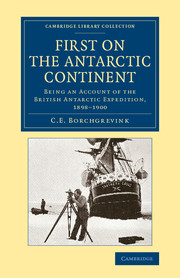
Norwegian-born Carsten Egeberg Borchgrevink (1864–1934) claimed to have been the first person to step onto the Antarctic mainland when he first visited the continent in 1895. Becoming enthusiastic about Antarctic exploration, he was inspired to organise his own expedition on the Southern Cross, with principal funding from Sir George Newnes, an English newspaper proprietor. The British Antarctic Expedition (1898–1900) of ten men to Cape Adare comprised seven Norwegians, two British and one Australian. This was the first expedition to construct a building in Antarctica, overwinter on land, and use sledge dogs for travel. It also set a new farthest south record. Although Borchgrevink was not an effective leader, and problems developed between the Norwegians and the English speakers, the expedition's scientific and exploratory achievements were significant. First published in 1901, and illustrated with many photographs, this work illuminates these endeavours.
Following his stint as the naturalist aboard the Endeavour on James Cook's pioneering voyage, Sir Joseph Banks (1743–1820) became a pre-eminent member of the scientific community in London. President of the Royal Society from 1778, and a friend and adviser to George III, Banks significantly strengthened the bonds between the practitioners and patrons of science. Between 1796 and 1800, the Swedish botanist and librarian Jonas Dryander (1748–1810) published this five-volume work recording the contents of Banks' extensive library. The catalogue was praised by many, including the distinguished botanist Sir James Edward Smith, who wrote that 'a work so ingenious in design and so perfect in execution can scarcely be produced in any science'. Volume 1 (1798) lists books pertaining to various branches of science, including accounts in a multitude of languages from scientific institutions all over the world.
Richard Hakluyt (1552?–1616) was fascinated from his earliest years by stories of strange lands and voyages of exploration. A priest by profession, he was also an indefatigable editor and translator of geographical accounts, and a propagandist for English expeditions to claim new lands, especially in the Americas. His most famous work was first published in 1589, and expanded in 1598–1600: reissued here is the twelve-volume edition prepared by the Scottish firm of James MacLehose and Sons and first published between 1903 and 1905, which included introductory essays and notes. Hakluyt's subjects range from transcriptions of personal accounts and 'ruttiers' (descriptive charts of voyages) to patriotic attacks against rival nations (especially Spain). Volume 8 contains voyages to the east coast of North America, from Newfoundland and Canada to Florida, and includes 'a discourse of the necessitie and commoditie of planting English colonies upon the North partes of America'.
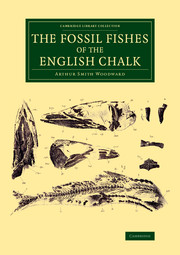
The Chalk Group of southern and eastern England preserves a rich marine fauna of Late Cretaceous age. In this work, first published in seven parts between 1902 and 1912, Arthur Smith Woodward (1864–1944) provides what remains the principal account of fossil fishes from these deposits. Woodward describes and illustrates over fifty genera of ray-finned, lobe-finned, and cartilaginous fishes. The three-dimensional preservation of some Chalk fishes allows Woodward to describe aspects of anatomy not visible in heavily compressed fossils of similar age from other localities. Woodward finds that the fine detail apparent in bony fish skulls from the Chalk provides evidence of a closer correspondence between Cretaceous species and their modern relatives than had previously been anticipated. This monograph represents one of Woodward's last truly monumental contributions on fossil fishes, and was completed at around the time his scientific attention became increasingly dedicated to the now infamous Piltdown Man.
Having served as a military surgeon in India, where he also pursued botanical research and investigated the efficacy of Hindu medicines, John Forbes Royle (1798–1858) went on to become a professor of materia medica at King's College, London. Acknowledging the need for a thorough yet manageable textbook on the subject, he published in 1847 this manual containing entries on the medicinal substances derived from minerals, plants and animals that were used in Britain at that time. The terminology, operations and aims of pharmaceutical practice are also addressed, and the differing preparations of the London, Edinburgh and Dublin pharmacopoeias are taken into account for the benefit of students. Furthermore, the work provides information on recently discovered medicines, 'as may be seen among the Preparations of Iron and of Gold, as well as in Matico, Indian Hemp, Bebeerine &c'.
Relying on incremental experiment and practice rather than individual leaps into the unknown, Robert Stephenson (1803–59) forged an influential career as a highly respected railway and civil engineer. From the steam locomotive Rocket to the London and Birmingham Railway and the Britannia Bridge, his work helped to consolidate the foundations of the modern engineering profession. Based on the first-hand testimony of relatives and contemporaries as well as correspondence and official records, this 1864 biography by John Cordy Jeaffreson (1831–1901), published only five years after Stephenson's death, tells the story of this quiet industrial innovator. Five chapters by engineer William Pole (1814–1900) provide a more technical insight, examining some of Stephenson's most significant railway bridges. Volume 2 covers his advocacy of standardisation of the permanent way during the Gauge War, and his life as a bridge builder and politician.
Following his stint as the naturalist aboard the Endeavour on James Cook's pioneering voyage, Sir Joseph Banks (1743–1820) became a pre-eminent member of the scientific community in London. President of the Royal Society from 1778, and a friend and adviser to George III, Banks significantly strengthened the bonds between the practitioners and patrons of science. Between 1796 and 1800, the Swedish botanist and librarian Jonas Dryander (1748–1810) published this five-volume work recording the contents of Banks' extensive library. The catalogue was praised by many, including the distinguished botanist Sir James Edward Smith, who wrote that 'a work so ingenious in design and so perfect in execution can scarcely be produced in any science'. Volume 2 (1796) focuses on books relating to animals, including humans, particularly their physiology, maladies and economic functions.
Although without formal scientific training, Henry John Elwes (1846–1922) devoted his life to natural history. He had studied birds, butterflies and moths, but later turned his attention to collecting and growing plants. Embarking on his most ambitious project in 1903, he recruited the Irish dendrologist Augustine Henry (1857–1930) to collaborate with him on this well-illustrated work. Privately printed in seven volumes between 1906 and 1913, it covers the varieties, distribution, history and cultivation of tree species in the British Isles. The strictly botanical parts were written by Henry, while Elwes drew on his extensive knowledge of native and non-native species to give details of where remarkable examples could be found. Each volume contains photographic plates as well as drawings of leaves and buds to aid identification. The species covered in Volume 3 (1908) include cedar, hornbeam, southern beech, hickory, maple and redwood.
First published in 1855 and reissued here in the second edition of that year, this two-volume work celebrates the life of the author, wit and clergyman Sydney Smith (1771–1845). A founder of the second Edinburgh Review, Smith is best remembered for his entertaining observations and witticisms. The work comprises a memoir, written by Smith's daughter Saba Holland (1802–66), and a selection of letters, edited by Sarah Austin (1793–1867). Together, the volumes offer private insights into a man who lived much of his life in the public eye. Volume 1 contains Holland's memoir, which includes biographical details as well as descriptions of her father's articles for the Edinburgh Review. Sharing her father's sense of humour, she peppers her account with many of his best jokes, while also emphasising his character as compassionate clergyman, loving father and dutiful friend.
After the expedition of Sir John Franklin went missing in the Arctic, a series of search missions were sent out in an attempt to discover its fate. Two of these were funded by, and named after, the American shipping magnate Henry Grinnell (1799–1874), the second of which was launched in 1853. With the brig Advance trapped in ice off the coast of northern Greenland, the expedition's surgeon Isaac Israel Hayes (1832–81) set out in August 1854 with a party of men towards Upernavik. This 1860 publication traces nearly four months spent struggling against horrendous Arctic conditions. Also reissued in the Cambridge Library Collection are The Open Polar Sea (1867) and The Land of Desolation (1871), Hayes's account of a more leisurely cruise along the coast of Greenland. Also available is Arctic Explorations (1856), a two-volume account of the second Grinnell expedition by its leader, Elisha Kent Kane (1820–57).
For those engaged in military conflict at the end of the nineteenth century, infection and disease were still as formidable enemies as the guns of an opposing army. Yet advances in sanitary science and understanding continued to help officers keep their troops in optimal fighting condition. After serving as an assistant surgeon for the Union Army during the American Civil War, Alfred Alexander Woodhull (1837–1921) began to publish on the topics of hygiene and sanitation, and how they related to military effectiveness. Arguably his most important publication, the present work was based on lectures he delivered at the US Infantry and Cavalry School. It covers such varied topics as the selection of men, uniform design, and the management of waste. First published in 1890, it was recommended as a textbook by the surgeon general of the time. Reissued here is the revised third edition, which appeared in 1904.