To save content items to your account,
please confirm that you agree to abide by our usage policies.
If this is the first time you use this feature, you will be asked to authorise Cambridge Core to connect with your account.
Find out more about saving content to .
To save content items to your Kindle, first ensure no-reply@cambridge.org
is added to your Approved Personal Document E-mail List under your Personal Document Settings
on the Manage Your Content and Devices page of your Amazon account. Then enter the ‘name’ part
of your Kindle email address below.
Find out more about saving to your Kindle.
Note you can select to save to either the @free.kindle.com or @kindle.com variations.
‘@free.kindle.com’ emails are free but can only be saved to your device when it is connected to wi-fi.
‘@kindle.com’ emails can be delivered even when you are not connected to wi-fi, but note that service fees apply.
The expression Binge Drinking (BD) refers to dysregulated alcohol consumption, characterized by the intake of large quantities of alcohol, regardless of their nature, consecutively in a limited period of time. BD is a significant public health problem in many European countries, including Italy. According to data from the Istituto Superiore di Sanità, dated 2020, over 4 million Italians exhibit episodic excessive alcohol consumption (compared to 2019 data, there was an increase of approximately 5,3%).
Objectives
This study aims to examine alcohol consumption habits in the Italian population, evaluating psychopathological correlations that can explain its diffusion.
Methods
Between January and May 2023, an anonymous online questionnaire was randomly sent to the general population. Alongside with tests to evaluate psycho-social features, to estimate the presence of alcohol abuse or dependence the AUDIT scale (Saunders et al. Addict Abingdon Engl. 1993; 88:791–804) was used. It included two specific questions to frame the phenomenon of BD (Cranford et al. Alcohol Clin Exp Res. 2006; 30:1896–905). No other study conducted in Italy has so far used the aforementioned validated questions.
Results
The sample consists of 308 people (189 F, 119 M), with an average age of 32 years (sd 14). The AUDIT indicates a state of chronic alcohol consumption in 11,7% (95% confidence interval 8,5%-15,7%), of the recruited sample, positively correlating with the element of impulsivity (p<0,005) confirming what has already been reported in literature. BD prevalence reaches 56% (M 57%, F 55%) without any significant correlation with impulsivity, personality disorders, emotional dysregulation, or sensitivity to rejection. Among university students the prevalence of BD exceeds 70% (95% confidence interval 60%-76%), with a number of drinks reported for a single occasion reaching up to 25 units and a reported number of binge episodes, in a two-week span, ranging from 2 to 10.
Conclusions
Despite possible biases, this study raises the relevant issue of the extremely high prevalence of BD disorder, which is particularly alarming in light of the numerous issues related to the behavior itself. A direct correlation with reduced school performance, an increase in risky sexual behavior, and an increase in cases of drunk driving have been evaluated. Considering these consequences, it is of primary importance on a medical, but even more social level, to best characterize this phenomenon in such a way as to be able to implement awareness-raising and prevention interventions.
Suicide is the most severe consequence of major depressive disorder (MDD). The most novel researches assume the role of immunological dysregulation in the background – several studies have reported alterations of inflammatory cells related to both MDD and suicidal behaviour (SB).
Objectives
Changes in the number of certain immune cells and their ratios have been proposed as potential biomarkers of suicide risk (SR). The aim of our research was to investigate alterations of these values related not only to MDD as an assumed inflammatory state, but also to an increased risk of SB.
Methods
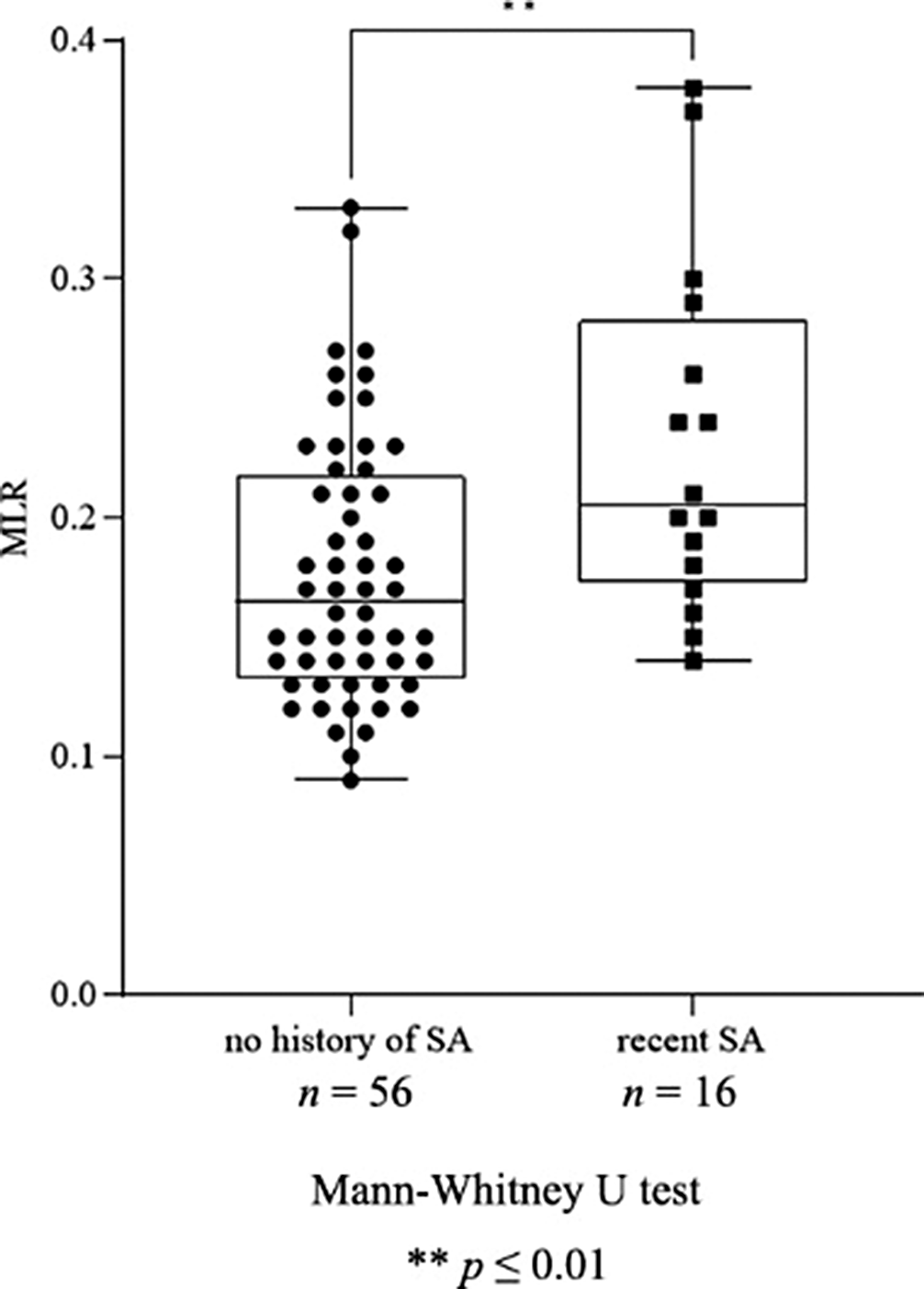
In our restrospective cohort study carried out between January 2015 and January 2020, we investigated laboratory parameters of psychiatric patients diagnosed with MDD (n=101). Individuals with recent (≤48 hours prior) suicide attempt (SA) (n=22) and with past SA (>48 hours prior) (n=19) represented the high SR group. MDD patients with no history of SA (n=60) composed the intermediate SR group. We compared the number of neutrophil granulocytes, monocytes, lymphocytes, platelets, leukocytes, neutrophil-to-lymphocyte (NLR), monocyte-to-lymphocyte (MLR), platelet-to-lymphocyte ratio (PLR), red blood cell distribution width (RDW) and erythrocyte sedimentation rate (ESR). Furthermore, we evaluated alterations of these parameters related to antidepressant (AD) treatment, which has been proved to have anti-inflammatory effects. Statistical analyses were carried out using GraphPad 9.5.0 and MedCalc 16.8 programmes.
Results
We found a significant increase in neutrophil granulocyte count (p=0.016), NLR (p=0.031, Fig. 1), monocyte count (p≤0.0001), MLR (p=0.005, Fig. 2), leukocyte count (p=0.048) and ESR (p=0.037) in patients with recent SA compared to patients with no history of SA. Moreover, there was a significant elevation in monocyte count (p≤0.0001), MLR (p=0.020, Fig. 3), ESR (p=0.041) and RDW (p=0.037) in patients with high SR compared to patients with intermediate SR. AD treatment resulted in a significant decrease in neutrophil granulocyte count (p=0.0163) and NLR (p=0.016), however, it did not affect the rest of the parameters.
Image:
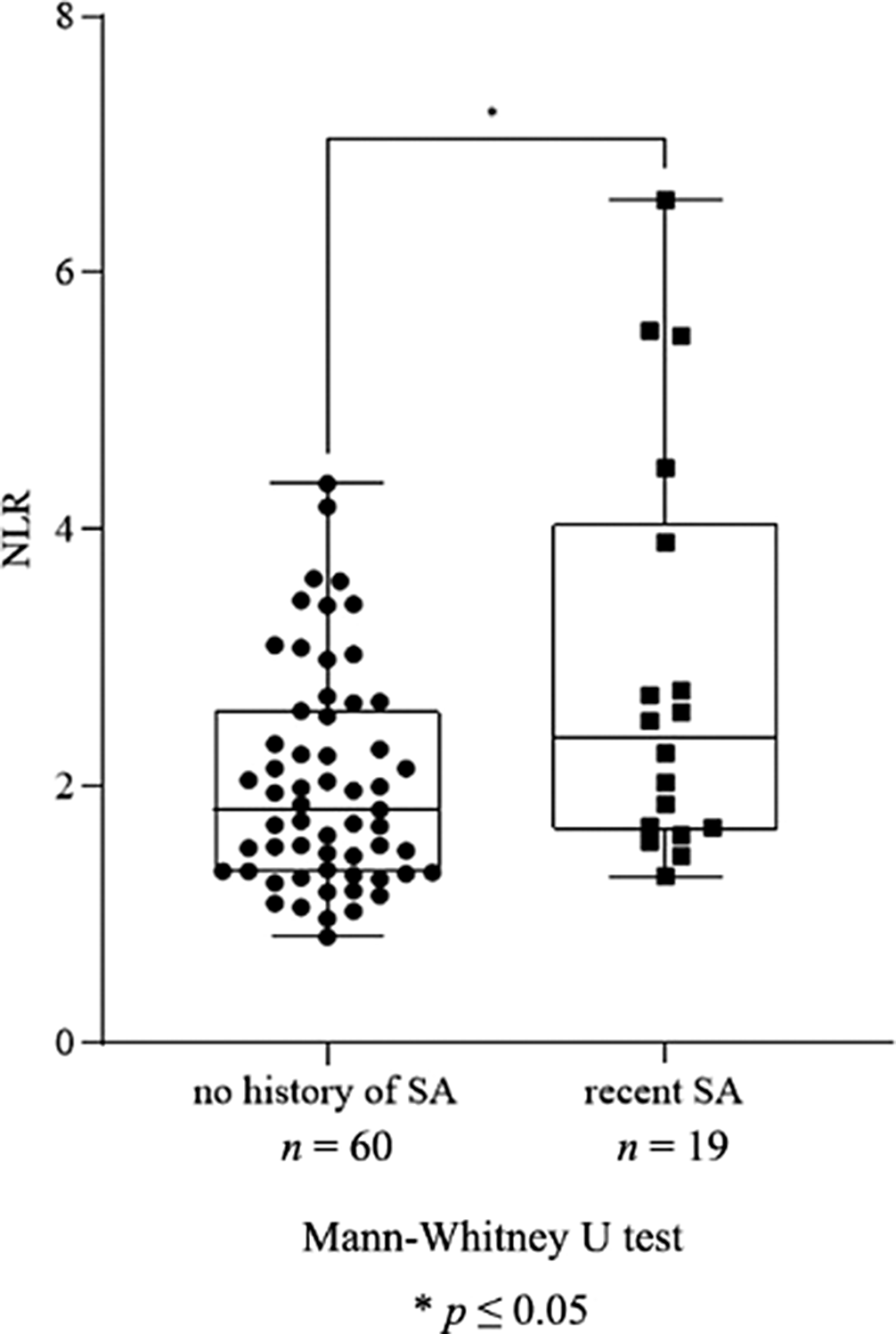
Image 2:
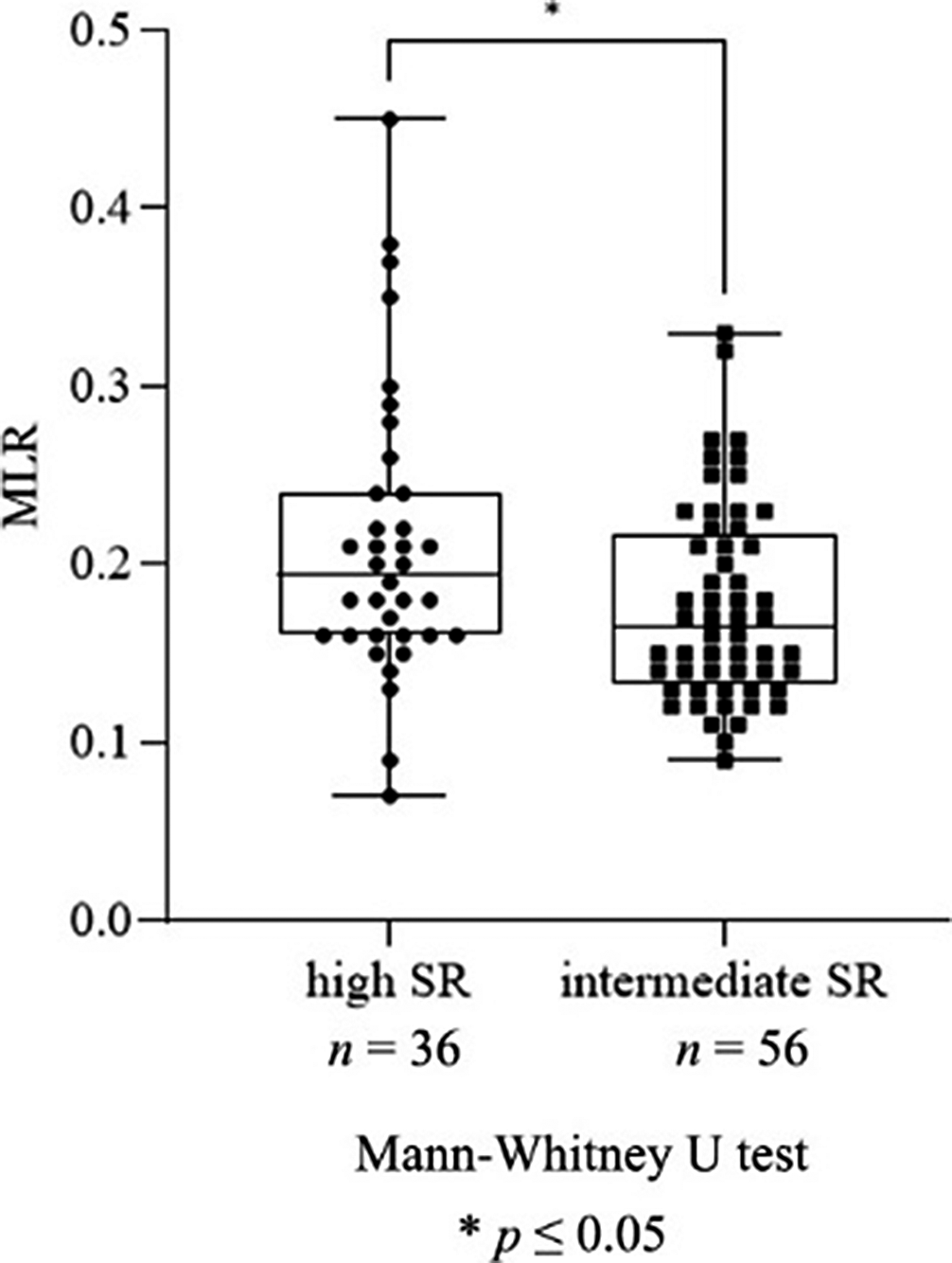
Image 3:
Conclusions
Assuming immunological mechanisms in the background of MDD and SB, our findings support the role of NLR as a biomarker of acute SR, though its alterations may be masked by AD therapy in the long term. However, MLR – remaining unaffected by AD treatment – may be a possible indicator of both acute and long term suicidal vulnerability. In order to further specify the diagnostic value of these parameters, future prospective research is needed.
The study was supported by the FIKP-IV and the TNIL projects.
Sleep disorders are the commonest comorbid conditions in adult ADHD. This presentation will begin with an overview of the relationship between ADHD and sleep as well as the impact of disturbed sleep on concentration, impulvity and hyperactivity. Next, we will discuss the clinical characteristics of the sleep disorders, how to screen for them and their pharmacological and non pharmacological management. By the end of the session, participants will have a clear idea of how to investigate the various sleep disorders, to distringuish and treat them.
Schizophrenia is a common chronic disease in psychiatric long-term care institutions. Taipei City Hospital Songde Branch Psychiatric Nursing Home (TCHSBPNH) is the first public psychiatric nursing home in Taipei City. There’s not only a complete interdisciplinary care system, but also detail initial evaluation at admission of residents, including basic demographic information, cognitive assessments, activities of daily living, and so on. It is known that patients with schizophrenia are generally accompanied by cognitive impairments, which further affects their activities of daily living (ADL) performance, but we still don’t know the correlation between of them.
Objectives
This study aimed to investigate the relationships between cognitive function and ADL function of psychiatric nursing home residents with schizophrenia. The results would promote clinical intervention in ADL training for institutional patients.
Methods
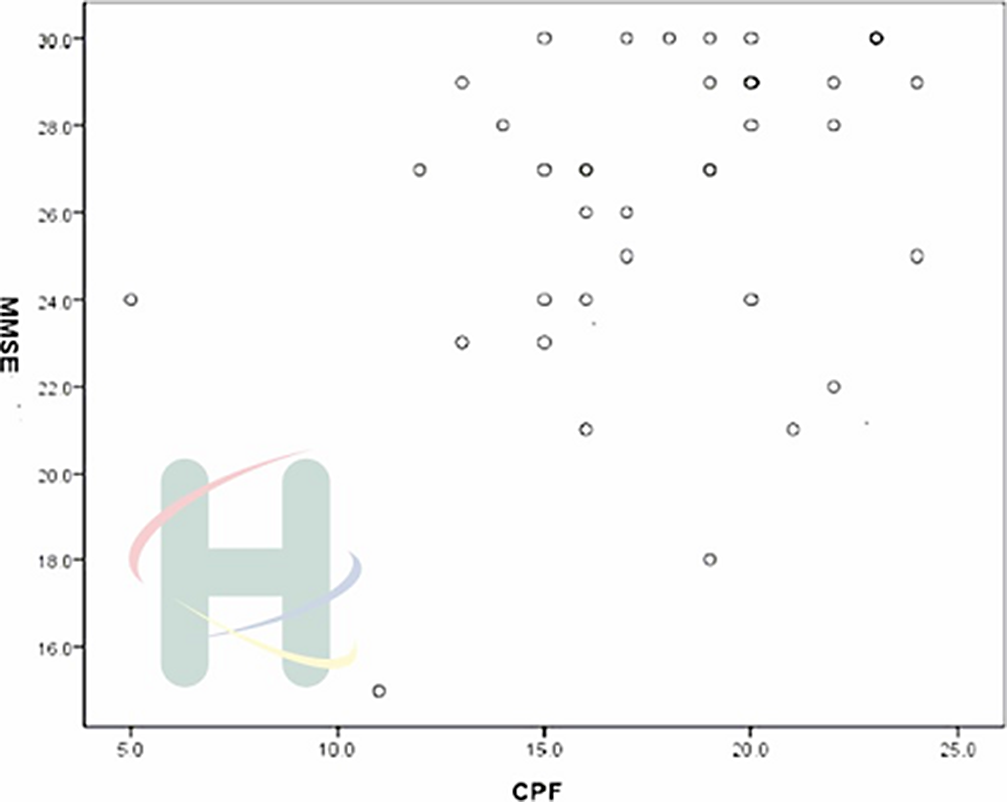
39 participants with chronic schizophrenia (mean age =63.95±6.59 years) were recruited for the study from 2020 to 2021 in TCHSBPNH. We collected every resident’s assessment data, including Mini-Mental State Examination (MMSE), Barthel Index, Lawton - Brody Instrumental Activities Of Daily Living Scale (Lawton IADL scale) and Composite Physical Function (CPF) Scale. The Pearson correlation coefficient was used to examine the correlation between cognitive function and ADL.
Results
Moderate positive correlations were showed between cognitive function and ADL (p<.05). The statistic results as follow, MMSE and Barthel Index (γ=.627, p<.001), Lawton IADL scale (γ=.431, p=.006), and CPF (γ=.341, p=.034) respectively exhibited significant correlations.
Image:
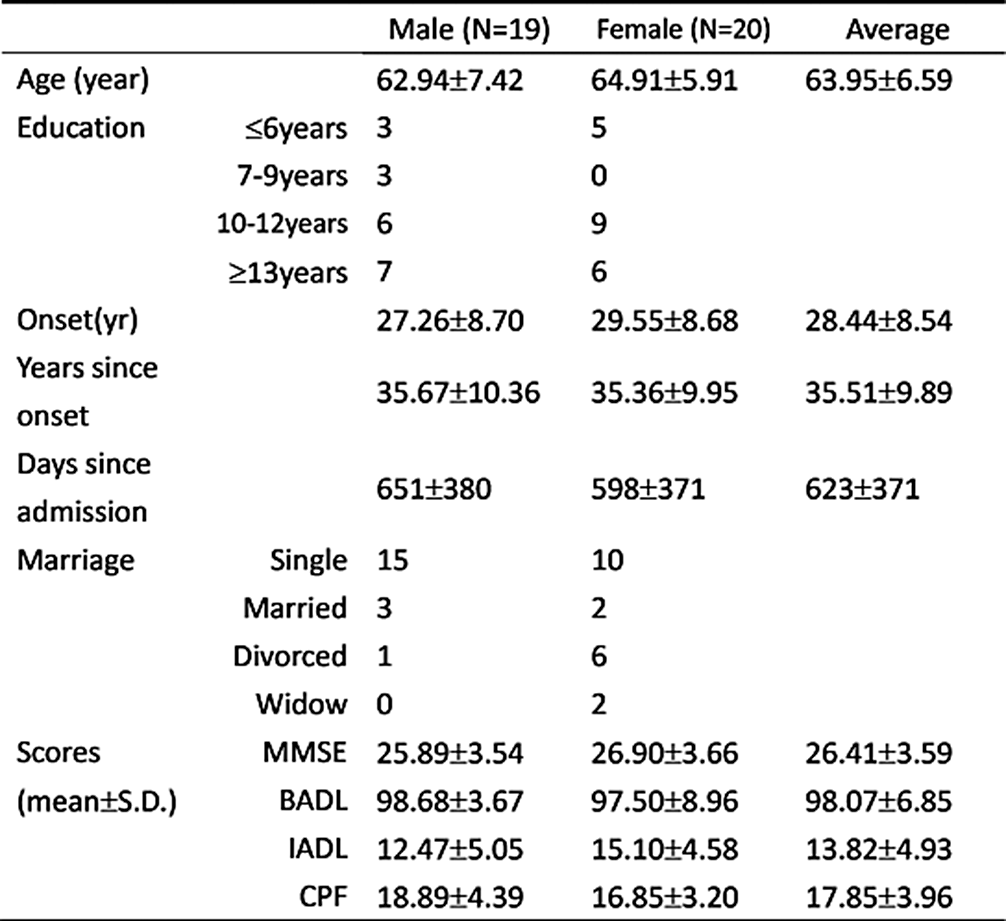
Image 2:
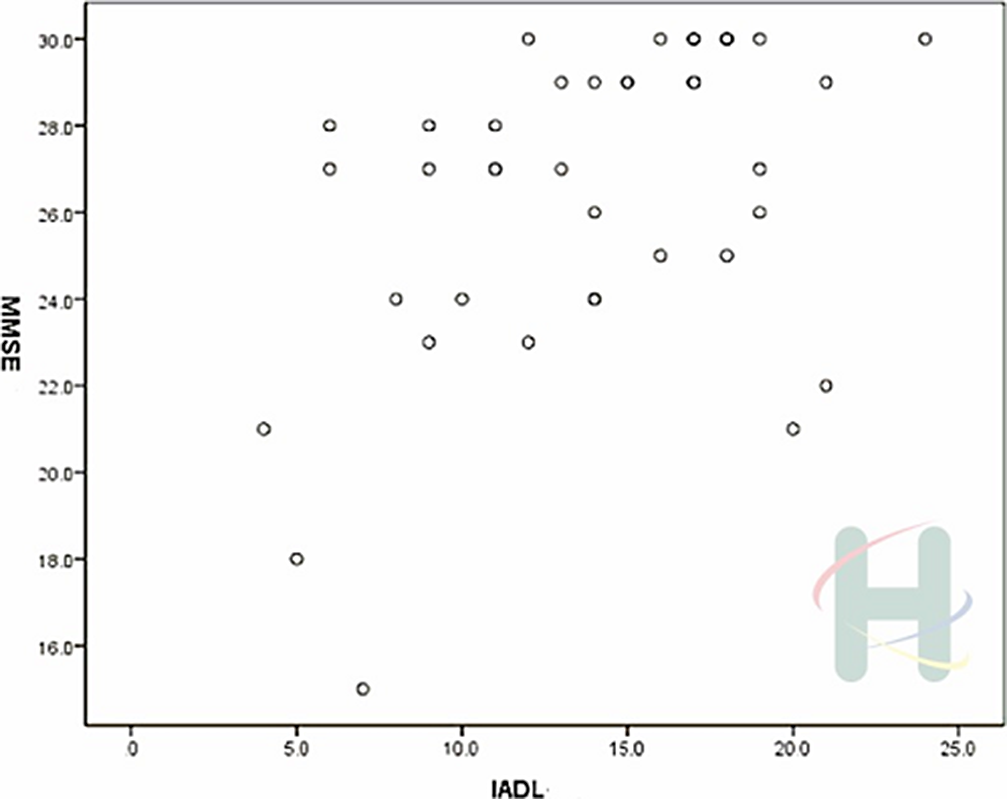
Image 3:
Conclusions
There is a positive correlation between cognitive function and ADL in psychiatric nursing home residents with schizophrenia. The better cognitive function performance becomes, the better independent ADL functions will be. Thus, the psychiatric nursing home residents’ independent ADL training will also vary from person to person.
In comparison to extrapyramidal and metabolic side effects, the subjective aspects of neuroleptic treatment have been less extensively researched. Nevertheless, they are equally significant given their potential to influence adherence and functional outcome. Historically, terms such as “neuroleptic dysphoria,” “neuroleptic-induced psychic indifference,” and “neuroleptic-induced deficit syndrome” were used to characterize a range of unpleasant mood states on the one hand and a documented and observable motivational deficit on the other. The latter aligns with the findings from preclinical neuroscientific studies and animal models highlighting the significant involvement of mesolimbic dopamine in motivational processes. Despite an abundance of anecdotal data these adverse effects are often undetectable in large-scale clinical studies that utilize standardized assessment measures.
Objectives
To present adverse subjective changes in arousal, mood and volitional drive resulting from neuroleptic intake from a patient’s perspective.
Methods
The subject is a patient, with no reported negative symptoms or lasting functional impairment described, who underwent a gradual 6-month discontinuation of risperidone in an outpatient setting following a complete recovery after a single psychotic episode. A semi-structured interview modelled after The Clinical Assessment Interview for Negative Symptoms (CAINS) was conducted. We aimed to elicit descriptions of the subjective experience while ensuring our approach remained non-suggestive.
Results
In addition to describing potential akathisia and lethargy at higher doses, the subject reported a significant lack of motivation and a notably reduced willingness to exert effort towards achieving specific goals or engaging in activities that he still found rewarding or pleasurable. Furthermore, he consistently noted gradual improvements across various psycho-social aspects following the discontinuation of the medication. These adverse and unpleasant experiences were presented as the primary reason for wanting to discontinue pharmacological treatment.
Conclusions
Certain adverse effects of antipsychotic medications can only be elucidated by the clinician through the examination of the patient’s subjective experiences. Medication induced dysphoria and volitional deficits have the potential to profoundly impact treatment adherence, leading to unrecommended discontinuation of neuroleptics, and can cause important functional impairment.
Military aggression significantly worsens the mental health of the population due to losses: human, economic-financial, social-psychological, ecological. One of the negative consequences of military aggression is migration, the movement of the population within the country and outside its borders, which disrupts adaptation and leads to the formation of a wide range of psychological and mental disorders.
Objectives
To study the state of mental health of internally displaced persons (IDPs) and to develop, on this basis, a system of therapy and prevention of mental disorders.
Methods
A combination of clinical-psychopathological and psychodiagnostics methods of studying were used to identify peculiarities of the mental state and various forms of mental pathology.
Results
270 IDPs were examined. It was established that the group of IDPs is heterogeneous and includes 3 categories: 1 group of IDPs who do not have signs of mental disorders (conditionally healthy) (34.81%), 2 group of IDPs who have separate symptoms of mental disorders (risk group) (25.19 %) and the 3 group of IDPs with established mental disorders (40.00 %). The assessment of the general condition of the IDPs of the 1 group shows that they have various somato-neurological disorders and the absence of mental disorders. The assessment of the emotional state of the IDPs of the 2 group indicates the presence of various emotional disorders that include asthenic syndrome (41.18 ± 5.97) %, agripnic syndrome (45.59 ± 6.04) %, somato-vegetative syndrom (30.88 ± 5.60) %, anxiety-depressive syndrome (20.59 ± 4.90) %). That separate syndromеs do not meet the criteria of ICD-10 and were subthreshold. The general features of mental disorders in group 3 IDPs are characterized by the predominance of disorders of the anxiety-depressive spectrum and includes adjustment disorders (F43.2) in 35,18%; post-traumatic stress disorder (F43.1) in 17.59%; a moderate depressive episode (F32.1) in 16, 67%; organic affective (depressive) disorder (F06.3) in 14.81%; organic anxiety disorder (F06.4) in 9.28%; recurrent depressive disorder (33.1) in 6.48%.
Conclusions
A system of treatment of mental disorders in IDPs has been developed, which includes pharmacotherapy (the usage of antidepressants, anxiolytics and, if necessary, antipsychotics), cognitive-behavioral and family psychotherapy. For prevention mental disorders among IDPs of groups 1 and 2, a psychoeducational program was created, aimed at forming awareness of clinical manifestations of mental disorders, opportunities to prevent their formation, and necessary actions in conditions of exacerbation of the mental state. Evaluation of the effectiveness of the developed system of therapy and psychoeducation has testified to their effectiveness.
Schizophrenia has a clinical course that has a great negative impact on the daily life of the person due to the cognitive and social problems it causes. Internalised stigmatisation is a very common negative phenomenon in individuals diagnosed with schizophrenia. It is known that treatment adherence is low in schizophrenia patients with high levels of internalised stigma. Lack of adequate treatment adherence in these patients is a negative factor in terms of recovery. Reducing the level of internal stigmatisation and reinforcing treatment adherence in schizophrenia has a positive effect on recovery. Considering this situation, it is important to determine the relationship between internal stigmatisation, treatment adherence and recovery in schizophrenia patients. In the literature review, there were no studies in which the relationship between internal stigmatisation, recovery and treatment adherence in individuals diagnosed with schizophrenia was carried out together.
Objectives
In this study, it was aimed to fill the existing gap in the relevant field and to be a resource for further intervention programmes.
Methods
The study was planned as descriptive. The sample of the study consisted of individuals diagnosed with schizophrenia aged 18 years and over who met the inclusion criteria and accepted to participate in the study by purposive sampling method. In the power analysis, the sample number was calculated as (N=80) with a margin of error of 0.5. Personal information form, Internalised Stigma Scale in Mental Illness (ISMI), Recovery Assessment Scale (RAS) and Medication Adherence Rating Scale (MARS) were used for data collection. IBM SPSS 27.0 package programme was used for statistical analysis.
Results
The data are still being analysed in detail by the researchers. The findings and relational results of the study will be presented.
Conclusions
It is thought that the results of the study will contribute to the reporting of the relationship between intrinsic stigma, recovery and treatment adherence in individuals diagnosed with schizophrenia, and by revealing the relationship between the variables, it is thought that it will be a source for planning interventions that will increase the treatment adherence and recovery perceptions of schizophrenia patients and reduce their intrinsic stigma.
Child maltreatment (CM) refers to all forms of physical or psychological violence, sexual abuse, and neglect of a person under the age of 18, resulting in actual or potential harm to their health, survival, development, or dignity. It is recognized as a predictor of psychological difficulties in adulthood, such as bulimic behavior.
Objectives
The aim of our study was to assess the link between CM and bulimic behaviors in the Tunisian general population.
Methods
We conducted a cross-sectional, descriptive, and analytical study among Facebook group members, using an online questionnaire, from February 17, 2023, to May 26, 2023. All respondents over the age of 18 were included in the study. CM was assessed using the Childhood Trauma Questionnaire (CTQ), which provides information on five types of maltreatment: emotional abuse (EA), physical abuse (PA), sexual abuse (SA), emotional neglect (EN), and physical neglect (PN). The Bulimic Investigatory Test, Edinburgh (BITE) was used to screen and assess the intensity of bulimic behavior.
Results
A total of 528 responses were included in the study. The mean age of the sample was 33.3±11.95 years. Mean AE, AP, AS, NE, NP, and overall CTQ scores were 8.30; 6.58; 6.38; 10.14; 7.26, and 49.72, respectively. A history of severe AE, AP, AS, NE, or NP was reported by 13.1%, 10.8%, 8.5%, 11.6% and 8.3% of respondents, respectively. The mean BITE score was 10.76 ±6.85 and 6.6% of our population were at high risk of developing bulimic behavior.
In the bivariate study, the BITE score was significantly correlated with all forms of MI. The strongest correlation was with AE (r=0.310; p<0.001).
In the multivariate study, only AE was associated with bulimic behaviors.
Conclusions
This study highlighted a positive association between various forms of child neglect and abuse, and bulimic behaviors. It is therefore worth noting that interventions for these disorders may be more effective if they target not only the behavior itself but also underlying risk factors such as maltreatment.
The Korean Basketball League(KBL) holds an annual draft to allow teams to select new players, mostly graduates from the elite college basketball teams even though some are from high school teams. In sports games, many factors might influence the success of an athlete. In addition to possessing excellent physical and technical factors, success in a sports game is also influenced by remarkable psychological factors. Several studies reported that elite sports players can control their anxiety during competition, which may lead to better performance. In particular, the temperament and characteristics of players have been regarded as crucial determinants of the player’s performance and goal. In this regard, numerous studies suggest that personality is considered to be an important predictor of long-term success in professional sports
Objectives
Based on previous reports and studies, we hypothesized that physical status, temperament and characteristics, and neurocognitive functions of basketball players could predict the result of KBL draft selection. Especially, temperament and characteristics were associated with the result of KBL selection. The basketball performances including average scores and average rebound were associated with emotional perception and mental rotation.
Methods
We recruited the number of 44 college elite basketball players(KBL selection, n=17; Non-KBL selection, n=27), and the number of 35 age-matched healthy comparison subjects who major in sports education in college. All participants were assessed with the Temperament and Character Inventory(TCI), Sports Anxiety Scales(SAS), Beck Depression Inventory(BDI), Perceived Stress Scale (PSS-10), Trail Making Test(TMT), and Computerized Neuro-cognitive Test(CNT) for Emotional Perception and Mental Rotation.
Results
Current results showed that physical status, temperament and characteristics, and Neurocognitive functions of college basketball players could predict the KBL draft selection. Among temperament and characteristics, novelty seeking and reward dependence were associated with KBL draft selection. The basketball performances including average scores and average rebound were associated with emotional perception and mental rotation.
Conclusions
In order to be a good basketball player for a long time, it was confirmed that temperamental factors and Neurocognitive factors were very closely related. Furthermore, it is also judged that these results can be used as basic data to predict potential professional basketball players.
Substance use disorder is a common comorbidity with bipolar disorder, delaying its diagnosis and making treatment of both disorders more complex and challenging.
Objectives
We aim to analyze the types of substances used by patients with bipolar disorder and to find if there’s a relationship between the substance used both with treatment adherence and maintenance of abstinence.
Methods
We collected, retrospectively, data from the hospital platform and analyzed it on SPSS Statistics 26, along with a literature review. Our study looks over 3 years, and all patients analyzed have a dual diagnosis of both bipolar disorder and substance use disorder and were hospitalized in the psychiatric ward of a tertiary university hospital.
Results
There were 2384 hospitalizations in the Coimbra’s University Hospital psychiatric ward, and 88 hospitalizations were coded with a dual diagnosis of bipolar disorder and substance use disorder.
Tobacco was the substance more consumed by the patients (53.4%), followed by alcohol (46.6%) and cannabinoids (30.7%). In 18.2% of the patients was identified consumption of cocaine and in 6.8% there was an abuse of opioids. It is important to highlight that 20.5% of the patients used 2 or more substances at the same time.
Regarding adherence to treatment for both their bipolar disorder and substance use disorder, in 25% of the patients, there wasn’t a satisfactory compliance with the treatment prescribed.
In the group of patients with polydrug use, half of them didn’t comply with the treatment. In the patients consuming only one substance, we found out that 30% of patients who use alcohol didn’t adhere to the treatment, while around 13% of the patients using cannabinoids didn’t comply with the suggested treatment.
The relationship between the type of substance used and treatment adherence was statistically significant with a p=0.004 (considering p<0.05).
Regarding abstinence from consumption, around 42% of the patients keep using at least one substance. In the group with polydrug use, around 65% of the patients were not abstinent in the last appointments, while in the cannabinoids users’ group around 50% of them were still using the drug. In the group with patients using alcohol, around 43% of them are not abstinent.
The relationship between the type of substance used and maintenance of abstinence was found to be statistically significant with a p=0.037 (considering p<0.05).
Conclusions
Substance use disorder can have a huge impact on adherence to treatment, worsening the prognosis of the comorbid bipolar disorder. On the other hand, this dual diagnosis can impact the maintenance of abstinence.
Early detection of both diagnosis and simultaneous treatment from an early phase are essential to improve the prognosis of both diseases.
Adopting a traditional healthy eating pattern is strongly associated with a more stable, adaptive, and serene mood. In contrast, adopting a modern and industrialized diet is linked to a higher incidence of anxiety and depressive disorders.
To prevent mood disorders, a varied diet rich in colorful fruits and vegetables is recommended. Studies show that the consumption of vegetables, whole grains, and fruits can help prevent the risk of major depression and anxiety disorders by more than 35%. A well-rounded plate, rich in micronutrients (trace elements, vitamins, minerals), is essential for the proper functioning of our brain and its emotional areas.
Our brain requires significant amounts of iron, zinc, magnesium, and vitamins B, E, D, and K. Unfortunately, our modern diet often lacks sufficient intake of these essential micronutrients. A deficiency in iron or zinc is associated with a significantly higher risk of major depression, and a lack of magnesium is a potential source of anxiety disorders.
Choosing a diet rich in micronutrients (whole grains, cereals, fresh fruits, and vegetables) can address potential deficiencies and contribute to a more adaptive and balanced mood. Similarly, carefully selected dietary supplements can prove to be effective.
Objectives
it shows the importance of alimentation and her role on Primary and secondary prevention in depressive disorders.
Methods
This poster is a prospective study done on 100 random people via a multi choice quizz, to see the impact of their food on their mental health .
Results
in the making
Conclusions
Food should today be universally considered as a potential risk factor or protective factor in depressive disorders. Since the recent decades, nutritional psychiatry has developed a field of research promising The International Society For Nutritional Psychiatry Research (ISNPR) who is a collective of doctors and researchers with the common objective of advance research and communication of nutritional medicine in the field of psychiatry. Cross-sectional epidemiological studies finding an association between diet quality and mental health in longitudinal studies, a step has been taken. The observational data have been widely replicated and documented in several meta-analyses and are supported by prospective studies studying the effectiveness of improving nutritional quality in the treatment of depression. It now appears necessary that in the near future psychiatrists must receive training on the impact of diet in psychiatric disorders including depression, and get into the habit of taking an interest in the eating habits of their patients, as well as their microbiota .
According to a number of authors, inflammation is involved in the development of asthenic syndrome in different diseases. The results of our own studies indicate that the main feature of the spectrum of inflammatory markers in patients with asthenic syndrome in schizophrenia is low enzymatic activity of leukocyte elastase against the background of high levels of other inflammatory markers. Presumably, the decrease in LE activity may be associated with functional exhaustion of neutrophils and/or their transmigration to the brain through the disrupted blood-brain barrier due to a long-term chronic inflammatory process.
Objectives
To create a logistic regression model for predicting the development of asthenia in schizophrenia based on the analysis of the association between leukocyte elastase (LE) and α1-proteinase inhibitor (α1-PI) activity in blood plasma.
Methods
A database including clinical and demographic parameters (ICD-10 diagnosis, duration of the disease, psychometric evaluation according to the PANSS and MFI-20 scales, sex and age) and immunological parameters (enzymatic activity of LE and functional activity of α1-PI in blood plasma) of 95 patients from 22 to 55 years old with paroxysmal-progressive (F20.x1) and paranoid (F20.00) schizophrenia was used to construct the model. An asthenic symptom complex was diagnosed in 61 patients.
Results
A binary logistic regression model linking the probability of developing asthenia to LE and α1-PI activity was constructed by analyzing a database of patients with schizophrenia.
P=1/(1+exp [-(11.71-0.057-LE+0.027-α1-PI)] (2), where
P is the probability of asthenia development; exp is the base of the natural logarithm; 11.71 is the regression constant; 0.057 is the coefficient for LE; 0.027 is the coefficient for α1-PI.
This model adequately describes the clinical data and has good predictive ability (sensitivity - 93.44%, specificity - 76.47%, AUC - 0.89).
Conclusions
A binary logistic regression model was created to predict the development of asthenia in schizophrenia using immunological parameters LE and α1-PI. The model is highly effective and can complement clinical examination of patients with schizophrenia, contributing to the objective diagnosis of asthenic syndrome and, consequently, timely therapeutic correction.
World Health Organization estimates that climate changes are expected to cause an additional 250 000 deaths worldwide per year between 2030 and 2050 (1). We do not know, in what extense, population mental health will deteriorate due to climate change. Unfortunately, not all European countries, including Poland collect the evidence-based information about current and possible future risks for mental health.
(1)World Health Organization. Climate change and health; 2018. Available from who.int/news-room/ fact-sheets/detail/climate-change-and-health [cited 20 October 2020]
Objectives
The aims of present study are: (1) summarize the available literature through a current review and (2) make recommendations for future actions/ prevention strategy for Poland.
Methods
Medline database (through PubMed) and Polish authorities documents was searched for records published in 2010–2024. Mental health-related descriptors (i.e. „mental health” OR “mental disorders”) and „climate change” and “Poland/ Polish” and “Europe” term were used in particular searches. The results of the screening were included in the final selection list. References of screened full-text articles and raports were manually searched for further literature. Additionally, European and worldwide publications and reports prepared by mental health and/ or climate change organizations were taken into account.
Results
Mental health risks of climate change can stem from climate-related natural disasters (e.g., extreme weather events), slower moving events (e.g., drought), or concern about the phenomenon of climate change itself. Primary mental health impact is related mostly to disasters itself and its consequences: environment of disruption, trauma and grief. Direct consequences include increased rates of high-risk behaviours. Secondary effects of climate change are due to various processes of environmental changes and ecological disruptions. They consist of damages to physical and social infrastructure, physical health effects, food and water shortages, conflict, and displacement. Long-term droughts affect food and water supplies and can subsequently affect the economic and mental wellbeing not only the land-based workers.
Conclusions
A focus on climate change impact on mental health can help enhance the understanding of factors that strengthening psychosocial resilience and adaptation. The future mental health challenges of climate change in Poland cover:
- developing scientific knowledge regarding adaptation process and resilience,
- focusing on high-risk groups (i.e. children, rural workers),
- strengthened community engagement,
- developing available locally strategies for mental health improving.
In today’s world of global migration and cultural diversity, mental health care grapples with persistent challenges. Despite efforts to promote cultural competency and person-centred approaches, it’s vital to delve into the issues surrounding cultural differences and linguistic diversity in mental health care. This exploration highlights the complexities where culture, language, and healthcare intersect (Brisset et al., 2014; Desai et al., 2021).
Objectives
Our aim is to analyse cultural and linguistic barriers in mental health care for migrants and assess their impact on access and quality of care.
Methods
Literature review, drawing from sources such as PubMed, ResearchGate, and Google Scholar. This review will be framed around the case of a 34-year-old man from Bangladesh, who has been residing in Lisbon for a year. His clinical presentation includes depressive symptoms, disorganized behaviour, and psychotic manifestations, such as persecutory delusions. He does not speak Portuguese or English, thereby limiting his access to essential mental health treatment services. Through this review, we intend to elucidate the intricate dynamics surrounding cultural and linguistic barriers in mental health care.
Results
Migrants from diverse backgrounds face many challenges, including the loss of homes, livelihoods, and family, often leading to mental health issues like depression, anxiety, and post-traumatic stress disorder. Two primary challenges include adapting to a new life and experiencing discrimination and marginalization (Amri et al., 2013; Satinsky et al., 2019). Social stigma and mistrust hinder access to mental health services. Limited culturally competent services widen the gap between mental health needs and help-seeking attitudes. Language barriers significantly contribute to disparities in access to services (Amri et al., 2013). Additionally, mental health care providers’ organizational culture often prioritizes ‘ideal’ patients who are native speakers, favouring individual-oriented treatment over community-focused care (Desai et al., 2021).
To address these barriers effectively, it is crucial to employ specific strategies. The Multi-Phase Model of Psychotherapy, Social Justice, and Human Rights (MPM) equips mental health counsellors to better serve immigrant communities while addressing social stigma. This comprehensive framework comprises five phases of intervention: psychoeducation, culturally responsive service delivery, cultural orientation, collaboration with local healers, and connecting patients to essential resources (Amri et al., 2013). Additionally, practitioners should receive training in effective collaboration with interpreters to provide multilingual healthcare (Brisset et al., 2014).
Conclusions
Addressing cultural and linguistic barriers in mental health care is vital. The Multi-Phase Model of Psychotherapy offers a promising approach, while collaboration with interpreters remains essential.
Domestic violence is a universal phenomenon that destroys the fabric of society and threatens the lives, health and prosperity of all.
It can take different forms, including physical abuse. This is one of the most serious form of violence, as it can range from a simple shove to homicide.
Objectives
To determine the prevalence and describe the various forms of physical violence perpetrated by husbands against their wives.
Methods
We contacted women who consulted at the psychiatric emergency of ‘Hedi Chaker hospital’,Sfax examined in the context of medical expertise on the period between May 2021 until January 2022.
A questionnaire regarding the violence was asked to responders. It included a section for collecting socio-demographic and clinical data on the woman, and a section for assessing the various forms of domestic violence.
Results
122 women were surveyed. The average age of victims was 35.66 years with extremes of 18 and 64 years. 78.7% (n=96) of ladies were of urban origin. The majority of them (44,3%) had secondary level education.
The half of the population (51.6%) had an average socio-economic level and 43.4% (n=53) lived in rented houses.
All the women of our population were married: it was the first marriage in (89.3%) and the majority (86.1%) had children.
Almost all women (95.1%; n=116) were victims of physical violence.
Different types of physical violence were reported with decreasing prevalence: slap (65,6%), punch (58,2%), strangle (46,7%), kicking (38,1%), stabbing threat (28,7%), kidnapping (4,9%), and gun threat (3,3%).
Should be noted that some women experience different forms of violence simultaneously.
Conclusions
Our study showed a high prevalence of physical violence with different shapes.
These figures must be taken into account by the authorities given the gravity of physical and psychological consequences of this form of violence.
The COVID-19 pandemic and the Ukrainian war appear to have adverse mental health effects. These global crises have raised concerns about the long-term psychological well-being of individuals across different demographic groups.
Objectives
The objective of this study was to evaluate the cumulative mental health effects of the COVID-19 pandemic and the Ukrainian war, emphasizing the relationship between demographic factors and mental health outcomes.
Methods
This was a cross-sectional online survey using convenience and snowballing methods of recruitment. A sample of 170 participants completed demographic questions and Likert-scale assessments using a range of psychometric scales for measuring general psychological distress, perceived stress, personal resilience, traumatic life events, emotional and social effects of trauma, and potential growth after trauma. Participants were requested to respond to the traumatic experiences of the COVID-19 pandemic and the Ukraine war.
Results
Gender differences were evident, with women reporting higher levels of psychological distress and post-traumatic growth. Family size had a negative correlation with psychological disturbance. Family status exhibited a positive correlation with traumatic event recall. Specifically, individuals who were either unmarried or divorced demonstrated increased memory recall for such events and levels of psychological distress. Conversely, participants in married or cohabiting relationships displayed diminished recall and lower psychological distress levels.Financial strain strongly correlated with compromised psychological well-being.
Conclusions
These findings highlight the association of demographic factors with cumulative stressors, underscoring the importance of personalized psychosocial interventions. Such interventions can enhance mental well-being and resilience in adversity, ultimately promoting improved psychological health.
Ankylosing spondylitis (AS) is one of the most common inflammatory rheumatisms. It is a chronic, sometimes disabling and it could cause both physical and psychological problems among patients, including depression.
Objectives
With this in mind, the objective of our work was to study the prevalence of depression among patients with AS and to determine its associated factors.
Methods
This was a retrospective descriptive and analytical study, carried out in 2021 over a period of 5 years in southern Tunisia on patients with a confirmed diagnosis of AS established in accordance with the ASAS diagnostic criteria (Assessment of Spondyloarthritis International Society) or the modified New York criteria for AS. Depression was assessed using the Hospital anxiety and Depression (HAD) score. A HAD score>10 means certain depression.
Results
A total of 62 patients were included in our study. The median age was 39 years with an interquartile range (IQR) = [32-50 years]. There were 35 men (56.5%). Inflammatory back pain was noted among 51 patients (82.3%). Extraarticular manifestations were noted among 14 cases (22.6%) and were mainly ocular (11 cases; 78.4%). The diagnosis was confirmed by ASAS criteria in 55 cases (88.7%). AS was treated symptomatically in 58 cases (93.5%), specifically by basic treatment among 17 patients (27.4%) and by additional physical rehabilitation among 15 patients (24.2%). Depression was certain among 30 patients, giving a global prevalence of 48.4%. The factors statistically associated with this disease among patients with AS were having a low level of education (illiterate or primary) (Odds Ratio (OR) = 2.87; p = 0.044), being clinically suffering from severe fatigue (OR= 7.14; p<0.001), have a poor quality of life [Ankylosing spondylitis quality of life questionnaire (Asqol) Score ≥13] (OR=4.52; p=0.007) and have certain anxiety (HAD>10) (OR=19; p<0.001).
Conclusions
In addition to its clinical impact on patients, the psychological impact of AS was considerable in terms of depression. The factors associated with it were individual, clinical, and psychological. Thus, psychological support must be coupled with AS medical management in order to prevent psychological disorders among patients, particularly depression.
Dementia is a clinical syndrome affecting 1-2% of the population under the age of 65, while at older ages the frequency doubles every five years. The clinical manifestations include memory loss, communication deficits, agnosia, apraxia and executive dysfunction.Schizophrenia is a complex, chronic mental disorder affecting approximately 1% of the population, presenting with disturbances in perception, thought and behavior.
Objectives
To investigate the relationship between schizophrenia and later-onset dementia; more specifically to explore whether schizophrenia increases the dementia risk.
Methods
A review of 35 articles -from 2010 to 2023- on PubMed and Google Scholar regarding patients with schizophrenia or other type of psychosis, who later presented dementia.
Results
Patients with a history of schizophrenia, schizotypal disorder, or delusional disorder are more likely to develop dementia.The greatest risk is presented in patients showing the shortest duration of psychotic symptoms (5 years or less), while at 5-10 years the probability of developing dementia decreases.The most common types of dementia occurring in psychotic patients are alzheimer’s disease (50-70%),vascular dementia (30%) and unspecified dementia (15%).Chronic patients (10+ years of symptomatology) are less likely to develop dementia. Psychotic patients over the age of 65 are more likely to develop dementia later in life, while individuals who develop schizophrenia after their 40s are three to four times more likely to present dementia compared to patients carrying a schizophrenia diagnosis before their 40s.Females with Late-Onset Schizophrenia have an increased dementia risk compared to males carrying the same diagnosis and compared to healthy females of the same age. Physical conditions implicated in the onset of dementia in schizophrenic patients include cardiovascular diseases, lung disease, substance and alcohol use, head injuries and diabetes.
Conclusions
According to data, there is a strong correlation between schizophrenia and dementia.However, the related studies are limited in number, while their results require further investigation because of limitations (small sample sizes, co-morbidities, selection of chronic elderly patients).Furthermore, most of these studies were conducted in Western countries, highlighting the necessity of pursuing additional research.
Rheumatoid arthritis (RA) is a systemic inflammatory disease that can lead to significant morbidity and especially to psychiatric disorders. Depression and anxiety are common symptoms in RA patients, and seem to influence disease activity, pain, and treatment response.
Objectives
The aim of this study was to investigate the prevalence of depression and anxiety and their related factors in RA patients.
Methods
100 patients diagnosed with rheumatoid arthritis according to ACR1987 or ACR/EULAR criteria 2010 were investigated. Demographic, clinical and laboratorial data were obtained from hospitals records.
The RA severity Disease Activity was assessed by the Disease Activity Score (DAS 28). Physical function was assessed by the Health Assessment Questionnaire-Disability Index (HAQ).
The Hospital Anxiety and Depression Scale (HAD a/d) was used to evaluate the depression and anxiety symptoms. Patients with results greater than 11 are considered depressed or anxious.
Results
The group studied included 87% of women and 13% of men. The median age was 55.2 years [27-83]. The median disease duration was 11.7± 8.9 years.
The majority of the patients were unemployed, they were housewives in 65% of the cases, retired in 6% and 2 % had taken sick leave.
The median ESR was 44 ± 31.6 mm, and the median of CRP level was 26 ± 35.3 mg/l. The median disease activity (DAS 28) was 4.6 ± 1.4. Forty-five % had moderate disease activity (3.2 ≤DAS 28 ≤ 5.1), and 27% of the sample had high disease activity (DAS 28 > 5.1). The mean of the HAQ was 1.1 [0-3].
The anxiety and depression questionnaire (HAD a/d) showed means of 10.6 for depression, and 10.25 for anxiety respectively. Depression was presented in 46 % of RA patients. Anxiety was presented in 48 %.
There was a correlation of HAD a/d with employment status (p<0.05), and functional disability (HAQ) (p<0.001).
There was no significant association of anxiety and depression scales with RA disease activity.
Conclusions
Chronic inflammation impairs the physiological responses to stress, resulting in depression, anxiety which leads to a worse long-term outcome in RA.
Physical disability and social factors, are predictive of psychiatric disorders in RA. This fact must be taken into account when evaluating therapeutic response.
Depression is a significant global mental health problem and is very common compared to how it is perceived. In 2020 alone, 264 million people globally suffered from depression and its different forms as per the World Health Organisation. It is a leading cause of disability in individuals, affecting their ability to perform their daily chores, work, study, and even maintain relationships. The impact of depression is deeper and affects families, the economy, health care systems, and so on.
In India, the problem is grave and leads to serious consequences, thanks to the stigma and unawareness attached to mental health disorders. It is estimated that India has one of the highest rates of depression in the world, but it is hardly acknowledged.
Post-Partum Depression (PPD) is the most neglected and unreported subtype of depression in India. Globally, 1 in every 7 women suffers from Post Partum Depression. India is such a diverse country in terms of prevalence varies from 15% to 25% based on region, population, cultural and social expectations, economic status, living standard, climate factors, and others.
Objectives
The objective of the study is to spread awareness, identify the risk factors, root cause analysis of risk factors, possible solutions, and treatments.
Methods
This study is conducted to capture the awareness level of PPD in females across different ages, regions, income classes, cultures, working statuses, and societies. This is carried out using a detailed yet anonymous survey, it captures the demography, knowledge of signs and symptoms of PPD, personal experiences, attitudes, expected support for PPD, and awareness of possible healthcare options. The result of the study tries to understand and conclude the most common risk factors, groups at highest risk, a root cause analysis of the risk factors, and possible solutions and treatments.
Results
PPD occurs in the postnatal period, typically within the first year after childbirth. This condition can have a significant impact on the new mother and the infant’s well-being. The mother’s ability to take care of the child and herself is hugely impacted, impacting the child’s development and family dynamics negatively. Pushing to the limits, certain communities that believe in superstition and taboo often take PPD as an excuse to blame the mother resulting in the extremities like suicides.
Conclusions
PPD occurs in the postnatal period, typically within the first year after childbirth. This condition can have a significant impact on the new mother and the infant’s well-being. The mother’s ability to take care of the child and herself is hugely impacted, impacting the child’s development and family dynamics negatively. Pushing to the limits, certain communities that believe in superstition and taboo often take PPD as an excuse to blame the mother resulting in the extremities like suicides.
