To save content items to your account,
please confirm that you agree to abide by our usage policies.
If this is the first time you use this feature, you will be asked to authorise Cambridge Core to connect with your account.
Find out more about saving content to .
To save content items to your Kindle, first ensure no-reply@cambridge.org
is added to your Approved Personal Document E-mail List under your Personal Document Settings
on the Manage Your Content and Devices page of your Amazon account. Then enter the ‘name’ part
of your Kindle email address below.
Find out more about saving to your Kindle.
Note you can select to save to either the @free.kindle.com or @kindle.com variations.
‘@free.kindle.com’ emails are free but can only be saved to your device when it is connected to wi-fi.
‘@kindle.com’ emails can be delivered even when you are not connected to wi-fi, but note that service fees apply.
Charting the history of the Ottoman Empire through a wide range of primary sources dated from 1300 to 1920, this sourcebook renders Ottoman history newly accessible to beginners. The 73 texts represent the most comprehensive offering of Ottoman sources published for the classroom, translated from Turkish, Arabic, Persian, Greek and Armenian. The selected texts range from chronicles to treaties, poetry and folk tales to essays, and biography to legal court registers, imperial orders, and financial records. Each source is accompanied by a short contextual introduction and study questions; maps and illustrations immerse students in the diverse Ottoman world. Suitable for either a one-semester or two-semester course, Reading Ottoman History will serve as an ideal accompaniment to popular textbooks such as Douglas A. Howard's A History of the Ottoman Empire, offering students vivid inside views of the political, military, economic, social, cultural and religious history of the Ottoman Empire.
The third edition of Latin America in Colonial Times is a thoroughly revised, argument driven textbook that details the meeting of three great civilizations on American soil in the sixteenth century. Matthew Restall and Kris Lane invite readers to engage with colonial Latin America as historians do – through interpretation, debate, and evidence, showing how colonial societies were constructed through encounter, conflict, and collaboration. The new edition has been revised and refined page by page, engaging closely with the latest and most dynamic scholarship. It models how to analyze sources, weigh competing explanations, and connect local case studies to broader historical questions. Spanning from the rise of empires in the fifteenth century to their collapse in the nineteenth, the chapters draw on the latest scholarship on Spain, Portugal, Atlantic Africa, and Latin America, with particular attention to Indigenous, African, and women's experiences.
Building on its critical and optimistic approach, the fully revised second edition of this textbook utilizes international relations theory and coverage of key historical events to give students a comprehensive, unbiased understanding of international politics backed by up-to-date research. Broad in scope, the book covers topics ranging from leadership and warfare to terrorism and global environmental threats. New to this edition is in-depth coverage of the Russo-Ukraine War and the Israel, Palestine, and Middle East Wars, and up-to-date context is added throughout with the inclusion of issues such as the Covid-19 pandemic and Brexit. The text is enhanced by box features and 'Close Up' sections providing further information, and 'Critical Case Studies' highlighting complex historical and current affairs. Through the evaluation of past and contemporary real-world issues and institutions, this textbook provides students of political science and international relations with the tools they need to think critically about global politics.
Modern Spain has developed from a complex history, a diverse population, and continual contact with outside influences. This updated and revised volume moves from prehistoric times to the present, incorporating recent scholarship and focusing on politics, society, economy, culture, and personalities. Written in an engaging style, it introduces key themes that have shaped Spanish history. These include its varied landscapes and climate zones; the impact of waves of human migrations; and Spain's importance as a bridge between the Atlantic and the Mediterranean, between Europe and Africa, and between Europe and Latin America. Another key theme is religion, particularly militant Catholic Christianity, its centuries of conflict with Islam and Protestantism, and debates over the place of religion in modern Spanish life. Illustrations, maps, and a guide to further information about major cultural figures, books to read, and places of interest make the history of this fascinating country come alive.
Telling the story of humankind from the Paleolithic to the present, this book widens and lengthens human history. Renowned historian Merry E. Wiesner-Hanks brings a new perspective to world history by examining social and cultural developments across the globe, including families, kin groups, gender hierarchies, sexuality, race and ethnicity, labor, religion, consumption, and material culture. She examines how these structures and activities changed over time, highlighting key developments that defined eras, such as the growth of cities or the creation of a global trading network. The book makes comparisons and generalizations, but also notes diversities and particularities. This new edition includes updates to each chapter, drawing on material from the history of the emotions, Indigenous history, material culture studies, and the history of sexuality. Wiesner-Hanks also expands discussions of climate and the environment, and examines the matters that are at the heart of big questions in world history today.
The Gulf region is a distinct sub-system of the wider Middle East, including the resource-rich states of Saudi Arabia, Bahrain, UAE, Qatar, Oman, Kuwait and Iran, and commands enduring relevance within the international system. This is the first textbook to provide a focused, comprehensive introduction to Gulf politics, specifically tailored for undergraduate students and newcomers to the subject. It explores the region's political landscape, covering key topics such as state formation, oil and rentierism, regime types, religion and politics, foreign policy and migration. Blending historical context with contemporary analysis, chapters by leading scholars examine the role of oil wealth, tribal structures, regional integration and merchant elites in state-building, as well as the region's strategic importance in global politics. An ideal core text for university courses on the Gulf and GCC, An Introduction to Gulf Politics is essential for understanding the complexities of power, governance and influence in one of the world's most dynamic regions.
Understanding Modern Warfare has established itself as a leading text in professional military education and undergraduate teaching. This third edition has been revised throughout to reflect dramatic changes during the past decade. Introducing three brand new chapters, this updated volume provides in-depth analysis of the most pertinent issues of the 2020s and beyond, including cyber warfare, information activities, hybrid and grey zone warfare, multi-domain operations and recent conflicts in Ukraine, Gaza, and Syria. It also includes a range of features to maximise its value as a learning tool: a structure designed to guide students through key strategic principles; key questions and annotated reading guides for deeper understanding; text boxes highlighting critical thinkers and operational concepts; and a glossary explaining key terms. Providing debate driven analysis that encourages students to develop a balanced perspective, Understanding Modern Warfare remains essential reading both for officers and for students of international relations more broadly.
A rich and immersive reinterpretation of the history of Western thought, this volume – the first in a major trilogy – explores the transmission and development of philosophical ideas from Plato and Aristotle to Jesus, Paul, Augustine and Gregory the Great. Christopher Celenza recalibrates philosophy's story not as abstract argumentation but rather as lived practice: one aimed at excavating wisdom and shaping life. Emphasizing the importance of textual tradition and elucidation across diverse contexts, the author shows how philosophical and religious ideas were transformed and readjusted over time. By focusing on the centrality of Christianity to Western thought, he reveals how ancient ideas were alchemized within religious frameworks, and how – across the centuries – ethical and intellectual traditions intersected to shape culture, memory, and the pursuit of sagacity. Ever attentive to ongoing conversations between past and present, this expansive intellectual history brings perspectives to the subject that are both nuanced and fresh.
The fourth edition of Explaining the History of American Foreign Relations reconceptualizes this long-established classic to focus squarely on methods: not what we do, but how we do what we do. It presents revised, sharply focused essays on methods for researching national security, development, political economy, gender, religion, race, emotion, and nongovernmental organizations, alongside entirely new contributions on digital resources, spatial analysis, technology, materials, the natural world, the interaction of race and empire, US-Indigenous relations, ideology, and culture. The chapters are bracketed with an essay that assesses changes in the conception of US foreign relations history, and with an overview of how US foreign relations history is practiced in China. The essays, by scholars who have made a significant contribution in their areas of specialization, highlight conceptual approaches and methods that, taken together, offer an innovative and practical 'how-to' manual for both experienced scholars and newcomers to the field.
International security is an ambiguous concept – it has many meanings to many people. Without an idea of how the world works, or how security is defined and achieved, it is impossible to create effective policies to provide security. This textbook clarifies the concept of security, the debates around it, how it is defined, and how it is pursued. Tracking scholarly approaches within security studies against empirical developments in international affairs, historical and contemporary security issues are examined through various theoretical and conceptual models. Chapters cover a wide range of topics, including war and warfare, political violence and terrorism, cyber security, environmental security, energy security, economic security, and global public health. Students are supported by illustrative vignettes, bolded key terms and an end-of-book glossary, maps, box features, discussion questions, and further reading suggestions, and instructors have access to adaptable lecture slides.
In this revised and updated edition, An Economic History of Europe re-establishes itself as the leading textbook on European economic history. With an expanded scope, from prehistory to the present, it will be invaluable source for students, educators and researchers seeking to better understand Europe's long-run economic development. The authors cover key themes including the rise of institutions, technological advancements, globalization, and the Industrial Revolution, with a fresh emphasis on the wider impact of economic policies on welfare reflecting a broader understanding of societal well-being. The chronological structure, clear explanations, case studies, and minimal use of complex mathematics make this an accessible approach that allows students to apply economic theories in historical practice. The new edition also connects historical development to urgent contemporary issues such as modern-day sustainability goals. This comprehensive guide provides students with both a historical narrative of Europe's economic transformation, and the essential tools for analysing it.
The third edition of this ambitious book begins by asking: What is East Asia? Today, many of the features that made the region distinct have been submerged under revolution, politics, or globalization. Yet in ancient times, what we now think of as China, Korea, Japan, and Vietnam had both historical and cultural coherence. Thoroughly revised and updated to include recent developments in East Asian politics, with new illustrations and suggestions for further reading, this book traces the story of East Asia from the dawn of history to the modern age. New discussion questions at the end of each chapter encourage readers to reflect, while a glossary, pronunciation guide, and parallel timeline enable a closer engagement with this complex subject. Charles Holcombe is an experienced and sure-footed guide who encapsulates, in a fast-moving and colorful narrative, the connections, commonalities, and differences of one of the most remarkable regions on earth.
This wide-ranging introduction to the history of modern Britain extends from the eighteenth century to the present day. Vernon structures his compelling narrative around the rise, fall and reinvention of liberal ideas of how markets, governments and empires should work. In this new edition, Vernon expands on four important themes: the history of the environment and climate crisis; global pandemics; the history of minoritised people of colour; and shifting ideas of democracy and sovereignty. This textbook offers a new global history of Britain, demonstrating how the world shaped the course of Britain's modern history. Richly illustrated with figures and maps, the book features textboxes, further reading guides, highlighted key terms and a glossary. A supplementary online package includes a study guide with discussion questions and links to additional primary sources. This textbook is an essential resource for introductory courses on the history of modern Britain.
The American war in Vietnam was so much more than the sum of its battles. To make sense of it, we must look beyond the conflict itself. We must understand its context and, above all, the formative experiences, worldview, and motivations of those who devised communist strategies and tactics. Vietnam's American War, now in its second edition, remains a story of how and why Hanoi won. However, this revised and expanded edition offers more extensive and nuanced insights into Southern Vietnamese history, politics, and society. It puts to rest the myth of Vietnamese national unity by documenting the myriad, profound local fractures exacerbated by US intervention. It also includes over thirty-five new images intended to highlight that the Vietnam War was, fundamentally, a Vietnamese civil war and tragedy. This new edition is as richly detailed as it is original, eye-opening, and absorbing.
There are some stories that need to be told anew to every generation. This book tells one such story. It explores the historical origins of the common law and explains why that story needs to be understood by all who study or come into contact with English law. The book functions as the prequel to what students learn during their law degrees or for the SQE. It can be read in preparation for, or as part of, modules introducing the study of English law or as a starting point for specialist modules on legal history or aspects of legal history. This book will not only help students understand and contextualise their study of the current law but it will also show them that the options they have to change the law are greater than they might assume from just studying the current law.
In this up-to-date, succinct, and highly readable volume, Alan E. Steinweis presents a new synthesis of the origins, development, and downfall of Nazi Germany. After tracing the intellectual and cultural origins of Nazi ideology, the book recounts the rise and eventual victory of the Nazi movement against the background of the struggling Weimar Republic. The book details the rapid transformation of Germany into a dictatorship, focusing on the interplay of Nazi violence and the readiness of Germans to accommodate themselves to the new regime. Steinweis chronicles Nazi efforts to transform German society into a so-called People's Community, imbued with hyper-nationalism, an authoritarian spirit, Nazi racial doctrine, and antisemitism. The result was less a People's Community than what Steinweis calls a People's Dictatorship – a repressive regime that acted brutally toward the targets of its persecution, its internal opponents, and its foreign enemies even as it enjoyed support across much of German society.
In brisk and engaging prose, this comprehensive introductory textbook traverses the broad sweep of US history since 1945. Winds of Hope, Storms of Discord explores how Americans from all walks of life – political leaders, businesspeople, public intellectuals, workers, students, activists, migrants, and others – struggled to define the nation's political, economic, geopolitical, demographic, and social character. It chronicles the nation's ceaseless ferment, from the rocky conversion to peacetime in the early aftermath of World War II; to the frightening emergence of the Cold War and repeated US military adventures abroad; to the struggles of African Americans and other minorities to claim a share of the American Dream; to the striking transformations in social attitudes catalyzed by the women's movement and struggles for gay and lesbian liberation; to the dynamic force of political, economic, and social conservatism. Carrying the story to the spring of 2022, Winds of Hope also shows how dizzying technological changes at times threatened to upend the nation's civic and political life.
India is a land of enormous diversity. Cross-cultural influences are everywhere in evidence, in the food people eat, the clothes they wear, and in the places they worship. This was ever the case, and at no time more so than in the India that existed from c. 1200 to 1750, before European intervention. In this thoughtfully revised and updated second edition, readers are taken on a richly illustrated journey across the political, economic, religious, and cultural landscapes of India – from the Ghurid conquest and the Delhi Sultanate, through the rise and fall of the southern kingdom of Vijayanagara and their successors, to the peripheries of empire, to the great court of the Mughals. This was a time of conquest and consolidation, when Muslims and Hindus came together to create a literary, material, and visual culture which was uniquely their own and which still resonates today.
Covering European history from the invention of the printing press to the French Revolution, the third edition of this best-selling textbook is thoroughly updated with new scholarship and an emphasis on environmental history, travel and migration, race and cultural blending, and the circulation of goods and knowledge. Summaries, timelines, maps, illustrations, and discussion questions illuminate the narrative and support the student. Enhanced online content and sections on sources and methodology give students the tools they need to study early modern European history. Leading historian Merry Wiesner-Hanks skillfully balances breadth and depth of coverage to create a strong narrative, paying particular attention to the global context of European developments. She integrates discussion of gender, class, regional, and ethnic differences across the entirety of Europe and its overseas colonies as well as the economic, political, religious, and cultural history of the period.
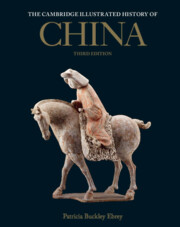
The Cambridge Illustrated History of China is an illuminating account of the full sweep of Chinese civilisation – from prehistoric times to the intellectual ferment of the Warring States Period, through the rise and fall of the imperial dynasties, to the modern communist state. Written by a leading scholar and lavishly illustrated, its narrative draws together everything from the influence of key intellectual figures, to political innovations, art and material culture, family and religious life, not to mention wars and modern conflicts. This third revised edition includes new archaeological discoveries and gives fuller treatment of environmental history and Chinese interaction with the wider world, placing China in global context. The Qing dynasty is now covered in two chapters, while the final chapter brings the story into the twenty-first century, covering the transformation of China into one of the world's leading economies and the challenges it faces. Lively and highly visual, this book will be appreciated by anyone interested in Chinese history.