To save content items to your account,
please confirm that you agree to abide by our usage policies.
If this is the first time you use this feature, you will be asked to authorise Cambridge Core to connect with your account.
Find out more about saving content to .
To save content items to your Kindle, first ensure no-reply@cambridge.org
is added to your Approved Personal Document E-mail List under your Personal Document Settings
on the Manage Your Content and Devices page of your Amazon account. Then enter the ‘name’ part
of your Kindle email address below.
Find out more about saving to your Kindle.
Note you can select to save to either the @free.kindle.com or @kindle.com variations.
‘@free.kindle.com’ emails are free but can only be saved to your device when it is connected to wi-fi.
‘@kindle.com’ emails can be delivered even when you are not connected to wi-fi, but note that service fees apply.
Group interpersonal therapy (IPT) was introduced to Senegal to treat depression in people living with HIV (PLWH), using a task-shifting approach. Following successful implementation at a tertiary-level hospital in Dakar, we evaluate IPT’s acceptability, feasibility and benefits in primary and secondary-level suburban health facilities. We assess the impact of IPT adaptations and organizational changes and identify sustainability requirements. PLWH with depression received group IPT following the World Health Organization protocol. Acceptability, feasibility and implementation aspects were assessed quantitatively and qualitatively following specific conceptual frameworks. Depressive symptoms severity (PHQ-9) and functioning (WHODAS) were measured pre-, post-treatment and at 3-month follow-up. General linear mixed models were used to describe changes in outcomes over time. Qualitative data were analyzed thematically. Of 84 participants (median age: 45, female>50%), 81 completed group IPT. Enrolment refusal and dropout rates were 7% and 4%. Ninety-seven percent attended at least seven sessions out of eight. Depressive symptoms and functioning significantly improved by therapy’s end (β = 12,2, CI 95% [11.6, 12.8] and β = 8.5, CI 95% [7.3, 9.7], respectively) with gains being sustained 3 months later (p = 0.94 and 0.99, respectively). Adaptations and organizational changes proved successful, but depression screening and diagnosis communication to patients remained challenging. Emerging needs included a tailored patient care pathway and confidentiality. Participants advocated for depression care integration into HIV services. Group IPT’s successful implementation in various ecological and organizational contexts in Senegal indicates high acceptability and feasibility. Sustainability may be enhanced by addressing specific needs at multiple levels (individual, organizational, systemic). A comprehensive reflection on strategies to sustain and scale up group IPT is the next logical step.
The creation of a healthy food environment is highly dependent on the policies that governments choose to implement. The objective of this study is to compare the level of implementation of current public policies aimed at creating healthy food environments in Burkina Faso with international good practice indicators.
Design:
This evaluation was carried out using the Food-EPI tool. The tool has two components (policy and infrastructure support), thirteen domains and fifty-six good practice indicators adapted to the Burkina Faso context.
Setting:
Burkina Faso.
Participants:
Expert evaluators divided into two groups: the group of independent experts from universities, NGO and civil society and the group of experts from various government sectors.
Results:
Among the fifty-six indicators, it was assessed the level of implementation as ‘high’ for six indicators, ‘medium’ for twenty-four indicators, ‘low’ for twenty-two indicators and ‘very low’ for four indicators. High implementation level indicators include strong and visible political support, targets on exclusive breastfeeding and complementary feeding, strong and visible political support for actions to combat all forms of malnutrition, monitoring of exclusive breastfeeding and complementary feeding indicators, monitoring of promotion and growth surveillance programmes and coordination mechanism (national, state and local government). The indicators on menu labelling, reducing taxes on healthy foods, increasing taxes on unhealthy foods and dietary guidelines are the indicators with a ‘very low’ level of implementation in Burkina Faso.
Conclusions:
The general results showed that there is a clear need for further improvements in policy and infrastructure support to promote healthy food environments.
Late planting due to erratic onset of the rainy season is becoming more frequent in the Sahelo-Sudanian climate where cotton is grown, causing seed cotton yield (SCY) loss and higher risk of drought at the end of the crop cycle. Therefore, cultivars should be adapted to late (from July 10) planting date (PD) in Senegal. The aim of this study was to analyse the interaction between genotypes and PD on SCY in Senegal under rainfed conditions. Field experiments were conducted in 2018 and 2019 using a split-plot design (two PDs, eight cultivars) at three experimental stations. Robust analysis of SCY was used to moderate the effect of potential outliers. The average SCY was 1404 kg/ha under early planting, and 714 kg/ha under late planting. The best SCY was obtained under early planting conditions, in environments with good rainfall. The loss due to late planting was significantly affected by cultivar choice. None of the cultivars performed best under both early and late PD. Under early PD, cultivar CS 50 gave the best SCY, while under late PD it was cultivar IRMA Q302. The best performing cultivar on average depended on the proportion of early plantings. A model was developed to identify the best overall cultivar based on the expected proportion of early planting, as a decision support tool for the cotton development company, if only one cultivar is released. The benefit of releasing a second cultivar for late-planted fields is considered.
To evaluate the extent of implementation of public policies aimed at creating healthy eating environments in Senegal compared to international best practice and identity priority actions to address the double burden of malnutrition.
Design:
The Healthy Food Environment Policy Index (Food-EPI) was used by a local expert panel to assess the level of implementation of forty-three good practice policy and infrastructure support indicators against international best practices using a Likert scale and identify priority actions to address the double burden of malnutrition in Senegal.
Setting:
Senegal, West Africa.
Participants:
A national group of independent experts from academia, civil society, non-governmental organisations and United Nations bodies (n =15) and a group of government experts from various ministries (n =16) participated in the study.
Results:
Implementation of most indicators aimed at creating healthy eating environments were rated as ‘low’ compared to best practice (31 on 43, or 72 %). The Gwet AC2 inter-rater reliability was good at 0·75 (95 % CI 0·70, 0·80). In a prioritisation workshop, experts identified forty-five actions, prioritising ten as relatively most feasible and important and relatively most effective to reduce the double burden of malnutrition in Senegal (e.g. develop and implement regional school menus based on local products (expand to fourteen regions) and measure the extent of the promotion of unhealthy foods to children).
Conclusions:
Significant efforts remain to be made by Senegal to improve food environments. This project allowed to establish an agenda of priority actions for the government to transform food environments in Senegal to tackle the double burden of malnutrition.
Hydatigera (Cestoda: Taeniidae) is a recently resurrected genus including species seldom investigated in sub-Saharan Africa. We surveyed wild small mammal populations in the areas of Richard Toll and Lake Guiers, Senegal, with the objective to evaluate their potential role as intermediate hosts of larval taeniid stages (i.e. metacestodes). Based on genetic sequences of a segment of the mitochondrial DNA gene cytochrome c oxidase subunit 1 (COI), we identified Hydatigera parva metacestodes in 19 out of 172 (11.0%) Hubert's multimammate mice (Mastomys huberti) and one out of six (16.7%) gerbils (Taterillus sp.) and Hydatigera taeniaeformis sensu stricto metacestodes in one out of 215 (0.5%) Nile rats (Arvicanthis niloticus). This study reports epidemiological and molecular information on H. parva and H. taeniaeformis in West African rodents, further supporting the phylogeographic hypothesis on the African origin of H. parva. Our findings may indicate significant trophic interactions contributing to the local transmission of Hydatigera spp. and other parasites with similar life-cycle mechanisms. We therefore propose that further field investigations of rodent population dynamics and rodent-borne infectious organisms are necessary to improve our understanding of host–parasite associations driving the transmission risks of rodent parasites in West Africa.
We examined the association between a history of smallpox vaccination and immune activation (IA) in a population of antiretroviral therapy-naïve people living with HIV (PLHIV). A cross-sectional study was conducted in Senegal from July 2015 to March 2017. Smallpox vaccination was ascertained by the presence of smallpox vaccine scar and IA by the plasma level of β-2-microglobulin (β2m). The association was analysed using logistic regression and linear regression models. The study population comprised 101 PLHIV born before 1980 with a median age of 47 years (interquartile range (IQR) = 42–55); 57·4% were women. Smallpox vaccine scar was present in 65·3% and the median β2m level was 2·59 mg/l (IQR = 2·06–3·86). After adjustment, the presence of smallpox vaccine scar was not associated with a β2m level ⩾2·59 mg/l (adjusted odds ratio 0·94; 95% confidence interval 0·32–2·77). This result was confirmed by the linear regression model. Our study does not find any association between the presence of smallpox vaccine scar and the β2m level and does not support any association between a previous smallpox vaccination and HIV disease progression. In this study, IA is not a significant determinant of the reported non-targeted effect of smallpox vaccination in PLHIV.
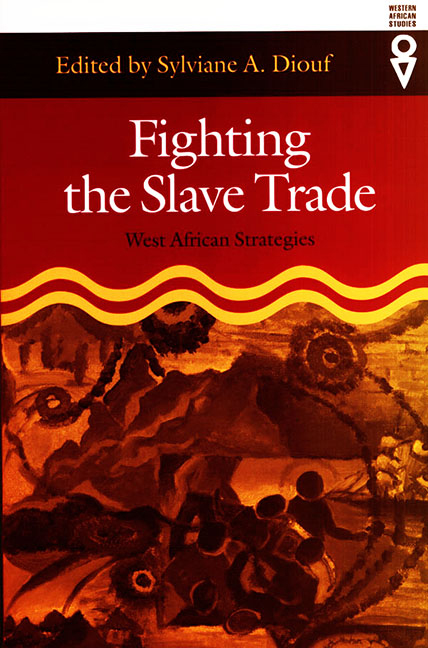
This is the first book to explore in a systematic manner the strategies used by Africans to protect and defend themselves and their communities from the onslaught of the Atlantic slave trade and how they assaulted it. It concludes with a reflective epilogue on the memory of slavery.
A great many plantain varieties are cropped in West and Central Africa, and there is a lack of information about their production potential and suitability for cropping system environments. To obtain benchmark data for the production potential of plantain varieties, experimental and modelling approaches were combined to determine intrinsic growth parameters and to increase understanding of factors affecting yield. Five real plantains commonly cropped in Cameroon and representative of plantain group diversity (Batard, Big Ebanga, Essong, French clair and Mbouroukou n°3) and four plantain-like hybrids (CRBP39, D248, D535 and FHIA21) were studied. A process-based growth model (the AAB model) was developed that accounts for specific characteristics of the plantain crop that includes parameters affecting growth, development and yield. Varietal-specific parameters were determined in a field experiment conducted under nearly non-limiting production conditions while general parameters were drawn from the literature. Parameters describing the conversion of intercepted radiation into dry matter were evaluated by model fitting. Photosynthetic efficiency was significantly higher for real plantains than for plantain-like hybrids. The model realistically simulated development, growth and bunch production for five varieties. These results are the first step in developing a useful tool for assessing the suitability of plantain varieties to different environments. The current study highlights the need for greater knowledge of plantain physiology in order to better model plantain growth and develop variety-specific production approaches.
The violent irruption of African youth into the public and domestic spheres seems to have resulted in the construction of their behavior as a threat, and to have provoked, within society as a whole, a panic that is simultaneously moral and civic. At issue are the bodies of young people and their behavior, which escape the constraints of social construction, their sexuality and pleasure, as well as the formulas of their action and presence as junior social actors. The new situation has consequences for several issues, the most important of which are the redefinition of the relationships between identity and citizenship in the whirlwind of globalization, the metamorphoses of the processes of socialization, the production of new forms of inequality accompanied by their own representations and imaginations, and the extraordinary mutation of the chronological and psychological constructions of the passage from youth to adulthood.
Exclusive breast-feeding until 6 months is advised by the WHO as the best practice to feed infants. Yet, some studies have suggested a gap between energy requirements and the energy provided by human milk for many infants at 6 months. In order to assess the adequacy of WHO recommendations in 6-month-old Senegalese lactating infants, a comprehensive study was designed to measure human milk intake by the dose-to-the mother 2H2O turnover method. Infants' energy intakes were calculated using daily breast milk intake and the energy content of milk was estimated on the basis of creamatocrit. Of the fifty-nine mother–infant pairs enrolled, fifteen infants were exclusively breast-fed (Ex) while forty-four were partially breast-fed (Part). Infants' breast milk intake was significantly higher in the Ex group (993 (sd 135) g/d, n 15) compared with the Part group (828 (sd 222) g/d, n 44, P= 0·009). Breast milk energy content as well as infants' growth was comparable in both groups. However, infants' energy intake from human milk was significantly higher (364 (sd 50) kJ/kg per d (2586 (sd 448) kJ/d)) in the Ex group than in the Part group (289 (sd 66) kJ/kg per d (2150 (sd 552) kJ/d), P< 0·01). Compared with WHO recommendations, the results demonstrate that energy intake from breast milk was low in partially breast-fed infants while exclusively breast-fed 6-month-old Senegalese infants received adequate energy from human milk alone, the most complete food for infants. Therefore, advocacy of exclusive breast-feeding until 6 months should be strengthened.
This is a summary of the presentations and discussion of Panel 2.9, Repair and Recovery of Health Systemsof the Conference, Health Aspects of the Tsunami Disaster in Asia, convened by the World Health Organization (WHO) in Phuket, Thailand, 04–06 May 2005. The topics discussed included issues related to the repair and recovery of health systems as pertain to the damage created by the Tsunami. It is presented in the following major sections: (1) needs assessment; (2) coordination; (3) filling gaps; (4) capacity building; (5) what was done well, and what should have been done better; (6) lessons learned; and (7) recommendations. Recommendations included: (1) how to make health systems better prepared for coping with disasters; and (2) how to support preparedness in local communities.
Introduction. Tamarind (Tamarindus indica L.) belongs tothe Fabaceae family; it is a multipurpose tree with slow growth. In order to help improveits growth and development, we assessed mycorrhizal diversity of tamarind parklands inSenegal. Materials and methods. Three sites of tamarind populations weresampled for each agro-ecological zone in Senegal: the Sahelian zone (i), Sahelo-Sudan zone(ii) and Sudan zone (iii). Soil and root samples were collected in each site and used forarbuscular mycorrhizal (AM) spore isolation and root colonization assessment. Weidentified the mycorrhizal fungi from spore collections and evaluated the rootmycorrhization rate, defined as percentage of roots colonized according to agro-ecologicalzones. Results and discussion. The results did not reveal a specific AMfungal strain associated with tamarind plants. Three arbuscular mycorrhizal fungi (AMF)were identified from spores on the genus level: Glomus,Scutellospora and Acaulospora. Tamarind sites withsandy soil texture (70–90%) and located in dry areas (Sahel and Sudano-Sahel zones) wereshown to be rich in mycorrhizal propagules. High densities of soil AM propagules evaluatedwith the Most Probable Number method (MPN) were found in Niokhoul (1100 propagules per 50g of soil), Sakal (790 propagules per 50 g of soil) and Mbassis (780 propagules per 50 gof soil). However, higher mycorrhizal colonization (11%) was observed in the Sahelagro-ecological zone compared with the Sudano-Sahelian and Sahelian zones (3%) of Senegal.Conclusion. Our study explored natural AMF diversity as a starting point todevelop inocula to be used in commercial nursery production of tamarinds.
This paper suggests, on the basis of the New Keynesian model, a measure of the degree of conservatism of the European Central Banker. At first, we notice that the appointment of the President of the European Central Bank was made after substantive disagreements about the degree of conservatism (institutional and personal) of the candidates. Secondly, we apply this measure to the change of presidency (from Duisenberg to Trichet) in order to explore the possibility of a step change in the conduct of the ECB's monetary policy. Finally, our results show that once appointed, the two Central Bankers adapted to the institutional framework in which they made decisions.