To save content items to your account,
please confirm that you agree to abide by our usage policies.
If this is the first time you use this feature, you will be asked to authorise Cambridge Core to connect with your account.
Find out more about saving content to .
To save content items to your Kindle, first ensure no-reply@cambridge.org
is added to your Approved Personal Document E-mail List under your Personal Document Settings
on the Manage Your Content and Devices page of your Amazon account. Then enter the ‘name’ part
of your Kindle email address below.
Find out more about saving to your Kindle.
Note you can select to save to either the @free.kindle.com or @kindle.com variations.
‘@free.kindle.com’ emails are free but can only be saved to your device when it is connected to wi-fi.
‘@kindle.com’ emails can be delivered even when you are not connected to wi-fi, but note that service fees apply.
This essay addresses the role of whiteness in slave narratives, a body of writing that featured the voices and experiences of African Americans, arguing that white American culture is fundamental to these narratives. This foundational presence is clear in the narratives’ representation of white slave owners, in the prefaces or other material added to slave narratives by white writers, and in the fact that some narratives were wholly written by white writers, representing the experience of formerly enslaved African Americans. But it is important to understand that white American culture made the slave narratives necessary and that these narratives work to persuade white Americans of moral imperatives for which African Americans needed no persuasion.
Primary production is fundamental to ecosystems, and in many extreme environments production is facilitated by microbial mats. Microbial mats are complex assemblages of photo- and heterotrophic microorganisms colonizing sediment and soil surfaces. These communities are the dominant producers of the McMurdo Dry Valleys, Antarctica, where they occupy lentic and lotic environments as well as intermittently wet soils. While the influence of microbial mats on stream nutrient dynamics and lake organic matter cycling is well documented, the influence of microbial mats on underlying soil is less well understood, particularly the effects of microbial mat nitrogen and carbon fixation. Taylor Valley soils occur across variable levels of inorganic phosphorus availability, with the Ross Sea drift containing four times that of the Taylor drifts, providing opportunities to examine how soil geochemistry influences microbial mats and the ecological functions they regulate. We found that inorganic phosphorus availability is positively correlated with microbial mat biomass, pigment concentration and nitrogen fixation potential. Additionally, our results demonstrate that dense microbial mats influence the ecological functioning of underlying soils by enriching organic carbon and total nitrogen stocks (two times higher). This work contributes to ongoing questions regarding the sources of energy fuelling soil food webs and the regional carbon balance in the McMurdo Dry Valleys.
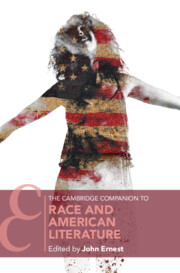
Race is central to American history. It is impossible to understand the United States without understanding how race has been defined and deployed at every stage of the nation's history. Offering a comprehensive and accessible introduction to the history of race, The Cambridge Companion to Race and American Literature shows how this history has been represented in literature, and how those representations have influenced American culture. Written by leading scholars in in African American, Latinx, Asian American, Native American, and white American studies, the essays in this volume address the centrality of race in American literature by foregrounding the conflicts across different traditions and different modes of interpretation. This volume explores the unsteady foundations of American literary history, examines the hardening of racial fault lines throughout the nineteenth century and into the twentieth, and then considers various aspects of the multiple literary and complexly interrelated traditions that emerged from this fractured cultural landscape.
Hospital-treated self-harm is common and costly, and is associated with repeated self-harm and suicide.
Aims
To investigate the effectiveness of a brief contact intervention delivered via short message service (SMS) text messages in reducing hospital-treated self-harm re-presentations in three hospitals in Sydney (2017–2019), Australia. Trial registration number: ACTRN12617000607370.
Method
A randomised controlled trial with parallel arms allocated 804 participants presenting with self-harm, stratified by previous self-harm, to a control condition of treatment as usual (TAU) (n = 431) or an intervention condition of nine automated SMS contacts (plus TAU) (n = 373), over 12 months following the index self-harm episode. The primary outcomes were (a) repeat self-harm event rate (number of self-harm events per person per year) at 6-, 12- and 24-month follow-up and (b) the time to first repeat at 24-month follow-up.
Results
The event rate for self-harm repetition was lower for the SMS compared with TAU group at 6 months (IRR = 0.79, 95% CI 0.61–1.01), 12 months (IRR = 0.78, 95% CI 0.64–0.95) and 24 months (IRR = 0.78, 95% CI 0.66–0.91). There was no difference between the SMS and TAU groups in the time to first repeat self-harm event over 24 months (HR = 0.96, 95% CI 0.72–1.26). There were four suicides in the TAU group and none in the SMS group.
Conclusions
The 22% reduction in repetition of hospital-treated self-harm was clinically meaningful. SMS text messages are an inexpensive, scalable and universal intervention that can be used in hospital-treated self-harm populations but further work is needed to establish efficacy and cost-effectiveness across settings.