To save content items to your account,
please confirm that you agree to abide by our usage policies.
If this is the first time you use this feature, you will be asked to authorise Cambridge Core to connect with your account.
Find out more about saving content to .
To save content items to your Kindle, first ensure no-reply@cambridge.org
is added to your Approved Personal Document E-mail List under your Personal Document Settings
on the Manage Your Content and Devices page of your Amazon account. Then enter the ‘name’ part
of your Kindle email address below.
Find out more about saving to your Kindle.
Note you can select to save to either the @free.kindle.com or @kindle.com variations.
‘@free.kindle.com’ emails are free but can only be saved to your device when it is connected to wi-fi.
‘@kindle.com’ emails can be delivered even when you are not connected to wi-fi, but note that service fees apply.
The decision of when to claim Social Security benefits is among the most consequential and irreversible financial choices older Americans face, yet interventions to help guide it have had limited effectiveness. Building upon past research demonstrating that people choose differently and make different predictions for others than they do for themselves, we ask whether making recommendations for another can shift one’s own claiming decision. In two high-powered experiments using national survey panels, we show that older American adults intend to claim retirement income benefits earlier (vs. later) after making guided recommendations for a person who died relatively young (vs. lived to an old age) after retiring. This effect persists when the effect of recalling such a person is disentangled from that of recommending. This research suggests that making guided recommendations for others can be a powerful intervention for one’s own choices in highly consequential domains where trade-offs are difficult to make.
This statement draws on over 1,000 person-years’ work by the authors on the conservation of non-human primates and their habitats. It harnesses knowledge of what works for primates in the context of broader issues of global ecological integrity and increasing risk to all primate species, including our own. It indicates how conserving primates can protect and advance the interests of Indigenous Peoples, local communities, developing countries and humankind as a whole. It offers ideas and text for use by those engaged in relevant issues who are unfamiliar with the subject, with the aim of making conservation action easier to understand, to communicate and to do. It highlights four key elements of effective strategy: avoiding damage to native forest ecosystems, restoring native forest ecosystems, building conservation partnerships, and managing and using knowledge. Additionally, it advocates an approach in which all four elements are integrated, as a way to balance human rights and nature rights, to postpone and ultimately to prevent Earth system breakdown, and to promote mutual aid between people and nature.
The nominal anaphoric element one has figured prominently in discussions of linguistic nativism because of an important argument advanced by C. L. Baker (1978). His argument has been frequently cited within the cognitive and linguistic sciences, and has provided the topic for a chain of experimental and computational psycholinguistics papers. Baker's crucial grammaticality facts, though much repeated in the literature, have not been critically investigated. A corpus investigation shows that his claims are not true: one does not take only phrasal antecedents, but can also take nouns on their own, including semantically relational nouns, and can take various of-PP dependents of its own. We give a semantic analysis of anaphoric one that allows it to exhibit this kind of freedom, and we exhibit frequency evidence that goes a long way toward explaining why linguists have been inclined to regard phrases like the one of physics or three ones as ungrammatical when in fact (as corpus evidence shows) they are merely dispreferred relative to available grammatical alternatives. The main implication for the acquisition literature is that one of the most celebrated arguments from poverty of the stimulus is shown to be without force.
In this paper, we present two corpus-based case studies which cast doubt on the postulation of a distinction between complements and modifiers in pre-head position in the English noun phrase. Based on examples such as medical student, the paper focuses on ordering patterns as an easily observable criterion, rather than more difficult or less reliable criteria such as anaphoric replacement or stress patterns. The conclusion is that the pre-head dependents treated as complements in, for example, the Cambridge Grammar of the English Language (Huddleston & Pullum et al. 2002), should rather be treated as type-dependents. This conclusion, at least as far as ordering patterns are concerned, is in line with the postulation of a “classifier” function in approaches to English noun phrases such as Feist (2009).
In the volatile year 1968, just weeks after the assassinations of Martin Luther King Jr. and Robert F. Kennedy, an editor in the Roanoke World-News noted a strange new pop cultural phenomenon. Christian folk and rock music had arrived. Jonathan Guest, an Anglican pastor from Liverpool, and Chuck Hess, a Roanoke, Virginia man, had begun to perform for teen groups and college students. “We are reaching young people in their idiom with their type of music,” Chuck exclaimed. Put simply, Chuck believed that “if Christianity is to be relevant, it must be relevant today, and we think we can make it so with new forms of music and lyrics.” (World-News, June 29, 1968) Others who joined the early God rock craze included the shambling amateur pop rock group the Crusaders, the psychedelic rockers Mind Garage, and the young rockabilly gospel shouter Isabel Baker. From these inauspicious beginnings, Christian pop music would develop into a billion-dollar industry by the 1990s.
Various global-scale proposals exist to reduce the loss of biological diversity. These include the Half-Earth and Whole-Earth visions that respectively seek to set aside half the planet for wildlife conservation or to diversify conservation practices fundamentally and change the economic systems that determine environmental harm. Here we assess these visions in the specific context of Bornean orangutans Pongo pygmaeus and their conservation. Using an expert-led process we explored three scenarios over a 10-year time frame: continuation of Current Conditions, a Half-Earth approach and a Whole-Earth approach. In addition, we examined a 100-year population recovery scenario assuming 0% offtake of Bornean orangutans. Current Conditions were predicted to result in a population c. 73% of its current size by 2032. Half-Earth was judged comparatively easy to achieve and predicted to result in an orangutan population of c. 87% of its current size by 2032. Whole-Earth was anticipated to lead to greater forest loss and ape killing, resulting in a prediction of c. 44% of the current orangutan population for 2032. Finally, under the recovery scenario, populations could be c. 148% of their current size by 2122. Although we acknowledge uncertainties in all of these predictions, we conclude that the Half-Earth and Whole-Earth visions operate along different timelines, with the implementation of Whole-Earth requiring too much time to benefit orangutans. None of the theorized proposals provided a complete solution, so drawing elements from each will be required. We provide recommendations for equitable outcomes.
In this article we investigate the role of semantic relations in grammatical alternations. The specific alternation we look at is that between the proper name modifier construction, e.g. the Obama government, and the determiner genitive, e.g. Obama's government. Through the use of an experimental study in which participants were asked to rate the naturalness of the two constructions in 20 attested natural language contexts and provide paraphrases of the semantic relations in question, we tested when the two constructions alternate and whether either construction expresses semantic relations that block alternation. Our initial finding is that none of the relations we studied is categorically associated with only one of the constructions, but that certain relations – notably possession and name – are far more preferentially associated with determiner genitives and proper name modifiers respectively. Despite these ‘default’ associations, participants nevertheless identified a range of possible interpretations for many of the examples, meaning that our study simultaneously supports the opposing theoretical views of default relations and semantic underspecification. Further, our study validates the inclusion of semantic relations in genitive alternation studies as a major factor despite the notorious difficulties in their operationalisation. Animacy distinctions, although more straightforward to codify, appear to be of lesser importance. Methodologically, our study shows the value of an experimental approach as a corrective to researcher intuitions about the identification of semantic relations in context.
The observation that personal pronouns typically sound highly unnatural as the object in of-PP dependents of English noun phrases dates back at least to Lyons (1986: 136). In a table comparing the frames [NP’s N], [(Det) N of NP], and [(Det) N of NP’s], he systematically excludes accusative pronouns from the NP position in the second of these. We will employ the terms used by The Cambridge Grammar of the English Language (Huddleston and Pullum et al. 2002) for these three constructions: s-genitive, of-PP, and oblique genitive respectively.
This book presents a new and comprehensive descriptive grammar of English, written by the principal authors in collaboration with an international research team of a dozen linguists in five countries. It represents a major advance over previous grammars by virtue of drawing systematically on the linguistic research carried out on English during the last forty years. It incorporates insights from the theoretical literature but presents them in a way that is accessible to readers without formal training in linguistics. It is based on a sounder and more consistent descriptive framework than previous large-scale grammars, and includes much more explanation of grammatical terms and concepts, together with justification for the ways in which the analysis differs from traditional grammar. The book contains twenty chapters and a guide to further reading. Its usefulness is enhanced by diagrams of sentence structure, cross-references between sections, a comprehensive index, and user-friendly design and typography throughout.
The Omani basement is located spatially distant from the dominantly juvenile Arabian–Nubian Shield (ANS) to its west, and its relationship to the amalgamation of those arc terranes has yet to be properly constrained. The Jebel Ja'alan (NE Oman) basement inlier provides an excellent opportunity to better understand the Neoproterozoic tectonic geography of Oman and its relationship to the ANS. To understand the origin of this basement inlier, we present new radiogenic isotopic data from igneous bodies in Jebel Ja'alan. U–Pb and 40Ar/39Ar geochronological data are used to constrain the timing of magmatism and metamorphism in the jebel. Positive εHf and εNd values indicate a juvenile origin for the igneous lithologies. Phase equilibria modelling is used to constrain the metamorphic conditions recorded by basement. Pressure–temperature (P–T) pseudosections show that basement schists followed a clockwise P–T path, reaching peak metamorphic conditions of c. 650–700°C at 4–7.5 kbar, corresponding to a thermal gradient of c. 90–160°C/kbar. From the calculated thermal gradient, in conjunction with collected trace-element data, we interpret that the Jebel Ja'alan basement formed in an arc environment. Geochronological data indicate that this juvenile arc formed during Tonian time and is older than basement further west in Oman. We argue that the difference in timing is related to westwards arc accretion and migration, which implies that the Omani basement represents its own tectonic domain separate to the ANS and may be the leading edge of the Neoproterozoic accretionary margin of India.
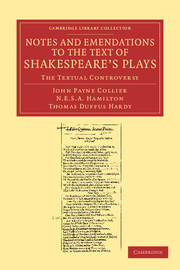
The editor and forger John Payne Collier (1789–1883) claimed to have discovered a Second Folio of Shakespeare which had been 'corrected' in a mid-seventeenth-century hand. He published this catalogue of the emendations, including his commentary on them, in 1852. Collier then presented the so-called 'Perkins Folio' to the Duke of Devonshire, whose successor allowed it to be loaned in 1859 to the British Museum, where a thorough examination exposed it as a forgery. A storm of controversy followed and three of the key documents in the debate, all published in 1860, are also reissued here: 'An Inquiry into the Genuineness of the Manuscript Corrections in Mr. J. Payne Collier's Annotated Shakspere Folio, 1632' by Nicholas Hamilton (d.1915), assistant keeper of manuscripts at the British Museum; Collier's attempt to refute Hamilton's findings; and 'A Review of the Present State of the Shakespearian Controversy' by Thomas Duffus Hardy (1804–78).
In the United States alone, ∼14,000 children are hospitalised annually with acute heart failure. The science and art of caring for these patients continues to evolve. The International Pediatric Heart Failure Summit of Johns Hopkins All Children’s Heart Institute was held on February 4 and 5, 2015. The 2015 International Pediatric Heart Failure Summit of Johns Hopkins All Children’s Heart Institute was funded through the Andrews/Daicoff Cardiovascular Program Endowment, a philanthropic collaboration between All Children’s Hospital and the Morsani College of Medicine at the University of South Florida (USF). Sponsored by All Children’s Hospital Andrews/Daicoff Cardiovascular Program, the International Pediatric Heart Failure Summit assembled leaders in clinical and scientific disciplines related to paediatric heart failure and created a multi-disciplinary “think-tank”. The purpose of this manuscript is to summarise the lessons from the 2015 International Pediatric Heart Failure Summit of Johns Hopkins All Children’s Heart Institute, to describe the “state of the art” of the treatment of paediatric cardiac failure, and to discuss future directions for research in the domain of paediatric cardiac failure.
The Permian–Triassic boundary, examined at two sections in the Southern Alps, occurs ~ 1.0 to 1.5 m above the base of the Tesero Oolite Member of the Werfen Formation in a depositionally continuous sequence of inner neritic carbonates. Lagenide foraminifers from the boundary interval comprise 27 species in 15 genera plus additional unidentified taxa, most of which became extinct during the end-Permian crisis. The only survivors were “Nodosaria” elabugae and unidentified species in Geinitzina and Nodosinelloides, with representatives of the latter two genera being short-term holdovers. The end-Permian lagenide extinction level occurs a few decimeters below the biostratigraphically defined erathem boundary, just above the contact between the Bulla Member of the Bellerophon Formation and the overlying Tesero Oolite Member. Confidence intervals (>96%) for the lagenide extinction at the two sections are 0.03 and 0.04 m thick. Plots of species' stratigraphic abundance versus their last observed occurrences below the estimated extinction intervals at both localities are consistent with abrupt extinction or gradual extinction lasting no more than the time required for 1 m of rock to accumulate. Blooms of the foraminiferal disaster taxa Rectocornuspira kalhori and Earlandia sp. occur in the extinction interval and continue well into the Dienerian part of the Mazzin Member of the Werfen Formation, consistent with a protracted survival phase. A detailed carbon isotope record has been obtained from rocks bracketing the extinction at the well-known Tesero section. The combined microfossil and carbon isotope data indicate that the extinction occurred during an initial negative shift in δ13C. Therefore, the negative excursion is likely to be related to the cause of extinction and unlikely to be merely a consequence of extinction.
This article discusses the niche role that the oblique genitive of the type the friend of John’s occupies in the context of genitive variation. The article shows that the oblique genitive should be considered an independent construction which competes marginally in two syntactic contexts with the s-genitive (as in John's friend) and the of-genitive (as in the friend of John). The first context is one in which all three constructions function as the predicative complement of the clause (e.g. He is a friend of John's / John's friend / a friend of John). Note that in this context the definiteness effect of the s-genitive is downplayed, so that competition is possible with indefiniteness of the other two constructions. The second context is one where the oblique genitive and the of-genitive are introduced by the determiner the. Contrary to the claim that oblique genitive constructions introduced by the definite article must receive restrictive modification of the head (see e.g. Barker 1998; Lyons 1986), the quantitative data presented in this article reveal that oblique genitives introduced by the determiner the are not confined to pre- or postmodification of the head but can occur, albeit rarely, without any modification as in the example the executor of Sir Ralph’s.
The article further compares the oblique genitive, s-genitive and of-genitive with respect to the following five features: noun-headed vs pronoun dependent; animacy of the dependent; length of the noun-headed dependent; determiner of the head; and the semantic relations that can hold between head (e.g. friend) and dependent (e.g. John). The most intriguing theoretical conclusion is that the semantic relations available to head and dependent in the oblique genitive are a subset of those found in the s-genitive, which, again constitute a subset of those that exist in the of-genitive. This means that variation between all three constructions is not only restricted to the two syntactic contexts outlined above but also to a shared set of semantic relations.
This special issue concerns English genitive variation: the choice between the s-genitive and the of-genitive. It has grown out of the workshop ‘Genitive variation in English’, which was held at the conference of the International Society for the Linguistics of English at the University of Boston in June 2011. While previous research on genitive variation has already unearthed a wealth of factors predicting the variation, the aim of this volume is to add new dimensions to existing parameters.
Recent studies have implicated Ca supplements in vascular risk elevation, and therefore these supplements may also be associated with the occurrence of brain lesions (or hyperintensities) in older adults. These lesions represent damage to brain tissue that is caused by ischaemia. In the present cross-sectional clinical observational study, the association between Ca-containing dietary supplement use and lesion volumes was investigated in a sample of 227 older adults (60 years and above). Food and supplemental Ca intakes were assessed with the Block 1998 FFQ; participants with supplemental Ca intake above zero were categorised as supplement users. Lesion volumes were determined from cranial MRI (1·5 tesla) scans using a semi-automated technique; volumes were log-transformed because they were non-normal. ANCOVA models revealed that supplement users had greater lesion volumes than non-users, even after controlling for food Ca intake, age, sex, race, years of education, energy intake, depression and hypertension (Ca supplement use: β = 0·34, se 0·10, F1,217= 10·98, P= 0·0011). The influence of supplemental Ca use on lesion volume was of a magnitude similar to that of the influence of hypertension, a well-established risk factor for lesions. Among the supplement users, the amount of supplemental Ca was not associated with lesion volume (β = − 0·000035, se 0·00 015, F1,139= 0·06, P= 0·81). The present study demonstrates that the use of Ca-containing dietary supplements, even low-dose supplements, by older adults may be associated with greater lesion volumes. Evaluation of randomised controlled trials is warranted to determine whether this relationship is a causal one.
A vast array of surgical interventions may be performed in the treatment of ocular and periorbital disease. Because of the high technical difficulty, the subspecialist often performs a significant portion of the ophthalmic surgeries. Most procedures in ophthalmology involve microsurgery and are usually limited to the eye and orbit. Thus, typically there is minimal risk to other organs. Ophthalmic surgery offers a high probability of success, with a major positive impact on quality of life. Nevertheless, many patients with eye pathology are elderly, and some have significant systemic illness. Therefore, the risk of elective intervention must be balanced against the expected benefits, and appropriate counseling should be performed prior to surgery. Optimizing the management of medical problems preoperatively can make the surgery safer and minimize patient discomfort.
Anesthesia
The large majority of ophthalmic interventions can be performed under local anesthesia with intravenous sedation. In some cases, even topical anesthetics are sufficient. But there are ophthalmic surgeries that require general anesthesia, such as those that involve significant extraocular manipulation, for which the local anesthetic may not be as effective, or those that may be prolonged, as is often the case in many vitreoretinal and orbital procedures. Some periorbital or facial cosmetic interventions often necessitate general anesthesia as well. General anesthesia is also indicated in younger patients and those who may not be cooperative enough to remain motionless during surgery. In addition, general anesthetics are required in trauma cases with significant ocular laceration, where administration of local anesthetics may raise intraorbital pressure, necessitating subsequent extrusion of intraocular contents. Several choices exist in the route of administration of local ophthalmic anesthesia for intraocular surgery. The most widely used approach is injection of 3–7 mL of a mixture of lidocaine 2% and marcaine 0.75% through a retrobulbar approach using a blunted needle (Atkinson needle). This is often performed with a regional seventh nerve block to paralyze eyelid closure. The risks of local ophthalmic anesthesia are remote, but they may be significant. They include local damage through retrobulbar hemorrhage, extraocular muscle damage, and penetration of the globe or optic nerve. Systemic exposure to the injected medication through intravascular or subarachnoid injection of the anesthetic has been known to cause hypertension, seizures, apnea, or even death.
The Adaptive Decision Maker argues that people use a variety of strategies to make judgments and choices. The authors introduce a model that shows how decision makers balance effort and accuracy considerations and predicts which strategy a person will use in a given situation. A series of experiments testing the model are presented, and the authors analyse how the model can lead to improved decisions and opportunities for further research.