To save content items to your account,
please confirm that you agree to abide by our usage policies.
If this is the first time you use this feature, you will be asked to authorise Cambridge Core to connect with your account.
Find out more about saving content to .
To save content items to your Kindle, first ensure no-reply@cambridge.org
is added to your Approved Personal Document E-mail List under your Personal Document Settings
on the Manage Your Content and Devices page of your Amazon account. Then enter the ‘name’ part
of your Kindle email address below.
Find out more about saving to your Kindle.
Note you can select to save to either the @free.kindle.com or @kindle.com variations.
‘@free.kindle.com’ emails are free but can only be saved to your device when it is connected to wi-fi.
‘@kindle.com’ emails can be delivered even when you are not connected to wi-fi, but note that service fees apply.
“Food noise” is an emerging term, originated from patient’s anecdotes, that inspired a wider conversation in the media and amongst clinicians. Since it is not a formal diagnosis, its definition varies throughout the available literature, one of them being “persistent thoughts about food that are perceived by the individual as being unwanted and/or dysphoric and may cause harm to the individual, including social, mental or physical problems”. It has become more noticeable through its sudden absence, reportedly following treatment with glucagon-like peptide-1 receptor agonists (GLP1-RAs). Understanding its neurobiological and psychopathological underpinnings may provide valuable insights for psychiatry and metabolic medicine.
Objectives
This review aimed to synthesize current evidence on food noise, focusing on its conceptual definition, possible physiological and psychopathological mechanisms, and implications for clinical practice in psychiatry.
Methods
Original scientific articles and other relevant scientific publications indexed in the databases - PubMed, Google Scholar, ScienceDirect, and APA PsycNet – were analyzed. Preference was given to studies published in the last 10 years, written in English. Articles were examined for conceptual frameworks, neurobiological findings, and clinical implications related to food noise.
Results
Food noise has been conceptualized as heightened reactivity to food cues, reflecting persistent activation of reward-related brain circuits (insula, amygdala, parietal cortex, hypothalamus). This state of reactivity can lead to food-related intrusive thoughts and negatively impact daily life, mirroring the preoccupation and disordered thinking observed in behavioral addictions and substance use disorders.
Functional MRI studies demonstrate that GLP-1 receptor agonists, such as liraglutide, modulate brain responses to highly palatable food cues, supporting a physiological basis for the reduction in food noise reported by patients. Preclinical and translational evidence suggests GLP-1 signaling influences dopaminergic and reward pathways, potentially attenuating compulsive behaviors beyond eating. Psychopathologically, food noise aligns with intrusive thought processes observed in eating disorders and obsessive-compulsive spectrum disorders.
Conclusions
Food noise is a psychological construct bridging psychiatry, neuroscience, and metabolic medicine. Although still colloquial, it may serve as a useful framework to understand intrusive food-related cognitions and their modulation by neurobiological pathways, particularly GLP-1 signaling. The role of food noise in weight management and mental health, as well as its social and cultural implications requires further research in order to validate operational definitions, develop standardized measures, and explore implications for diagnosis and treatment within psychiatric populations.
The role of amygdala in processing emotional expressions and emotional memory is well-established. Several neuroimaging studies have demonstrated that the amygdala is activated when individuals view emotional stimuli, such as movies. Furthermore, these studies have found a correlation between amygdala activity and the improvement in memory for emotional stimuli days later.
Objectives
A case of affective anesthesia is presented, as a post-surgical complication, to our knowledge not previously reported in the literature, due to amygdala resection.
Methods
We will describe a clinical case of a female patient, with no history of previous psychiatric follow-up, who presented to the psychiatrist after developing a condition of severe and sustained affective anesthesia directed towards her husband and three children, after undergoing a left anterior temporal lobectomy and amygdalohippocampectomy for the treatment of temporal lobe epilepsy (TLE) secondary to mesial sclerosis.
Results
TLE is the most common form of drug-resistant epilepsy. Its exact cause is not yet fully understood, but the hippocampus, especially concerning hippocampal sclerosis, is implicated in most proposed mechanisms. Surgical treatment typically involves the resection of mesial temporal structures, which may include the hippocampus, parahippocampal gyrus, and basolateral amygdala. Despite the potential benefits of this intervention, it is not without risks. Complications can occur in up to 17% of patients, with the most common being bacterial meningitis and some transient neurological deficits. Some described psychopathological effects include depressive episodes, psychosis and memory deficits. At no point is there a description of affective anesthesia as a post-surgical complication, despite the theoretical correlation of the intervened structures with emotional memory.
Conclusions
Mesial temporal lobe epilepsy has limited articles in the literature that specifically address its surgical outcomes and complications. Clinical studies in patients with different types of brain lesions at the temporal lobe level have confirmed that damage to the amygdala underlies impairments in memory for emotional material compared to those with an intact amygdala. It is important to emphasize the difficulty of deciding to act surgically in the face of a progressive degenerative disease, such as TLE, knowing it’s not without risks and these ones are still not fully explored. Therefore, ongoing research is necessary to improve outcomes and minimize complications in this area. The case reported proved to be rare and shocking, considering a patient who previously had stable and satisfactory affective relationships in her life.
Neurocysticercosis (NCC) is an infection of the central nervous system (CNS) caused by the larval stage of Taenia solium. It is the most common parasitic disease of the CNS (Del Brutto OH. Scientific World Journal 2012; 159821). Although more prevalent in developing countries, the progressive increase in migration and international travel has raised its prevalence in developed countries. NCC predominantly presents with neurological symptoms but may also be associated with psychiatric manifestations, including psychosis.
Objectives
To characterise the main features of a psychotic episode secondary to NCC, including its most frequent clinical manifestations and the most appropriate treatment approaches.
Methods
Relevant and recent scientific articles were selected from PubMed®. The theoretical evidence derived from this review was contextualised with a clinical case of an 86-year-old woman with no previous psychiatric history, who developed a psychotic episode secondary to NCC.
Results
Psychosis is a rare manifestation of NCC, occurring in up to 5% of cases (Mahajan et al. J Assoc Physicians India 2004; 52 663-5). Psychiatric symptoms in NCC are associated with increased cerebrospinal fluid pressure and inflammatory lesions of the brain parenchyma caused by cystic formations (Anjana et al. Arch Ment Health 2020; 21 55-58). In this context, psychotic episodes present with delusional ideation, disorganised speech, psychomotor agitation with aggressive behaviour, and visual hallucinations (El-Kady et al. Neuropsychiatr Dis Treat 2021; 17 1599-1610). Although not exclusive to psychosis, the most striking neuropsychiatric manifestations of NCC have been reported when cysts lodge in the prefrontal and occipital lobes (Goyal et al. Neurol India 2023; 71 228-232). Treatment should combine the use of antipsychotics and, in acute NCC, antiparasitic drugs and corticosteroids.
Conclusions
As described in the literature, the patient presented with a psychotic episode characterised by auditory and olfactory hallucinations, paranoid and persecutory delusional ideation, disorganised speech, and psychomotor agitation. Brain MRI revealed cystic lesions in the bilateral frontal lobes and in the right caudate nucleus. Treatment with the antipsychotic paliperidone (6 mg/day) led to complete remission of hallucinatory activity and partial remission of delusional ideation, now encapsulated.
Anxiety disorders affect a substantial portion of the global population and represent one of the leading causes of disability worldwide, being strongly associated with reduced quality of life and significant psychosocial and economic burden. Cannabidiol (CBD), a non-psychoactive phytocannabinoid derived from Cannabis, has emerged as a promising compound with potential anxiolytic properties. Preclinical and clinical studies suggest that CBD may modulate anxiety-related responses through interaction with the endocannabinoid and serotonergic systems, supporting its therapeutic potential in anxiety management.
Objectives
This study aimed to evaluate the efficacy and safety of short-term oral administration of a CBD-rich cannabis extract in adults with anxiety symptoms, to explore general patterns of dose tolerance and to monitor common treatment-related adverse effects.
Methods
A prospective, single-arm clinical trial was conducted at the Federal University of Paraíba, Brazil, with approval from the Research Ethics Committee of the Center for Medical Sciences. The participants underwent an individual medical consultation before the intervention and after 8 weeks of treatment, in which the Beck Anxiety Inventory (BAI) was administered to assess anxiety symptoms index. Participants received escalating oral doses of a CBD-rich cannabis extract, starting at 50 mg/day and increasing by 50 mg every two weeks, up to a maximum of 200 mg/day, when well tolerated. Otherwise, the highest well-tolerated dose was maintained until the end of the intervention, and outcomes were assessed regardless of this adjustment. Statistical analyses used paired t-tests or Wilcoxon signed-rank tests, with significance set at p < 0.05
Results
Among 65 enrolled participants (mean age = 35 ± 11.8 years; 72.3% female), 14 discontinued the treatment (6 due to intolerance, 8 due loss follow-up). Mean BAI scores decreased from 35.7 ± 8.8 to 12.2 ± 10.6, with severe anxiety falling from 74.5% to 21.6%. Intention-to-treat analysis confirmed significance (mean difference: 24.0; CI 95%: 20.4 - 27.8; p < 0.001).Participants using concomitant psychotropic drugs showed greater improvement (mean difference = 27 vs. 21). The most tolerated dose that complete the protocol was 200mg (n=26) followed by 150mg (n=10), 50mg (n=8) and 100mg (n=7). Common adverse effects included nausea (7), somnolence (6), diarrhea (4),mild gastrointestinal discomfort (3) and dizzines (2).
Conclusions
Short-term administration of cannabidiol markedly reduced anxiety symptoms, even among participants who did not reach the maximum 200 mg/day dose, highlighting its therapeutic potential. Despite some loss to follow-up and dose-limiting tolerability in a few cases, the overall improvement supports CBD as a promising intervention for anxiety, warranting larger controlled trials to confirm and refine these findings.
The study provides a radiocarbon sequence for the Iron Age occupation in the elevated areas of the Phoenician settlement of Lisbon, located in the Tagus estuary (Portugal). The dataset is based in ten animal and human samples recovered during archaeological excavations at Largo de Santa Cruz do Castelo. These samples are associated with distinct phases of the Iron Age, dated by the ceramic findings between the 7th and 5th century BCE, as well as a latter sample from the Roman Republican Period (2nd half of the 2nd century BCE). Despite the challenges posed by the 1st millennium BCE radiocarbon calibration, this dataset proves valuable for establishing a more detailed chronological framework. It represents a significant contribution to refining the timeline of Lisbon’s Iron Age settlement and provides a stronger basis for interpreting local developments within the broader regional context.
Borderline personality disorder (BPD) often results in recurrent acute hospitalisations, significantly burdening healthcare systems. Specialised intervention programs aim to stabilise patients and reduce hospital admissions. This study investigates the impact of a structured BPD Intervention Program at the Local Health Unit of São João on reducing the need for acute hospitalisations.
Objectives
The objective of this study is to assess the effect of integration into the BPD Intervention Program on the frequency of acute hospitalizations. Furthermore, we aim to investigate the relationship between clinical and sociodemographic factors, as well as the need for inpatient care.
Methods
This is a retrospective longitudinal study with quantitative statistical analysis of data from 293 patients referred for suspected BPD at the São João Local Health Unit. The analysis included 163 patients who had their BPD diagnosis confirmed. We collected data from hospital records, focusing on the number of hospitalisations before and after program admission. We also analysed variables such as the program’s follow-up duration.
Results
The mean age at the time of the first evaluation was 24.6 years, with symptoms typically starting at a mean age of 14.2 years. The majority of participants (94%) were female. The program’s integration led to a significant reduction in hospital admissions. Prior to the program, patients had an average of 1.01 hospitalisations per patient (median = 0). After integration, the average decreased to 0.66 hospitalisations per patient (median = 0). We are conducting further analyses to explore associations between additional factors and hospitalisation outcomes.
Conclusions
Integration into the BPD Intervention Program is associated with a decrease in acute hospitalizations. This clearly supports the idea that specific interventions can help stabilise BPD patients. The findings also highlight how personalised care can reduce strain on healthcare costs. Future research should evaluate the long-term benefits of the program, including its impact on the duration of hospital stays and the lasting effects of reduced hospitalisation rates after program completion.
War and conflict have significant long-term effects on mental health, affecting both civilians and military personnel. Exposure to armed conflict greatly increases the risk of psychiatric disorders such as PTSD, depression, and anxiety. These effects are not limited to the immediate aftermath but can persist for years, even across generations. Vulnerable populations, including children, women, and refugees, are particularly at risk, facing compounded mental health challenges due to prolonged exposure to trauma and limited access to support.
Objectives
This poster aims to:
1. Explore the psychiatric consequences of war and conflict.
2. Investigate the development of PTSD, depression, and anxiety in conflict-affected populations.
3. Assess the role of transgenerational trauma transmission and its epigenetic effects.
4. Highlight the role of resilience and psychosocial support in mitigating these effects.
Methods
Data were drawn from various studies examining populations affected by conflict across different regions. Key metrics included the prevalence of PTSD, depression, and anxiety, and the impact of traumatic experiences. The role of social support and resilience factors in mitigating psychiatric outcomes was also analyzed.
Results
The findings consistently demonstrate high rates of PTSD and other psychiatric disorders in individuals exposed to conflict. Mental health impacts are often prolonged, with many individuals showing persistent symptoms years after the initial trauma. Additionally, research on epigenetic changes suggests that trauma can be passed down to future generations, potentially affecting their mental health. However, protective factors such as strong social support and community resilience were found to buffer the negative effects of trauma in some cases.
Conclusions
War and conflict have profound and lasting psychiatric consequences. The prevalence of mental health disorders is significant among affected populations, and these effects can be transmitted across generations. Interventions should focus on providing timely mental health care, building resilience, and addressing the broader societal impacts of trauma. Early identification and support are critical to reducing the long-term mental health burden in conflict-affected areas.
Obsessive-compulsive disorder (OCD) has an estimated prevalence of 1-2% and causes a significative reduction in functionality and quality of life with a high socioeconomic impact.
First and second line treatment includes serotonin reuptake inhibitors, clomipramine, antipsychotics augmentation strategy and cognitive behavioural therapy. It is ineffective in 20-60% of patients whose approach may include transcranial magnetic stimulation (TMS).
Objectives
The aim of this study is to assess the effect of treatment with TMS on obsessive-compulsive, anxious, and depressive symptoms in patients with OCD.
Methods
A prospective observational study was conducted including all patients diagnosed with OCD who underwent TMS in our department since March 2023.
Our protocol targets the dorsolateral prefrontal cortex and includes a total of 25 sessions using the Food and Drug Administration approved parameters (20 Hz, 100% of the leg resting motor threshold, 50 trains of 2s duration, inter-train interval 20s, 2000 pulses per session). Before each session, symptom provocation is performed. TMS was performed using the Cool D-B80 coil and a MagPro stimulator.
Symptoms before and after treatment were assessed using the Yale Brown Obsessive-Compulsive Scale (Y-BOCS), the Hamilton Anxiety Rating Scale (HAM-A) and the Hamilton Depression Rating Scale (HAM-D).
Results
As of 01/09/2024, 21 individuals with OCD completed TMS treatment, 57% male, with a median age of 37 years (interquartile range (IQR) 17). The median duration of illness was 25 years (IQR 15), with 24% of patients having very severe OCD, 52% severe, and 19% moderate—all refractory to psychotherapeutic and pharmacological treatment.
There was a statistically significant reduction in Y-BOCS scores (pre-TMS median score 29 (IQR 6), post-TMS 21 (IQR 13), p=0.003), with 32% of patients achieving a complete response (Y-BOCS reduction ≥35%) and 5% a partial response (Y-BOCS reduction ≥25%). No correlation was found between the change in Y-BOCS scores and other variables such as age, duration of illness, and pre-TMS scores on Y-BOCS, HAM-A, and HAM-D.
Additionally, a statistically significant reduction was observed in HAM-A scores (pre-TMS median 20 (IQR 18), post-TMS 16 (IQR 11), p=0.026) and HAM-D scores (pre-TMS median 19 (IQR 17), post-TMS 15 (IQR 14), p=0.029).
No severe adverse effects were reported.
Conclusions
This study shows significant reductions in Y-BOCS, HAM-A, and HAM-D scores after TMS treatment, with many patients achieving complete or partial response. These findings align with previous research, suggesting TMS is an effective option for treatment-refractory OCD. The absence of severe adverse effects supports its safety.
In conclusion, this study adds to real-world evidence by demonstrating the efficacy and safety of TMS in a clinical setting. Continued data collection is crucial to identify predictors of response.
Inflammation and oxidative stress contribute to the progression of chronic diseases, and the volume of research in this area is rapidly expanding. Various dietary indices have been developed to determine the overall inflammatory or oxidative stress potential of a diet; however, few have been validated in cardiometabolic disease populations. This review aimed to explore the association between dietary indices and biomarkers of inflammation and oxidative stress in adults with cardiometabolic conditions. Four databases were systematically searched for literature in any language (Embase, CINAHL, CENTRAL and MEDLINE) with 12,286 deduplicated records identified. Seventeen studies of adults with metabolic syndrome, cardiovascular disease, type 2 diabetes, non-alcoholic fatty liver disease or chronic kidney disease were included. Fourteen studies were observational studies, one study was a clinical trial, and one was a randomised controlled trial. Four dietary indices were reported on with most studies (n 11) reporting on the dietary inflammatory index. The most reported biomarker was C-reactive protein. The findings were narratively synthesised. Results were inconclusive due to the heterogeneity of dietary indices and their use, disease states and biomarkers reported. Only one study reporting on the dietary inflammatory index assessed all 45 parameters. Observational studies, particularly retrospective designs (n 7), are subject to recall and selection biases, potentially presenting overestimated results. Further research is required to determine the relationship between dietary indices and biomarkers of inflammation and oxidative stress in cardiometabolic disease populations. Future research should be prospective, utilise rigorous research methods, assess the full range of index parameters, and examine biomarkers the tool was developed for.
Addressing mental and physical health problems and promoting wellbeing in educational settings is a global priority. Teachers present a high risk of stress and burnout, which negatively impacts their professional performance as well as their mental and physical health. Compassion-based interventions have been found effective in promoting psychosocial and physiological wellbeing.
Objectives
The current paper presents preliminary findings of the impact of a 6-module Compassionate Mind Training intervention for Teachers (CMT-T) on immunological markers and the Conserved Transcriptional Response to Adversity (CTRA; a gene expression signature that involves a group of 53 genes: pro-inflammatory genes, type I interferon response and genes related to antibody synthesis).
Methods
A pilot non-controlled study was conducted in a sample of public-school teachers in Portugal (n=36). Participants were assessed at 4 time-points: 1) Extended Baseline Control_M0, in order to establish a within-subjects psychological and biophysiological baseline (8 weeks before the start of the CMT-T); 2) Pre-intervention_M1 (8-weeks after M0); 3) Post-intervention_M2 (8-weeks after M1); and 4) Follow-up_M3 (3 months after the CMT-T end). In all assessment moments, participants completed a set of psychological self-report measures and were assessed in immunological and epigenetic biological markers through the collection of blood. After M1, teachers completed the 8-week group CMT-T intervention and given access to its resources and materials. They were instructed to practice daily and incorporate the teachings in their personal and professional lives. All assessments and the CMT-T intervention took place at the schools.
Results
Preliminary data on the impact of CMT-T on Immune Response Profiling revealed that teachers’ Natural Killer (i.e., NK) cells were decreased after the CMT-T intervention. In regard to the CTRA gene expression, results showed that type one interferon response genes (e.g., IFI16, IFI27L2, IFITM2, IFITM3, IFITM4P) were decreased after the intervention. In addition, we observed that the gene c-Jun, a pro-inflammatory gene, had a decreased expression after the CMT-T intervention.
Conclusions
These preliminary findings seem to corroborate previous studies involving the type one interferon response, the pro-inflammatory genes and antibody synthesis genes in a signature involving 53 genes previously described as the CTRA gene signature. Furthermore, our results suggest that cultivating compassion using a compassion focused intervention may have a positive impact on markers of the immune system response, associated with how our bodies respond to stress, infection and cancer, as well as, on reducing the expression of genes related to our bodies’ response to stress and inflammation.
Autobiographical memory is known to be disturbed in schizophrenia. In addition, a leading theory of auditory hallucinations (AVH) is that they are intrusive – typically negative – autobiographical memories that are misinterpreted as perceptions.
Objectives
The aim of this study was to examine the brain functional correlates of recall of negatively emotionally valanced autobiographical memories in patients with schizophrenia, with a longer term aim of comparing patients with and without AVH.
Methods
11 patients meeting DSM-5 criteria for schizophrenia or schizoaffective disorder and 10 age, sex and estimated premorbid IQ-matched healthy controls have so far taken part.
Participants underwent functional MRI in a 3T scanner while performing a task requiring them to recall autobiographical memories in response to individually tailored pairs of cue words. The cue words were based on autobiographical memories previously elicited in an interview with each patient and were designed to evoke the same memory. The cue words were presented in 10 20-second blocks interspersed with blocks where the subjects viewed cue words that did not evoke autobiographical memories. Brain activations were examined in three contrasts of interest: memory evoking words vs baseline, neutral words vs baseline and memory evoking vs neutral words.
Pre-processing and analysis were carried out with the FEAT module included in the FSL software. Statistical analysis was performed by means of a General Linear Model (GLM) approach.
Results
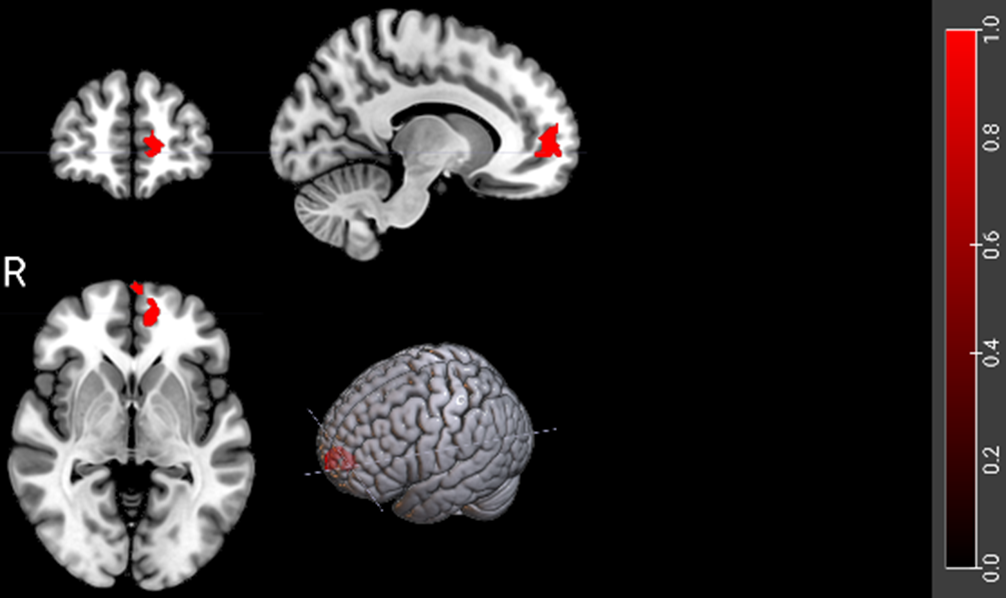
In the memory evoking vs baseline contrast the patients showed hypoactivation in the medial frontal cortex compared to the healthy controls (Figure 1). There were no differences in activation between the patients and the controls comparing the memory evoking and neutral cues.
Image:
Conclusions
The finding of hypoactivation in the medial frontal cortex compared to low level baseline in patients with schizophrenia suggests dysfunction in the default mode network, which is known to activate during recall of autobiographical memories.
These preliminary results suggest that recall of negative autobiographical memories in patients with schizophrenia is associated with reduced activity in the default mode network. A planned larger sample of patients and controls will be used to examine activations in patients with and without AVH.
Nowadays, In the exercise of psychiatric clinical activity, the prescription of atypical antipsychotics is a widespread practice.
However, despite the approval in the treatment of psychoses and bipolar affective disorder, where its effectiveness is clearly demonstrated, these drugs are off-label prescribed in most of the clinical situations.
Objectives
This work aims to clarify which atypical antipsychotics are most frequent prescribed and the clinical conditions where their off-label prescription is more common.
Methods
Bibliographic research in the Pubmed® database using the terms “atypical antipsychotics and off-label use”
Results
According to the scientific literature consulted, the off-label prescription of atypical antipsychotics may represent about 70% of the total prescription of these psychotropic drugs.
Risperidone, olanzapine, quetiapine and aripiprazole are the most off-label prescribed among the atypical antipsychotics.
The psychiatric conditions where atypical antipsychotics are most often off-label prescribed are addictive disorders, anxiety disorders, post-traumatic stress disorder, personality disorders, eating disorders, insomnia and dementia, where therapeutic benefits are demonstrated when carefully selected.
Conclusions
The off-label prescription can be interpreted from two points of view. On the one hand, it can guide innovation in clinical practice and improve symptoms in patients who do not respond to standard treatments. On the other hand, it may be associated with negative consequences due to the lack of data on safety and efficacy in these situations.
Despite widespread prescribing of atypical antipsychotics, there is no evidence-based recommendation beyond psychoses and bipolar affective disorder.
Thus, when prescribed, we must proceed with careful monitoring and consider the risks and benefits in relation to off-label prescription.
Substance use disorders(SUDs) are a major health concern and current treatment interventions have proven only limited success. Despite increasing effectiveness, still about 50–60% relapse within 6–12 months after treatment [Cornelius et al., Addict Behav. 2003;28 381-386]. SUDs are defined as chronic disorders of brain reward system, motivation, and memory processes that have gone awry. Medication reducing craving and substance use is mainly available for alcohol dependence and to a lesser extent for other substances.
Hallucinogens may represent a group of agents with potential anti-craving properties subsequently reducing substance use in SUD patients. For instance, lysergic acid diethylamide(LSD) and psilocybin have previously been shown to effectively alleviate symptoms of alcohol and nicotine dependence.
Objectives
New treatments preferably focusing on reducing craving and subsequent substance use are therefore urgently needed. The hallucinogen psilocybin may provide a new treatment option for SUD patients, given the beneficial results observed in recent studies
Methods
Systematic revision of literature.
Results
In the 1950s, a group of drugs with potential to alter consciousness were discovered (hallucinogens). Several studies suggested their anti-SUD potential, improving self-acceptance and interpersonal relationships, reducing craving and alcohol use. As a result of its recreational popularity during the 1960s, they were banned in 1967, greatly hampering scientific research in this field. Recently, psilocybin, an hallucinogenic substance in psilocybin-containing mushrooms has gained popularity in neuropsychological research, showing to increase trait openness, cognitive and behavioral flexibility, and ratings of positive attitude, mood, social effects, and behavior and even reported persistent positive changes in attitude and behavior. These findings might suggest a valuable compound for the treatment of psychiatric conditions with several additional studies providing supportive evidence for the therapeutic potential of psilocybin for SUD treatment and relapse prevention.
Conclusions
With the reported limited amount of side effects and potential beneficial effects of psilocybin in SUD, there are valid reasons to further investigate the therapeutic efficacy and safety of psilocybin as a potential SUD treatment. On the one hand, psilocybin may exert its anti-addictive properties by beneficial effects on negative emotional states and stress. On the other hand, psilocybin may improve cognitive inflexibility and compulsivity. Research on the efficacy of psilocybin on SUD is still limited to a handful of published studies to date. As a result, many important questions related to the use of psilocybin as a complement to current treatment of SUD and its working mechanisms remain unanswered. Before psilocybin can be implemented as a treatment option for SUD, more extensive research is needed.
The prevalence of mental illness has increased worldwide over the past few years. At the same time, and even in the sense, there is also an increase in suicide rates with special incidence in certain risk groups, among which health professionals stand out.
In this particular group, physicians seem to represent a class particularly vulnerable by the stress and demand associated with it, but also by access and knowledge about potentially lethal means.
For this very part, they have a higher risk of suicide than the general population.
Objectives
This paper aims to better understand the phenomenon of suicide among physicians and identify which medical specialties are most vulnerable.
Methods
Bibliographic research in the Pubmed® database using the terms “suicide and physicians”.
Results
The data obtained from the scientific literature consulted indicate that physicians have a higher risk of suicide than the general population, with greater emphasis on females who have higher rates compared to males.
Work factors that translate into higher levels of demand and stress combined with easy access and knowledge about the use of potentially lethal means seem to contribute very significantly to this phenomenon. Perfectionist personality traits with a high sense of responsibility and duty are also important characteristics that place these professionals in a position of greater vulnerability.
With regard to the different medical specialties, anesthesiology, psychiatry and general and family medicine are the ones with higher suicide rates among the medical class.
Conclusions
The risk of suicide, although admittedly high in the medical class, is not homogeneous among different countries, being naturally influenced by the satisfaction/gratification obtained in the performance of their profession. In this sense, countries such as Switzerland and Canada show higher levels of professional satisfaction. In the opposite direction, dissatisfaction in the exercise of clinical activity is associated with higher levels of fatigue and burnout.
Medical women, due to the need to combine the responsibility of family tasks with professional responsibility, are at greater risk.
In this sense, it is necessary to develop strategies that are more appropriate for the prevention and early identification of suicide risk situations that can be experienced not only by improving working conditions but also by better addressing professionals suffering from mental disorders.
Psychosis is a frequent complication in patients diagnosed with Parkinson’s Disease (PD). Characterized mainly by visual hallucinations and paranoid delusions, it occurs most frequently, but not exclusively, as an adverse effect of antiparkinson medications. Nevertheless, cognitive impairment and dementia, as a frequent feature of PD, needs to be considered for differential diagnosis.
Objectives
Our main objective is to report a case of PD Psychosis, its diagnosis and management and complement it with a non-systematic review of literature.
Methods
Patient file consultation and an additional research, based on the key words “Psychosis” and “Parkinson’s Disease”, using Pubmed as database.
Results
A 53-year-old female, diagnosed with Juvenile Parkinson’s Disease since age 45 and, as expected, polimedicated with antiparkinson medication. Without any relevant psychiatric background, she was admitted to the emergency department for disorganized behaviour, with 2 weeks of evolution. There, it was also possible to determine the presence of auditive hallucinations and persecutory delusions, associated with marked anguish.
After exclusion of any underlying cause for this symptomatology, inpatient treatment was proposed and accepted by the patient. In collaboration with the Neurology Department, a gradual reduction and optimization of antiparkinson drugs was conducted, associated with introduction of low doses of antipsychotic drugs, in this case Olanzapine. With this medication adjustments, clinical improvement was accomplished, with eventual fading and cessation of psychotic symptoms. Additionally, an irregularly intake of antiparkinson drugs was considered the most probably cause of this clinical decompensation.
Conclusions
As present in literature, due to the chronicity and complexity of PD, stopping all antiparkinson drugs is not an option, even when psychotic symptoms, that could be a consequence of these drugs, are present. Therefore, a rigorous evaluation and management are mandatory, including the exclusion of other underlying causes and a careful therapeutic adjustment, with gradual reduction of antiparkinson drugs, addressing an eventual temporal relationship between the beginning of a specific drug and the onset of symptoms, and verification of therapeutic compliance, including an involuntary overdose. In cases of refractory symptoms, and after a risk-benefit assessment, pharmacologic treatment directed at these symptoms, low doses of anti-psychotics, may be necessary.
Pregnancy and childbirth are moments of great vulnerability in a woman’s life, which can predispose her to the development of psychopathology, ranging from transient depressive symptoms (“baby blues”) to psychotic symptoms. Postpartum delirium is the psychiatric syndrome that some authors refer to as puerperal psychosis par excellence. It was first described in the 18th century and were thought to be associated with painful delivery, then became rare after the introduction of effective analgesia.
Objectives
The objective of this work is to contribute to a better understanding of this condition, through a literature review.
Methods
Bibliographic research using Pubmed® and the keywords: postpartum delirium.
Results
Clinical presentation of postpartum delirium includes: constantly varying degrees of consciousness; perplexity; hallucinations or pseudo-hallucinations of one or more organs of sense; delusions or delusive-type thoughts; great motoric unrest and considerable motoric and verbal abandon; and acute aggressive discharges can also occur. It is thought to be due to organic complications, such as infectious disease, abnormal loss of blood, thrombosis, neurological disease, obstetric disease, vitamin deficiencies, hormonal changes. An article from 1975 mentions how difficult was to treat postpartum delirium despite the development of psychopharmaceutical therapy. The patients remained psychotic for long periods and had many relapses. They mention a comparative study that found that the symptomatic treatment of this syndrome with a combination of perfenazine and lithium carbonate produced relatively favorable results. For that reason, at that time, it was the medication of choice. Nowadays the psychopharmacological treatment of puerperal psychosis, in general, still consists of the combination of lithium and an antipsychotic, such as haloperidol, and possibly a benzodiazepine, such as lorazepam.
Conclusions
Postpartum delirium is rarely mentioned in the literature and just a few cases have been described. It is considered a rare postpartum psychotic condition but would perhaps be less rare if its existence were recognized. On this note, it is important for clinical practice to research on the psychoses of pregnancy and not just the most common.
When we talk about cycloid psychosis we have doubts about their nosological enclave; whether they should be considered as a subform of schizophrenia or as independent psychoses.Some solutions were proposed, such as the thesis of mixed psychoses (Kretschmer) or that of intermediate forms (Bleuler, Schneider). Cycloid psychoses and bouffée delirante are recognized in ICD-10 under the name of acute polymorphic disorder without symptoms of schizophrenia (F23.0) and with symptoms of schizophrenia (F23.1).
Objectives
Clinical case
Methods
We present the case of a 16-year-old patient with no psychiatric history, with medical background of epilepsy; she was in fllow-up by Neurology and in treatment with valproate.Neurology indicates to stop treatment; it is then whwn the patient begins to appear disoriented, confused, with significant anguish and lability and regressive behaviors.She has sudden mood swings (from laughing to crying); sudden changes in emotional reaction (from distress to anger) and sudden changes in behavior (from agitation to prostration); verbiage with pressure of speech and dysprosodia; delusional ideation and incongruous affect; visual, auditive and kinesthetic hallucinations with important repercussion. We request blood and urine tests, drug test, EEG, cranial MRI.
Results
She presents fluctuating, polymorphic and unstable affective and psychotic symptoms. What is the most appropriate diagnosis? We treat the patient with antipsychotic, mood stabilizer and anxiolytic treatment.
Conclusions
Psychopathology in early ages is not so clearly defined and it can take very different forms. The diagnosis of cycloid psychosis can be useful as well as necessary to describe certain patients with similar characteristics and different from other groups.
Mental illness accounts for about one-third of the world’s disability, a burden that many health systems cannot adequately respond to. Up to 70% of mental health (MH) patients are followed-up in primary health care (PHC) settings. To bridge the treatment gap, the World Health Organization developed mhGAP, a guidance package for integrated management of priority MH disorders in lower-income countries. Other countries have developed their own evidence-based interventions.
Objectives
Overviewing countries’ strategies towards integrating MH services into PHC, their outcomes and challenges.
Methods
Review of literature using PubMed search terms “mental health primary care”, MeSH terms “Primary Health Care”, “Mental Health Care” and “organization and administration”, published in the last 5 years, in English.
Results
25 of 602 articles were selected. The mhGAP programme has seen successful integration in pilot district-level programs, but wider implementation has stalled due to stigma and lack of clinical engagement, resources, MH specialists, and policy support. The Quebec MH reform promoted integrated service networks, improving accessibility and quality of care (QoC). A Norwegian-Russian long-standing collaboration initiative has significantly improved treatment for anxiety and depression (A&D), with 58% reliable recovery rate. A Danish collaborative care intervention provided high-quality treatment of moderate A&D. In Peru, a similar initiative allowed early detection, referral, and treatment of MH patients attending PHC services.
Conclusions
Comprehensive, integrated and responsive collaborative care models are a cost-efficient strategy to improve QoC for many MH conditions across diverse populations. MH-PHC integration initiatives have seen varying degrees of success. However, several barriers impact wider implementation and scale-up.
The aim of the current study was to explore the effect of gender, age at onset, and duration on the long-term course of schizophrenia.
Methods
Twenty-nine centers from 25 countries representing all continents participated in the study that included 2358 patients aged 37.21 ± 11.87 years with a DSM-IV or DSM-5 diagnosis of schizophrenia; the Positive and Negative Syndrome Scale as well as relevant clinicodemographic data were gathered. Analysis of variance and analysis of covariance were used, and the methodology corrected for the presence of potentially confounding effects.
Results
There was a 3-year later age at onset for females (P < .001) and lower rates of negative symptoms (P < .01) and higher depression/anxiety measures (P < .05) at some stages. The age at onset manifested a distribution with a single peak for both genders with a tendency of patients with younger onset having slower advancement through illness stages (P = .001). No significant effects were found concerning duration of illness.
Discussion
Our results confirmed a later onset and a possibly more benign course and outcome in females. Age at onset manifested a single peak in both genders, and surprisingly, earlier onset was related to a slower progression of the illness. No effect of duration has been detected. These results are partially in accord with the literature, but they also differ as a consequence of the different starting point of our methodology (a novel staging model), which in our opinion precluded the impact of confounding effects. Future research should focus on the therapeutic policy and implications of these results in more representative samples.
