To save content items to your account,
please confirm that you agree to abide by our usage policies.
If this is the first time you use this feature, you will be asked to authorise Cambridge Core to connect with your account.
Find out more about saving content to .
To save content items to your Kindle, first ensure no-reply@cambridge.org
is added to your Approved Personal Document E-mail List under your Personal Document Settings
on the Manage Your Content and Devices page of your Amazon account. Then enter the ‘name’ part
of your Kindle email address below.
Find out more about saving to your Kindle.
Note you can select to save to either the @free.kindle.com or @kindle.com variations.
‘@free.kindle.com’ emails are free but can only be saved to your device when it is connected to wi-fi.
‘@kindle.com’ emails can be delivered even when you are not connected to wi-fi, but note that service fees apply.
Mentalising skills may be conceptualised as composed by both personal and interpersonal competencies, in turn shaped by early adverse experiences and coping strategies. Although cross-sectional observations described a role for mentalising skills in burnout development, large-scale longitudinal studies on the topic remain limited, especially in relation to psychiatry training.
Aims
The primary aim was to investigate protective and risk factors for higher burnout scores across time. Secondary aims included testing whether psychiatry exhibited different burnout scores across time in comparison to other medical residents.
Method
A cohort of 1803 medical residents (1131 psychiatry residents) was assessed for mentalising skills, conceptualised as composed of emotional regulation (Difficulties in Emotion Regulation Scale), interpersonal competencies (Interpersonal Competence Questionnaire), coping strategies (Coping Orientation to Problems Experienced) and burnout dimensions (Maslach Burnout Inventory). One-year follow-up was available for 520 psychiatry residents (73.03% response rate) and 234 other medical residents (35.94% response rate). Longitudinal mixed models and bivariate latent change models were employed.
Results
Across all residents, greater levels of burnout were associated with higher scores in insecure attachment, emotional dysregulation and maladaptive coping, as well as lower scores in interpersonal skills. Attending at least one supervision per month was associated with lower burnout scores across time. According to a bivariate latent change model, emotional regulation improvements through years were associated with lower burnout scores across time. In psychiatry residents, lower burnout scores across time were observed as compared to other medical residents. Psychiatry residents benefited from a higher protective effect of interpersonal competencies (group by moderator by time interaction) and coping strategies against burnout.
Conclusions
Mentalising skills may mitigate burnout development. Training in psychiatry emerged as a potential mitigating factor against burnout increases. Structured supervisions may foster professional development and emotional resilience.
Radiation oncology (RO) plays a central role in modern cancer treatment. However, in Italy, this specialty remains under-represented in medical education, with limited awareness among students and many residency positions going unfilled. The gap between the importance of the discipline and student interest suggests a need to better integrate RO into medical training.
Innovation:
To assess the impact of early exposure, we conducted a pilot educational intervention involving 54th-year medical students. Participants completed a questionnaire before and after a six-hour clinical rotation in an RO department. The rotation included ward shadowing and introductory sessions on the role of the radiation oncologist.
Discussion:
At baseline, only 50% of students could describe the role of a radiation oncologist, and fewer than 10% were considering the specialty. Post-rotation, all students demonstrated an understanding of the profession. Positive perceptions of workload, safety and career prospects increased significantly (p < 0.01). The proportion of students expressing interest in pursuing RO rose modestly from 8% to 12%, while those definitively excluding it dropped from 40% to 36%. These findings suggest that even brief exposure can correct misconceptions and enhance receptiveness towards the field.
Recommendations:
While a single half-day experience can meaningfully improve awareness and perceptions of RO, it is unlikely to drive major changes in career choices on its own. To translate greater understanding into actual recruitment, medical schools should implement more sustained and structured RO experiences throughout the curriculum.
Deficits in social cognition (SC) are significantly related to community functioning in schizophrenia (SZ). Few studies investigated longitudinal changes in SC and its impact on recovery. In the present study, we aimed: (a) to estimate the magnitude and clinical significance of SC change in outpatients with stable SZ who were assessed at baseline and after 4 years, (b) to identify predictors of reliable and clinically significant change (RCSC), and (c) to determine whether changes in SC over 4 years predicted patient recovery at follow-up.
Methods
The reliable change index was used to estimate the proportion of true change in SC, not attributable to measurement error. Stepwise multiple logistic regression models were used to identify the predictors of RCSC in a SC domain (The Awareness of Social Inference Test [TASIT]) and the effect of change in TASIT on recovery at follow-up.
Results
In 548 participants, statistically significant improvements were found for the simple and paradoxical sarcasm of TASIT scale, and for the total score of section 2. The reliable change index was 9.8. A cut-off of 45 identified patients showing clinically significant change. Reliable change was achieved by 12.6% and RCSC by 8% of participants. Lower baseline TASIT sect. 2 score predicted reliable improvement on TASIT sect. 2. Improvement in TASIT sect. 2 scores predicted functional recovery, with a 10-point change predicting 40% increase in the probability of recovery.
Conclusions
The RCSC index provides a conservative way to assess the improvement in the ability to grasp sarcasm in SZ, and is associated with recovery.
Resilience is defined as the ability to modify thoughts to cope with stressful events. Patients with schizophrenia (SCZ) having higher resilience (HR) levels show less severe symptoms and better real-life functioning. However, the clinical factors contributing to determine resilience levels in patients remain unclear. Thus, based on psychological, historical, clinical and environmental variables, we built a supervised machine learning algorithm to classify patients with HR or lower resilience (LR).
Methods
SCZ from the Italian Network for Research on Psychoses (N = 598 in the Discovery sample, N = 298 in the Validation sample) underwent historical, clinical, psychological, environmental and resilience assessments. A Support Vector Machine algorithm (based on 85 variables extracted from the above-mentioned assessments) was built in the Discovery sample, and replicated in the Validation sample, to classify between HR and LR patients, within a nested, Leave-Site-Out Cross-Validation framework. We then investigated whether algorithm decision scores were associated with the cognitive and clinical characteristics of patients.
Results
The algorithm classified patients as HR or LR with a Balanced Accuracy of 74.5% (p < 0.0001) in the Discovery sample, and 80.2% in the Validation sample. Higher self-esteem, larger social network and use of adaptive coping strategies were the variables most frequently chosen by the algorithm to generate decisions. Correlations between algorithm decision scores, socio-cognitive abilities, and symptom severity were significant (pFDR < 0.05).
Conclusions
We identified an accurate, meaningful and generalizable clinical-psychological signature associated with resilience in SCZ. This study delivers relevant information regarding psychological and clinical factors that non-pharmacological interventions could target in schizophrenia.
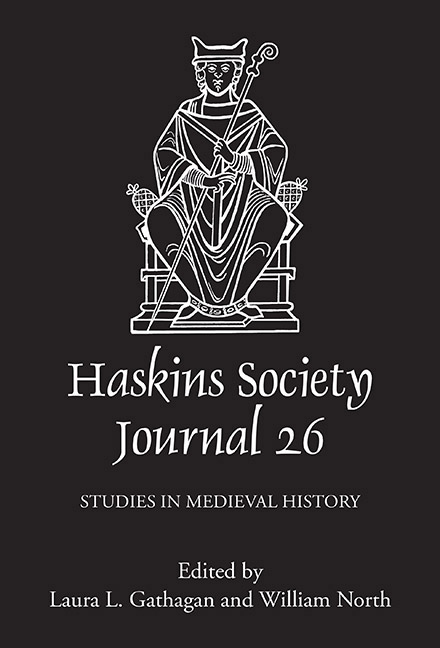
The essays here consider a broad range of topics drawn from the early to central Middle Ages. These include a fascinating glimpse of the controversy surrounding Theodoric of Ostrogoth's identity as a builder king; evidence of Byzantine slavery that emerges from a ninth-century Frankish exegetical tract; conciliar prohibitions against interfaith dining; and a fresh look at the doomed Danish marriage of Philip II of France. The Journal's commitment to source analysis is continued with chapters examining female authority on the coins of Henry the Lion; the use and meaning of monastic depredation lists; and the relationship between Henry of Huntingdon and Robert of Torigni. Finally, the volume offers a truly rich set of explorations of the political and historiographical dynamics between England and Wales from the tenth century through the late Middle Ages. This volume also contains the Henry Loyn Memorial Lecture for 2008.
Contributors: Shane Bobrycki, Gregory I. Halfond, Thomas Heeboll-Holm, Georgia Henley, Jitske Jasperse, Simon Keynes, Maria Cristina La Rocca, Corinna Matlis, Benjamin Pohl, Thomas Roche, Owain Wyn Jones
Autism spectrum disorders (ASDs) and schizophrenia spectrum disorders (SSDs), although conceptualized as separate entities, may share some clinical and neurobiological features. ASD symptoms may have a relevant role in determining a more severe clinical presentation of schizophrenic disorder but their relationships with cognitive aspects and functional outcomes of the disease remain to be addressed in large samples of individuals.
Aims
To investigate the clinical, cognitive, and functional correlates of ASD symptoms in a large sample of people diagnosed with schizophrenia.
Methods
The severity of ASD symptoms was measured with the PANSS Autism Severity Scale (PAUSS) in 921 individuals recruited for the Italian Network for Research on Psychoses multicenter study. Based on the PAUSS scores, three groups of subjects were compared on a wide array of cognitive and functional measures.
Results
Subjects with more severe ASD symptoms showed a poorer performance in the processing speed (p = 0.010), attention (p = 0.011), verbal memory (p = 0.035), and social cognition (p = 0.001) domains, and an overall lower global cognitive composite score (p = 0.010). Subjects with more severe ASD symptoms also showed poorer functional capacity (p = 0.004), real-world interpersonal relationships (p < 0.001), and participation in community-living activities (p < 0.001).
Conclusions
These findings strengthen the notion that ASD symptoms may have a relevant impact on different aspects of the disease, crucial to the life of people with schizophrenia. Prominent ASD symptoms may characterize a specific subpopulation of individuals with SSD.
Greater levels of insight may be linked with depressive symptoms among patients with schizophrenia, however, it would be useful to characterize this association at symptom-level, in order to inform research on interventions.
Methods.
Data on depressive symptoms (Calgary Depression Scale for Schizophrenia) and insight (G12 item from the Positive and Negative Syndrome Scale) were obtained from 921 community-dwelling, clinically-stable individuals with a DSM-IV diagnosis of schizophrenia, recruited in a nationwide multicenter study. Network analysis was used to explore the most relevant connections between insight and depressive symptoms, including potential confounders in the model (neurocognitive and social-cognitive functioning, positive, negative and disorganization symptoms, extrapyramidal symptoms, hostility, internalized stigma, and perceived discrimination). Bayesian network analysis was used to estimate a directed acyclic graph (DAG) while investigating the most likely direction of the putative causal association between insight and depression.
Results.
After adjusting for confounders, better levels of insight were associated with greater self-depreciation, pathological guilt, morning depression and suicidal ideation. No difference in global network structure was detected for socioeconomic status, service engagement or illness severity. The DAG confirmed the presence of an association between greater insight and self-depreciation, suggesting the more probable causal direction was from insight to depressive symptoms.
Conclusions.
In schizophrenia, better levels of insight may cause self-depreciation and, possibly, other depressive symptoms. Person-centered and narrative psychotherapeutic approaches may be particularly fit to improve patient insight without dampening self-esteem.
This chapter focuses on how the immune system is thought to contribute to the multiple sclerosis (MS) process through the different disease phases, including initiation and propagation, and in different anatomical compartments. Several subsets of regulatory T-cells are capable of inhibiting activation of other T-cells, including suppression of autoimmune responses. Clinical trials of B-cell depletion with rituximab and more recently ocrelizumab have demonstrated substantial reductions in new brain lesions, and relapses in MS patients. The innate immune system rapidly senses foreign pathogen-associated structures without the need for adaptive antigen-specific recognition or memory responses. The presence of clonally expanded CD4 and CD8 T-cells persisting in the CNS, suggests that T-cells can be activated or re-activated within the central nervous system (CNS) compartment. Cellular immune responses and soluble factors can have protective and potentially growth permissive influences capable of limiting injury, as well as promoting survival and repair of neural elements.