To save content items to your account,
please confirm that you agree to abide by our usage policies.
If this is the first time you use this feature, you will be asked to authorise Cambridge Core to connect with your account.
Find out more about saving content to .
To save content items to your Kindle, first ensure no-reply@cambridge.org
is added to your Approved Personal Document E-mail List under your Personal Document Settings
on the Manage Your Content and Devices page of your Amazon account. Then enter the ‘name’ part
of your Kindle email address below.
Find out more about saving to your Kindle.
Note you can select to save to either the @free.kindle.com or @kindle.com variations.
‘@free.kindle.com’ emails are free but can only be saved to your device when it is connected to wi-fi.
‘@kindle.com’ emails can be delivered even when you are not connected to wi-fi, but note that service fees apply.
Does an increase in the number of shared identity traits between citizens and their public representatives increase the likelihood that they will agree on policy priorities? The identities of citizens and politicians are complex and multi-dimensional, but we know little about how the combination of multiple shared identity traits affects the convergence of attitudes on government policy. In this paper, we analyze two waves of original survey data on local government councillors in conjunction with several surveys of citizens in South Africa. We find that both within and across political parties, greater degrees of trait similarity between citizens and politicians – even beyond the one or two traits considered in most studies of descriptive representation – are associated with modest but consistent increases in alignment on policy priorities, especially when citizens and councillors share traits that reinforce a historically marginalized identity. We also show that trait similarity increases policy priority alignment to a greater degree when politicians have roles that require frequent contact with constituents, suggesting that communication channels may strengthen the substantive impact of descriptive representation.
The predictive power of polygenic scores (PGSs) for lithium treatment response in bipolar disorder remains limited.
Aims
To enhance the prediction of lithium responsiveness by developing a multi-trait PGS (mt-PGS) combining genetic information from multiple phenotypes implicated in lithium response and/or bipolar disorder aetiology.
Method
We analysed data collected from bipolar disorder patients who had received lithium treatment for at least 6 months and participated in the International Consortium on Lithium Genetics study (N = 2367). The Alda scale was used to assess lithium responsiveness, and treatment outcome was defined as continuous total Alda score (0–10) and categorical outcome (favourable ≥7 versus unfavourable response). PGSs were calculated for 60 phenotypes grouped into 5 clinical–biological clusters: psychiatric and behavioural (#23 phenotypes), cardiometabolic (#17), autoimmune/inflammatory (#5), neurocognitive (#8) and renal function (#7). We applied cross-validated machine learning regression approaches in both outcomes within each cluster, with the selected features from each cluster subsequently combined to construct the final mt-PGS models. Model performance was assessed using explained variance (R2) for the continuous outcome, and both McFadden’s pseudo-R2 and standard classification model parameters for the categorical outcome.
Results
mt-PGS explained between 5.70% (continuous outcome) and 9.11% (categorical outcome) of the interindividual variability in lithium responsiveness. Classification accuracy (area under the curve) for the categorical outcome was 68.24% (95% CI: 64.98–71.66), with a Brier score of 0.257. Of the 5 clusters, the PGSs for psychiatric and behavioural phenotypes were most strongly associated with lithium responsiveness, accounting for 3.67–6.52% of its variability.
Conclusions
By integrating PGSs for multiple relevant phenotypes, predictive accuracy for lithium response improved substantially compared with single-trait methods. Future research incorporating larger, more diverse populations and combining genetic scores with clinical data holds promise for further enhancing prediction and advancing clinical implementation.
When thoroughly assessed, the prevalence of attention-deficit hyperactivity disorder (ADHD) in children/adolescents is estimated at 5%. There is no evidence that ADHD is over-diagnosed in the UK. Indeed, available data point to under-diagnosis, even though rigorous updated post-COVID-19 pandemic data are not available. Some cases may be misdiagnosed due to low-quality assessment, poor adherence to national guidance or inappropriate differential diagnosis. Beyond the controversy around over- or under-diagnosis and over-medicalisation of ordinary behaviours or emotions, the main issue is that UK clinical services cannot adequately support individuals with ADHD who need help. There is a risk that the narrative claiming ‘ADHD is over-diagnosed’ could be used to deny people with properly-diagnosed ADHD the care they deserve.
Biodiversity monitoring is essential to inform the state of wildlife populations, and the impacts of environmental change, conservation intervention, and sustainable development policies and actions. We review the current state of bird monitoring across Africa using public questionnaires and semi-structured interviews. We received 87 questionnaire responses from 46 (of 54) countries and, additionally, 24 in-depth interviews were carried out. Multiple data collection methods were reported with total counts of individuals being most frequent, but all-species surveys, essential for quantifying ecosystem health, were restricted to bird atlases and Common Bird Monitoring (CBM) projects in Kenya, Uganda, and Botswana. Data collection relied largely on volunteers, but their motivation, recruitment, training, and retention is a continuing challenge. The most sustainable programmes were driven by clear policy objectives (e.g. waterbird monitoring under the Ramsar Convention or the Convention on the Conservation of Migratory Species), monitoring of individual groups (e.g. raptors, vultures, bustards), specific threatened species, and where clear national priorities had been set within government agencies. Use of monitoring data by governments in country biodiversity reports or National Biodiversity Species Action Plans (NBSAPs) varied widely and, for many countries, simply did not exist. A lack of skilled analysts and a comprehensive approach to data curation and ownership were identified as major limitations. A more strategic approach to funding and monitoring is needed, whereby smaller funders collaborate to reduce costs associated with applying for small amounts of money, and bird (and biodiversity) monitoring is explicitly integrated with sustainable development goals to exploit broader funding streams.
Machine learning (ML) models show promise in predicting post-traumatic stress disorder (PTSD) treatment outcomes, but it is unknown how their predictions compare to those of clinicians. This study directly compared the accuracy of clinicians’ predictions of patient treatment outcomes with those of three ML models.
Methods
Twenty clinicians providing cognitive processing therapy repeatedly predicted outcomes for 194 veterans. We compared their accuracy against three ML models on two key endpoints: clinically meaningful symptom reduction (≥10-point PCL-5 decrease) and posttreatment severity (final PCL-5 < 33). Clinician predictions were compared against a recurrent neural network, a mixed-effects random forest, and a generalized linear mixed-effects model. We analyzed prediction accuracy and the association between clinician confidence and accuracy using logistic mixed-effects models.
Results
ML models were significantly more accurate than clinicians at predicting whether a patient’s posttreatment PCL-5 score would be below 33 (p < .001). However, no significant difference in accuracy was found for predicting a ≥10-point symptom reduction (p = .734). Clinician confidence increased throughout treatment and was significantly associated with greater prediction accuracy for both outcomes (ORs = 1.06, ps < .001).
Conclusions
ML models can outperform clinicians in predicting posttreatment symptom severity, particularly early in treatment, suggesting they could be a useful tool for identifying patients at risk for suboptimal outcomes. However, ML models were not superior in predicting symptom reduction, where clinicians also performed at a high level. Findings support the selective use of ML to enhance, rather than replace, clinical judgment in PTSD treatment.
Continued global environmental degradation generates risks to human health, for example, through air pollution, disease, and food insecurity. This study focuses on these three types of health impact and explores what drives these risks. The risks can arise from diverse causes including political, economic, social, technological, legal/regulatory, and environmental factors. We assembled diverse experts to work together to produce ‘system maps’ for how risks arise, identifying monitoring ‘watchpoints’ to help track risks and interventions that can help prevent them materialising. We critically appraise this pilot methodology, in order to improve our capacity to understand and act to protect human health.
Technical summary
Systemic risks arise through a process of contagion across political, economic, social, technological, legal/regulatory, and environmental systems. The highly complex nature of these risks prevents probabilistic assessment as is carried out for more conventional risks. This study critically explores a new approach based on participatory systems mapping with experts from diverse backgrounds helping to appraise these risks and identify data and monitoring ‘watchpoints’ to track their progress. We focus on three case studies: air quality, biosecurity, and food security. We assembled 36 experts selected in a stratified way to maximise cognitive diversity, plus 14 members of the interdisciplinary project team. Across 7 workshops, we identified 39 ‘risk cascades’, defined as pathways by which systemic risk can have negative impacts on human health, and we identified 681 watchpoints and interventions. We identify a broad range of interventions to reduce risk, exploring systems approaches to help prioritise these interventions; for example, understanding co-benefits in terms of reducing multiple different types of risk, as well as trade-offs. In this paper, we take a reflective approach, critically discussing constraints and refinements to our pilot methodology, in order to enhance capacity to appraise and act on systemic risks.
Social media summary
How can we act on the risks from air pollution, disease, and food insecurity? Insights from a new systemic risk assessment methodology.
We report the introduction of Juxtacribrilina mutabilis, a nonindigenous marine encrusting bryozoan, to eastern Canada. Previously reported as a nonindigenous species (NIS) in Europe and Maine, USA, this species is of potential ecological concern due to its propensity to foul eelgrass (Zostera marina), an ecologically important habitat-forming coastal species. By compiling prior unpublished records, re-evaluating existing specimens, and collecting new records of J. mutabilis, we discovered that the species has a widespread distribution in eastern Canada. Specimen reclassification efforts in our study indicate that J. mutabilis has been present in eastern Canada since at least 2013, but the species largely escaped notice until 2024, likely due to its similarity to other encrusting bryozoan species and other factors inhibiting its detection. In light of the distributional and genetic data collected in this study, we reconstruct the possible invasion history of J. mutabilis in eastern Canada, including potential introduction mechanisms, timing, and source regions. We also discuss the ecology of J. mutabilis in eastern Canada, evaluating the factors influencing the morphology of the bryozoan, assessing its potential to detrimentally impact its eelgrass substrate, and estimating its environmental niche. Further research into the distribution, ecology, and potential impacts of J. mutabilis in eastern Canada is recommended. This case study highlights the importance of diversity in the habitats surveyed and methods used when monitoring for marine NIS, the need for horizon scanning to raise awareness of potential NIS, and the advantages of multi-party collaboration and citizen science for early detection of such species.
Recent changes to US research funding are having far-reaching consequences that imperil the integrity of science and the provision of care to vulnerable populations. Resisting these changes, the BJPsych Portfolio reaffirms its commitment to publishing mental science and advancing psychiatric knowledge that improves the mental health of one and all.
There is a significant mortality gap between the general population and people with psychosis. Completion rates of regular physical health assessments for cardiovascular risk in this group are suboptimal. Point-of-care testing (POCT) for diabetes and hyperlipidaemia – providing an immediate result from a finger-prick – could improve these rates.
Aims
To evaluate the impact on patient–clinician encounters and on physical health check completion rates of implementing POCT for cardiovascular risk markers in early intervention in psychosis (EIP) services in South East England.
Method
A mixed-methods, real-world evaluation study was performed, with 40 POCT machines introduced across EIP teams in all eight mental health trusts in South East England from March to May 2021. Clinician training and support was provided. Numbers of completed physical health checks, HbA1c and lipid panel blood tests completed 6 and 12 months before and 6 months after introduction of POCT were collected for individual patients. Data were compared with those from the South West region, which acted as a control. Clinician questionnaires were administered at 2 and 8 months, capturing device usability and impacts on patient interactions.
Results
Post-POCT, South East England saw significant increases in HbA1c testing (odds ratio 2.02, 95% CI 1.17–3.49), lipid testing (odds ratio 2.38, 95% CI 1.43–3.97) and total completed health checks (odds ratio 3.61, 95% CI 1.94–7.94). These increases were not seen in the South West. Questionnaires revealed improved patient engagement, clinician empowerment and patients’ preference for POCT over traditional blood tests.
Conclusions
POCT is associated with improvements in the completion and quality of physical health checks, and thus could be a tool to enhance holistic care for individuals with psychosis.
Objectives/Goals: Research suggests that veterans identifying as Black, Hispanic/Latinx and multiracial may be at higher risk for developing posttraumatic stress disorder (PTSD). The aim of the current study was to compare PTSD treatment outcomes across racial/ethnic veteran groups. Methods/Study Population: Data from 862 veterans who participated in a 2-week cognitive processing therapy (CPT)-based intensive PTSD treatment program were evaluated. Veterans were on average 45.2 years old and 53.8% identified as male. Overall, 64.4% identified as White, Non-Hispanic/ Latino; 17.9% identified as Black, Indigenous, and People of Color (BIPOC), Non-Hispanic/Latino; and 17.7% identified as Hispanic/Latino. PTSD (PCL-5) and depression (PHQ-9) were collected at intake, completion, and at 3-month follow up. A Bayes factor approach was used to examine whether PTSD, and depression outcomes would be noninferior for BIPOC and Hispanic/Latino groups compared to White, Non-Hispanic veterans over time. Results/Anticipated Results: PTSD severity decreased for the White, BIPOC, and Hispanic/Latino groups from baseline to 3-month follow-up. The likelihood that BIPOC and Hispanic/Latino groups would have comparable PTSD outcomes was 1.81e+06 to 208.56 times greater than the likelihood that these groups would have worse outcomes than the White, Non-Hispanic veterans. Depression severity values on the PHQ-9 decreased for the White, BIPOC, and Hispanic/Latino groups from baseline to 3-month follow-up. The likelihood that BIPOC and Hispanic/Latino groups would have comparable depression outcomes at treatment completion approached infinity. At 3-month follow-up, likelihood was 1.42e+11 and 3.09e+05, respectively. Discussion/Significance of Impact: Results indicated that White, BIPOC, and Hispanic/ Latino groups experienced similarly large PTSD and depression symptom reductions. This study adds to the growing body of literature examining differences in clinical outcomes across racial/ ethnic groups for PTSD.
Accurate diagnosis of bipolar disorder (BPD) is difficult in clinical practice, with an average delay between symptom onset and diagnosis of about 7 years. A depressive episode often precedes the first manic episode, making it difficult to distinguish BPD from unipolar major depressive disorder (MDD).
Aims
We use genome-wide association analyses (GWAS) to identify differential genetic factors and to develop predictors based on polygenic risk scores (PRS) that may aid early differential diagnosis.
Method
Based on individual genotypes from case–control cohorts of BPD and MDD shared through the Psychiatric Genomics Consortium, we compile case–case–control cohorts, applying a careful quality control procedure. In a resulting cohort of 51 149 individuals (15 532 BPD patients, 12 920 MDD patients and 22 697 controls), we perform a variety of GWAS and PRS analyses.
Results
Although our GWAS is not well powered to identify genome-wide significant loci, we find significant chip heritability and demonstrate the ability of the resulting PRS to distinguish BPD from MDD, including BPD cases with depressive onset (BPD-D). We replicate our PRS findings in an independent Danish cohort (iPSYCH 2015, N = 25 966). We observe strong genetic correlation between our case–case GWAS and that of case–control BPD.
Conclusions
We find that MDD and BPD, including BPD-D are genetically distinct. Our findings support that controls, MDD and BPD patients primarily lie on a continuum of genetic risk. Future studies with larger and richer samples will likely yield a better understanding of these findings and enable the development of better genetic predictors distinguishing BPD and, importantly, BPD-D from MDD.
Despite the global expansion of electronic medical record (EMR) systems and their increased integration with artificial intelligence (AI), their utilization in disaster settings remains limited, and few studies have evaluated their implementation. We aimed to evaluate Fast Electronic Medical Record (fEMR), a novel, mobile EMR designed for resource-limited settings, based on user feedback.
Methods
We examined usage data through October 2022 to categorize the nature of its use for disaster response and determine the number of patients served. We conducted interviews with stakeholders and gathered input from clinicians who had experience using fEMR.
Results
Over eight years, fEMR was employed 60 times in 11 countries across four continents by 14 organizations (universities, non-profits, and disaster response teams). This involved 37,500+ patient encounters in diverse settings including migrant camps at the US-Mexico and Poland-Ukraine borders, mobile health clinics in Kenya and Guatemala, and post-earthquake relief in Haiti. User feedback highlighted adaptability, but suggested hardware and workflow improvements.
Conclusion
EMR systems have the potential to enhance healthcare delivery in humanitarian responses, offer valuable data for planning and preparedness, and support measurement of effectiveness. As a simple, versatile EMR system, fEMR has been deployed to numerous disaster response and low-income settings.
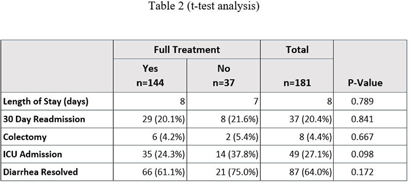
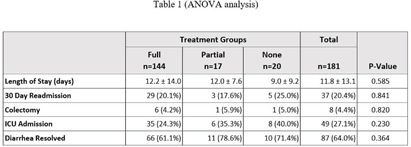
Background: In August 2021, Saint Luke’s Health System (SLHS) transitioned Clostridioides difficile (C. diff.) testing from polymerase chain reaction (PCR)-only to two-step enzyme immunoassay (EIA) reflex following PCR+ for suspected C. diff. infection. Uncertainty in patient management may arise when PCR and EIA testing differ. Previous studies suggested that disease severity varies when a patient’s results demonstrate PCR+ and EIA- due to possible colonization. Clinicians may not treat if diarrhea self-resolves, patients remain stable, or alternate causes of diarrhea exist. We compared clinical outcomes of patients who received treatment to those who did not. Methods: This was a retrospective cross-sectional study from August 2021-August 2023 in a multi-site, integrated health system, comparing 181 inpatients with PCR+/EIA- C. diff. test results stratified by no treatment (0-48 hours of C. diff. targeted treatment), partial treatment (2-9 days), or full treatment (10+ days). The primary outcome was length of stay. Secondary outcomes were readmission rates, need for colectomy, intensive care unit (ICU) admission, and diarrhea resolution on day of discharge. Results: Of the 181 patients, 144 received full treatment, 17 had partial, and 20 had no treatment. Baseline characteristics were similar between groups. No significant difference was found for length of stay or any secondary outcomes (Table 1). Table 2 provides a subgroup of patients who received no treatment vs those receiving partial or full treatment. Conclusion: In this study, treatment exposure did not affect clinical outcomes for patients with PCR+/EIA- results, though sample sizes may limit generalizability. Further research is warranted regarding the clinical approach to PCR+/EIA-
Human immunodeficiency virus (HIV)-associated neurocognitive disorder (HAND) prevalence is expected to increase in East Africa as treatment coverage increases, survival improves, and this population ages. This study aimed to better understand the current cognitive phenotype of this newly emergent population of older combination antiretroviral therapy (cART)-treated people living with HIV (PLWH), in which current screening measures lack accuracy. This will facilitate the refinement of HAND cognitive screening tools for this setting.
Method:
This is a secondary analysis of 253 PLWH aged ≥50 years receiving standard government HIV clinic follow-up in Kilimanjaro, Tanzania. They were evaluated with a detailed locally normed low-literacy neuropsychological battery annually on three occasions and a consensus panel diagnosis of HAND by Frascati criteria based on clinical evaluation and collateral history.
Results:
Tests of verbal learning and memory, categorical verbal fluency, visual memory, and visuoconstruction had an area under the receiver operating characteristic curve >0.7 for symptomatic HAND (s-HAND) (0.70–0.72; p < 0.001 for all tests). Tests of visual memory, verbal learning with delayed recall and recognition memory, psychomotor speed, language comprehension, and categorical verbal fluency were independently associated with s-HAND in a logistic mixed effects model (p < 0.01 for all). Neuropsychological impairments varied by educational background.
Conclusions:
A broad range of cognitive domains are affected in older, well-controlled, East African PLWH, including those not captured in widely used screening measures. It is possible that educational background affects the observed cognitive impairments in this setting. Future screening measures for similar populations should consider assessment of visual memory, verbal learning, language comprehension, and executive and motor function.
There is a paucity of data guiding treatment duration of oral vancomycin for Clostridiodes difficile infection (CDI) in patients requiring concomitant systemic antibiotics.
Objectives:
To evaluate prescribing practices of vancomycin for CDI in patients that required concurrent systemic antibiotics and to determine whether a prolonged duration of vancomycin (>14 days), compared to a standard duration (10–14 days), decreased CDI recurrence.
Methods:
In this retrospective cohort study, we evaluated adult hospitalized patients with an initial episode of CDI who were treated with vancomycin and who received overlapping systemic antibiotics for >72 hours. Outcomes of interest included CDI recurrence and isolation of vancomycin-resistant Enterococcus (VRE).
Results:
Among the 218 patients included, 36% received a standard duration and 64% received a prolonged duration of treatment for a median of 13 days (11–14) and 20 days (16–26), respectively. Patients who received a prolonged duration had a longer median duration of systemic antibiotic overlap with vancomycin (11 vs 8 days; P < .001) and significantly more carbapenem use and infectious disease consultation. Recurrence at 8 weeks (12% standard duration vs 8% prolonged duration; P = .367), recurrence at 6 months (15% standard duration vs 10% prolonged duration; P = .240), and VRE isolation (3% standard duration vs 9% prolonged duration; P = .083) were not significantly different between groups. Discontinuation of vancomycin prior to completion of antibiotics was an independent predictor of 8-week recurrence on multivariable logistic regression (OR, 4.8; 95% CI, 1.3–18.1).
Conclusions:
Oral vancomycin prescribing relative to the systemic antibiotic end date may affect CDI recurrence to a greater extent than total vancomycin duration alone. Further studies are needed to confirm these findings.