To save content items to your account,
please confirm that you agree to abide by our usage policies.
If this is the first time you use this feature, you will be asked to authorise Cambridge Core to connect with your account.
Find out more about saving content to .
To save content items to your Kindle, first ensure no-reply@cambridge.org
is added to your Approved Personal Document E-mail List under your Personal Document Settings
on the Manage Your Content and Devices page of your Amazon account. Then enter the ‘name’ part
of your Kindle email address below.
Find out more about saving to your Kindle.
Note you can select to save to either the @free.kindle.com or @kindle.com variations.
‘@free.kindle.com’ emails are free but can only be saved to your device when it is connected to wi-fi.
‘@kindle.com’ emails can be delivered even when you are not connected to wi-fi, but note that service fees apply.
Reviving Gould and Lewontin’s critique of adaptationism, Singh’s subjective selection favors truth over useful simplification. Nonetheless, while psychologically plausible, its explanatory power remains limited. Moreover, by treating evolved psychology as fixed, it neglects gene-culture coevolution. The result is a vision of cultural evolution whose expansiveness risks outpacing its scientific utility.
Late-life depression refers to a depression occurring in older adults, defined as individuals aged 65 years and older. It is common and often mismanaged due to complex clinical profiles, polypharmacy, and limited evidence-based guidance. Existing tools poorly address psychiatric nuances in older adults. This work aims to develop French recommendations based on experts’ consensus on the use of antidepressants in unipolar late-life depression, to guide safer prescribing practices.
Methods
This tool was developed using a Delphi survey, based on a review of literature published between 2014 and 2024 and focused on “antidepressants” and “late-life depression” Experts from various fields: geriatric psychiatry, clinical pharmacy and general practice, rated items using a 9-point Likert scale. Items with a median score ≥ 7 and at least 80% agreement were validated and included in the final version of the tool.
Results
Twenty to 23 experts per round, different from the authors of the proposed items, participated in a four-round Delphi process. The resulting tool includes 57 validated items across 10 sections and a stepped-care algorithm for treating major depression in older adults. It addresses drug choice, dosing, monitoring, comorbidities, and treatment resistance, prioritizing safe first-line options like sertraline, citalopram, and escitalopram.
Conclusion
A Delphi survey involving multidisciplinary experts led to a French consensus tool for prescribing antidepressants in unipolar late-life depression. It integrates clinical evidence and expert judgment to address treatment complexity, drug safety, and resistance. The tool offers practical, stepwise recommendations tailored to primary care, aiming to optimize antidepressant use, reduce iatrogenesis, and improve patient outcomes.
We review the ambiguous legacy of Emil Kraepelin. He established an approach that secured psychiatry’s place as a medical specialty, and his methodology has dominated the profession and defined its long 20th century, 1899–2026. However, his eugenic views weigh heavily because of the catastrophes in which German psychiatry was implicated and to which it contributed actively during the Nazi era that followed. Furthermore, his project to establish mental illness in the form of discrete natural kinds has failed in the light of scientific progress. Psychiatry must embrace the complexity of mental illness and engage more deeply with the inherently fuzzy realms of language, culture, technological change and political power. This shift should bear more strongly on psychiatry’s curriculum, research priorities, continuing professional development, practice, ethics and public engagement.
Patagonia and Tierra del Fuego (Austral Andes) are the most glacierised regions in the Southern Hemisphere, where glaciers have experienced significant mass changes in recent decades. Understanding glacier–climate–water interactions is crucial for addressing future climate challenges. Open-access data play a key role in advancing geoscience research, improving models and assessing the impacts of hazards and sea-level rise impacts. Here, we present QFuego-Patagonia, a free glacier-related GIS dataset and web portal covering Patagonia and Tierra del Fuego, which provides essential geospatial information across four scientific topics: Glaciology, Atmosphere, Terrain Models, and Glacial Geology and Geomorphology. This initiative aims to foster interdisciplinary research and collaboration, synthesise current knowledge and establish an advanced glacier data repository that will be continuously updated as new data and insights become available.
Collating the neural traits possessed by taxa provides valuable evidence about brain evolution. However, to get the full scientific benefit, we must pair it with an understanding of the selection pressures driving brain complexity. This can be achieved by considering the heterogeneity of the animal’s environment alongside the reliability of information. A complex environment selects for a complex brain.
It is well established that childhood adversity is associated with both negative physical and mental health outcomes. Recent research posits that 1) there may be developmental periods for which the effects of adversity are most influential on brain development and 2) abuse and neglect may be associated with different developmental mechanisms linking psychopathology. This study used seven years of longitudinal data to investigate how abuse and neglect during three developmental periods (early childhood, middle childhood, and adolescence), as well as chronicity of maltreatment across these developmental periods, are associated with young adult mental health outcomes (ages 20–21), and how changes in adolescent task-based functional connectivity during cognitive control (between ages 14–15 and 18–20 years) may mediate these associations. Hypothesized mediation models were tested via structural equation modeling (SEM). Significant indirect effects indicated that chronic abuse predicted higher depressive symptoms and higher substance use through stronger dACC–insula connectivity. In contrast, significant indirect effects revealed that neglect during adolescence predicted lower substance use and lower depressive symptoms through weaker dACC–insula connectivity. These results suggest that differential patterns of connectivity changes within the salience network during cognitive control may be associated with risk and resilience for future depression and substance use in young adulthood.
Psychological therapy (PT) along with antipsychotic medication is the recommended first line of treatment for first-episode psychosis (FEP). We investigated whether ethnicity, clinical, pathways to care (PtC) characteristics, and access to early intervention service (EIS) influenced the offer, uptake, and type of PT in an FEP sample.
Methods
We used data from the Clinical Record Interactive Search-First Episode Psychosis study. Inferential statistics determined associations between ethnicity, clinical, PtC, and PT offer/uptake. Multivariable logistic regression estimated the odds of being offered a PT and type of PT by ethnicity, clinical and PtC characteristics adjusting for confounders.
Results
Of the 558 patients included, 195 (34.6%) were offered a PT, and 193 accepted. Cognitive behavioral therapy (CBT) (n = 165 of 195; 84.1%) was commonly offered than group therapy (n = 30 of 195; 13.3%). Patients who presented via an EIS (adj. OR = 2.24; 95%CI 1.39–3.59) were more likely to be offered a PT compared with those in non-EIS. Among the patients eligible for an EIS, Black African (adj. OR = 0.49; 95%CI = 0.25–0.94), Black Caribbean (adj. OR = 0.45; 95%CI = 0.21–0.97) patients were less likely to be offered CBT compared with their White British counterparts. Patients with a moderate onset of psychosis (adj. OR = 0.34; 95%CI = 0.15–0.73) had a reduced likelihood of receiving CBT compared with an acute onset.
Conclusions
Accessing EIS during FEP increased the likelihood of being offered a PT. However, treatment inequalities remain by ethnicity and clinical characteristics.
This article examines how Native Nations and institutions have been affected by a new directive in the revised NAGPRA regulations, the duty of care provision (43 CFR 10.1(d)), with a focus on the care of Indigenous Ancestral remains and cultural items. The Native Nation’s perspective is provided by the Osage Nation and the Eastern Band of Cherokee Indians. The South Carolina Institute of Archaeology and Anthropology; the University of Tennessee, Knoxville; the Illinois State Museum; and Indiana University share their viewpoints as institutions that house Indigenous Ancestral remains, cultural items, and archaeological collections and describe the initial impacts of the revised legislation on their programs. There are several key takeaways of its initial effects, including (1) an increased burden to Native Nations, given the substantial uptick in requests for consultation linked to new requirements for consent and the revised definitions of cultural items and research (although the end result of more consultations leading to repatriations is desired), (2) a disconnect between Native Nations and institutions regarding cultural item identification, (3) a strengthening of existing NAGPRA-related institutional policies and procedures, and (4) an emphasis on the importance of consultation between institutions and Native Nations to facilitate repatriation.
The use of extended reality (XR) for education of healthcare personnel (HCP) is increasing. XR equipment is reusable and often shared between HCP in clinical areas; however, it may not include manufacturer’s instructions for use (MIFU) in healthcare settings. Considerations for the selection of equipment and development of cleaning and disinfection protocols are described.
To compare rates of clinical response in children with Clostridioides difficile infection (CDI) treated with metronidazole vs vancomycin.
Design:
Retrospective cohort study was performed as a secondary analysis of a previously established prospective cohort of hospitalized children with CDI. For 187 participants 2–17 years of age who were treated with metronidazole and/or vancomycin, the primary outcome of clinical response (defined as resolution of diarrhea within 5 days of treatment initiation) was identified retrospectively. Baseline variables associated with the primary outcome were included in a logistic regression propensity score model estimating the likelihood of receiving metronidazole vs vancomycin. Logistic regression using inverse probability of treatment weighting (IPTW) was used to estimate the effect of treatment on clinical response.
Results:
One hundred seven subjects received metronidazole and 80 subjects received vancomycin as primary treatment. There was no univariable association between treatment group and clinical response; 78.30% (N = 83) of the metronidazole treatment group and 78.75% (N = 63) of the vancomycin group achieved clinical response (P = 0.941). After adjustment using propensity scores with IPTW, the odds of a clinical response for participants who received metronidazole was 0.554 (95% CI: 0.272, 1.131) times the odds of those who received vancomycin (P = 0.105).
Conclusions:
In this observational cohort study of pediatric inpatients with CDI, the rate of resolution of diarrhea after 5 days of treatment did not differ among children who received metronidazole vs vancomycin.
Lewy body dementias (LBD) are the second most common dementia. Several genes have been associated with LBD, but little is known about their contributions to LBD pathophysiology. Each gene may transcribe multiple RNA, and LBD brains have extensive RNA splicing dysregulation. Hence, we completed the first transcriptome-wide transcript-level differential expression analysis of post-mortem LBD brains for gaining more insights into LBD molecular pathology that are essential for facilitating discovery of novel therapeutic targets and biomarkers for LBD. We completed transcript-level quantification of next-generation RNA-sequencing data from post-mortem anterior cingulate (ACC) and dorsolateral prefrontal cortices (DLPFC) of people with pathology-verified LBD (LBD = 14; Controls = 7) using Salmon. We identified differentially expressed transcripts (DET) using edgeR and investigated their functional implications using DAVID. We performed transcriptome-wide alternative splicing analysis using DRIMseq. We identified 74 DET in ACC and 96 DET in DLPFC after Benjamini-Hochberg false discovery rate (FDR) correction (5%). There were 135 and 98 FDR-corrected alternatively spliced genes in ACC and DLPFC of LBD brains, respectively. Identified DET may contribute to LBD pathology by altering DNA repair, apoptosis, neuroplasticity, protein phosphorylation, and regulation of RNA transcription. We confirm widespread alternative splicing and absence of chronic neuroinflammation in LBD brains. Transcript-level differential expression analysis can reveal specific DET that cannot be detected by gene-level expression analyses. Therapeutic and diagnostic biomarker potential of identified DET, especially those from TMEM18, MICB, MPO, and GABRB3, warrant further investigation. Future LBD blood-based biomarker studies should prioritise measuring the identified DET in small extracellular vesicles.
The maintenance of cross-cultural variation and arbitrary traditions in human populations is a key question in cultural evolution. Conformist transmission, the tendency to follow the majority, was previously considered central to this phenomenon. However, recent theory indicates that cognitive biases can greatly reduce its ability to maintain traditions. Therefore, we expanded prior models to investigate two other ways that cultural variation can be sustained: payoff-biased transmission and norm reinforcement. Our findings predict that both payoff-biased transmission and reinforcement can enhance conformist transmission's ability to maintain traditions. However, payoff-biased transmission can only sustain cultural variation if it is functionally related to environmental factors. In contrast, norm reinforcement readily generates and maintains arbitrary cultural variation. Furthermore, reinforcement results in path-dependent cultural dynamics, meaning that historical traditions influence current practices, even though group behaviours have changed. We conclude that environmental variation probably plays a role in functional cultural traditions, but arbitrary cultural variation is more plausibly due to the reinforcement of norm compliance.
This article presents the results of the 2008 excavation in the ancient theatre of Sparta conducted by the British School at Athens and the Ephorate of Antiquities of Laconia. Focused on the west side of the cavea, work aimed to locate the southern edge of the Late Antique settlement between the theatre and the sanctuary of Athena Chalkioikos; to establish the northern limits of the Late Antique settlement over the former orchestra; and to establish a more precise ceramic characterisation and chronology for the Early–Middle Byzantine period in Sparta. The area between settlement clusters on the acropolis and over the former orchestra was essentially open, with just a Byzantine terrace wall and path recorded. In the north-west part of the former cavea, a tomb built in the late eighth or early ninth century AD was used at least until the late thirteenth century for the burial of c. 29 individuals. This article presents the first results of a bioarchaeological study of the human remains, and studies of Byzantine pottery from the tomb interior and from the backfill of the pit in which the tomb was built (the latter including a notable quantity of Early Byzantine domestic ware). The 2008 findings are set in the larger context of research on post-antique phases in the theatre (drawing on the British School at Athens Archive) and on the material culture and urban topography of Byzantine Sparta. Almost all excavated contexts contained residual material of all periods. The article concludes with short catalogues of material which pre-dates the construction of the theatre and of inscriptions of all periods.
While humans are highly cooperative, they can also behave spitefully. Yet spite remains understudied. Spite can be normatively driven and while previous experiments have found some evidence that cooperation and punishment may spread via social learning, no experiments have considered the social transmission of spiteful behaviour. Here we present an online experiment where, following an opportunity to earn wealth, we asked participants to choose an action towards an anonymous partner across a full spectrum of social behaviour, from spite to altruism. In accordance with cultural evolutionary theory, participants were presented with social information that varied in source and content. Across six conditions, we informed participants that either the majority or the highest earner had chosen to behave spitefully, neutrally or altruistically. We found an overall tendency towards altruism, but at lower levels among those exposed to spite compared with altruism. We found no difference between social information that came from the majority or the highest earner. Exploratory analysis revealed that participants’ earnings negatively correlated with altruistic behaviour. Our results contrast with previous literature that report high rates of spite in experimental samples and a greater propensity for individuals to copy successful individuals over the majority.
Psychotic experiences (PEs) and social isolation (SI) seem related during early stages of psychosis, but the temporal dynamics between the two are not clear. Literature so far suggests a self-perpetuating cycle wherein momentary increases in PEs lead to social withdrawal, which, subsequently, triggers PEs at a next point in time, especially when SI is associated with increased distress. The current study investigated the daily-life temporal associations between SI and PEs, as well as the role of SI-related and general affective distress in individuals at clinical high risk (CHR) for psychosis.
Methods
We used experience sampling methodology in a sample of 137 CHR participants. We analyzed the association between SI, PEs, and distress using time-lagged linear mixed-effects models.
Results
SI did not predict next-moment fluctuations in PEs, or vice versa. Furthermore, although SI-related distress was not predictive of subsequent PEs, general affective distress during SI was a robust predictor of next-moment PEs.
Conclusions
Our results suggest that SI and PEs are not directly related on a moment-to-moment level, but a negative emotional state when alone does contribute to the risk of PEs. These findings highlight the role of affective wellbeing during early-stage psychosis development.
Understanding the distribution and extent of suitable habitats is critical for the conservation of endangered and endemic taxa. Such knowledge is limited for many Central African species, including the rare and globally threatened Grey-necked Picathartes Picathartes oreas, one of only two species in the family Picathartidae endemic to the forests of Central Africa. Despite growing concerns about land-use change resulting in fragmentation and loss of forest cover in the region, neither the extent of suitable habitat nor the potential species’ distribution is well known. We combine 339 (new and historical) occurrence records of Grey-necked Picathartes with environmental variables to model the potential global distribution. We used a Maximum Entropy modelling approach that accounted for sampling bias. Our model suggests that Grey-necked Picathartes distribution is strongly associated with steeper slopes and high levels of forest cover, while bioclimatic, vegetation health, and habitat condition variables were all excluded from the final model. We predicted 17,327 km2 of suitable habitat for the species, of which only 2,490 km2 (14.4%) are within protected areas where conservation designations are strictly enforced. These findings show a smaller global distribution of predicted suitable habitat forthe Grey-necked Picathartes than previously thought. This work provides evidence to inform a revision of the International Union for Conservation of Nature (IUCN) Red List status, and may warrant upgrading the status of the species from “Near Threatened” to “Vulnerable”.
A numerical investigation is undertaken on the development of linear disturbances in the rotating disk boundary layer, in which a time-periodic modulation is applied to the disk rotation rate. The model gives a prototypical example of a three-dimensional oscillatory boundary layer, by adding a Stokes layer to the von Kármán flow that develops on a steady disk. The study extends the Floquet analysis of Morgan et al. (J. Fluid Mech., vol. 925, 2021, A20), who showed that disk modulation stabilises the stationary convective instabilities found on the steady rotating disk. Using a radial homogeneous flow approximation, whereby the radial dependence of the basic state is ignored, disturbance development is simulated for several modulation settings, with flow conditions matched to both convective and absolute forms of linear instability. Disturbances excited via a stationary periodic wall forcing display behaviour consistent with that found using Floquet theory; time-periodic modulation stabilises the cross-flow instability by reducing the radial growth rate. In addition, convective and absolute instabilities, generated by an impulsive wall forcing, are both stabilised by the introduction of modulation to the disk rotation rate. Modulation establishes a significant reduction in both the temporal growth rate and the disturbance amplitude as it propagates away from the impulse origin. Moreover, greater stabilising control benefits are realised as the modulation amplitude increases.
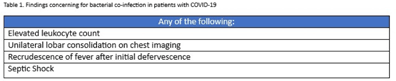
Background: Bacterial coinfections with COVID-19 appear to be rare, yet antibiotic use in this population is high. Limited guidance is available regarding the use of antibiotics in these patients. In response, a multidisciplinary group of physicians and pharmacists from 5 VISN9 facilities developed a guideline for the use of antibiotics with COVID-19 in July 2021. This guideline created a network-wide standard for antibiotic use and facilitates the assessment of antibiotic appropriateness in hospitalized veterans with COVID-19. Methods: In this observational, cross-sectional study, we reviewed veterans diagnosed with COVID-19 from August 1 through September 30, 2021, who were admitted to VISN9 facilities. Use of antibiotics was assessed during the first 4 days of admission. If antibiotics were prescribed, their use was determined to be appropriate or inappropriate based on the presence or absence of a finding concerning for bacterial coinfection as outlined in the guideline (Table 1). Additional data including procalcitonin results as well as positive sputum cultures were collected. Results: In total, 377 veterans were admitted for COVID-19 during the study period. Among them, 42 veterans (11%) received antibiotics for nonrespiratory infections and were removed from this analysis. Of the remaining 335 veterans, 229 (68%) received antibiotics and 116 (51%) of those met guideline criteria that were concerning for bacterial coinfection. Additionally, 32 (14%) of the 229 veterans who received antibiotics had >1 finding concerning for bacterial coinfection. Procalcitonin levels were obtained in 97 (42%) of 229. Only 33 veterans (14%) who received antibiotics had an elevated procalcitonin, and only 19 (8%) had a positive sputum culture. Conclusions: Antibiotic use was common in hospitalized veterans with COVID-19 in VISN9 facilities. This results are comparable to findings in the published literature. Among those receiving antibiotics early in their hospitalization, half were considered appropriate based on our guideline. Quality improvement initiatives are needed to improve implementation of the network guideline to reduce the overuse of antibiotics for management of COVID-19. Additionally, procalcitonin may be a helpful tool for hospitalized veterans with COVID-19.
OBJECTIVES/GOALS: The Fulkerson Home Food Inventory (HFI) is widely used to assess the home food environment, a key target of behavioral weight loss trials. However, no standardized report is available. We created publicly available procedures to automate and standardize HFI reporting, yielding a personalized report to enhance this measures clinical utility. METHODS/STUDY POPULATION: Parents in the TEENS adolescent behavioral weight loss trial complete the HFI at 0-, 2-, 4-, 8-, and 12m and receive personalized reports at each timepoint. In REDCap, participants identify foods available in their home. HFI syntax is applied to calculate the obesogenic home food availability score. Categories of foods found are identified, with specific guidance provided to enhance their home food environment. Prior to automation, procedures were time intensive and error prone. To address this, HFI data are exported into Excel by a PowerShell (v7.2) command-line script using Python (v3.10) with the REDCap API. Results are calculated with F# (v6.0) using Microsoft Excel Interop API and inserted into a report template with F# using the Microsoft Publisher Interop API. This process is repeated at each timepoint. RESULTS/ANTICIPATED RESULTS: The new automated procedures significantly reduce time to generate reports and enhance accuracy. Procedures yield a 2-page individualized report that includes the obesogenic home food environment score and identifies categories of healthy items found (e.g., fruits, vegetables, whole grains) as well as areas of improvement (e.g., high-fat dairy products, processed meats). Specific items found in each category are identified. The report identifies food found in the home (e.g., chicken nuggets) with suggested healthier substitutions (e.g., lean chicken breast). This syntax and commands will be made publicly available for use in the scientific and clinical community. DISCUSSION/SIGNIFICANCE: These publicly available procedures optimize, automate, and standardize reporting for the HFI. Procedures improve efficiency within large-scale clinical trials and yield a personalized report to enhance the clinical utility of this measure and empower participants to make informed decisions about their health behaviors.