Refine search
Actions for selected content:
26 results
A survey of MRSA infection prevention practices amongst US burn centers
-
- Journal:
- Antimicrobial Stewardship & Healthcare Epidemiology / Volume 6 / Issue 1 / 2026
- Published online by Cambridge University Press:
- 29 September 2026, e302
-
- Article
-
- You have access
- Open access
- HTML
- Export citation
Impact of Adding Anaerobic Coverage to Preoperative Antibiotics on Rates of Abdominal Hysterectomy (AH) Surgical Site Infections (SSI)
-
- Journal:
- Antimicrobial Stewardship & Healthcare Epidemiology / Volume 6 / Issue S1 / August 2026
- Published online by Cambridge University Press:
- 23 June 2026, pp. s21-s22
-
- Article
-
- You have access
- Open access
- Export citation
-
Introduction: The American College of Obstetricians and Gynecologists (ACOG) and Society of Healthcare epidemiology (SHEA) recommend cephalosporins as the standard antibiotic for preoperative prophylaxis for abdominal hysterectomy (AH-includes Laparoscopic and open cases) . However, anaerobic organisms are prevalent in vaginal and intraabdominal flora and can contribute to development of surgical site infections (SSIs). Limited data suggest that including anaerobic coverage may reduce SSI risk. In May 2024, we implemented anaerobic containing regimens as first-line preoperative antibiotic prophylaxis for all AH cases. This study evaluates whether adding anaerobic coverage to the preoperative antibiotic protocol reduces National Healthcare Safety Network (NHSN)-defined SSI after AH surgeries. Methods: We conducted a retrospective cohort study of all patients who underwent inpatient or outpatient from January 2023 through September 2025. Preoperative antibiotic choice and timing as well as patient demographics and comorbidities were obtained from medical records. SSI were determined by NHSN definitions by trained infection preventionists. First line antibiotics with anaerobic coverage were defined as cefazolin plus metronidazole, or vancomycin plus aztreonam plus metronidazole in patients with penicillin allergies. SSI in patients who received first line antibiotics with anaerobic coverage were compared to those who received alternative antibiotic regimens (Around 80% of alternative regimen consisted of only cefazolin). Multivariate logistic regression and overlap weighting methods were applied to evaluate the independent impact of first-line therapy. Results: Among 11,444 hysterectomy procedures, the overall SSI rate was 1% (n=109 cases). Unadjusted SSI rate in patients receiving first-line antibiotics was significantly lower than those receiving alternate prophylaxis (0.7% vs 1.3 %, p =0.001). Individuals who received first-line antibiotics were generally younger, more frequently identified as Caucasian, and exhibited greater rates of diabetes and cancer compared to those who received alternative regimens. Patients who received first line antibiotics also had longer surgeries, a higher frequency of elective and laparoscopic procedures, and higher rates of adherence to preoperative protocols such as chlorhexidine bathing, vaginal preparation, and maintenance of normothermia (see Table 1). After adjusting for baseline differences between groups through multivariate logistic regression and overlap weighting, first-line therapy was associated with a 50% reduction in SSI risk compared to alternative regimens (OR 0.51; 95% CI 0.34–0.76; p=0.001). (Table 2) Conclusion: Compared to alternative regimens for preoperative antibiotic prophylaxis, the routine inclusion of metronidazole to cefazolin was associated with a reduced risk of SSI following AH surgeries even after adjusting for demographic, procedural and clinical differences between groups.


Multidisciplinary Reviews of Colectomy Surgeries Improve Accuracy of Surgical Site Infection Event Detection
-
- Journal:
- Antimicrobial Stewardship & Healthcare Epidemiology / Volume 6 / Issue S1 / August 2026
- Published online by Cambridge University Press:
- 23 June 2026, pp. s179-s180
-
- Article
-
- You have access
- Open access
- Export citation
-
Introduction: Surgical site infections (SSI) account for 20% of all healthcare-associated infections (HAIs). SSI are associated with increased patient mortality, morbidity, length of hospitalization and risk of readmission with an associated total healthcare cost of $3.3 billion annually. Of the reported SSIs, colorectal (COLO) surgeries have been among the highest risk procedures. A crucial element to prevent HAI is the accurate identification of true events. This allows for comparison of facility-specific performance metrics with peer groups and the development and implementation of targeted interventions to reduce SSI burden. In this abstract, we assessed the impact of multidisciplinary intervention to accurately identify, and document visualized infections on SSI rates and Standardized Infection Ratios (SIR) at a tertiary care teaching facility. Methods: A quasi-experimental study was conducted from 02/01/2024 to 06/30/2025 to improve the accuracy of operative note documentation of visualized infections. Indicators to evaluate possible SSI events included readmission(s), chief complaint, surgical logs, diagnostic codes, antibiotic use, lab/culture data and keywords that may indicate a surgical site infection. Subsequently identified procedures were evaluated by the Surveillance Infection Preventionist team, the Medical Director of Infection Prevention, and the Surgical Quality Officer. If indicated, the operating surgeon was consulted to determine whether visualized infection criteria were met and/or correctly documented. Turnaround time for case reviews was determined. We compared the observed SSI rates and Standardized Infection Ratios (SIR) with the uncorrected rates and SIR accounting for the clarified events. Results: Of 1,142 procedures, 55 were initially identified as COLO SSI. After multidisciplinary review, 12 (22%) of the 55 were found to be present at the time of surgery (PATOS). An additional two events (4%) were determined to not meet SSI criteria. The table summarizes the results of the review process showing a statistically significant correction in SSI event rates from 4.82/100 surgeries to 3.59/100 surgeries (p<0.0001). The turnaround time from identification of a potential SSI event to final determination was four days (range: 1-6 days). Conclusion: Surgical site infection events are critical quality outcome measures for both regulatory and reputational agencies. However, the misclassification of SSIs, such as observed in our study, can create a misleading picture of institutional performance, divert attention from preventable cases, and undermine confidence in surveillance systems. Our multidisciplinary approach ensures a more accurate identification of SSI events. This method can serve as a model for enhancing surveillance accuracy and reliability across healthcare settings.


A research agenda for burn infection prevention: identifying knowledge gaps and prioritizing future directions
-
- Journal:
- Antimicrobial Stewardship & Healthcare Epidemiology / Volume 5 / Issue 1 / 2026
- Published online by Cambridge University Press:
- 30 October 2025, e293
-
- Article
-
- You have access
- Open access
- HTML
- Export citation
Demographic and Socioeconomic Factors as Predictors of Device-Associated Healthcare Infections Before and During the COVID-19 Pandemic
-
- Journal:
- Antimicrobial Stewardship & Healthcare Epidemiology / Volume 5 / Issue S2 / July 2025
- Published online by Cambridge University Press:
- 24 September 2025, p. s73
-
- Article
-
- You have access
- Open access
- Export citation
Alcohol-Based Nasal Sanitizer Provides Superior Protection Against MRSA Bacteremia Compared to Mupirocin in Burn Patients
-
- Journal:
- Antimicrobial Stewardship & Healthcare Epidemiology / Volume 5 / Issue S2 / July 2025
- Published online by Cambridge University Press:
- 24 September 2025, pp. s3-s4
-
- Article
-
- You have access
- Open access
- Export citation
-
Background: Burn injuries pose a significant risk for infections. Nasal decolonization with mupirocin nasal ointment (MNO) is an established method to prevent infections with Methicillin-resistant Staphylococcus aureus (MRSA). We compared the effectiveness of an alcohol-based nasal sanitizer (ABNS) to MNO against MRSA bacteremia in burn patients. Methods: This was a retrospective before/after study comparing the impact of an MNO (study arm 1; Bactroban 2%, GlaxoSmithKline, NC; application: twice daily for five days after admission) and an ABNS (study arm 2; Nozin, Bethesda, MD; application: twice daily for entire stay on Burn unit) on Healthcare Associated (HA-) MRSA bacteremia events in burn patients. The Burn unit consists of eight intensive care beds for burn care and 15 regular beds in an 885 bed, tertiary care, academic hospital. Inclusion criteria were all burn patients 18 years of age and older admitted under the burn service for more than four consecutive days. No mandatory MRSA screening was performed. Outcome measure was HA-MRSA bacteremia acquired > four days after admission. Patient characteristics included demographics, BMI, intensive care need, MRSA colonization at admission, type and degree of burn, inhalation injury, total burn surface area, Baux score, inpatient mortality, length of stay by total, burn mixed acuity and burn ICU were documented. Daily compliance with treatments was extracted from patient records (EPIC, Verona, WI). Continuous patient characteristics were compared using t-tests or Wilcoxon signed-rank test (for factors with skewed distributions), and chi-square tests for categorical factors. Product-limit time-to-event analysis and log-rank test were used to compare the outcome measure between groups. Results: From 08/01/2021 to 07/31/2024 a total of 920 patients were enrolled (MNO arm: 448; ABNS arm: 462) with 239 and 217 meeting inclusion criteria. No differences in patient characteristics were detected between the two groups at all patients and >80% treatment compliance levels (MNO: 121 encounters; ABNS: 98 encounters). Patients in the MNO arm encountered 14 events compared to one event in the ABNS arm (p=0.0021). The figure displays the product-limit time to event estimates for developing HA-MRSA bacteremia at the >80% adherence level (p= 0.021). Lower adherence levels (50%, 60%, 70%) did not show significance (p>0.05) in the time-to-event analysis. Conclusion: Providing ABNS >80% of the time resulted in a significant decrease in HA-MRSA bacteremia events in burn patients compared to an MNO. The daily application throughout hospitalization may offer additional protection against MRSA in patients hospitalized for extended periods of time.


Clostridioides difficile Testing Strategies: Insights into Positivity Rates, Systemic Signs, and Treatment Patterns
-
- Journal:
- Antimicrobial Stewardship & Healthcare Epidemiology / Volume 5 / Issue S2 / July 2025
- Published online by Cambridge University Press:
- 24 September 2025, pp. s9-s10
-
- Article
-
- You have access
- Open access
- Export citation
-
Background: The diagnostic approach for Clostridioides difficile infection (CDI) significantly influences treatment and resource utilization. This study compares clinical characteristics and treatment choices based on three testing algorithms combining antigen and toxin enzyme immunoassay (EIA) tests and nucleic acid amplification tests (NAAT). Methods: We performed a retrospective study of patients tested for CDI between August 2022 and November 2024 in a large health system where multiple CDI testing algorithms are utilized: (arm 1) antigen and toxin EIA with automatic reflex to NAAT if discrepant results; (arm 2) NAAT with automatic reflex to toxin EIA if NAAT positive; and (arm 3) antigen and toxin EIA with NAAT at provider request with approval by Antimicrobial Stewardship. The last step in the testing algorithms determined whether the result was considered positive. We determined positivity rate by algorithm results and compared clinical variables including fever (temperature > 38.0° C) or abnormal white blood cell (WBC) count (12,000) within 48 hours prior to test order, laxative use within 24 hours prior to test order and treatment rates between those who tested toxin positive by EIA and those who tested toxin positive by NAAT only. Treatment was defined as receiving oral vancomycin or fidaxomicin for more than 5 days OR receiving those medications on the day prior to or day of discharge. Results: A total of 16,555 patients were tested. Overall algorithm positivity rate was highest in the EIA with reflex to NAAT (arm 1) at 13.7% compared to 5.7% for arm 2 (NAAT with reflex to toxin EIA) and 5.1% for arm 3 (EIA with NAAT at Provider Request). Toxin EIA positive patients were 1.2 times more likely than NAAT positive patients to display fever or abnormal WBC in the 48 hours prior to test order (p < 0 .001). Toxin EIA positive patients were less likely to receive laxatives compared to NAAT only positive patients. (p=0.11). Among toxin EIA positive cases, 89% received treatment compared to 57% in toxin NAAT only positive cases (p < 0 .001). 46% of patients who tested NAAT positive with a subsequently negative toxin EIA were treated. Conclusion: Patients with toxin EIA positive tests were more likely to exhibit systemic signs of infection and were treated at higher rates compared to NAAT-positive cases. While NAAT-based testing identified additional cases, many may reflect colonization. Treatment of toxin NAAT positive/toxin EIA negative patients was common highlighting opportunities for diagnostic stewardship.


Exploring social vulnerability in National Health Safety Network surgical site infections
-
- Journal:
- Infection Control & Hospital Epidemiology / Volume 46 / Issue 6 / June 2025
- Published online by Cambridge University Press:
- 26 March 2025, pp. 589-596
- Print publication:
- June 2025
-
- Article
-
- You have access
- Open access
- HTML
- Export citation
Respiratory equality: let’s stop playing favorites with COVID-19 in the healthcare setting
-
- Journal:
- Infection Control & Hospital Epidemiology / Volume 46 / Issue 3 / March 2025
- Published online by Cambridge University Press:
- 04 December 2024, pp. 333-334
- Print publication:
- March 2025
-
- Article
-
- You have access
- HTML
- Export citation
Reducing central line-associated bloodstream infections (CLABSI) by improved identification of primary infection sites through preliminary blood culture notifications
-
- Journal:
- Antimicrobial Stewardship & Healthcare Epidemiology / Volume 4 / Issue 1 / 2024
- Published online by Cambridge University Press:
- 17 October 2024, e178
-
- Article
-
- You have access
- Open access
- HTML
- Export citation
Exploring Socioeconomic Disparities in Surgical Site Infections
-
- Journal:
- Antimicrobial Stewardship & Healthcare Epidemiology / Volume 4 / Issue S1 / July 2024
- Published online by Cambridge University Press:
- 16 September 2024, pp. s2-s3
-
- Article
-
- You have access
- Open access
- Export citation
-
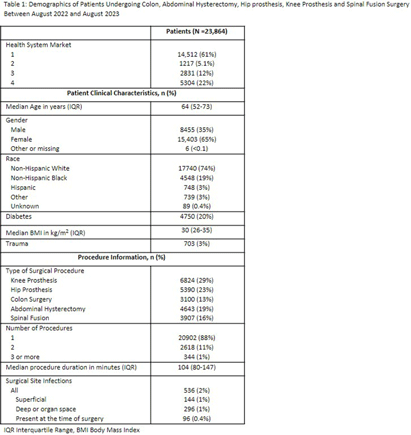
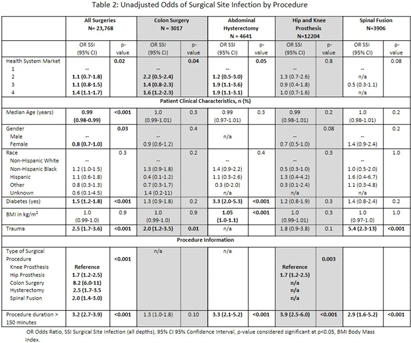
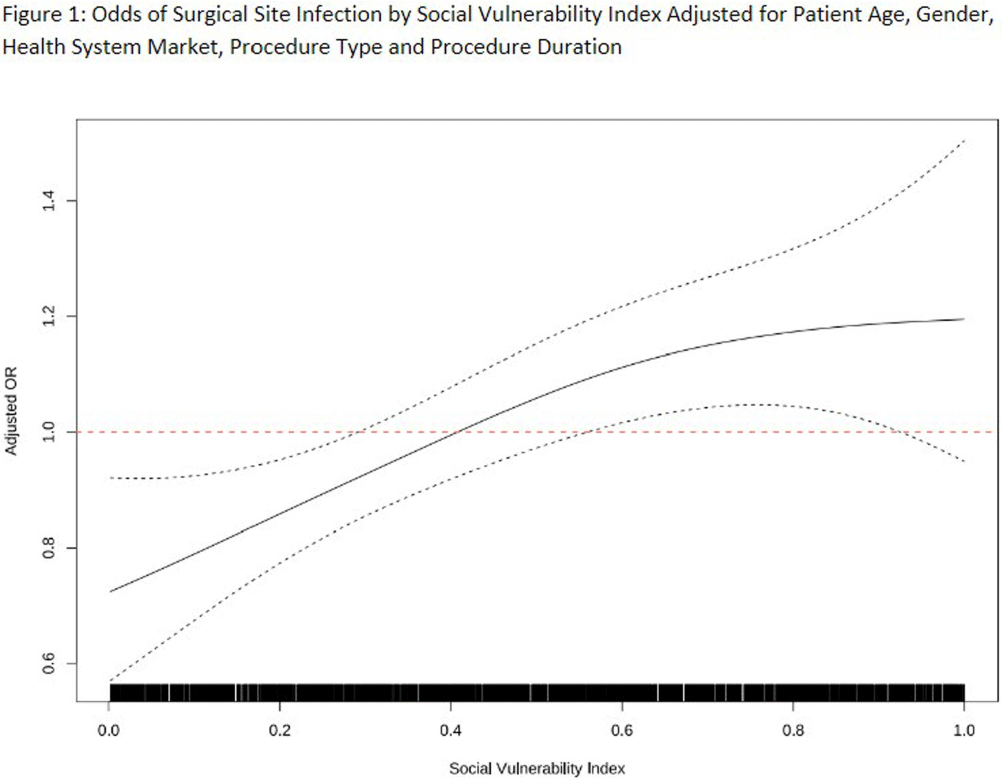
Introduction: Social disparities have been shown to impact a wide variety of healthcare outcomes. Surgical site infections (SSIs) are associated with substantial patient morbidity, but studies on the intersection of social disparity and SSI are limited. We sought to evaluate the association between SSI and the Center for Disease Control and Prevention’s social vulnerability index (SVI). Methods: Patients with National Health Safety Network (NHSN) procedure codes for colon, abdominal hysterectomy, hip prosthesis, knee prosthesis and spinal fusion surgeries were retrieved from the electronic medical records of 20 hospitals across 4 geographic markets. SSIs were identified by trained infection preventionists using NHSN definitions. Descriptive statistics were used for baseline demographic and clinical characteristics. Univariate logistic regression was performed to assess the association of demographic, clinical, and procedural factors with the outcome of SSI. Further univariate subgroup analysis was completed by procedure. To account for the nonlinear relationship between the social vulnerability index and SSIs, smoothing splines were used in a Bayesian hierarchical logistic regression model, with random effects to account for the different market practices. Nonlinear effects of procedure duration were also investigated while adjusting for the patient age, procedure type, and health system market. Results: 23,864 surgical procedures among 22,319 unique patients identified between 1 August 2022 and 31 August 2023. 96 patients with infection present at time of surgery were excluded. The study population was mostly white (74%) and female (65%) (Table 1). Less than 13% of the patients had more than one procedure during this time. In a univariate analysis, we found evidence of market and procedure effects, with colon surgery being associated with the highest odds of SSI. Procedure duration was significantly associated with SSI in both univariate and multivariable models, with a drastic increase in the odds of SSI for procedures > 150 mins. In the multivariable model we found that SVIs lower than 0.4 (95% CI 0.28 to 0.55) are associated with an adjusted odds ratio (aOR) < 1. (Figure 1) Conclusions: Our study shows that the relationship of social vulnerability and adverse outcomes is highly complex with nonlinear dynamics at play. After adjusting for procedure type, duration, patient age, gender and health system market the odds of SSIs increase sharply in patients with higher SVI until leveling off at an elevated risk.
Methicillin-resistant Staphylococcus aureus mupirocin resistance rates in a large healthcare system
-
- Journal:
- Antimicrobial Stewardship & Healthcare Epidemiology / Volume 3 / Issue S2 / June 2023
- Published online by Cambridge University Press:
- 29 September 2023, pp. s85-s86
-
- Article
-
- You have access
- Open access
- Export citation
-
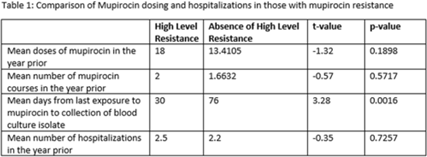
Methicillin-resistant Staphylococcus aureus (MRSA) is a common etiology of hospital-acquired infections (HAIs). One strategy to reduce HAIs due to MRSA involves a multistep decolonization process. This often involves nasal application of mupirocin 2% ointment. In our institution, when individuals meet criteria for decolonization, we recommend 5 days of treatment given twice daily. High levels of mupirocin resistance have been reported in some hospital systems, with >80% of tested isolates being resistant. To better understand our resistance levels, we selected 238 MRSA isolates from blood cultures to be tested for mupirocin resistance to correlate the presence of resistance and use of mupirocin for decolonization. We choose to assess MRSA blood isolates rather than nasal swabs given that we aim to prevent invasive MRSA infections, including blood stream infections, with decolonization. The blood cultures were collected from 11 acute-care facilities within our system from March 2021 through June 2022. High-level resistance was defined as an MIC >1,024 μg/mL according to Clinical and Laboratory Standards Institute guidelines. Of those, 7.14% showed high level resistance, and 76.47% occurred in those who were exposed to mupirocin and 23.53% occurred in those without mupirocin exposure (P = .0094). On average, those with high-level resistance had had more recent exposure to mupirocin compared to those without resistance, which was statistically significant. Also, those with high resistance, on average, received more doses of mupirocin, although this was not statistically significant. Conclusions: More recent and higher number of doses of mupirocin were associated with the development of resistance, which is consistent with what we know from pharmacodynamics of antibiotic resistance with other agents. These findings may be particularly important for those patients who have frequent hospitalizations and often require decolonization. Understanding baseline mupirocin resistance levels in an institution can assist with determining decolonization strategies.
Disclosures: None
Assessing alternatives to HEPA air purification requirements to reduce viral pathogen transmission in healthcare HVAC systems
-
- Journal:
- Antimicrobial Stewardship & Healthcare Epidemiology / Volume 2 / Issue S1 / July 2022
- Published online by Cambridge University Press:
- 16 May 2022, p. s85
-
- Article
-
- You have access
- Open access
- Export citation
Removal of SARS-CoV-2 bioaerosols using ultraviolet air filtration
- Part of
-
- Journal:
- Infection Control & Hospital Epidemiology / Volume 42 / Issue 8 / August 2021
- Published online by Cambridge University Press:
- 12 March 2021, pp. 1014-1015
- Print publication:
- August 2021
-
- Article
-
- You have access
- Open access
- HTML
- Export citation
Coronavirus disease 2019 (COVID-19) research agenda for healthcare epidemiology
- Part of
-
- Journal:
- Infection Control & Hospital Epidemiology / Volume 43 / Issue 2 / February 2022
- Published online by Cambridge University Press:
- 25 January 2021, pp. 156-166
- Print publication:
- February 2022
-
- Article
-
- You have access
- Open access
- HTML
- Export citation
A Self-Reflection Stewardship Workshop Improves Resident Physician Understanding of Ambulatory Antibiotic Stewardship
-
- Journal:
- Infection Control & Hospital Epidemiology / Volume 41 / Issue S1 / October 2020
- Published online by Cambridge University Press:
- 02 November 2020, p. s103
- Print publication:
- October 2020
-
- Article
-
- You have access
- Export citation
Correlation of the air–surface nexus of bacterial burden during routine patient care
-
- Journal:
- Infection Control & Hospital Epidemiology / Volume 41 / Issue 11 / November 2020
- Published online by Cambridge University Press:
- 16 September 2020, pp. 1353-1354
- Print publication:
- November 2020
-
- Article
- Export citation
How well do N95 respirators protect healthcare providers against aerosolized influenza virus?
-
- Journal:
- Infection Control & Hospital Epidemiology / Volume 40 / Issue 2 / February 2019
- Published online by Cambridge University Press:
- 18 December 2018, pp. 232-234
- Print publication:
- February 2019
-
- Article
- Export citation
Infrequent Air Contamination With Acinetobacter baumannii of Air Surrounding Known Colonized or Infected Patients
-
- Journal:
- Infection Control & Hospital Epidemiology / Volume 36 / Issue 7 / July 2015
- Published online by Cambridge University Press:
- 31 March 2015, pp. 830-832
- Print publication:
- July 2015
-
- Article
- Export citation
Transmission Route of Rhinovirus Type 39 in a Monodispersed Airborne Aerosol
-
- Journal:
- Infection Control & Hospital Epidemiology / Volume 31 / Issue 8 / August 2010
- Published online by Cambridge University Press:
- 02 January 2015, pp. 857-859
- Print publication:
- August 2010
-
- Article
- Export citation
