To save content items to your account,
please confirm that you agree to abide by our usage policies.
If this is the first time you use this feature, you will be asked to authorise Cambridge Core to connect with your account.
Find out more about saving content to .
To save content items to your Kindle, first ensure no-reply@cambridge.org
is added to your Approved Personal Document E-mail List under your Personal Document Settings
on the Manage Your Content and Devices page of your Amazon account. Then enter the ‘name’ part
of your Kindle email address below.
Find out more about saving to your Kindle.
Note you can select to save to either the @free.kindle.com or @kindle.com variations.
‘@free.kindle.com’ emails are free but can only be saved to your device when it is connected to wi-fi.
‘@kindle.com’ emails can be delivered even when you are not connected to wi-fi, but note that service fees apply.
In 2017, unprecedented rainfall from Hurricane Harvey resulted in severe flooding in parts of Texas. While the association between the immediate effects of severe weather on mortality is well established, less is known about long-term mortality and how risk may differ across vulnerable populations, especially those reliant on health services. This study examines the association between severe weather exposure from Hurricane Harvey and mortality among vulnerable populations of older adults.
Methods:
This retrospective cohort study used Medicare administrative claims data from beneficiaries aged 65+ who resided in Texas or Louisiana the year before and after Hurricane Harvey. Historic weather data was used to construct a 4-day measure of ZIP code tabulation area cumulative rainfall and identify locales exposed to high rainfall (above 75mm). Vulnerable older adult populations were identified. Attributable risk and relative risks (RRs) were estimated to quantify the impact of high rain exposure on mortality. Time-to-event analyses estimated associations between exposure to high rain and 12-month mortality.
Results:
The study included 1,730,693 beneficiaries; 535,794 (37.5%) were exposed to high rain in Texas, and 264,265 (87.5%) in Louisiana. Beneficiaries with Alzheimer’s disease and related dementias (ADRD) exposed to high rain had a 5% higher risk of mortality in fully adjusted models (HR=1.05, 95% CI: 1.02, 1.07) and 1,192 attributable deaths. High rain resulting from Hurricane Harvey was associated with a 13% higher risk of mortality among beneficiaries with end-stage renal disease (ESRD) in fully adjusted models (HR=1.13, 95% CI: 1.04, 1.23) and 85 attributable deaths.
Conclusion:
The risk of mortality from exposure to severe weather differs based on the type of vulnerability. Those with an ADRD or ESRD diagnosis, in particular, had elevated mortality rates. High rain exposure had a significantly larger mortality impact on those of lower socioeconomic status. Emergency planning should pay particular attention to these highly vulnerable groups.
This book is dedicated to Susan Reynolds and celebrates the work of a scholar whose views have been central to reappraisals of the position of the laity in the Middle Ages. The themes and concerns include a medieval world in which the activity and attitudes of the laity are not obscured by ideas expressed more systematically in theoretical treatises by ecclesiastics; a world in which lay collective action and thought take centre stage. Reynolds has written her own Middle Ages, especially in her innovative book Kingdoms and Communities whose influence can be seen in so many of the essays. Collectivities, solidarities and collective action are everywhere in these essays, as Reynolds has shown us to expect them to be. Collective action was carried out often in pursuit of social peace, but it existed precisely because there was discord. Of the narratives and interpretative frameworks with which Reynolds's work has been concerned, the book has least to say directly on the debate over feudalism. The book engages many of the themes of Reynolds's work and pursues some of the issues which are prominent in re-examinations of the medieval world and in studies of the medieval laity. It discusses secular aristocratic attitudes towards judicial combat within the broader setting of fictional 'treason trials' of the later twelfth century. Although kinship did not start out as an explicit and overt theme of the book, it emerges as a leitmotiv, perhaps in part because when feudalism is removed, kinship is thrown into sharper relief.
This chapter focuses on the judicial duel 'as it was practised in the courts' during the reigns of King Henry II of England and his sons Richard I and John (1199-1216 - in this last instance curtailed by King John's loss of Normandy to the Capetian king Philip Augustus in 1204). Originally it was intended to devote as much discussion to the 'cross-channel' territories of these kings, as to the English kingdom. The main focus of the study is a handful of cases in which the judicial duel raises important questions about the interaction of political issues and the conduct of legal affairs after Henry of Anjou succeeded to the English throne; and all of these - including the abortive Poitevin trial - involved members of the secular aristocracy in Angevin- ruled territories.
This introduction presents an overview of key concepts covered in the subsequent chapters of this book. The book is dedicated to Susan Reynolds and celebrates the work of a scholar whose views have been central to recent reappraisals of the position of the laity in the Middle Ages. It is arranged chronologically but is bound together by a series of themes and concerns. Those themes and concerns are hers: a medieval world in which the activity and attitudes of the laity are not obscured by ideas expressed more systematically in theoretical treatises by ecclesiastics; a world in which lay collective action and thought take centre stage. Susan Reynolds has written her own Middle Ages, especially in her innovative book Kingdoms and Communities. It is a world of overlapping communities or, as she would prefer it of 'collectivities' and 'solidarities'.
Released six years after Shakespeare in Love won Best Picture Oscar, Stage Beauty (Eyre, 2004) portrays Shakespearean performance history at the point in the Restoration when female impersonators were replaced by actresses on the English stage. Given the similarities between the two films, it comes as no surprise to find that the press response to Stage Beauty made frequent comparisons, describing it as: ‘bitchy half-sister to Shakespeare in Love’; ‘Shakespeare in Love II’; and ‘Shakespeare in Love for transvestites’. Those involved in making Stage Beauty were keen to differentiate its cinematic qualities. The film was adapted by Jeffrey Hatcher from his stage play Compleat Female Stage Beauty, and directed by Richard Eyre, a former artistic director of the National Theatre. This chapter examines the textual features that mark this film out as a serious-minded depiction of theatrical heritage and gender play, along with the reception discourses that the film stimulated. It also considers possible barriers to cultural engagement with Shakespeare as manifested in ‘art cinema’ with reference to audience research.
This conversation began as a roundtable at the 2023 joint meeting of the American Anthropological Association and the Canadian Anthropology Society in Toronto. The roundtable was part of the Executive Program and was intended as a follow-up to Kisha Supernant’s keynote presentation, which was entitled ‘Truth before transition. Reimagining anthropology as restorative justice.’ Considering the sensitive nature of the topic, we responded to a selection of written questions from the audience rather than taking open questions. The discussion was webcast, then transcribed and redacted. This article includes a portion of the question period as well as a contextual introduction that was not part of the initial conversation.
Paleontology provides insights into the history of the planet, from the origins of life billions of years ago to the biotic changes of the Recent. The scope of paleontological research is as vast as it is varied, and the field is constantly evolving. In an effort to identify “Big Questions” in paleontology, experts from around the world came together to build a list of priority questions the field can address in the years ahead. The 89 questions presented herein (grouped within 11 themes) represent contributions from nearly 200 international scientists. These questions touch on common themes including biodiversity drivers and patterns, integrating data types across spatiotemporal scales, applying paleontological data to contemporary biodiversity and climate issues, and effectively utilizing innovative methods and technology for new paleontological insights. In addition to these theoretical questions, discussions touch upon structural concerns within the field, advocating for an increased valuation of specimen-based research, protection of natural heritage sites, and the importance of collections infrastructure, along with a stronger emphasis on human diversity, equity, and inclusion. These questions offer a starting point—an initial nucleus of consensus that paleontologists can expand on—for engaging in discussions, securing funding, advocating for museums, and fostering continued growth in shared research directions.
Determine how characteristics of deployment mild traumatic brain injury (TBI) and blast exposure influence the relationship between the functional brain connectome with cognitive outcomes and symptom severity.
Participants and Methods:
N = 181 Iraq and Afghanistan combat veterans completed structured clinical interviews, cognitive testing, self-report questionnaires, and magnetoencephalography (MEG). MEG data were acquired in the resting-state with eyes open. MEG data were beamformed to identify brain regions active at rest. Functional brain connectomes representing the unique network present for a given individual were created using active brain regions identified for each participant. Network metrics describing these connectomes were calculated at the participant level. Cognitive tests included the WAIS-IV, Trail Making Test Parts A&B, and the Controlled Oral Word Association test. Due to differences in normative data across tests, raw scores were used in analyses. Symptom measures included the PTSD Checklist - 5 (PCL-5), Patient Health Questionnaire (PHQ-9), Neurobehavioral Symptoms Inventory (NSI), Quality of Life After Brain Injury (QOLIBRI), Pittsburgh Sleep Quality Index (PsQi), the Distress Tolerance Scale (DTS), and the PROMIS Pain Interference Scale (PROMIS-PI).
Results:
Hierarchical linear regression analyses revealed that several network metrics were significantly related to both cognitive outcomes and symptom severity after adjusting for demographic covariates and clinical characteristics.
The relationship between Global Efficiency (GE) and cognitive outcomes was moderated by deployment TBI on the WAIS-IV Full Scale Index (FSI), Perceptual Reasoning Index (PRI), and General Ability Index (GAI). In all cases, when deployment TBI was absent, greater GE was associated with poorer cognitive scores. The relationship between GE and symptom severity was moderated by the severity of blast exposure. Greater GE was associated with lower symptom severity at lower blast severities for the PHQ-9 and QOLIBRI A (thinking) and E (negative emotions). Moderation effects were also observed for the PSQI. In the absence of deployment TBI, greater GE was associated with better sleep quality; however, in the presence of deployment TBI, greater GE was associated with poorer sleep quality. Other connectome-outcome relationships were not consistently moderated by Deployment TBI or blast history
Conclusions:
Results demonstrated relationships between several aspects the functional connectome of the brain with both cognitive outcomes and symptom severity beyond effects of common demographic and clinical variables. Moderation analyses revealed that the relationship between GE of the connectome and outcomes is frequently disrupted by deployment TBI and blast. GE is a measure of the ease of information transfer through the network. These results identified consistent relationships between GE and outcomes in the absence of deployment TBI or blast, but these relationships disappear when deployment TBI or blast are present. Participants in this study were on average 11 years post-TBI or blast exposure, suggesting these are chronic rather than acute effects. GE was significantly correlated with most symptom severity measures as well as the WAIS-IV PRI, GAI, VCI, and FSI. Future efforts to normalize the relationship between GE and outcomes following TBI may improve rehabilitation outcomes and directly affect areas of concern commonly reported by service members following TBI or blast exposure.
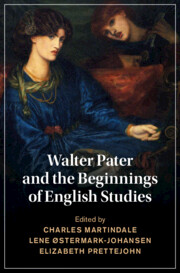
Walter Pater's significance for the institutionalization of English studies at British universities in the nineteenth century is often overlooked. Addressing the importance of his volume Appreciations (1889) in placing English literature in both a national and an international context, this book demonstrates the indebtedness of the English essay to the French tradition and brings together the classic, the Romantic, the English and the European. With essays on drama, prose, and poetry, from Shakespeare and Browne, to Lamb, Coleridge, Wordsworth and Pater's contemporaries Rossetti and Morris, Appreciations exemplifies ideals of aesthetic criticism formulated in Pater's first book, Studies in the History of the Renaissance (1873). Subjectivity pervades Pater's essays on the English authors, while bringing out their exceptional qualities in a manner reaching far into twentieth-century criticism. This title is part of the Flip it Open Programme and may also be available Open Access. Check our website Cambridge Core for details.
In 2006, the World Bank's private sector lending arm, the International Finance Corporation (IFC), introduced eight Environmental and Social Performance Standards (PSs) to define IFC clients’ responsibilities for managing their environmental and social risks, including those related to cultural heritage. Since their introduction, the PSs have evolved into a de facto global standard that other development banks and many private sector banks, insurers, and development proponents have voluntarily adopted to help manage their own risk exposure. Although the widespread adoption of such policies can be viewed positively as a reflection of good governance, the PSs were never designed with this purpose in mind. This article traces the development of cultural heritage policy within the World Bank Group, then critically examines the IFC PSs as they relate to cultural heritage, drawing attention to the elements in need of revision to better reflect internationally recognized good practice for the management of cultural heritage. Equally important, we recommend the development and implementation of a bespoke cultural heritage framework for the private sector.
The second part of this book focusses on Pater’s engagement with a number of major English writers. Appreciations covers all post-medieval centuries, excluding only the ‘Augustan’ period about which Pater was rather less than enthusiastic (though he did design, and perhaps complete, an essay on Dr Johnson). Pater is not normally thought of as a leading Shakespearean, but unsurprisingly Shakespeare was central to his idea of English literature, and at one point he may possibly have planned a whole volume on him; he was also at least sympathetic to the idea of undertaking a commentary for schoolboy use on Romeo and Juliet, whose ‘flawless execution’ he commended (‘Measure for Measure’, App., 170). Typically he did not write about the most celebrated plays (his own favourites also included Hamlet), but instead chose for treatment ones less popular in his day: Love’s Labour’s Lost (perhaps because of its reflections on language and style), Measure for Measure (arguably the finest of his three essays, centrally concerned with the way a work of art can profitably engage with ethics), and Richard II (the main focus of ‘Shakespeare’s English Kings’, where Pater contributed to the idea of Richard as the ‘poet-king’ and added to the understanding of the deposition scene). Alex Wong examines all three essays in detail, and comments on the overall value and distinctive character of Pater’s view of Shakespeare.