Refine search
Actions for selected content:
1 results
Numerical inverse scattering transform for the defocusing nonlinear Schrödinger equation with box-type initial conditions on a nonzero background
-
- Journal:
- Journal of Nonlinear Waves / Volume 2 / 2026
- Published online by Cambridge University Press:
- 09 January 2026, e1
-
- Article
-
- You have access
- Open access
- HTML
- Export citation
-
We present a method to solve numerically the Cauchy problem for the defocusing nonlinear Schrödinger (NLS) equation with a box-type initial condition (IC) having a nontrivial background of amplitude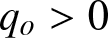 $q_o \gt 0$ as $x\to \pm \infty$ by implementing numerically the corresponding inverse scattering transform (IST). The Riemann–Hilbert problem associated with the inverse transform is solved numerically by means of appropriate contour deformations in the complex plane following the numerical implementation of the Deift–Zhou nonlinear steepest descent method. In this work, the box parameters are chosen so that there is no discrete spectrum (i.e., no solitons). The numerical method is demonstrated to be accurate within the two asymptotic regimes corresponding to two different regions of the $(x,t)$-plane depending on whether $|x/(2t)| \lt q_o$ or $|x/(2t)| \gt q_o$, as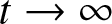 $t \to \infty$.

