
Jupiter: The big attraction this year is the mutual events of Jupiter’s bright Galilean satellites (Io, Europa, Ganymede, and Callisto). Because the plane of their orbits points almost directly at the Earth and the Sun in 2021, these satellites occasionally eclipse or occult each other. These events are fun to watch and worth catching – if you don't, you’ll have to wait until 2027. We’ve sorted out the best such events (those with a brightness drop of at least 0.3 magnitudes that happen when Jupiter is more than 90° from the Sun so they’re easily visible) and they’re all listed in this link.
Because of our perspective this year, these moons appear to travel on nearly straight lines. All of them, and their shadows pass in front of Jupiter – and they also get blocked by Jupiter and its shadow. This handy Jupiter's Moons link from Sky & Telescope Magazine will guide you to the moons and what they’re doing tonight.
If you’re up until the wee hours, you can observe Jupiter by May. It’s at opposition on August 15, when it rises at sunset and by midnight it’s near the meridian (due south, if you live in the northern hemisphere). Between August and October, it’s well placed at the end of twilight, and it remains easily visible through the end of the year. It’s still at a fairly southerly declination, but it’s moving northward and it’s now near the Cetus-Aquarius border.
As always, look for the zones and belts. Even when its color is subdued, you should look for the Great Red Spot in the southern equatorial belt within an hour or so of when Jupiter’s rotation brings it towards us (this handy Red Spot transit times link, also from S&T Magazine will tell you when to look).
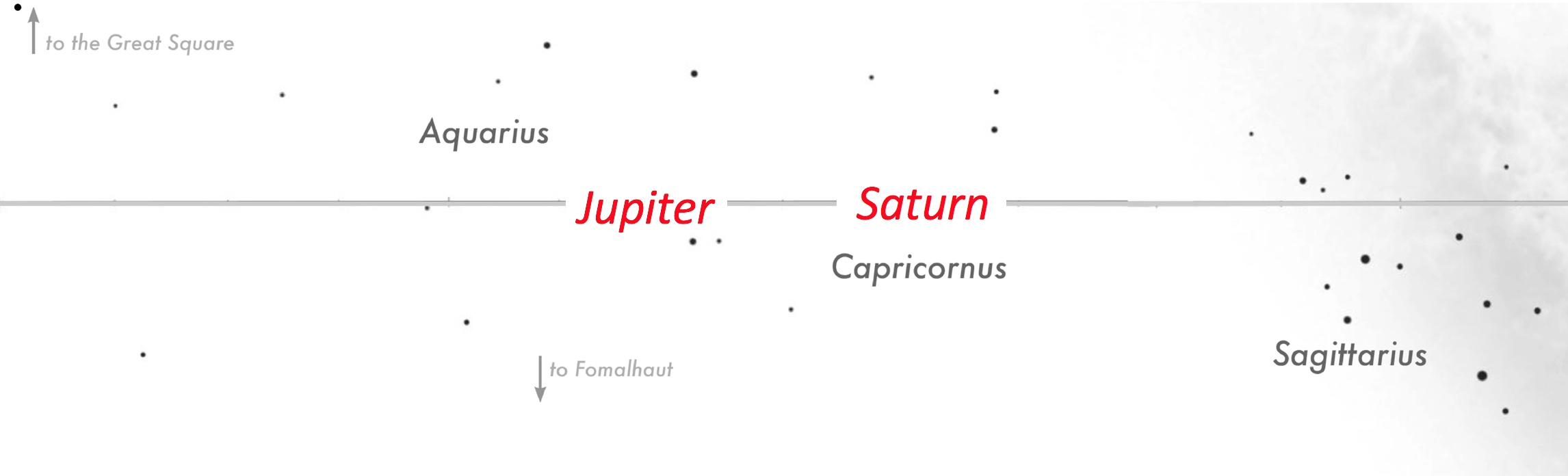
Saturn: In 2021 Saturn is at opposition on August 2, and it spends most of the year preceding Jupiter across the sky by about an hour. It’s visible before dawn by the start of April and is well placed in the pre-dawn skies by April, Between August and October it’s well placed at the end of twilight, and it remains easily visible through the end of the year. Right after sunset in December, it’s nestled between Venus and Jupiter low in the west.
