

Leather Binding Materials
Real leathers
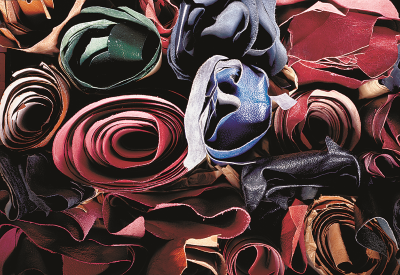
Real leather is taken from an animal hide. ‘Split’ refers to the underside of the hide; the other side, ‘top-grain’, is superior and more expensive. When publishers use generic and imprecise descriptions such as ‘real leather’ or ‘genuine leather’, the Bible cover is usually made from an inferior and industrially produced split pigskin material.
Goatskin
A beautiful and very durable top-quality leather. Traditionally known as ‘Morocco’ leather, it is strong yet supple and is used in the finest bindings. The best goatskins for bookbinding come from arid areas where environmental conditions are ideal for producing hides with the necessary balance of strength and suppleness. Here they are partially tanned using the same traditional vegetable preservative materials and methods which have been used through many generations.
Calfskin
A traditional high-quality leather used in fine bindings. It is long-lasting and becomes more supple with use. The finest calfskin is renowned for its distinctive natural grain and rich colour shading, features that will contribute to the ‘uniqueness’ of each cover. More recently, ‘analine’ calfskin is being used on the very highest quality Bibles. This material has no protective coating on its surface and will thus through usage pick up markings in a form of individual patina that accentuates the beauty of the leather and allows the aroma of the leather to come to the fore. However, care must be taken in avoiding damage to the cover from sharp implements or liquids.
The best quality calfskin is sometimes known as ‘top grain’ in the US. This refers to the retention of the strongest part of the hide. Some Bible publishers use cheaper grades of thinner, split calfskin, which lack the subtle qualities of the best material but are otherwise similar in appearance. Properly, they should be identified as such by using a different name to distinguish a split from a top grain.
Calf Split Leather
A superior grade to French Morocco leather, tanned to approach the quality and feel of full-grain calfskin leather.
French Morocco leather
Slightly thinner than other grades of leather, and therefore relatively flexible and soft even when new. A French Morocco binding offers high-quality real leather at an economical price.
Cambridge uses this term for leather taken from a split hide, traditionally sheepskin but now often calf or cowhide.
To maintain the fine quality for which Cambridge is renowned, the leather tanneries used by our bookbinders carefully select and scrutinise the best leathers from around the world. Of course, because leather is a natural product – however it is processed – each leather-bound Bible is unique; a facet that is particularly noticeable when natural-grain leathers rather than when an artificially grained leather hide is used.
Faux leathers
Modern technology has provided the binder with an impressive new range of moderately priced materials, which are nevertheless attractive to look at and handle, and wear very well indeed. Faux leather (or imitation leather) is an increasingly attractive cover material with some visual and tactile resemblance to real leather but at a lower price. It may often be very colourful and highly decorative, whilst remaining very flexible and robust.
Bonded leather
Not so commonly used as it once was, this may be made from a combination of materials: leather fibres and bonding resin and – with inferior grades – sometimes other ‘filler’ material such as card and paper. The materials used determine appearance and longevity: not all Bible bindings described as ‘bonded leather’ are of equal quality.
Cambridge Bibles with bonded leather covers use the best quality European manufactured bonded leathers.
Imitation Leather
These materials are usually made from polyurethane and are the most economical form of fine-binding material being very supple, smooth and often impressed with attractive grain designs. However, they are not as durable or as long-lasting as the real leathers and in certain climatic conditions where there are high temperatures and high levels of humidity are more prone to decay over time.
Most Cambridge leather-bound Bibles have flexible covers. Some of the larger Bibles — those described as 'over boards' – have a rigid cover.



