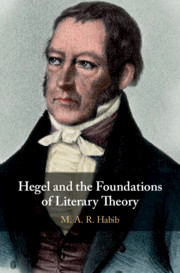
Welcome to this special site celebrating Georg
Wilhelm Friedrich Hegel’s 250th birthday on 27 August 2020. To mark the occasion, we have collated a wide range of Cambridge content from across books and journals, along with brand new podcasts and
blogs featuring some of today’s leading Hegel scholars, as well as an interview with Terry Pinkard where he discusses Hegel's impact today, his distinctive readings of Hegel and also Hegel's life in a historical context.
It is significant that, like Beethoven, Hölderlin
and Wordsworth, Hegel was born in 1770. These figures all experienced the
seismic event of the French Revolution while on the brink of adulthood. Hegel’s
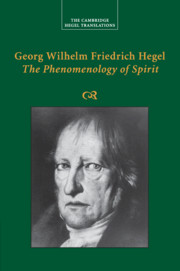
extraordinarily ambitious early work, the Phenomenology of Spirit,
is still marked by this, with its images of bursting forth into a new era.
As Hegel refined the philosophical project that the Phenomenology both
introduced and, in the end, found it needed to try and encompass within itself,
he rose to become one of the most influential intellectuals in Europe. He was
at the height of his powers as a professor at the University of Berlin, where
he expounded his philosophical system to large audiences, when his life was
suddenly cut short during the cholera pandemic that hit the city in 1831.
A systematic thinker par excellence, Hegel
contributed to a wide array of interconnected areas (as the material made
available here reveals). There have been many waves of Hegel interpretation and
reinterpretation, in more recent years among both ‘analytic’ and ‘continental’
philosophers. Scholars are also increasingly grappling with Hegel’s involvement
in European racism, while at the same time the politically emancipatory power
of his thought continues to be explored. In many senses, Hegel remains, 250
years on, a living and challenging thinker.
Written by Christoph Schuringa, editor of Hegel Bulletin
Listen
Hear from leading Hegel scholars as they discuss Hegel.