Refine search
Actions for selected content:
31 results

Rethinking Norman Italy
- Studies in honour of Graham A. Loud
-
- Published by:
- Manchester University Press
- Published online:
- 05 February 2026
List of figures
-
- Book:
- Rethinking Norman Italy
- Published by:
- Manchester University Press
- Published online:
- 05 February 2026, pp vii-viii
-
- Chapter
- Export citation
List of abbreviations
-
- Book:
- Rethinking Norman Italy
- Published by:
- Manchester University Press
- Published online:
- 05 February 2026, pp xvi-xvii
-
- Chapter
- Export citation
List of contributors
-
- Book:
- Rethinking Norman Italy
- Published by:
- Manchester University Press
- Published online:
- 05 February 2026, pp x-xiv
-
- Chapter
- Export citation
Part I: - Historiographies
-
- Book:
- Rethinking Norman Italy
- Published by:
- Manchester University Press
- Published online:
- 05 February 2026, pp 13-14
-
- Chapter
- Export citation
Index
-
- Book:
- Rethinking Norman Italy
- Published by:
- Manchester University Press
- Published online:
- 05 February 2026, pp 357-369
-
- Chapter
- Export citation
Contents
-
- Book:
- Rethinking Norman Italy
- Published by:
- Manchester University Press
- Published online:
- 05 February 2026, pp v-vi
-
- Chapter
- Export citation
1 - Introduction: Rethinking Norman Italy
-
-
- Book:
- Rethinking Norman Italy
- Published by:
- Manchester University Press
- Published online:
- 05 February 2026, pp 1-12
-
- Chapter
- Export citation
List of tables
-
- Book:
- Rethinking Norman Italy
- Published by:
- Manchester University Press
- Published online:
- 05 February 2026, pp ix-ix
-
- Chapter
- Export citation
Bibliography
-
- Book:
- Rethinking Norman Italy
- Published by:
- Manchester University Press
- Published online:
- 05 February 2026, pp 323-356
-
- Chapter
- Export citation
Part II: - Identities and communities
-
- Book:
- Rethinking Norman Italy
- Published by:
- Manchester University Press
- Published online:
- 05 February 2026, pp 110-112
-
- Chapter
- Export citation
Acknowledgements
-
- Book:
- Rethinking Norman Italy
- Published by:
- Manchester University Press
- Published online:
- 05 February 2026, pp xv-xv
-
- Chapter
- Export citation
Figure 0.1
-
- Book:
- Rethinking Norman Italy
- Published by:
- Manchester University Press
- Published online:
- 05 February 2026, pp xviii-xviii
-
- Chapter
- Export citation
Part III: - Religion and the Church
-
- Book:
- Rethinking Norman Italy
- Published by:
- Manchester University Press
- Published online:
- 05 February 2026, pp 189-190
-
- Chapter
- Export citation
Front matter
-
- Book:
- Rethinking Norman Italy
- Published by:
- Manchester University Press
- Published online:
- 05 February 2026, pp i-iv
-
- Chapter
- Export citation
Part IV: - Conquering Norman Italy and beyond
-
- Book:
- Rethinking Norman Italy
- Published by:
- Manchester University Press
- Published online:
- 05 February 2026, pp 262-264
-
- Chapter
- Export citation
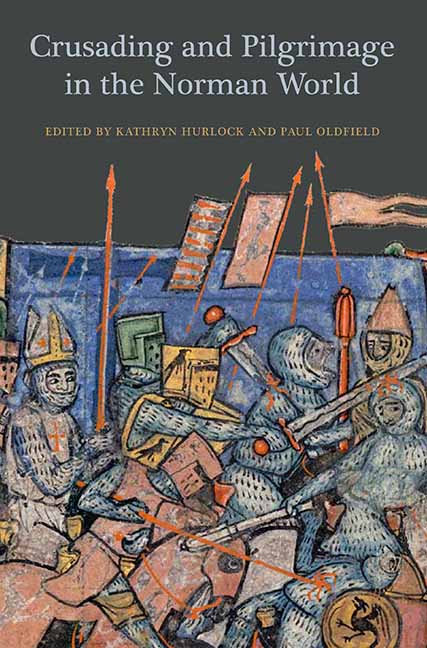
Crusading and Pilgrimage in the Norman World
-
- Published by:
- Boydell & Brewer
- Published online:
- 25 May 2021
- Print publication:
- 16 July 2015
Abbreviations
-
- Book:
- Crusading and Pilgrimage in the Norman World
- Published by:
- Boydell & Brewer
- Published online:
- 25 May 2021
- Print publication:
- 16 July 2015, pp ix-x
-
- Chapter
- Export citation
Index
-
- Book:
- Crusading and Pilgrimage in the Norman World
- Published by:
- Boydell & Brewer
- Published online:
- 25 May 2021
- Print publication:
- 16 July 2015, pp 223-234
-
- Chapter
- Export citation
Part I
-
- Book:
- Crusading and Pilgrimage in the Norman World
- Published by:
- Boydell & Brewer
- Published online:
- 25 May 2021
- Print publication:
- 16 July 2015, pp 11-12
-
- Chapter
- Export citation
