Temporary Disruption
We have implemented additional assurance measures to protect our systems.
As a result, we have suspended some of our systems and services. We apologise for any temporary disruption some customers may experience.
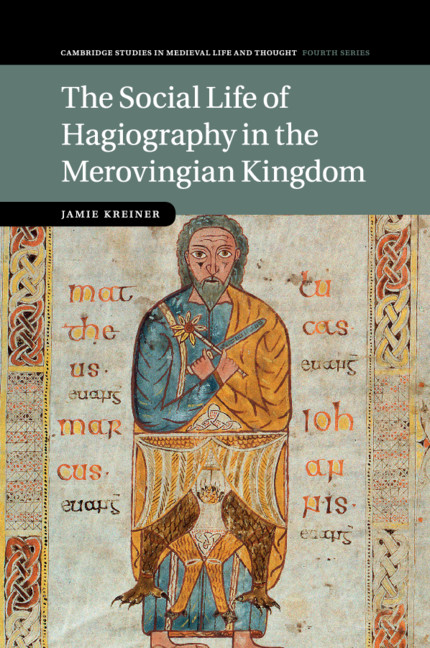
This book charts the influence of Christian ideas about social responsibility on the legal, fiscal and operational policies of the Merovingian government, which consistently depended upon the collaboration of kings and elites to succeed, and it shows how a set of stories transformed the political playing field in early medieval Gaul. Contemporary thinkers encouraged this development by writing political arguments in the form of hagiography, more to redefine the rules and resources of elite culture than to promote saints' cults. Jamie Kreiner explores how hagiographers were able to do this effectively, by layering their arguments with different rhetorical and cognitive strategies while keeping the surface narratives entertaining. The result was a subtle and captivating literature that gives us new ways of thinking about how ideas and institutions can change, and how the vibrancy of Merovingian culture inspired subsequent Carolingian developments.
'Kreiner is both an engaging analyst of hagiography and an efficient guide through the ‘real world’ of Merovingian society. … provides us with a rich and subtle examination of the way that hagiographical literature could be constructed in the early Middle Ages.'
Richard Sowerby Source: Early Medieval Europe
Loading metrics...
* Views captured on Cambridge Core between #date#. This data will be updated every 24 hours.
Usage data cannot currently be displayed.
This section outlines the accessibility features of this content - including support for screen readers, full keyboard navigation and high-contrast display options. This may not be relevant for you.
Accessibility compliance for the HTML of this book is currently unknown and may be updated in the future.