Book contents
- Frontmatter
- Contents
- Preface
- Introduction
- Annotated Bibliography
- Ainsworth's Magazine, 1842–1854
- All the Year Round, 1859–1895
- Bentley's Miscellany, 1837–1868
- Bentley's Quarterly Review, 1859–1860
- Blackwood's Edinburgh Magazine, 1824–1900
- The British and Foreign Review, 1835–1844
- The British Quarterly Review, 1845–1886
- Chambers's (Edinburgh) Journal, 1832–1900
- The Contemporary Review, 1866–1900
- The Cornhill Magazine, 1860–1900
- The Dark Blue, 1871–1873
- The Dublin Review, 1836–1900
- The Dublin University Magazine, 1833–1880
- The Edinburgh Review, 1802–1900
- The Foreign Quarterly Review, 1827–1846
- The Fortnightly Review, 1865–1900
- Fraser's Magazine for Town and Country, 1830–1882
- Good Words, 1860–1900
- Hogg's (Weekly) Instructor, 1845–1856
- The Home and Foreign Review, 1862–1864
- Household Words, 1850–1859
- Howitt's Journal, 1847–1848
- The Leisure Hour, 1852–1900
- The London Quarterly Review, 1853–1900
- The London Review, 1829–1830
- Longman's Magazine, 1882–1900
- Macmillan's Magazine, 1859–1900
- The Modern Review, 1880–1884
- The Monthly Chronicle, 1838–1841
- Murray's Magazine, 1887–1891
- The National Review, 1855–1864
- The National Review, 1883–1900
- The New Monthly Magazine, 1821–1854
- The New Quarterly Magazine, 1873–1880
- The New Review, 1889–1897
- The Nineteenth Century, 1877–1900
- The North British Review, 1844–1871
- The Oxford and Cambridge Magazine, 1856
- The Prospective Review, 1845–1855
- The Quarterly Review, 1824–1900
- The Rambler, 1848–1862
- Saint Pauls, 1867–1874
- The Scottish Review, 1882–1900
- Tait's Edinburgh Magazine, 1832–1855
- Temple Bar, 1860–1900
- The Theological Review, 1864–1879
- Titan: A Monthly Magazine, 1856–1859
- The Westminster Review, 1824–1900
- Key to Indexes
- Author Index
- Subject Index
The Rambler, 1848–1862
from Annotated Bibliography
Published online by Cambridge University Press: 05 May 2012
Book contents
- Frontmatter
- Contents
- Preface
- Introduction
- Annotated Bibliography
- Ainsworth's Magazine, 1842–1854
- All the Year Round, 1859–1895
- Bentley's Miscellany, 1837–1868
- Bentley's Quarterly Review, 1859–1860
- Blackwood's Edinburgh Magazine, 1824–1900
- The British and Foreign Review, 1835–1844
- The British Quarterly Review, 1845–1886
- Chambers's (Edinburgh) Journal, 1832–1900
- The Contemporary Review, 1866–1900
- The Cornhill Magazine, 1860–1900
- The Dark Blue, 1871–1873
- The Dublin Review, 1836–1900
- The Dublin University Magazine, 1833–1880
- The Edinburgh Review, 1802–1900
- The Foreign Quarterly Review, 1827–1846
- The Fortnightly Review, 1865–1900
- Fraser's Magazine for Town and Country, 1830–1882
- Good Words, 1860–1900
- Hogg's (Weekly) Instructor, 1845–1856
- The Home and Foreign Review, 1862–1864
- Household Words, 1850–1859
- Howitt's Journal, 1847–1848
- The Leisure Hour, 1852–1900
- The London Quarterly Review, 1853–1900
- The London Review, 1829–1830
- Longman's Magazine, 1882–1900
- Macmillan's Magazine, 1859–1900
- The Modern Review, 1880–1884
- The Monthly Chronicle, 1838–1841
- Murray's Magazine, 1887–1891
- The National Review, 1855–1864
- The National Review, 1883–1900
- The New Monthly Magazine, 1821–1854
- The New Quarterly Magazine, 1873–1880
- The New Review, 1889–1897
- The Nineteenth Century, 1877–1900
- The North British Review, 1844–1871
- The Oxford and Cambridge Magazine, 1856
- The Prospective Review, 1845–1855
- The Quarterly Review, 1824–1900
- The Rambler, 1848–1862
- Saint Pauls, 1867–1874
- The Scottish Review, 1882–1900
- Tait's Edinburgh Magazine, 1832–1855
- Temple Bar, 1860–1900
- The Theological Review, 1864–1879
- Titan: A Monthly Magazine, 1856–1859
- The Westminster Review, 1824–1900
- Key to Indexes
- Author Index
- Subject Index
Summary
Forebear of the Home and Foreign Review and beacon for enlightened Catholics, the Rambler displayed devotion to its church's journalism.
1. [?Capes, J. M]. “Preface.” 3 (1848–49): iii–vi.
Recommitted the Rambler to political impartiality, the “strictest decorum of language,” and a resistance to “offensive” personalization.
2. Our Own Correspondent [J. S. Northcote]. “Roman Intelligence: Agitation in the City – Attempted Assassination of Father Hearne, of Manchester.” 3 (1848–49): 39–41.
Selected the Epoca, Contemporaneo, and Giornale Romano as the “radical journals” of Rome.
3. [Capes, J. M.]. “The Duties of Journalists – Catholic and Protestant Education.” 3 (1848–49): 325–31.
Confessed that no periodical was always accurate in its facts, judgments, taste, and even “positive morality.”
4. “Barham's Life of Theodore Hook.” 3 (1848–49): 365–67.
Review of R. H. Barham's book recollected that Hook's “daring and witty personalities in the John Bull newspaper made even its hopeless Toryism brilliant and entertaining.” John Bull was “a phenomenon in the annals of newspapers.” It was selling 10,000 copies weekly by its sixth number and in its first year realized a profit of 4,000 pounds.
5. [?Capes, J. M.]. “Macaulay's History of England.” 3 (1848–49): 420–33.
Paralleled T. B. Macaulay's style in the captioned work and his Edinburgh Review essays.
6. [Capes, J. M.]. “The Fourth Estate.” 3 (1848–49): 471–77.
Maintained that the nineteenth-century press, notably in England, France, Germany, and the United States, was the “supreme authority” because it had the “practical power to control every other authority in a state.”
Information
- Type
- Chapter
- Information
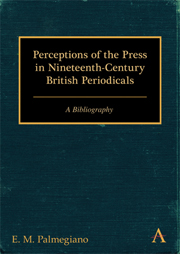
- Perceptions of the Press in Nineteenth-Century British PeriodicalsA Bibliography, pp. 522 - 531Publisher: Anthem PressPrint publication year: 2012
Accessibility standard: Unknown
Why this information is here
This section outlines the accessibility features of this content - including support for screen readers, full keyboard navigation and high-contrast display options. This may not be relevant for you.Accessibility Information
Accessibility compliance for the PDF of this chapter is currently unknown
and may be updated in the future.