Refine search
Actions for selected content:
22 results
Canadian Stroke Best Practice Recommendations. Stroke Systems of Care, 7th Edition, 2026
-
- Journal:
- Canadian Journal of Neurological Sciences , First View
- Published online by Cambridge University Press:
- 24 April 2026, pp. 1-20
-
- Article
-
- You have access
- Open access
- HTML
- Export citation
PD49 Developing Evidence-Based Optimal Testing Strategies To Monitor Long-Term Conditions In Primary Care
-
- Journal:
- International Journal of Technology Assessment in Health Care / Volume 40 / Issue S1 / December 2024
- Published online by Cambridge University Press:
- 07 January 2025, pp. S115-S116
-
- Article
-
- You have access
- Open access
- Export citation
APG ROUNDTABLE: SCHOLARLY PERSPECTIVES ON THE AMERICAN RIGHT
-
- Journal:
- Journal of American Studies / Volume 58 / Issue 4 / October 2024
- Published online by Cambridge University Press:
- 05 November 2025, pp. 609-639
- Print publication:
- October 2024
-
- Article
-
- You have access
- Open access
- HTML
- Export citation
Analysing the travel behaviour of older adults: what are the determinants of sustainable mobility?
-
- Journal:
- Ageing & Society / Volume 44 / Issue 9 / September 2024
- Published online by Cambridge University Press:
- 21 November 2022, pp. 1964-1992
- Print publication:
- September 2024
-
- Article
-
- You have access
- Open access
- HTML
- Export citation
Impact of suppressing ciprofloxacin susceptibility results on antibiotic utilization and hospital-acquired Clostridioides difficile infection
-
- Journal:
- Antimicrobial Stewardship & Healthcare Epidemiology / Volume 1 / Issue 1 / 2021
- Published online by Cambridge University Press:
- 05 August 2021, e19
-
- Article
-
- You have access
- Open access
- HTML
- Export citation
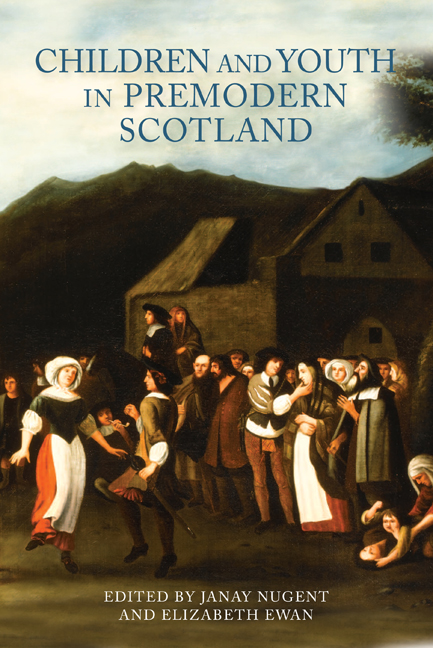
Children and Youth in Premodern Scotland
-
- Published by:
- Boydell & Brewer
- Published online:
- 11 May 2021
- Print publication:
- 15 October 2015
Part III - Constructing the Next Generation
-
- Book:
- Children and Youth in Premodern Scotland
- Published by:
- Boydell & Brewer
- Published online:
- 11 May 2021
- Print publication:
- 15 October 2015, pp 153-154
-
- Chapter
- Export citation
Abbreviations and Conventions
-
- Book:
- Children and Youth in Premodern Scotland
- Published by:
- Boydell & Brewer
- Published online:
- 11 May 2021
- Print publication:
- 15 October 2015, pp xvi-xvi
-
- Chapter
- Export citation
Frontmatter
-
- Book:
- Children and Youth in Premodern Scotland
- Published by:
- Boydell & Brewer
- Published online:
- 11 May 2021
- Print publication:
- 15 October 2015, pp i-iv
-
- Chapter
- Export citation
Contents
-
- Book:
- Children and Youth in Premodern Scotland
- Published by:
- Boydell & Brewer
- Published online:
- 11 May 2021
- Print publication:
- 15 October 2015, pp vii-viii
-
- Chapter
- Export citation
List of Illustrations
-
- Book:
- Children and Youth in Premodern Scotland
- Published by:
- Boydell & Brewer
- Published online:
- 11 May 2021
- Print publication:
- 15 October 2015, pp ix-x
-
- Chapter
- Export citation
Part II - Representations of the Young
-
- Book:
- Children and Youth in Premodern Scotland
- Published by:
- Boydell & Brewer
- Published online:
- 11 May 2021
- Print publication:
- 15 October 2015, pp 87-88
-
- Chapter
- Export citation
Dedication
-
- Book:
- Children and Youth in Premodern Scotland
- Published by:
- Boydell & Brewer
- Published online:
- 11 May 2021
- Print publication:
- 15 October 2015, pp v-vi
-
- Chapter
- Export citation
St Andrew Studies in Scottish History
-
- Book:
- Children and Youth in Premodern Scotland
- Published by:
- Boydell & Brewer
- Published online:
- 11 May 2021
- Print publication:
- 15 October 2015, pp 235-235
-
- Chapter
- Export citation
Index
-
- Book:
- Children and Youth in Premodern Scotland
- Published by:
- Boydell & Brewer
- Published online:
- 11 May 2021
- Print publication:
- 15 October 2015, pp 227-234
-
- Chapter
- Export citation
Part I - Experiences of Childhood and Youth
-
- Book:
- Children and Youth in Premodern Scotland
- Published by:
- Boydell & Brewer
- Published online:
- 11 May 2021
- Print publication:
- 15 October 2015, pp 13-14
-
- Chapter
- Export citation
Acknowledgments
-
- Book:
- Children and Youth in Premodern Scotland
- Published by:
- Boydell & Brewer
- Published online:
- 11 May 2021
- Print publication:
- 15 October 2015, pp xiv-xv
-
- Chapter
- Export citation
Envoi In Their Own Words: A Mother to Her Son
-
- Book:
- Children and Youth in Premodern Scotland
- Published by:
- Boydell & Brewer
- Published online:
- 11 May 2021
- Print publication:
- 15 October 2015, pp 203-204
-
- Chapter
- Export citation
Guide to Further Reading
-
- Book:
- Children and Youth in Premodern Scotland
- Published by:
- Boydell & Brewer
- Published online:
- 11 May 2021
- Print publication:
- 15 October 2015, pp 221-226
-
- Chapter
- Export citation
Notes on Contributors
-
- Book:
- Children and Youth in Premodern Scotland
- Published by:
- Boydell & Brewer
- Published online:
- 11 May 2021
- Print publication:
- 15 October 2015, pp xi-xiii
-
- Chapter
- Export citation
