

Popular Politics and the English Reformation

Popular Politics and the English Reformation
Looking for an examination copy?
If you are interested in the title for your course we can consider offering an examination copy. To register your interest please contact collegesales@cambridge.org providing details of the course you are teaching.
This study of popular responses to the English Reformation analyzes how ordinary people received, interpreted, debated, and responded to religious change. It differs from other studies by arguing that the subject cannot be understood simply by asking theological questions about people's beliefs, but must be understood by asking political questions about how they negotiated with state power. Therefore, it concerns political as well as religious history, since it asserts that, even at the popular level, political and theological processes were inseparable in the sixteenth century.
- This book offers an interpretation of the Protestant Reformation in England
- It explores the origins of the Anglican Church and the abilities of ordinary people to shape their own experiences in the pre-modern world
- Analyses the interaction of religion and politics at a crucial moment in English history
Reviews & endorsements
"Ethan Shagan set out to fire controversy and in this he will succeed." Thomas F. Mayer, Augustana College
"[A] fascinating interpretation of the English Reformation...Shagan asks imaginative and fresh questions of the evidence...Lucidly and incisively written, Shagan's work offers much to ponder." William Wizeman, S.J., Fordham University, Sixteenth Century Journal
"Shagan explores the key social, religious, cultural and governmental elements in England's conversion to a Protestant nation...[a] comprehensive text..." Northwestern
"...an impressive response to revisionists who argue that the English were inherently conservative and resistant to religious change." Religious Studies Review
"A well-written, innovative work that makes an important and provocative contribution to the debate about why Catholicism lost its hold on the English people." Journal of Interdisciplinary History
"One of the most thought-provoking books of the last decade on this much-worked topic." Renaissance Quarterly
"This is a book that students of the English Reformation must read, as much for its historiographical arguments as for its case studies...This book is an effective attempt to move the debate over the English Reformation off dead center...Based on extensive archival work, this volume does not pretened to be a history of the Reformation; rather, is presents an argument about how reformation occurred. It refreshingly quits trying to count converted noses and conservative faithful and asks a most reasonable question: what did people do in the face of reform from above?" - Journal of Modern History, Norman Jones, Utah State University
Product details
- Published: November 2002
- Format: Paperback
- ISBN: 9780521525558
- Length: 364 pages
- Dimensions: 229 × 153 × 23 mm
- Weight: 0.596kg
- Availability: Available





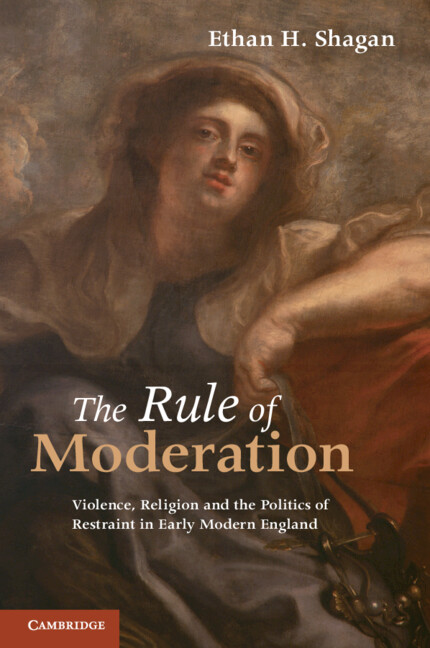

Table of Contents
- Acknowledgements
- List of abbreviations
- Note on the text
- Introduction
- Part I. The Break with Rome and the Crisis of Conservatism:
- 1. 'Schismatics be now plain heretics': debating the royal supremacy over the Church of England
- 2. The anatomy of opposition in early Reformation England: the case of Elizabeth Barton, the holy maid of Kent
- 3. Politics and the Pilgrimage of Grace revisited
- Part II. Points of Contact: The Henrician Reformation and the English People:
- 4. Anticlericalism, popular politics and the Henrician Reformation
- 5. Selling the sacred: Reformation and dissolution at the Abbey of Hailes
- 6. 'Open disputation was in alehouses': religious debate in the diocese of Canterbury, c. 1543
- Part III. Sites of Reformation: Collaboration and Popular Politics under Edward VI:
- 7. Resistance and collaboration in the dissolution of the chantries
- 8. The English people and the Edwardian Reformation
- Conclusion
- Bibliography
- Index.
- Show more
