

The Rise of European Security Cooperation
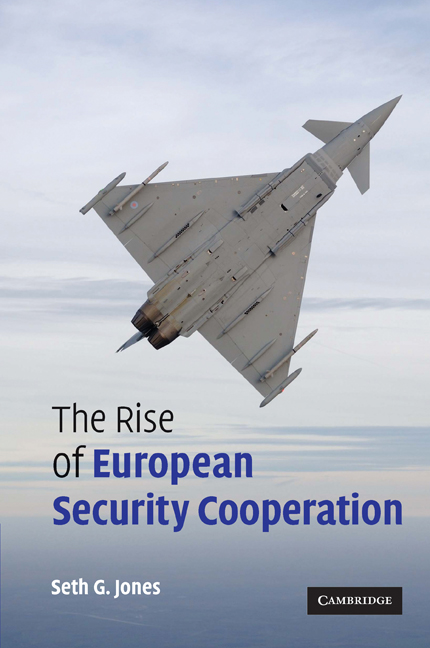
The Rise of European Security Cooperation
Looking for an examination copy?
If you are interested in the title for your course we can consider offering an examination copy. To register your interest please contact collegesales@cambridge.org providing details of the course you are teaching.
One of the most striking developments in recent international politics has been the significant increase in security cooperation among European Union states. Seth Jones argues that this increase in cooperation, in areas such as economic sanctions, weapons production and collaboration among military forces, has occurred because of the changing structure of the international and regional systems. Since the end of the Cold War, the international system has shifted from a bipolar to a unipolar structure characterized by United States dominance. This has caused EU states to cooperate in the security realm to increase their ability to project power abroad and to decrease reliance on the US. Furthermore, European leaders in the early 1990s adopted a 'binding' strategy to ensure long-term peace on the continent, suggesting that security cooperation is caused by a desire to preserve peace in Europe whilst building power abroad.
- The last 60 years of European history are examined, enabling readers to understand today's changes in a historical context
- Argues that European states are now working together to counterbalance US power
- Includes graphs and charts to display data in a simple, comprehensive format, and a final chapter laying out future policy trends and implications
Reviews & endorsements
“A political scientist at the RAND Corporation, Jones takes issue with the widespread view (particularly prevalent in the United States) that European security cooperation has been a failure. Thoroughly examining post-Cold War European cooperation on security institutions, economic sanctions, arms production, and military forces, he argues that such skepticism is misplaced: European security cooperation is ‘one of the most striking developments in international politics today.’”
Philip H. Gordon, Foreign Affairs
"...both books contribute to the understanding of European foreign policy, and schoalrs working in this area will profit from reading them." --Richard G. Whitman, University of Bath.
Product details
- Published: February 2007
- Format: Paperback
- ISBN: 9780521689854
- Length: 310 pages
- Dimensions: 229 × 152 × 18 mm
- Weight: 0.46kg
- Availability: Available




Table of Contents
- 1. Introduction
- 2. Power and security cooperation
- 3. Security institutions
- 4. Economic sanctions
- 5. Arms production
- 6. Military forces
- 7. The tragedy of US-European relations.
- Show more



