You are viewing content intended for a different location. This may affect your ability to shop online.

Our systems are now restored following recent technical disruption, and we’re working hard to catch up on publishing. We apologise for the inconvenience caused. Find out more

Recommended product

Popular links

Popular links


Mammoths and the Environment
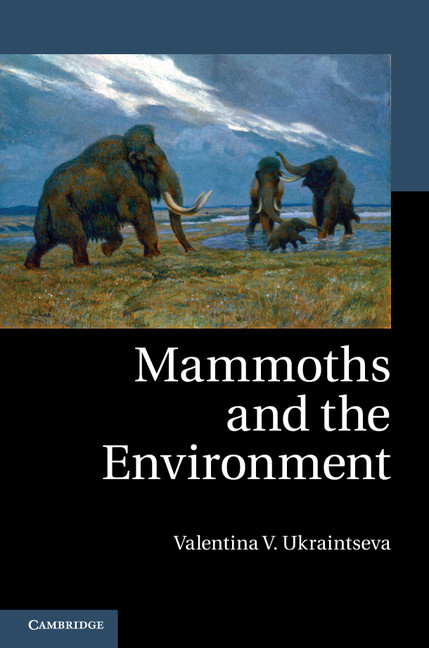
Mammoths and the Environment

Mammoths and the Environment

Author:
Valentina V. Ukraintseva, State Biosphere Reserve, Taymyrskiy
Published:
September 2013
Availability:
Available
Format:
Hardback
ISBN:
9781107027169

Looking for an examination copy?

If you are interested in the title for your course we can consider offering an examination copy. To register your interest please contact collegesales@cambridge.org providing details of the course you are teaching.

$188.00 (C) USD
Hardback
$188.00 (Z) USD
eBook

    The study of fossilised remains of herbivorous animals, particularly those rare findings with well-preserved gastrointestinal tracts filled with plant remains, is crucial to our understanding of the environment in which they lived. Summarising thirty years of research, Ukraintseva presents evidence on plants once eaten by Siberia's major herbivorous mammals. The collection of pollen and plant spores from food remains sheds light on the vegetation of these ancient habitats, enabling researchers to reconstruct local floras of the time. This also promotes further insight into the causes of the extinction of various species due to changing environmental conditions and food availability. Providing a history of the research undertaken, the book also includes specific chapters on the Cherski horse and bison, along with the vegetation and climate of Siberia in the late Anthropogene period, making it a lasting reference tool for graduate students and researchers in the field.

    • Summarises thirty years of Siberian research, providing a full history of the research undertaken and enabling a better understanding of the extinction of species due to changing environmental conditions and food availability
    • Features twenty full-page plates with microphotographs of pollen and plant spores collected from the food remains of fossil mammals
    • Presents new and detailed information on the vegetation of ancient habitats, enabling researchers to reconstruct local floras and climates of the time

    Reviews & endorsements

    "This book should be studied by every paleobotanist, paleoecologist, paleontologist, and archaeologist interested in arctic environments, climate change, extinctions, and early human adaptations to far northern latitudes. Ukraintseva’s volume brings much of the paleoecological information available only in the Russian language to the English-speaking scientific community and this fact alone makes this a very valuable contribution. This volume is a very useful compilation of information regarding past environments of northern Siberia and the relationship to the ecology of the mammoth faunal complex. Valentina Ukraintseva should be congratulated on a job well done."
    Steven R. Holen, Arctic, Antarctic and Alpine Research

    Product details

    • Published: September 2013
    • Format: Hardback
    • ISBN: 9781107027169
    • Length: 354 pages
    • Dimensions: 233 × 156 × 20 mm
    • Weight: 0.7kg
    • Contains: 107 b/w illus. 16 tables
    • Availability: Available

    Table of Contents

    • Preface
    • Acknowledgments
    • Introduction
    • 1. Some pages of history
    • 2. Material and methods
    • 3. The mammoth faunal complex
    • 4. Solving the mysteries of the Siberian mammoth and its companions
    • 5. Food remains of fossil herbivorous mammals as indicators of Late Quaternary floras in the North of Siberia
    • 6. Vegetation and climate of Siberia in the Late Quaternary
    • 7. Why did the mammoths die out so quickly?
    • 8. Summary
    • Glossary
    • References
    • Index.
    Resources for
    Type
    Chapter 14 Figure 07
    Size: 1.02 MB
    Type: image/jpeg
    Sign inThis resource is locked and access is given only to lecturers adopting the textbook for their class. We need to enforce this strictly so that solutions are not made available to students. To gain access to locked resources you either need first to sign in or register for an account.
    Chapter 14 Figure 15
    Size: 1.14 MB
    Type: image/jpeg
    Sign inThis resource is locked and access is given only to lecturers adopting the textbook for their class. We need to enforce this strictly so that solutions are not made available to students. To gain access to locked resources you either need first to sign in or register for an account.
    Chapter 14 Figure 20
    Size: 1.21 MB
    Type: image/jpeg
    Sign inThis resource is locked and access is given only to lecturers adopting the textbook for their class. We need to enforce this strictly so that solutions are not made available to students. To gain access to locked resources you either need first to sign in or register for an account.
    Chapter 14 Figure 08
    Size: 986.56 KB
    Type: image/jpeg
    Sign inThis resource is locked and access is given only to lecturers adopting the textbook for their class. We need to enforce this strictly so that solutions are not made available to students. To gain access to locked resources you either need first to sign in or register for an account.
    Chapter 14 Figure 16
    Size: 1.26 MB
    Type: image/jpeg
    Sign inThis resource is locked and access is given only to lecturers adopting the textbook for their class. We need to enforce this strictly so that solutions are not made available to students. To gain access to locked resources you either need first to sign in or register for an account.
    Chapter 14 Figure 01
    Size: 1.26 MB
    Type: image/jpeg
    Sign inThis resource is locked and access is given only to lecturers adopting the textbook for their class. We need to enforce this strictly so that solutions are not made available to students. To gain access to locked resources you either need first to sign in or register for an account.
    Chapter 14 Figure 09
    Size: 897.33 KB
    Type: image/jpeg
    Sign inThis resource is locked and access is given only to lecturers adopting the textbook for their class. We need to enforce this strictly so that solutions are not made available to students. To gain access to locked resources you either need first to sign in or register for an account.
    Chapter 14 Figure 17
    Size: 1.04 MB
    Type: image/jpeg
    Sign inThis resource is locked and access is given only to lecturers adopting the textbook for their class. We need to enforce this strictly so that solutions are not made available to students. To gain access to locked resources you either need first to sign in or register for an account.
    Chapter 14 Figure 02
    Size: 1.29 MB
    Type: image/jpeg
    Sign inThis resource is locked and access is given only to lecturers adopting the textbook for their class. We need to enforce this strictly so that solutions are not made available to students. To gain access to locked resources you either need first to sign in or register for an account.
    Chapter 14 Figure 10
    Size: 1.51 MB
    Type: image/jpeg
    Chapter 14 Figure 18
    Size: 1.62 MB
    Type: image/jpeg
    Chapter 14 Figure 03
    Size: 1.19 MB
    Type: image/jpeg
    Sign inThis resource is locked and access is given only to lecturers adopting the textbook for their class. We need to enforce this strictly so that solutions are not made available to students. To gain access to locked resources you either need first to sign in or register for an account.

    Author

    Valentina V. Ukraintseva , State Biosphere Reserve, Taymyrskiy

    Valentina V. Ukraintseva is Chief Investigator at the State Biosphere Reserve 'Taymyrskiy', Department of Research Investigations, Russia. She has published extensively on mammoths, is a member of the Mammoth Committee of the Russian Academy of Sciences and is also president of the Palynological Section of the Russian Botanical Society.