

Civil-Military Relations in Southeast Asia
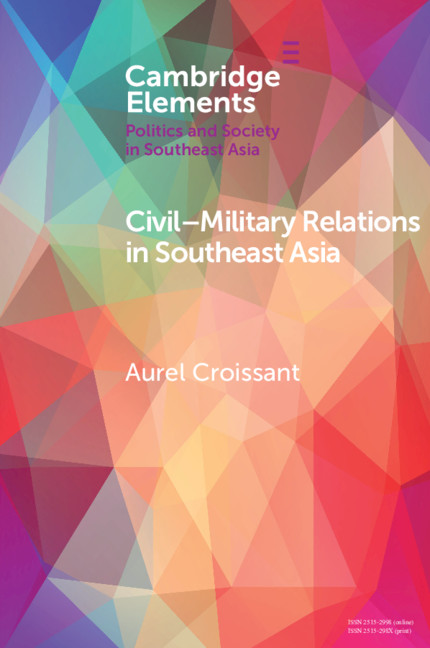
Civil-Military Relations in Southeast Asia
Looking for an examination copy?
If you are interested in the title for your course we can consider offering an examination copy. To register your interest please contact collegesales@cambridge.org providing details of the course you are teaching.
Civil-Military Relations in Southeast Asia reviews the historical origins, contemporary patterns, and emerging changes in civil–military relations in Southeast Asia from colonial times until today. It analyzes what types of military organizations emerged in the late colonial period and the impact of colonial legacies and the Japanese occupation in World War II on the formation of national armies and their role in processes of achieving independence. It analyzes the long term trajectories and recent changes of professional, revolutionary, praetorian and neo-patrimonial civil-military relations in the region. Finally, it analyzes military roles in state- and nation-building; political domination; revolutions and regime transitions; and military entrepreneurship.
Product details
- Published: August 2018
- Format: Paperback
- ISBN: 9781108459099
- Length: 76 pages
- Dimensions: 230 × 153 × 5 mm
- Weight: 0.14kg
- Availability: Available



Table of Contents
- 1. Introduction
- 2. Historical origins of civil–military relations
- 3. Types of civil–military relations
- 4. Military roles – old and new
- 5. Conclusions and outlook.
- Show more
